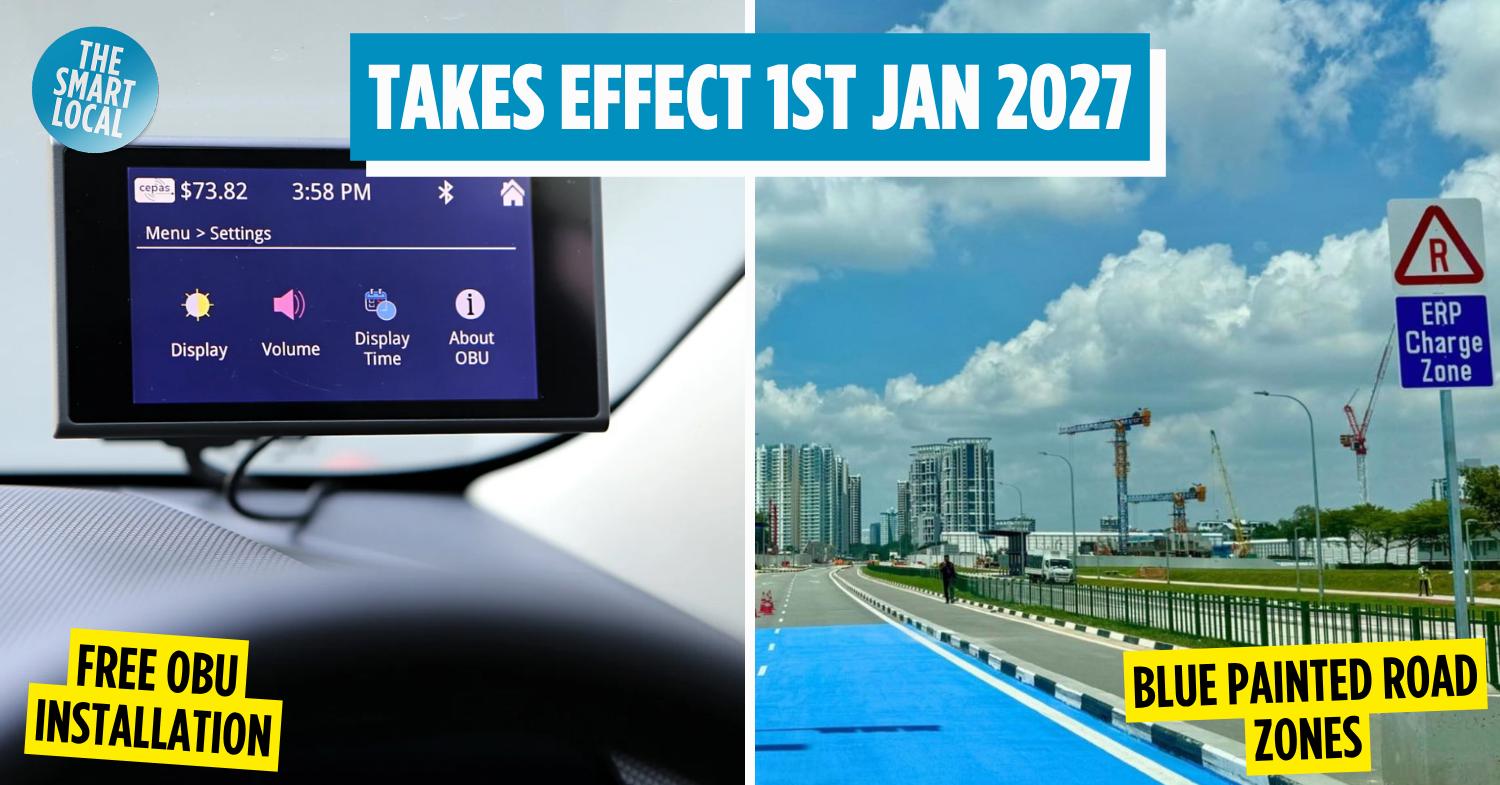

ERP 2.0 roll-out
Hear ye, hear ye – parts of Singapore’s roads might soon be painted blue. No, it’s not a rogue National Day project, but part of LTA’s rollout of ERP 2.0. This will eventually replace the physical ERP gantries we’ve all gotten used to spotting overhead.
In case you’ve been wondering what that means for drivers, here’s the short version: Singapore’s Land Transport Authority (LTA) is phasing out the old gantry-based system and switching fully to a satellite-based Electronic Road Pricing (ERP 2.0) system by 1st January 2027. After that, those familiar gantries will no longer be used for charging, though enforcement will still continue through cameras and other roadside checks.
Here’s what you need to know about the new road markings and what they mean for your daily drive.
What’s Electronic Road Pricing (ERP)?
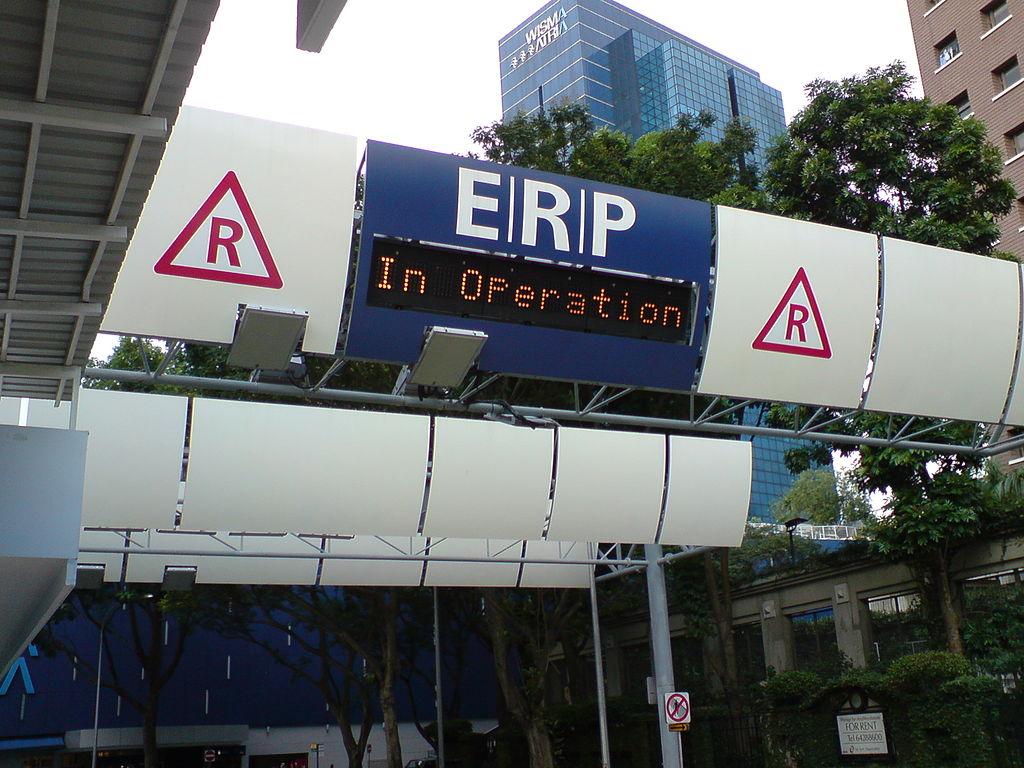
Image credit: Kalleboo
Now, the basics: Electronic Road Pricing (ERP) is Singapore’s congestion-charging system, which means drivers are automatically charged when they use certain roads during busier periods to help keep traffic flowing at a reasonable speed. It was first introduced in April 1998, replacing the older manual licensing scheme used in the CBD, and has since become a familiar part of driving here.
Traditionally, ERP works through overhead gantries that detect when your vehicle passes through a priced road during operating hours. The charge will then be automatically deducted from a stored-value card such as NETS CashCard or EZ-Link, or billed through a backend payment system linked to your vehicle’s in-vehicle unit.
Once Singapore transitions to ERP 2.0, that same idea will continue, but without the need for physical gantries on our roads.
What’s changing with ERP 2.0?

The biggest change is that ERP 2.0 won’t rely on physical gantries anymore. Instead, it uses a satellite-based On-Board Unit (OBU) and Global Navigation Satellite System (GNSS) technology to detect where your vehicle is and calculate charges more precisely.
In other words, drivers can still expect ERP charges in certain areas, but the system behind it will be a lot less dependent on those huge overhead structures we’re all used to seeing.
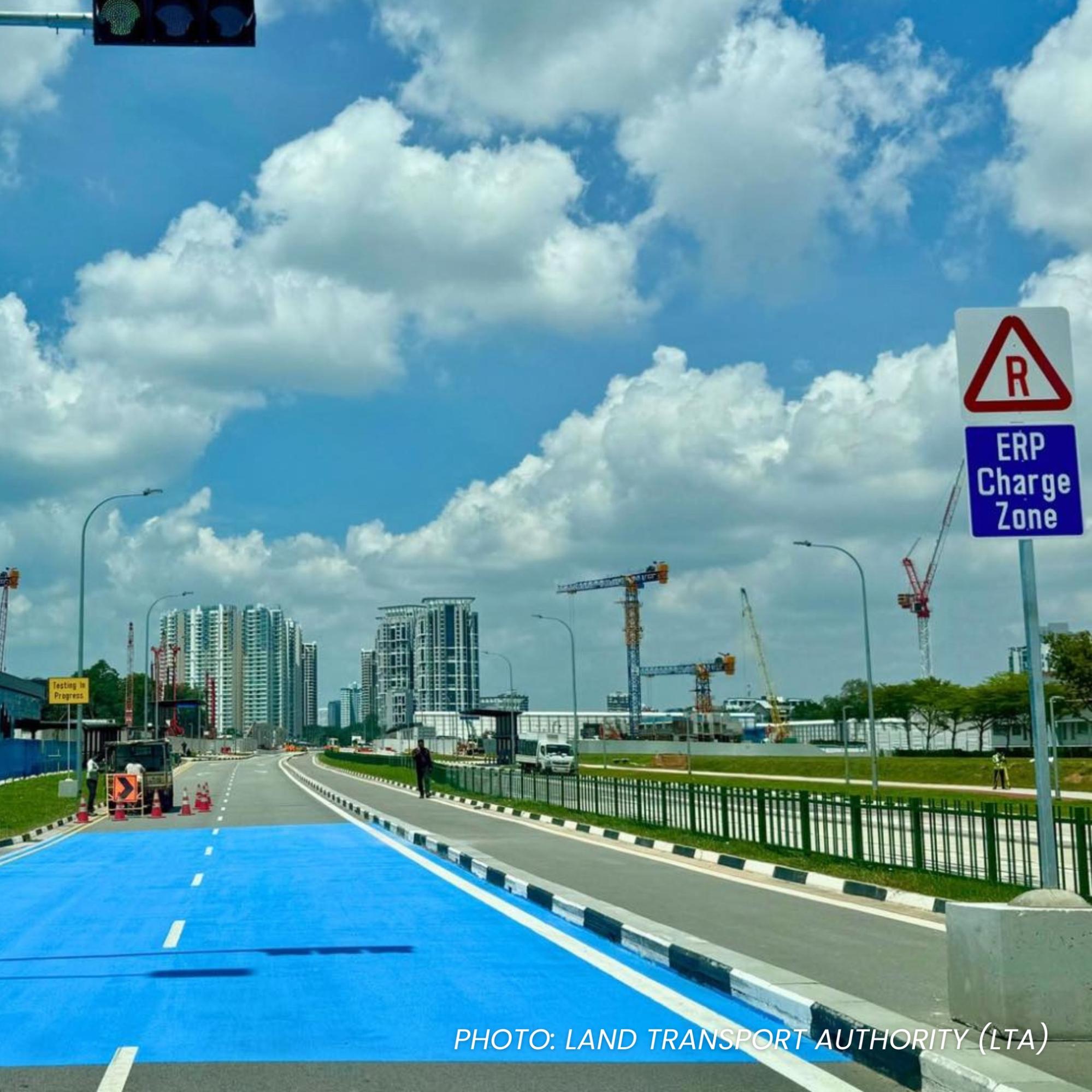
Image credit: Land Transport Authority via AL Autocar Pte Ltd on Facebook
You may also start noticing blue painted road zones, which are there to signal that you’re entering an ERP-charging area. As for the gantries themselves, LTA has about 95 ERP gantries islandwide, and many of them are already no longer in active use. These will be removed progressively later in 2026, starting with the non-operational ones, though signboards will still remain at key points to remind motorists when they’re entering ERP zones.
Where are the ERP 2.0 trial locations?
From 1st June to 31st July 2026, LTA will trial 5 different combinations of road signs and markings at 5 locations across the island. About 1,000 motorists will be involved in testing these out, with the findings helping LTA determine the most effective visual cues for letting drivers know when they’re entering an ERP charging zone, once the physical gantries are gone.
Here’s a look at what’s being tested at each trial location:
| Trial location | New road markings to indicate ERP charging locations |
| PIE Westbound after Kallang Bahru on Woodsville Flyover (5 lanes) | Blue oval “ERP” symbol on each of the 5 lanes |
| CTE Southbound from Serangoon Road (2 lanes) | 25m stretch of road painted blue |
| PIE Westbound before Eunos Link (4 lanes) | Blue oval “ERP” symbol on each of the 4 lanes |
| Marina Boulevard to MCE eastbound (2 lanes) | 25m stretch of road painted blue, with white “ERP” text painted in white at the centre of each lane |
| Citybound AYE after Jurong Town Hall (4 lanes) | 25m blue side markings, white “ERP” text for each lane, and blue lane dividers |
What do you need to know as a motorist?
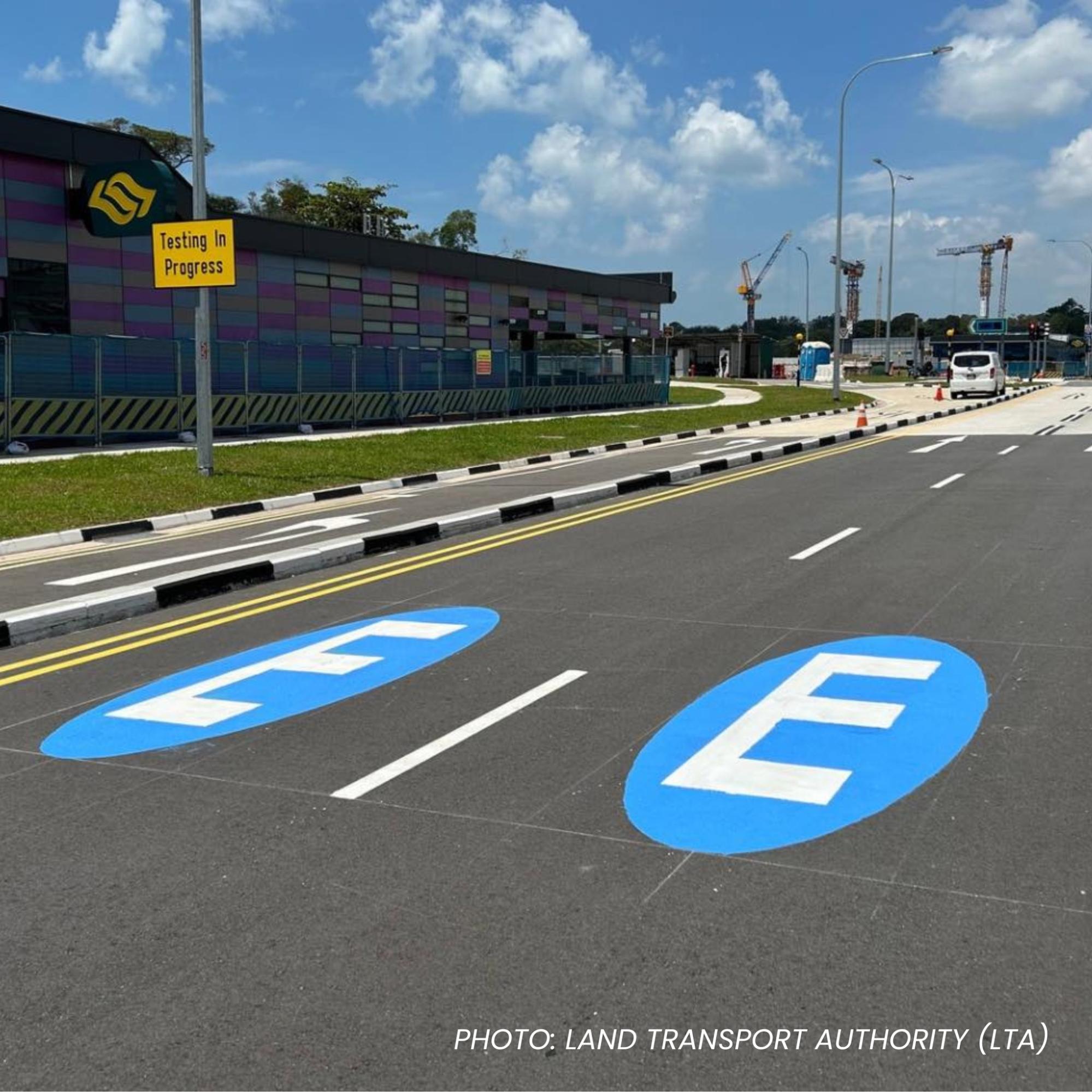
Image credit: Land Transport Authority via AL Autocar Pte Ltd on Facebook
If you drive a Singapore-registered vehicle, one big thing to note is that an On-Board Unit (OBU) will be mandatory from 1st January 2027. In other words, if you haven’t gotten yours installed by then, you won’t be able to use the new ERP 2.0 system properly.
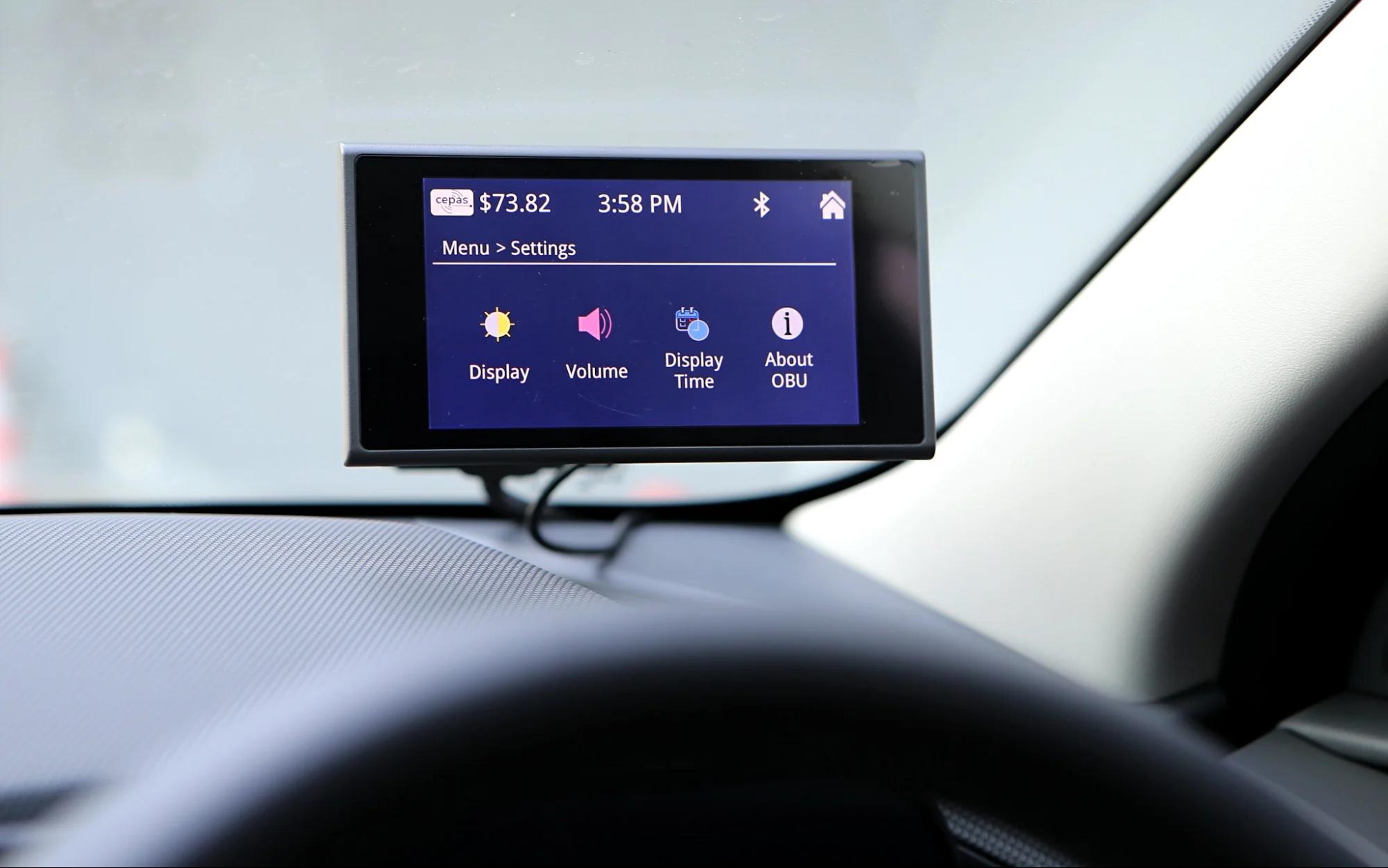
Image credit: Motorist Singapore
Unfortunately, the free installation window has ended as of 20th May 2026. So if you need to get your OBU installed, you’d have to pay a $35 installation fee for motorcycles and a $70 installation fee for other vehicles.
Additionally, take note that regular CashCards are not supported, and you’ll have to use CEPAS-type cards, such as NETS Motoring Card, NETS Flashpay, and EZ-Link Motoring Card.
Get ready for Singapore’s gantry-free ERP future
We don’t mean to be a cliché – but change is a constant in life, and Singapore’s roads are no exception. Motorists can expect a more flexible satellite-based setup once ERP 2.0 comes into effect, along with those new blue road markings popping up in selected areas.
If you haven’t done so already, make sure to get your OBU installed in time, so you’re not caught off guard when the familiar ERP gantries eventually become a thing of the past.
Read our other articles:
Cover image adapted from: Motorist Singapore, LTA
Last updated by Celine Wee on 29th May 2026.