

Punggol autonomous shuttles by Grab & ComfortDelGro
While flying cars might still be a pipe dream in Singapore, Punggol residents can now brag that they’re living in the future. The neighbourhood, which was once called ulu, is now officially home to the autonomous self-driving shuttles, a free service that sounds straight out of 2030. So even if you’re not a Punggolian (seriously, who coined that term?), we can all agree that this is a transport upgrade worth getting hyped about.
Table of Contents
What are autonomous shuttles?
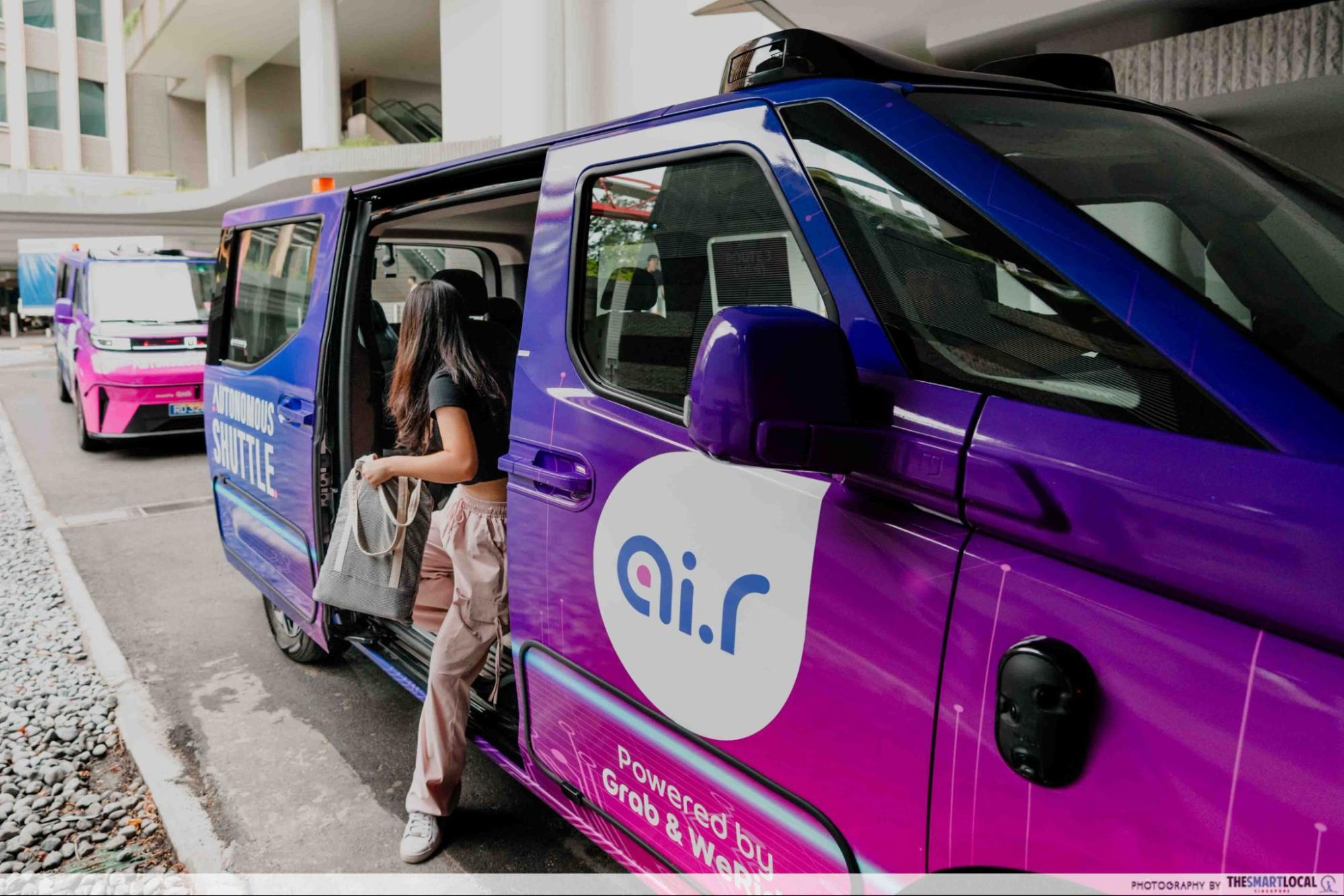
Autonomous shuttles and vehicles (AV) are self-driving vehicles that have been rolled out in Punggol to ferry residents to key amenities and transport nodes around the neighbourhood. The shuttles will be operated by Grab-WeRide and ComfortDelGro-Pony.AI – 2 major players in the global AV tech scene.
If this sounds like sci-fi made real, well, AVs aren’t entirely new to Singapore. Grab has been using them since July 2025 to shuttle staff between its office and one-north MRT, while WeRide has been zipping passengers around Resorts World Sentosa for about a year. But this is the first time AVs are hitting the heartlands – so Punggol residents, congrats, you’re the chosen ones.
Grab’s routes launched on 1st April 2026 after months of testing, followed by ComfortDelGro’s Route 2 on 1st July. As of 12th July, more than 11,500 riders have taken the
Why was Punggol chosen?

Punggol Digital District.
Image credit: JTC
Punggol might feel like Singapore’s favourite child right now, but there’s a reason: it ticks all the boxes for AV testing. Punggol has a compact layout, well-established travel patterns among residents, and mature road infrastructure. Resident feedback also helped map out the best shuttle routes.
It also makes sense given how futuristic Punggol already is. With the Punggol Digital District, which has been dubbed “Singapore’s Silicon Valley”, and the GenAI-powered FairPrice Finest at Punggol Coast Mall, it seems only fitting that self-driving shuttles make their heartlands debut here.
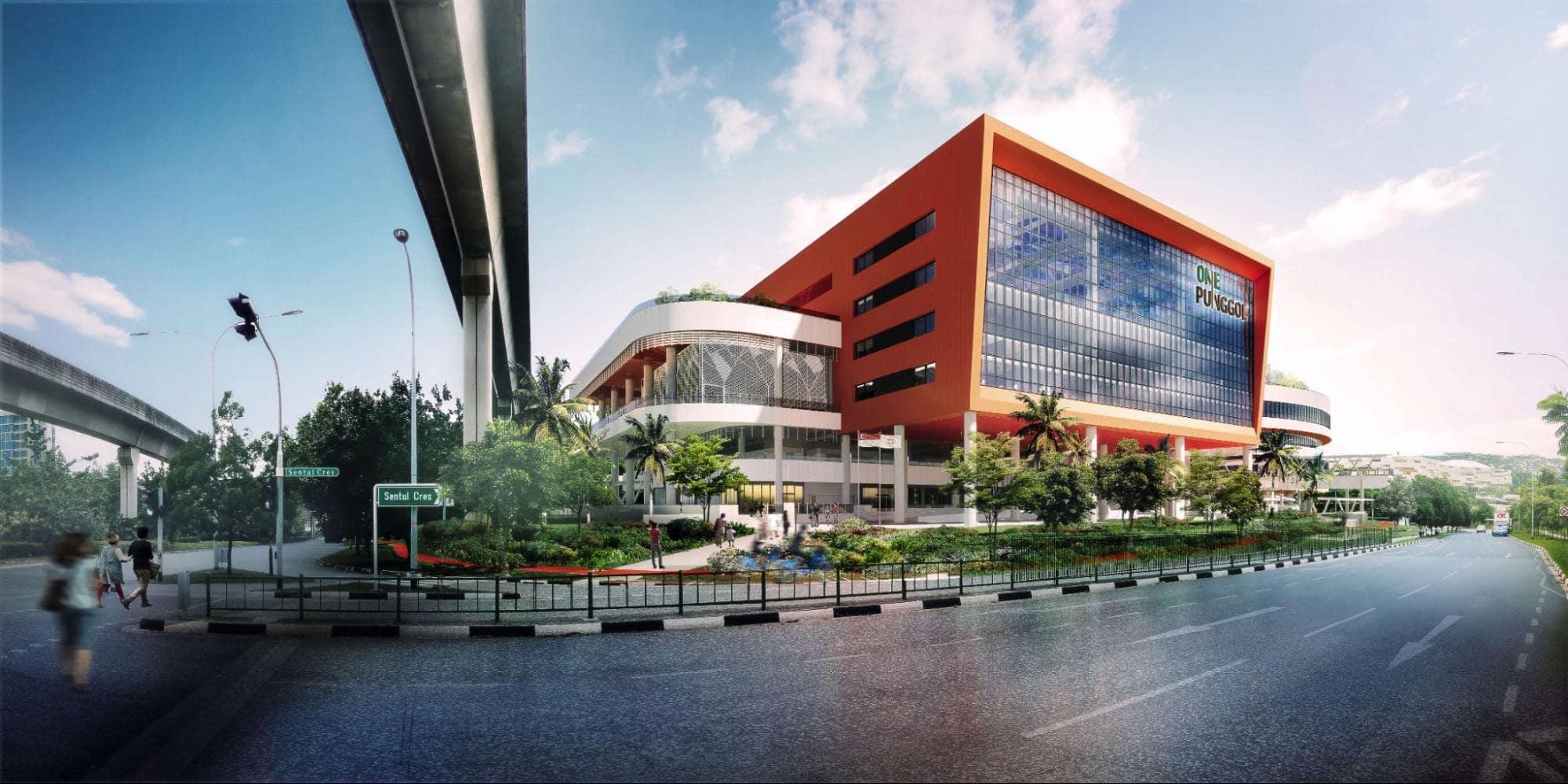
2 of the 3 self-driving shuttle routes will bring you to One Punggol.
Image credit: People’s Association
The practical upside with the introduction of these shuttles is that parts of Punggol that are a bit out of the way today have become much easier to reach, with journeys up to 15 minutes faster than existing public transport. And even if non-Punggol residents aren’t left out. Visiting friends in the area before popping by Punggol Coast Mall, or working through the list of things to do in Punggol, just got easier.
What are the routes for the Punggol autonomous shuttles?
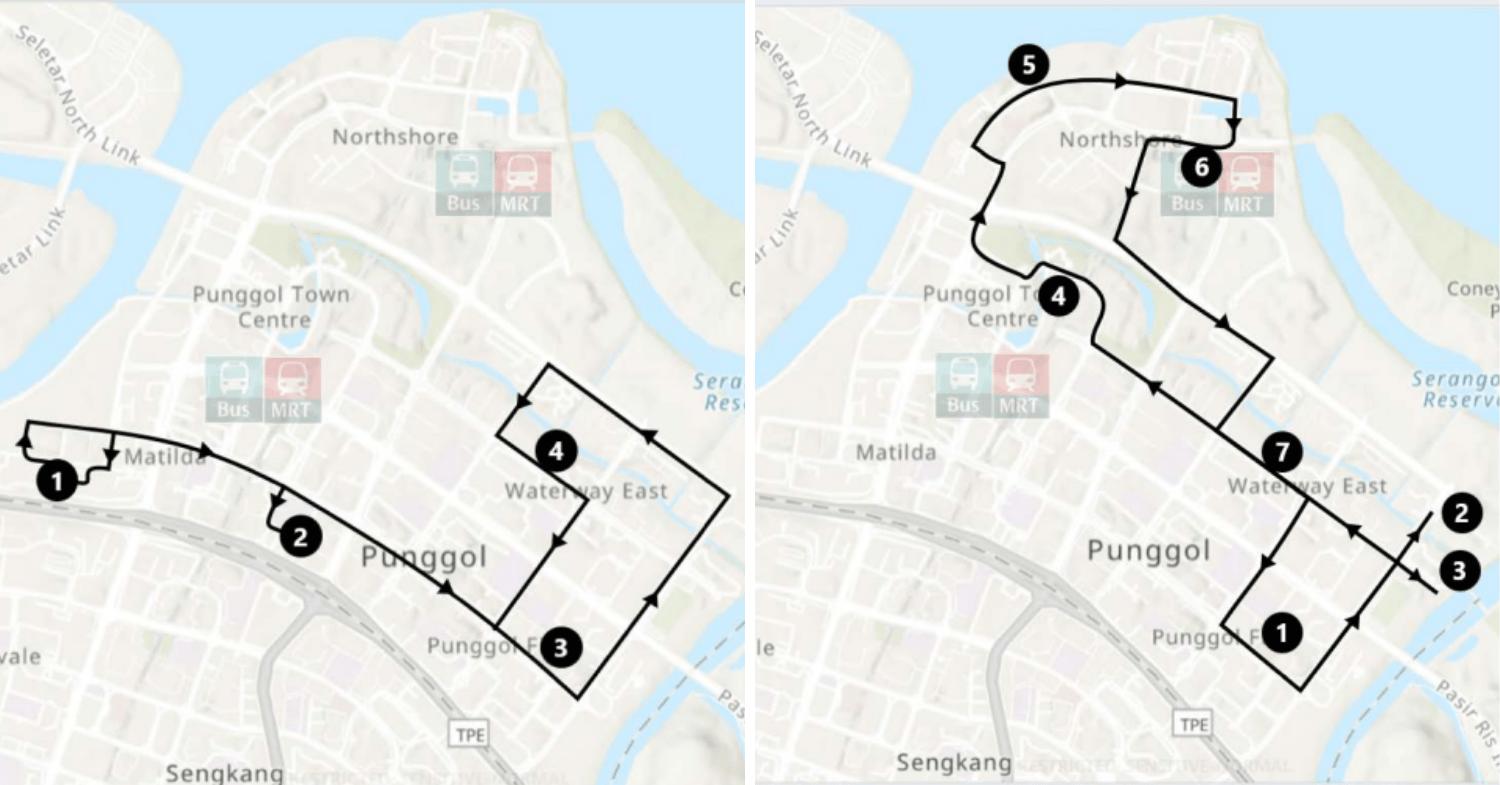
Routes 1 and 2.
Image adapted from: LTA
There will be 3 main routes launched in stages, connecting residents to hotspots like Oasis Terraces, Punggol Plaza, One Punggol, and Punggol Coast Mall.
| Route | Operator | Stops |
| 1 | Grab |
|
| 2 | ComfortDelGro |
|
| 2 Lite | ComfortDelGro |
|
| 3 | Grab |
|
| 3 Mini | Grab |
|
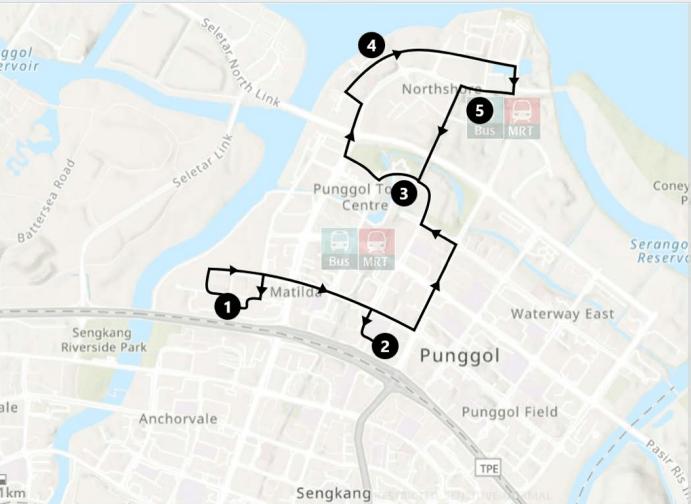
Route 3.
Image adapted from: LTA
All routes run from 9.30am to 5.30pm, with Routes 1, 3, and 3 Mini on weekdays only, while Route 2 and 2 Lite run daily, giving weekend commuters an option too.
The 2 Lite and 3 Mini routes give even more flexibility for commuters who want to shuttle in between fewer stops, as the entire route will only take 20-25 minutes compared to the full route, which is about 50 minutes.
One catch during the free phase: while you don’t need a booking to hop-on and hop-off Routes 1, 3, and 3 Mini, you’d need to make a booking to ride on ComfortDelGro’s Route 2 and 2 Lite.
How to book a free ride on the autonomous shuttles?
If you want to try out ComfortDelGro’s Zig Driverless autonomous shuttles, head to the Zig app (App Store | Google Play), and navigate to the Zig Driverless tab. After agreeing to the travel requirements, select your service route and enter your pick-up and drop-off point. Then you can book and confirm your ride, and after it’s just a waiting game to see when your vehicle will get to you.
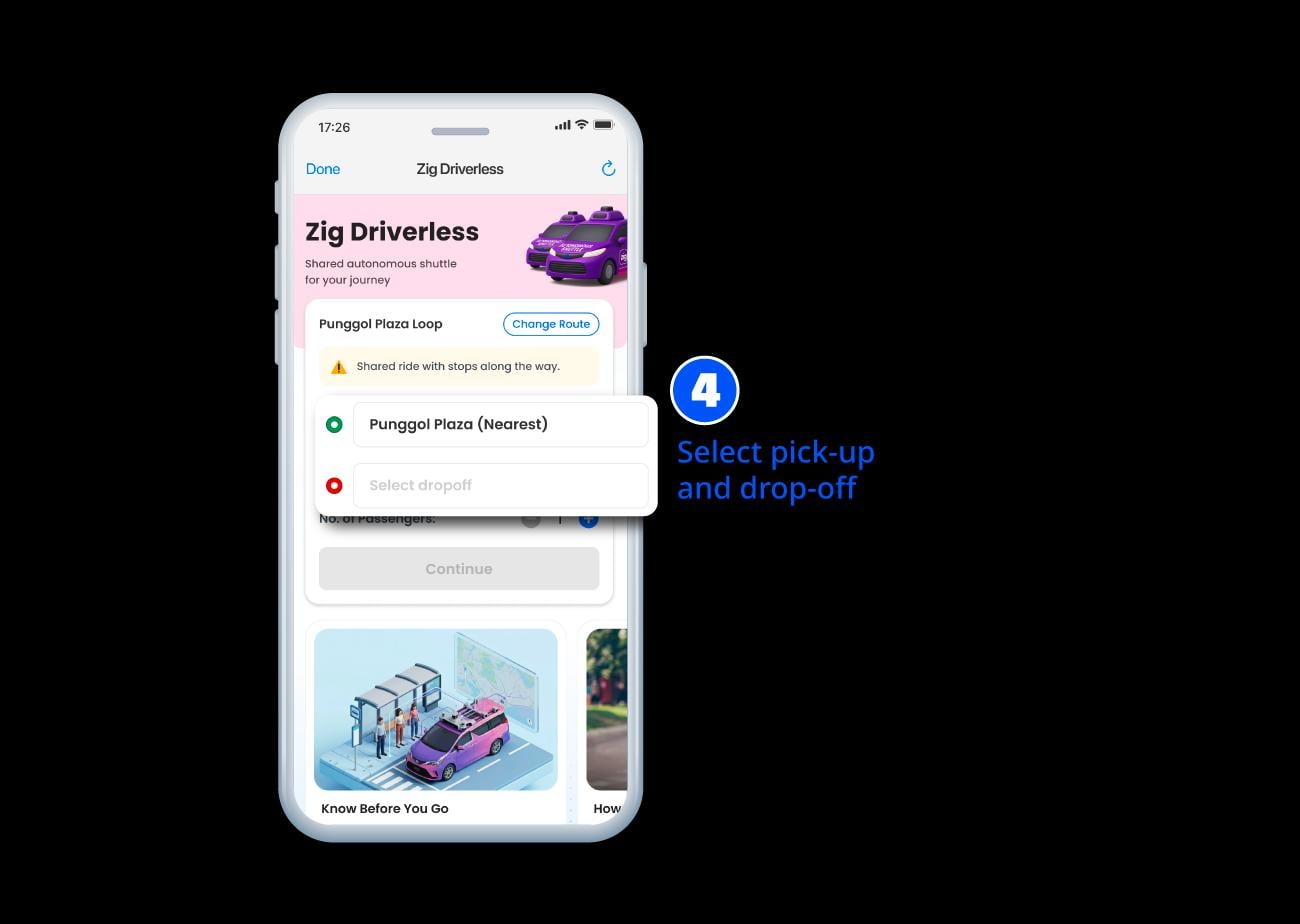
Image credit: Zig
When your ride arrives, scan the QR code to unlock the door, tap confirm once everyone is in, and off you go. When you get to your destination, just tap on the “End trip” button. It’s that easy.
For larger groups and those who require assistance, you can book special assisted rides via the booking.gov.sg form for ComfortDelGro, and rideair.ai for Grab. Do note that assisted rides for ComfortDelGro’s Route 2 Lite is limited to Mondays and Fridays, while assisted rides only operate on Route 1 for Grab.
Grab’s current fleet of autonomous shuttles are also not wheelchair accessible, but they are preparing for more inclusive and accessible models in the future.
Can I book on-demand autonomous shuttles?
Right now, the shuttles run fixed loops where commuters have to get on and get off at set stops in a set order. That’s about to change. In July 2026, Grab announced an on-demand AV pilot in Punggol, where riders can book their own dedicated AV and travel directly between pick-up and drop-off points instead of following the full loop.
This update stems from direct feedback from riders who have asked for more destinations, direct connections, and flexible bookings. As of now, over 500 people have already joined the waitlist on rideair.ai. Later in the year, more pick-up and drop-off points will be added in Punggol, creating an even more robust network of AVs serving the district.
The on-demand AV pilot will open to trial riders in the coming months and to the general public in Q4 of 2026. However, the on-demand rides will command commercial fares; the existing routes – 1, 3, and 3 Mini – will stay running for free in the meantime.
What’s the entire Punggol autonomous shuttle experience like?
Getting to the AV pick-up point
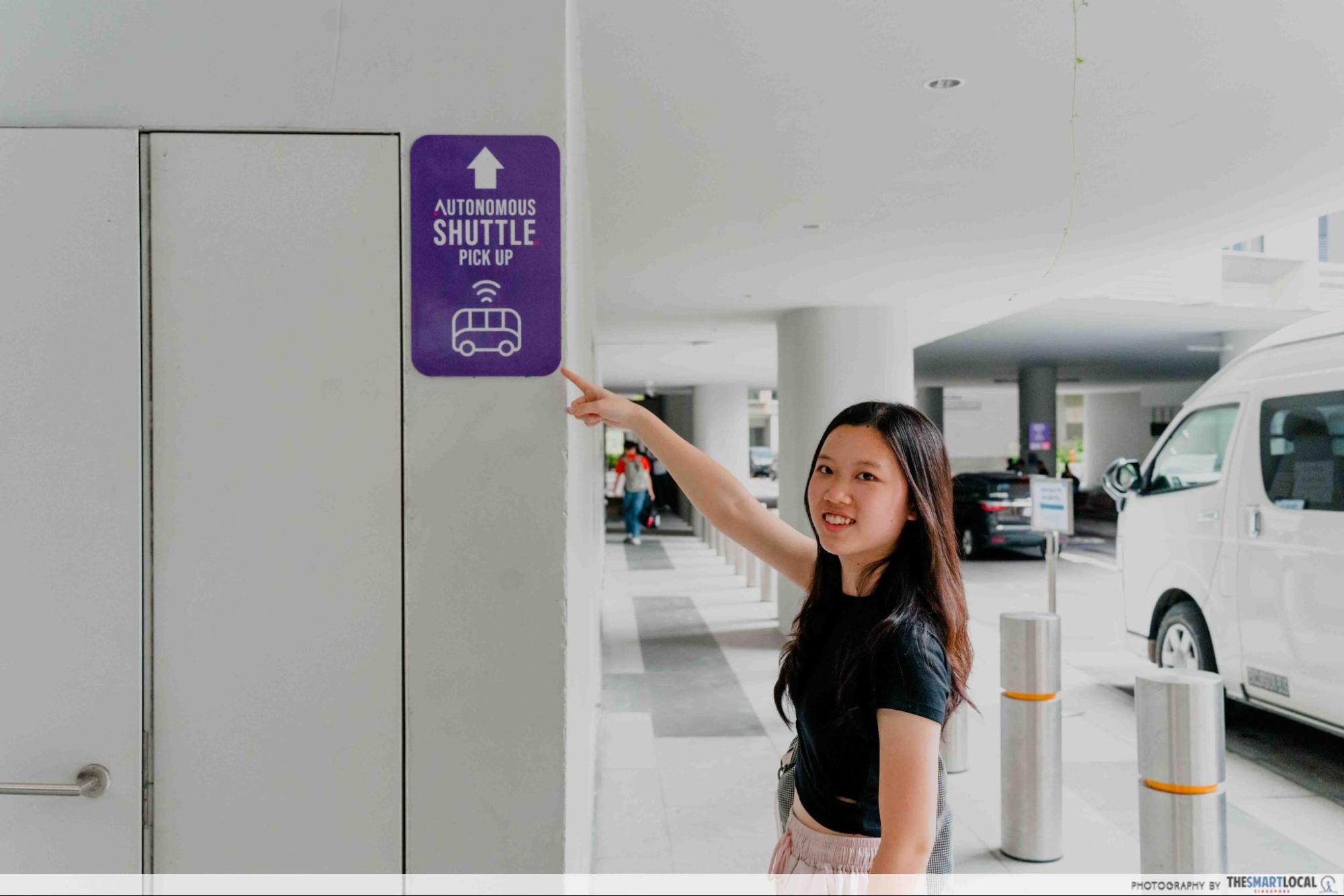
Of course, we had to try out the shuttle while it’s still free. We opted for Route 3 Mini and headed to the lobby of Tower 82 at Punggol Coast Mall. Finding our way there was not a concern because there were plenty of signs along the way. Just follow the purple signs, and you’ll be fine.
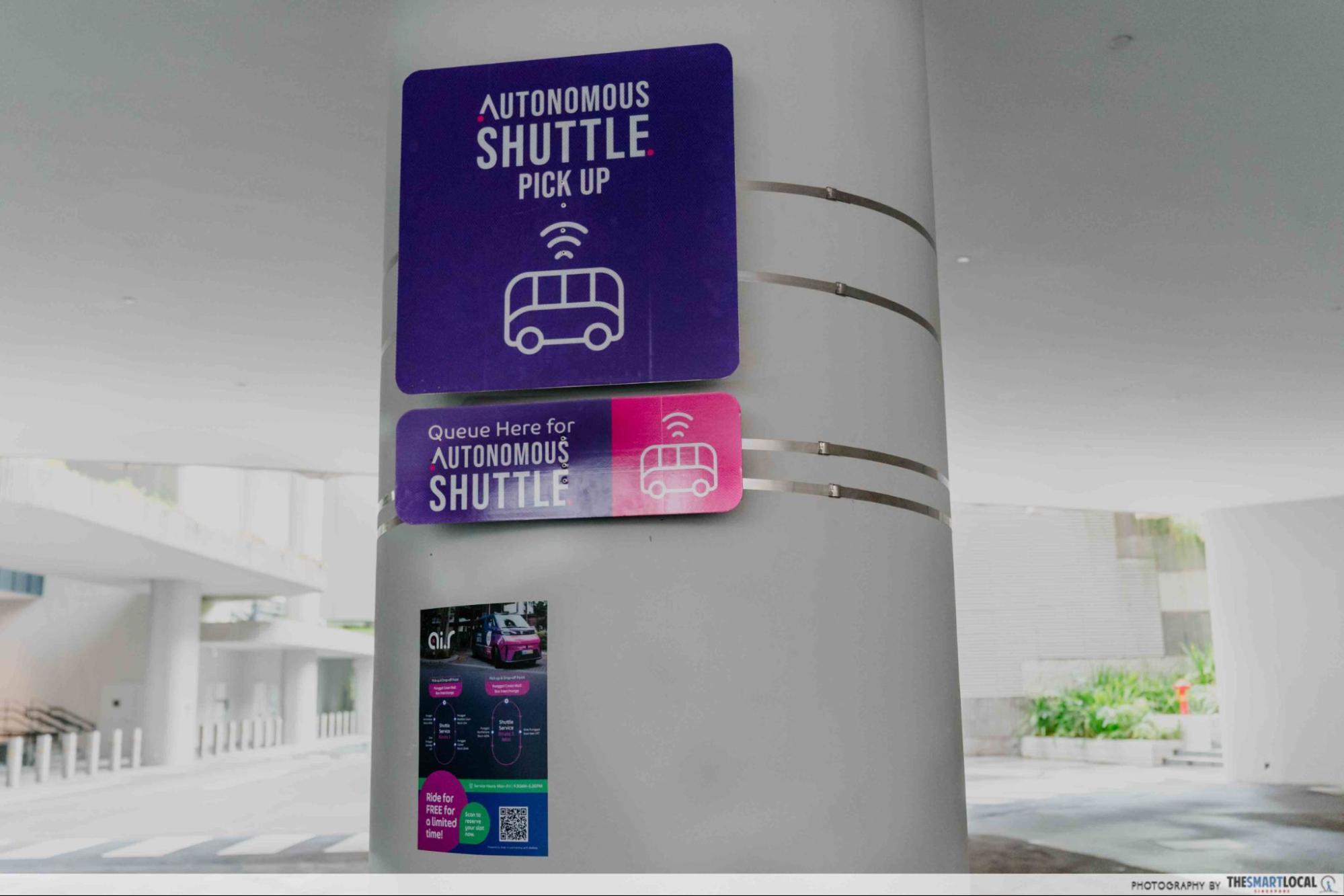
There’ll be staff stationed at the pick-up point, who will check your confirmation email and brief you on what to expect before the ride.
Boarding the autonomous shuttle
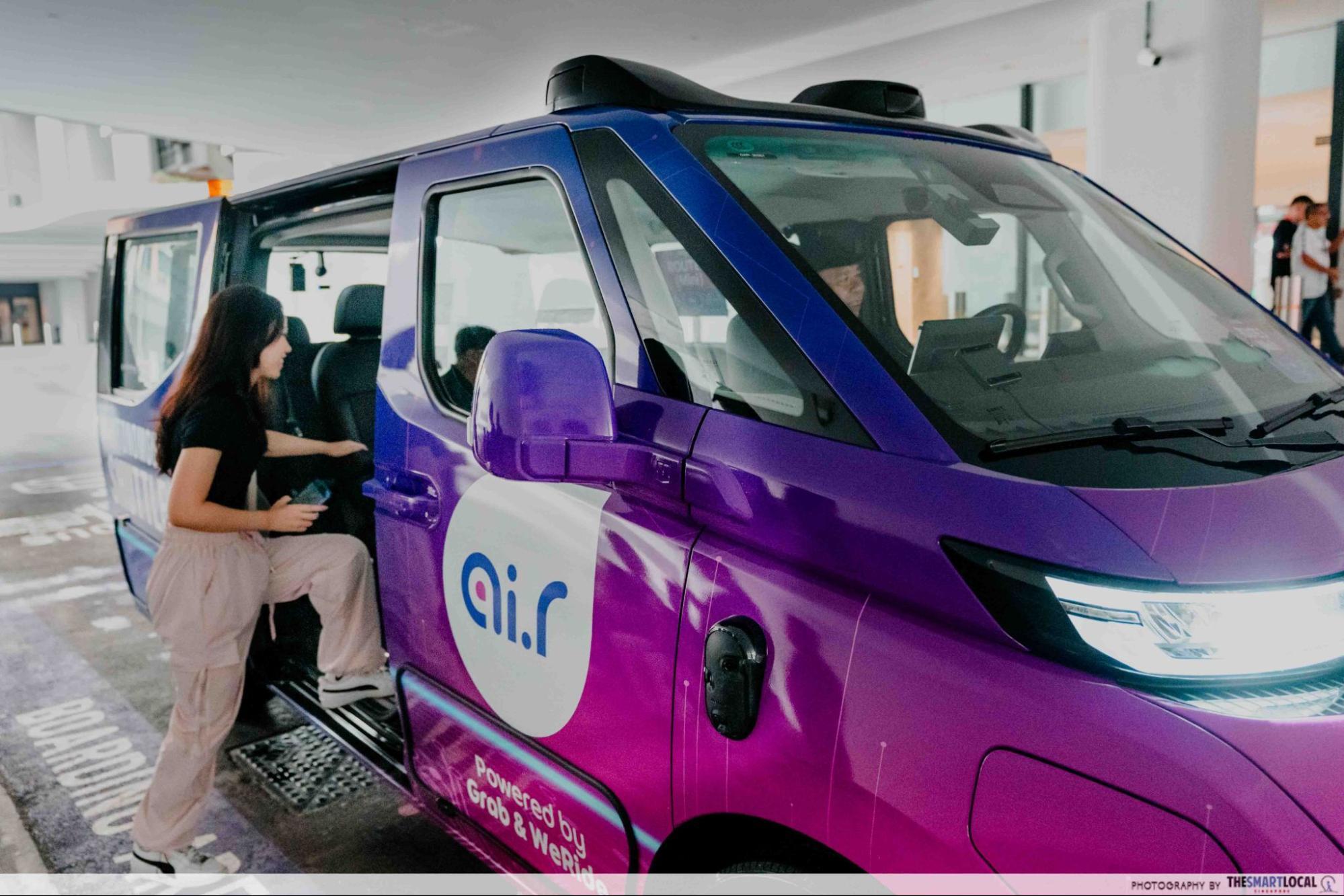
The shuttles tend to arrive earlier than scheduled, and yes, you can board early if they’re already there. Frequency-wise, vehicles come every 15 minutes, or closer to every 10 minutes for the mini route, since it’s shorter.
Grab’s Ai.R fleet currently has 5-seater WeRide GXRs and 8-seater Robobus. During our trip to Punggol, the latter was still in its testing phase, so we hopped on the WeRide GXR for this experience.
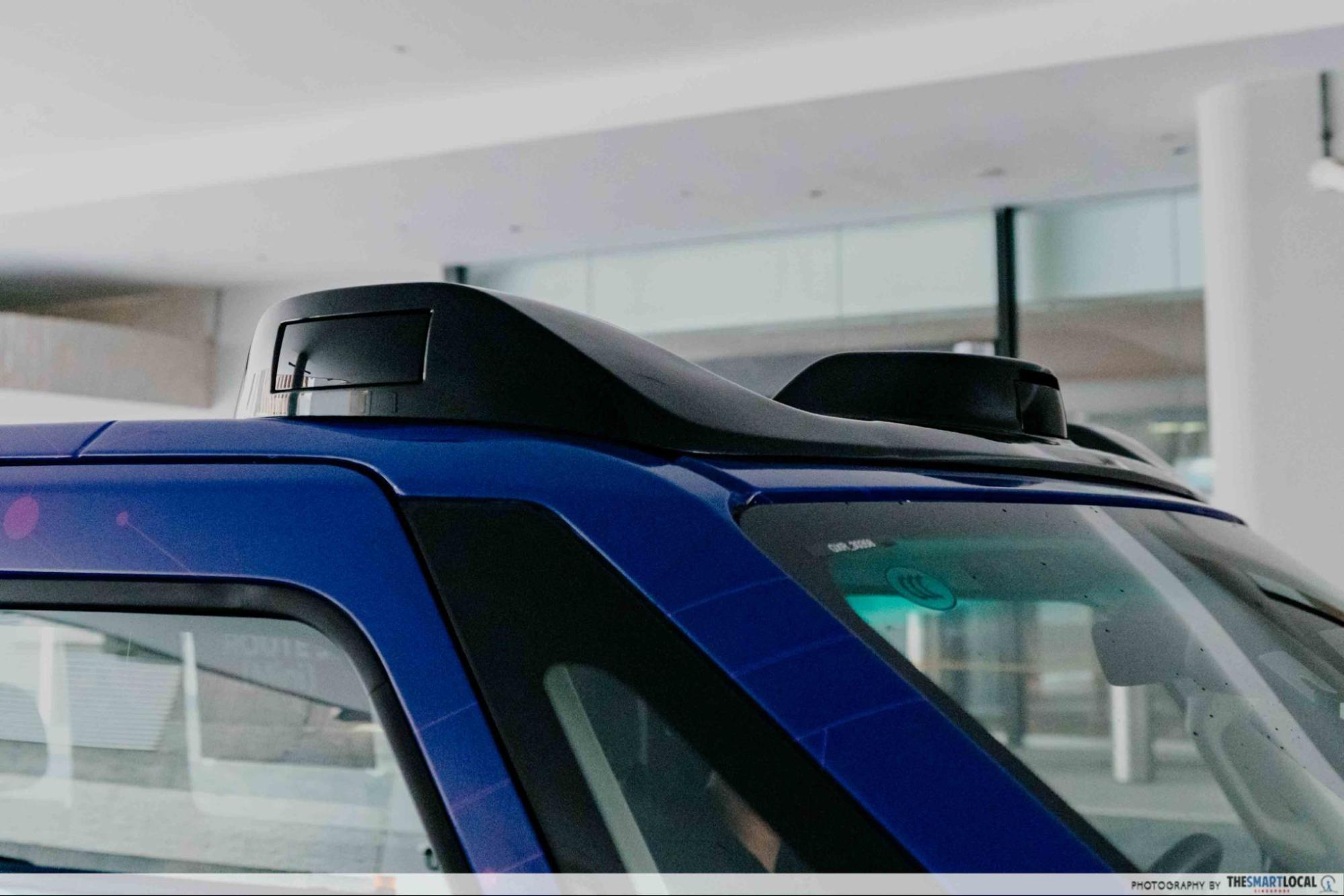
The first thing we noticed about the WeRide GXRs is that they are equipped with over 20 sensors, such as LiDAR arrays and high-definition cameras, to detect other vehicles and pedestrians 360° around.
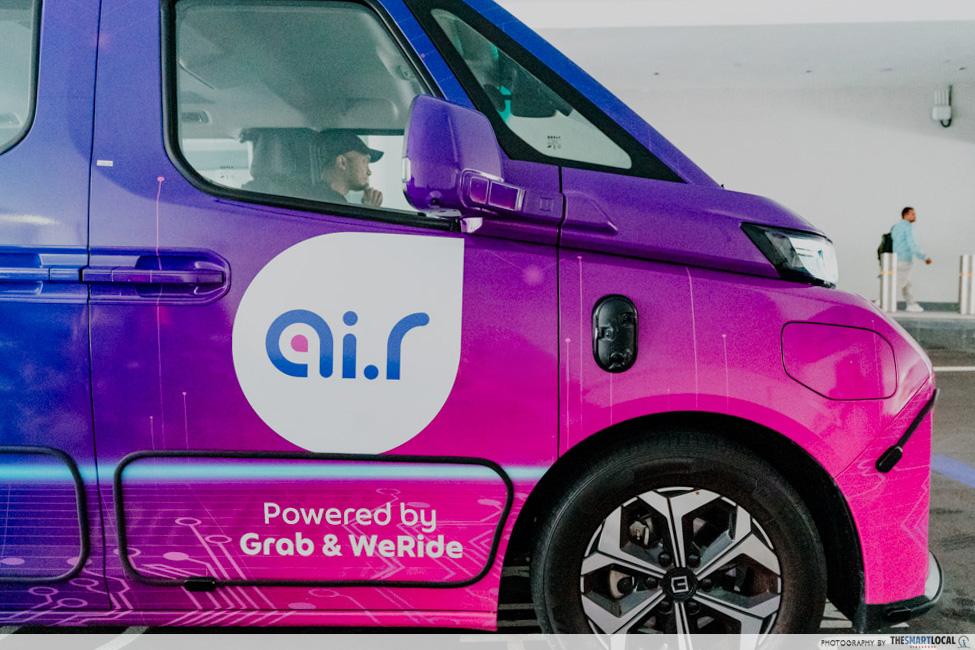
They even have blind spot sensors on the front and sides, which makes me feel like the AVs might be safer than a regular car – because let’s face it, we don’t have that many eyes on the road.
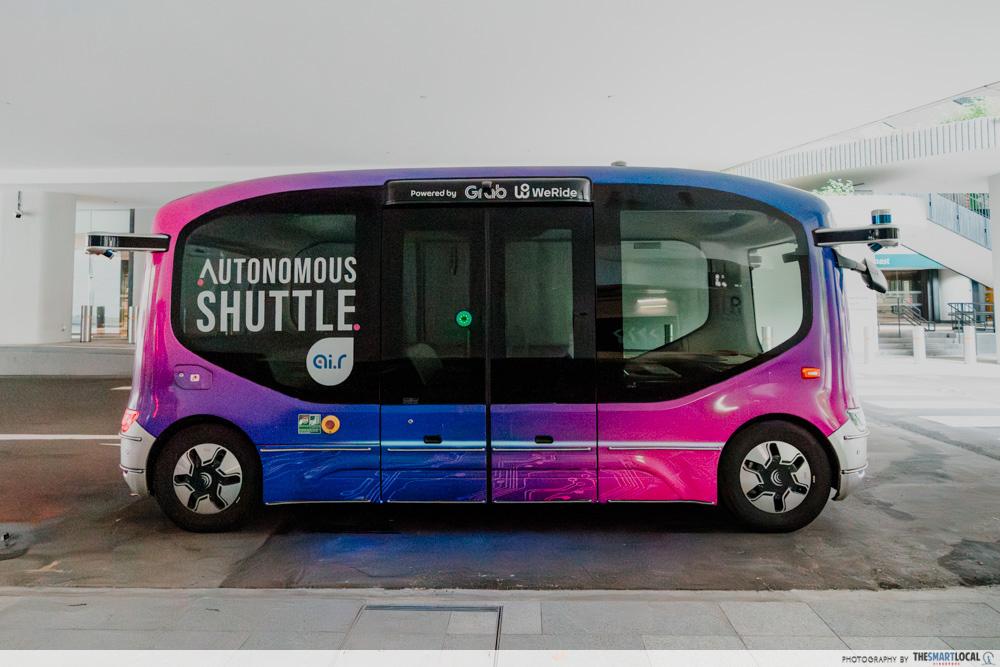
The Robobus from Grab.
We also managed to catch a glimpse of the 8-seater Robobus. With its wide windowpanes all around, it looked like a moving glass box – something out of a sci-fi movie.
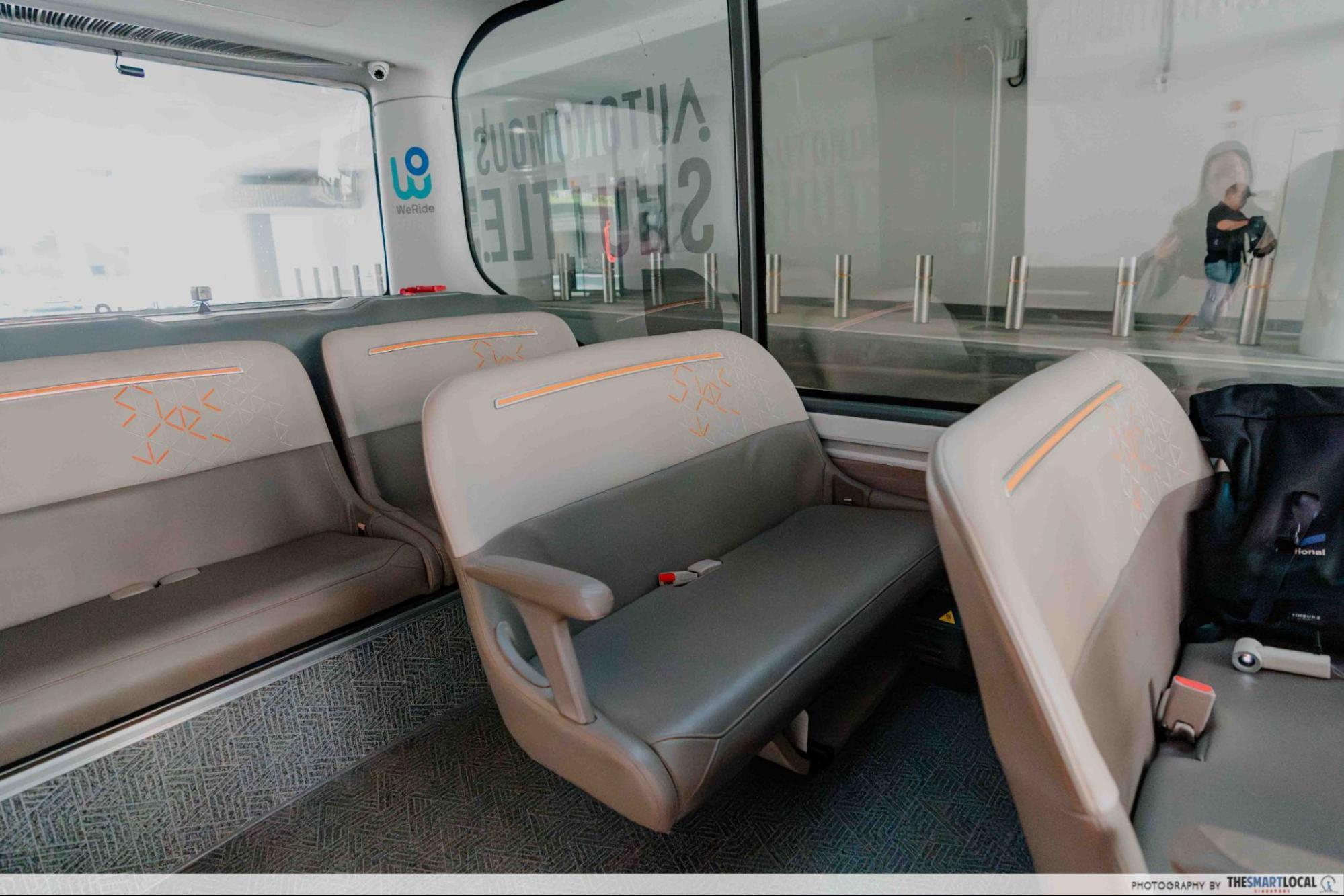
The interior of the Robobus.
We got a sneak peek into the interior, which had smaller seats but looked brighter than the WeRide GXR, thanks to its wide windows.
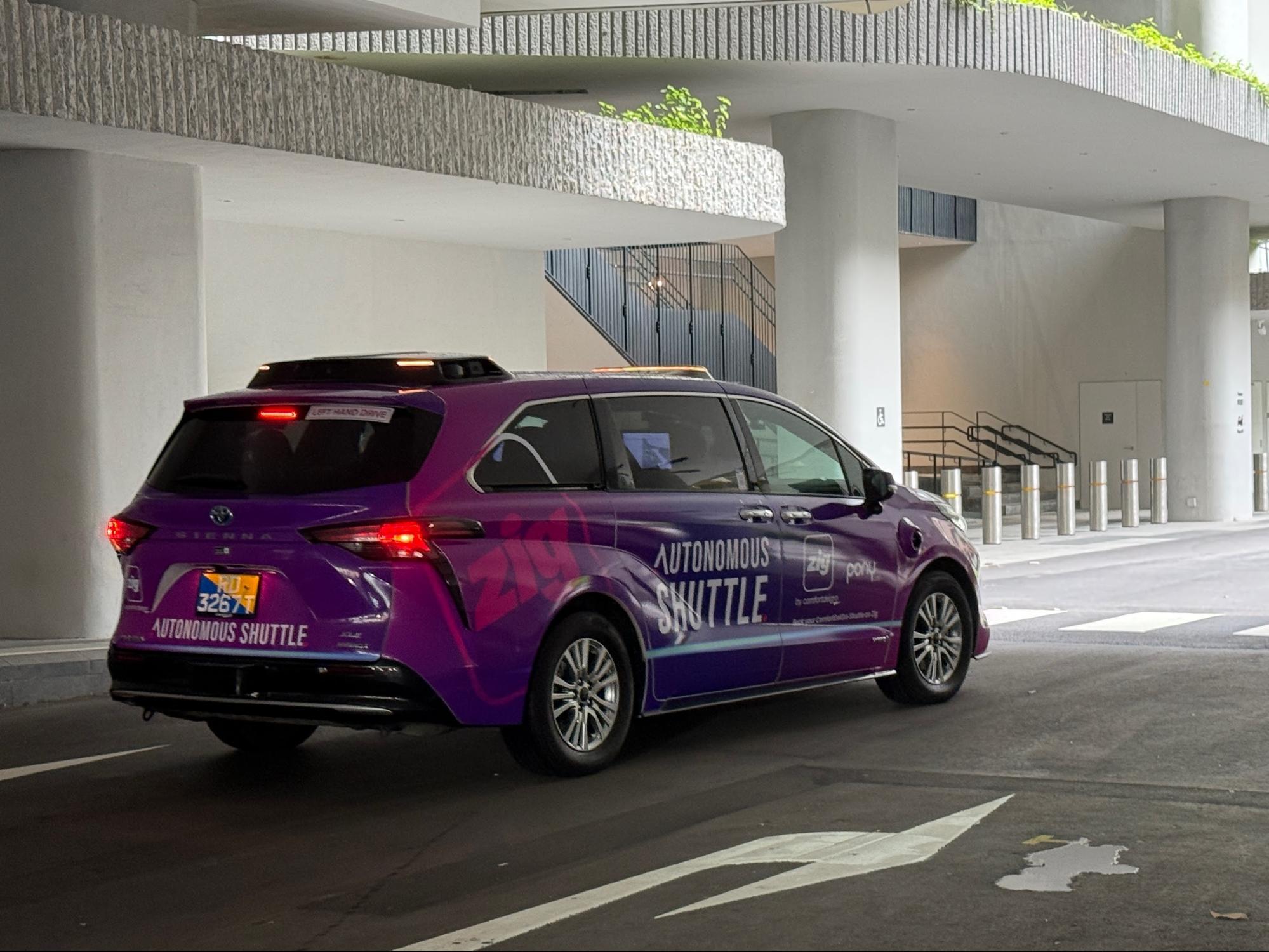
The ComfortDelGro autonomous shuttle.
Image credit: Ong Rui En
We also spotted the smaller ComfortDelGro vehicle along the routes.
Once you’re on the autonomous shuttle
Before the ride started, the safety operator on board reminded us that the vehicle would only move off once everyone had buckled their seatbelts.
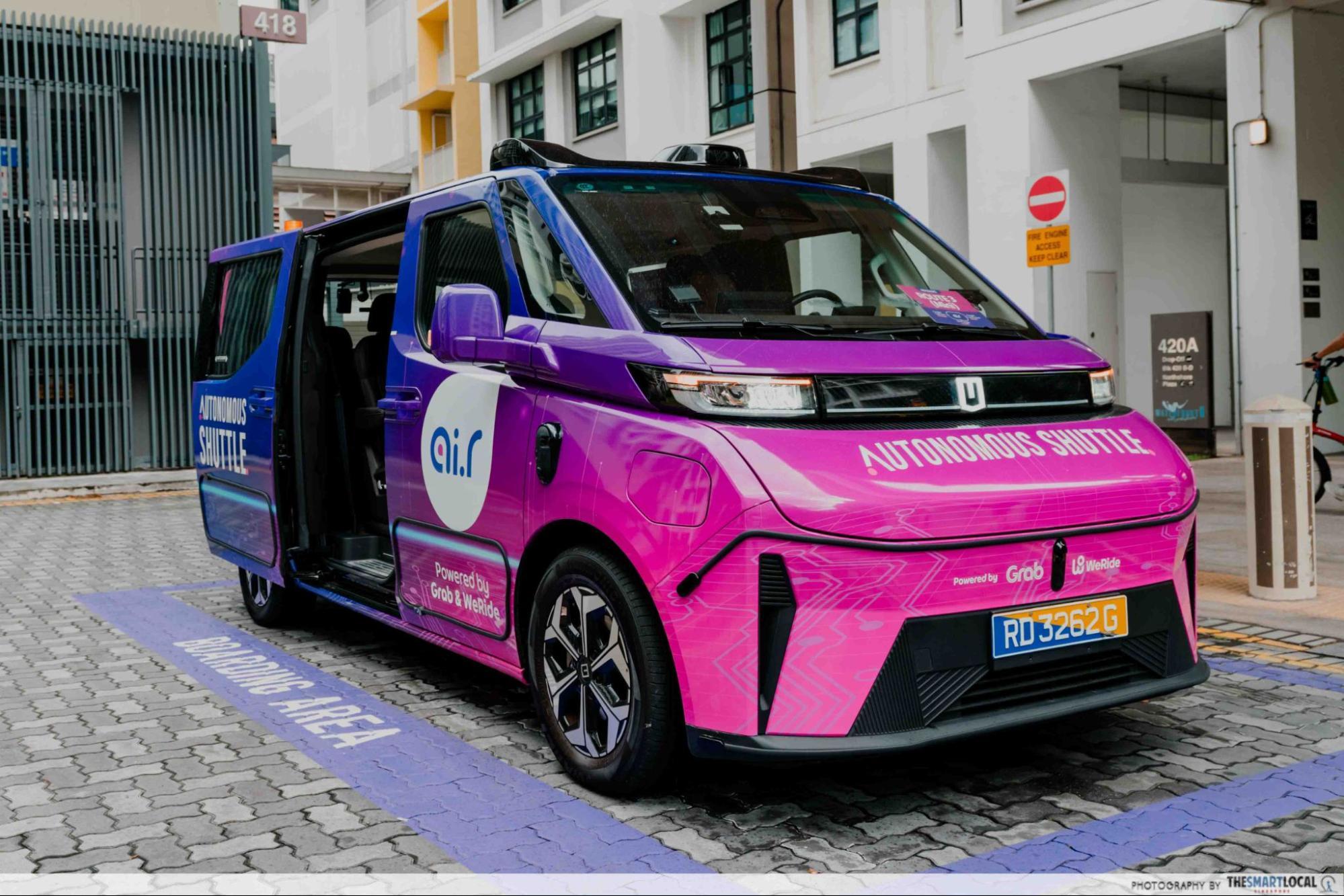
We noticed that the vehicle is a left-hand drive because it is imported from China, and boarding or alighting is from the right door for all stops along all routes.
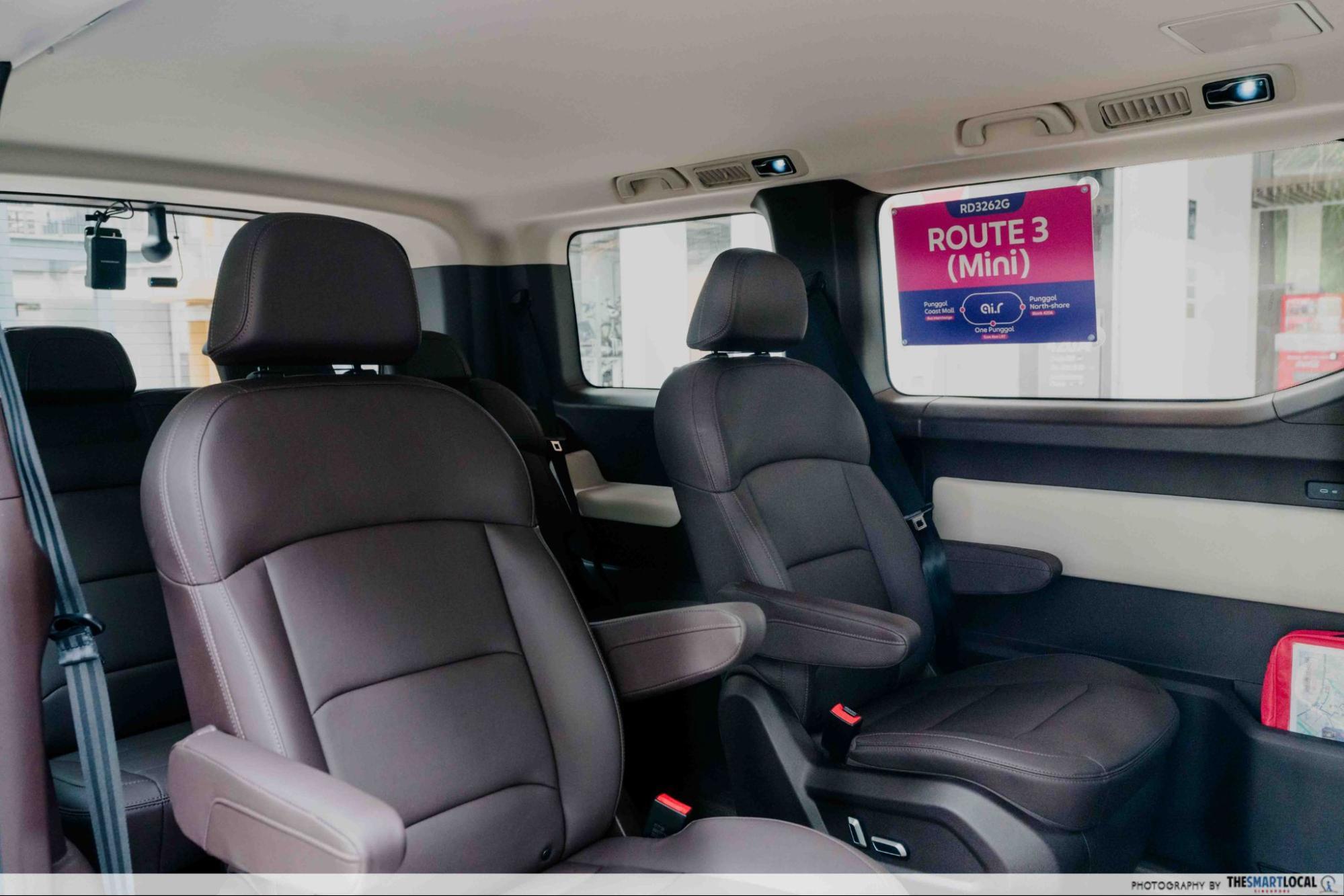
There are 5 large seats and some extra room for your bags. Bulky items like strollers and wheelchairs probably won’t fit, as there is no boot space, and it’s best to keep your belongings to just 1 small bag so everyone has enough room.
The seats can be adjusted forward and backwards to give yourself more legroom and can even recline completely – although we don’t recommend doing that when there are other passengers on board.
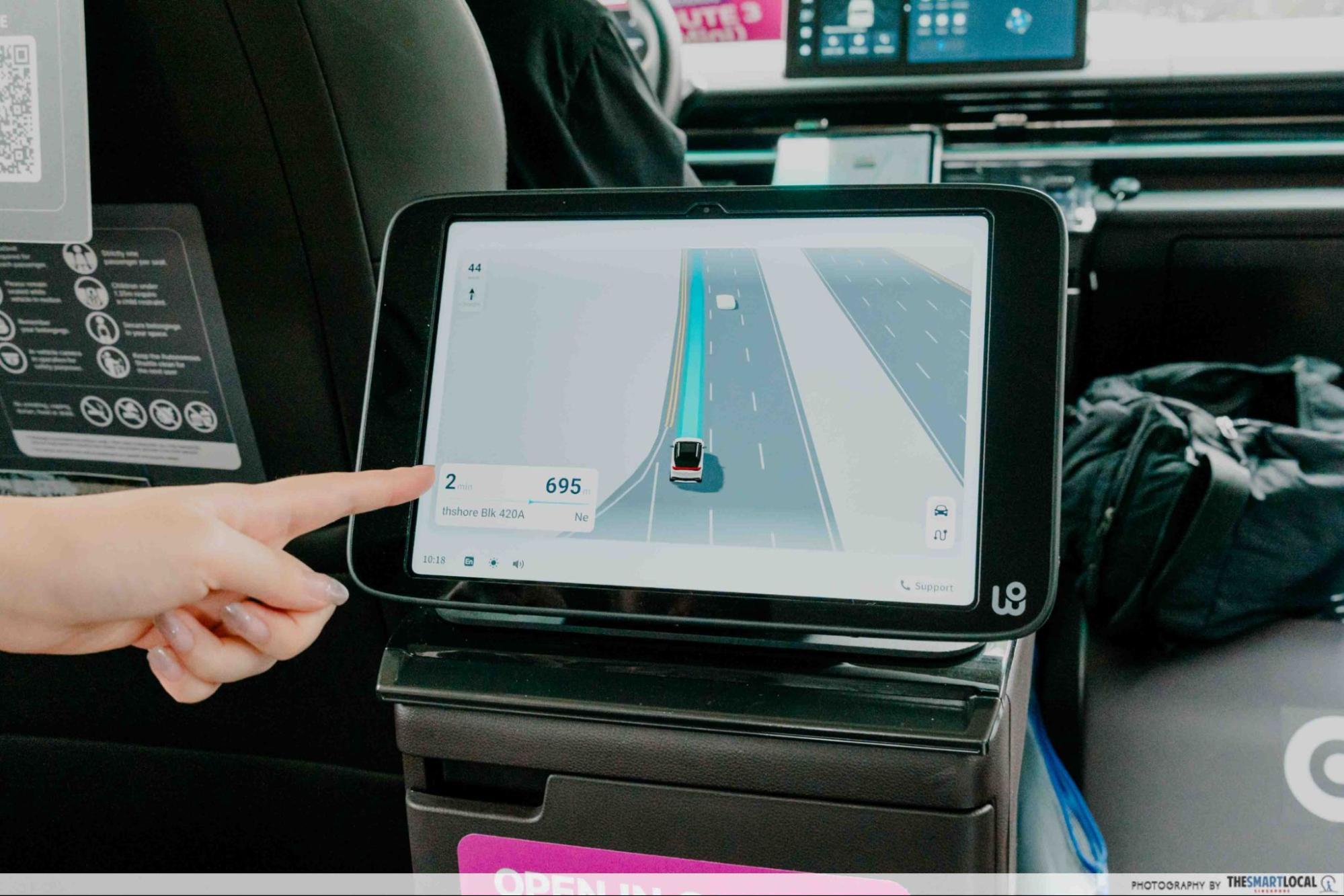
We also noticed that there were charging ports, light-up mirrors on the ceiling of the vehicle, first aid kits, as well as a screen for us to track the route progress and see what the AV is “seeing”. Other vehicles and pedestrians show up as a white block on the road.
Ending the trip
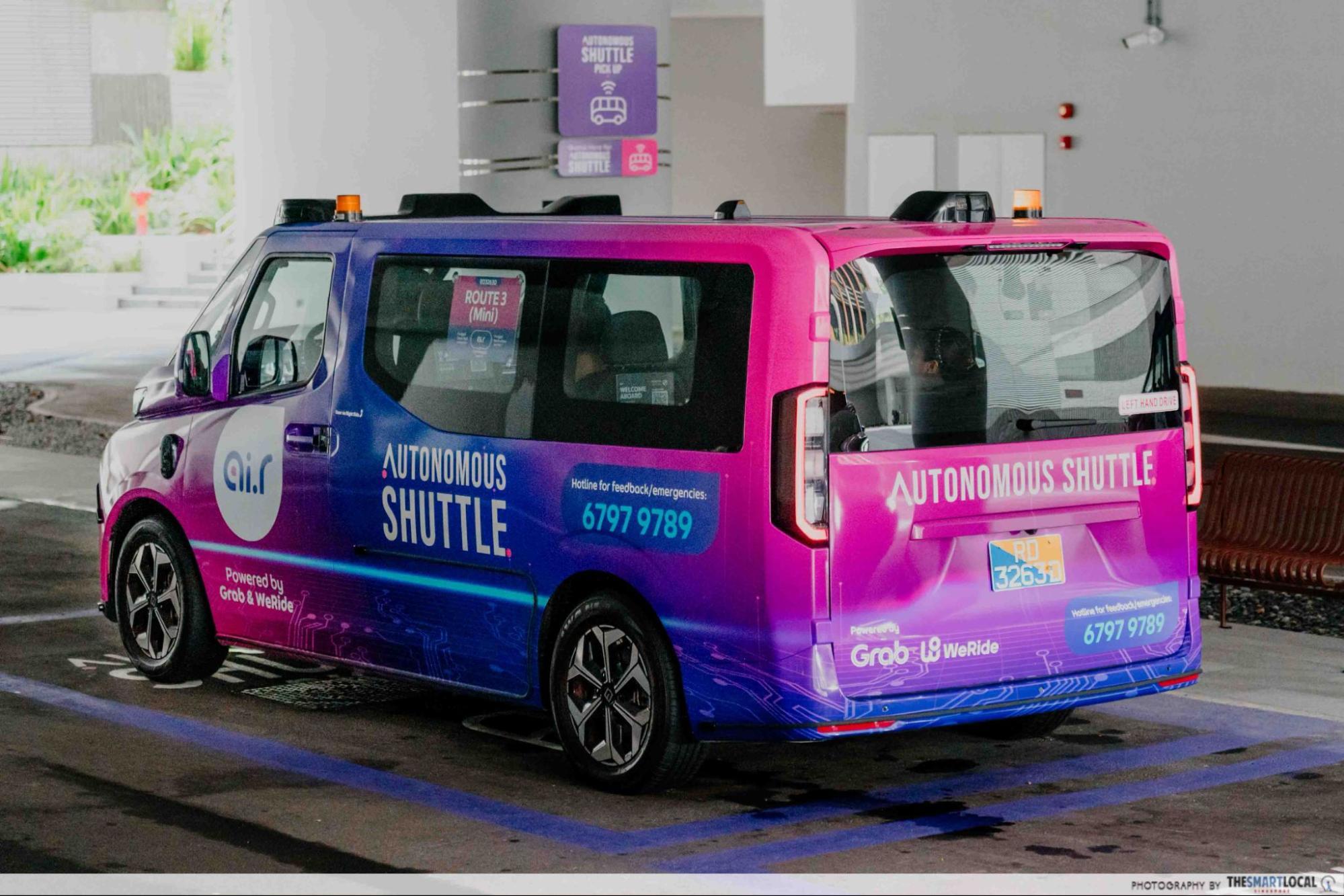
Overall, the ride felt like just any other Grab ride or even better, with how smooth it was. The vehicle kept within speed limits, yet didn’t hog the road. Some people have said that the shuttle moves a little too slow, but I think they’re just used to going too fast. It’s definitely one of the quicker transport options for getting between stops like Punggol Coast and One Punggol that are not directly connected by the Punggol LRT.
And even if you don’t live in Punggol, the autonomous shuttle is worth checking out if you’ve never ridden on one, especially since it’s free now.
How much will fares cost?
The self-driving autonomous shuttles are currently free to ride, and paid rides will arrive with the on-demand service by Grab in Q4 2026. Grab, ComfortDelGro, and LTA are still discussing the fare structure for the standard routes.
There has been some feedback that a flat fare of $4 is too high, but Grab has said that they will offer introductory discounted fares. They’re still gathering feedback to “fine-tune service and pricing standards”. The final fares for the self-driving shuttles are expected to sit somewhere between public transport and ride-hailing prices.
Are self-driving shuttles safe?
Yes, every AV currently has a trained safety operator on board who will stay alert, anticipate any danger throughout the ride, and get ready to step in and manually stop the vehicle if needed. Grab and ComfortDelGro have even set up academies to train driver partners who want to transition into new roles, including safety operators.
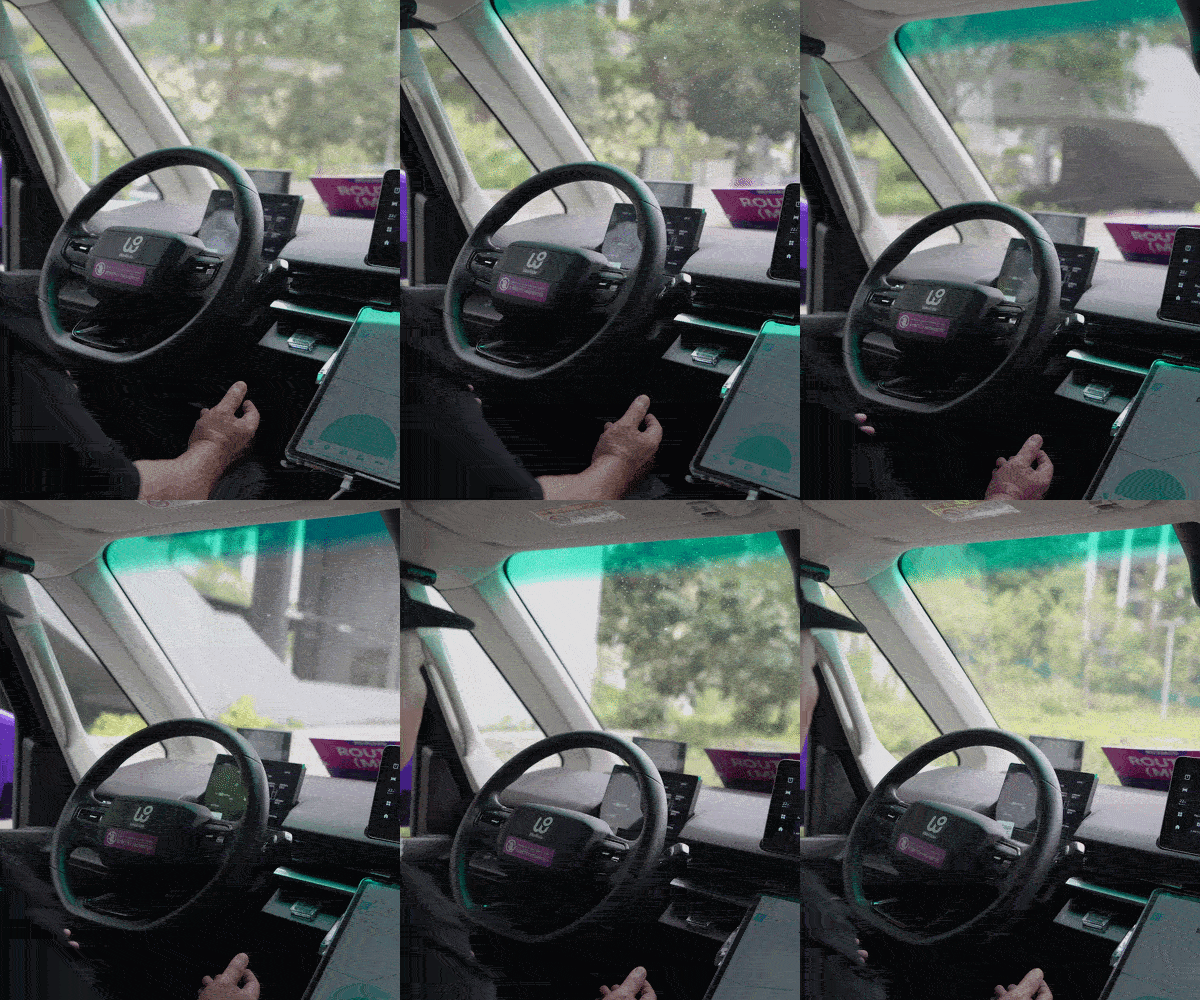
Image credit: Pravin Ramani
According to a safety operator we spoke to, the AVs are already pretty safe on their own and having a safety operator on board at this stage is more for our peace of mind. In fact, once LTA gives the green light, safety operators could no longer be required on board, and you could just have the whole shuttle to yourselves.
That shift is already underway. Grab has certified more than 20 safety operators through GrabAcademy, with another batch in training, and 6 have been further trained as Remote Operators who monitor and manage the fleet from Grab’s AV Operations Command Center rather than from inside the vehicle. ComfortDelGro runs a similar academy for driver-partners moving into AV roles.
The shuttles have also gone through extensive training with a trained engineer and safety operator present, learning every little detail of their assigned routes – from traffic lights and zebra crossings to speed limits.
For other motorists: just treat these shuttles like any other vehicle on the road and obey traffic rules.
The Punggol autonomous shuttles are just the beginning
The neighbourhood is quickly shaping up to be Singapore’s little hub of the future. Whether you’re living there or just visiting, the introduction of the Punggol autonomous shuttles is starting to feel like a sneak peek of 2030, and we’re here for it.
More Punggol-related reads:
Cover image adapted from: The Smart Local, People’s Association
Photography by Pravin Ramani.
Originally published on 29th September 2025. Last updated by Josiah Neo on 5th August 2026.