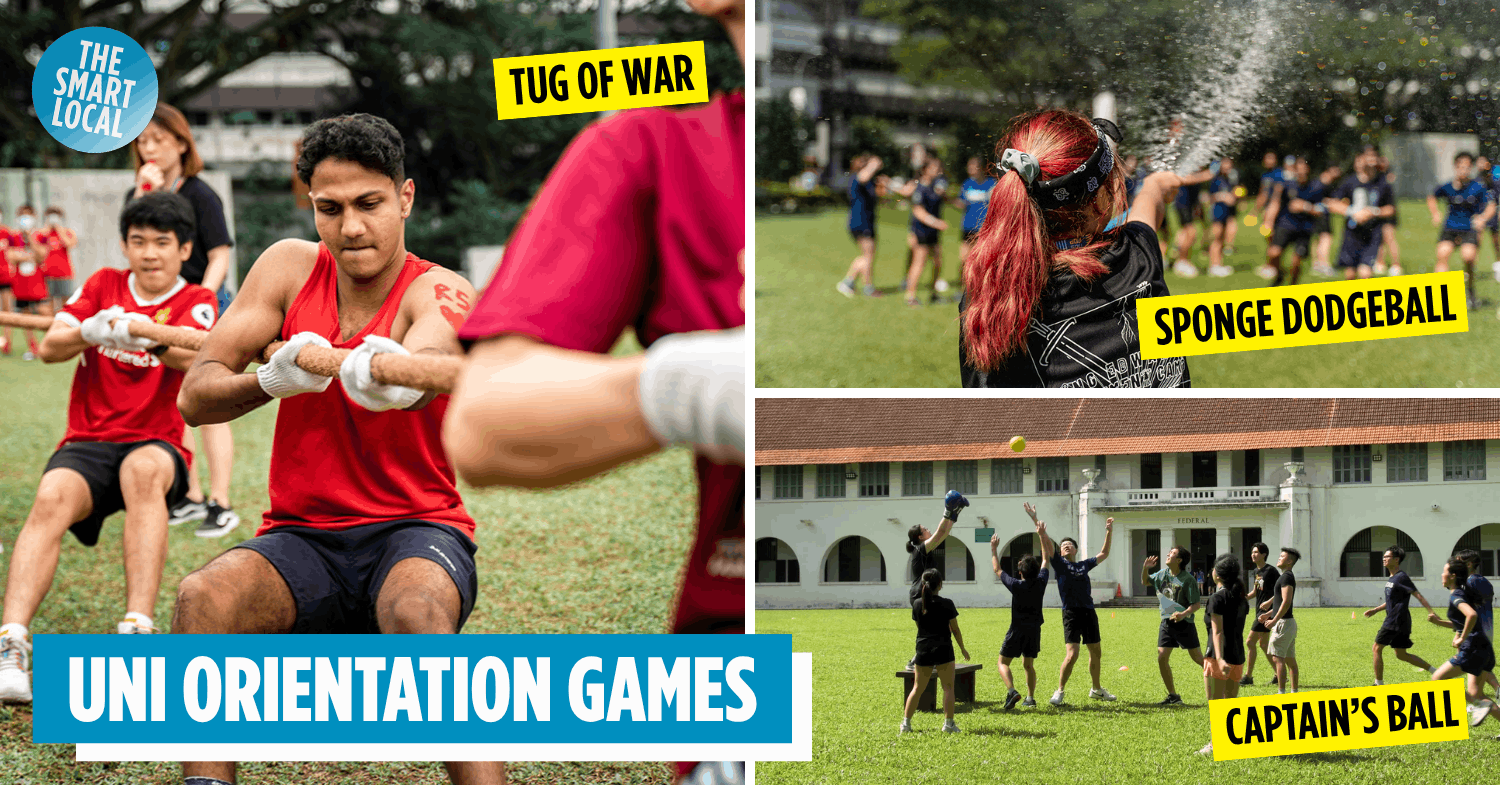

University orientation games
Congrats to all the freshies stepping into the brave new world of university – you’re in for an exciting and slightly chaotic ride. University comes with a whole new set of discoveries, from Telegram groups with alerts on free buffets to learning what hall essentials you’ll need when you move in.
But let’s be real, between the sea of new faces and back-to-back bonding games, taking the first step to join an orientation camp can feel a little overwhelming. So here’s a quick 101 on the fun orientation games you’re most likely to encounter at O’week. Who knows, you might help your team clinch the win and make a few friends along the way.
Table of Contents
1. Caterpillar
The team race where everyone has to move as one
Back in the good old pre-pandemic days, no beach day was complete without a game of Caterpillar.
Teams of 4 to 10 people link up and get into formation to race to the finish line, moving together with the rhythm of a single caterpillar – hence the name.
Players tie their feet together, hold each other’s ankles, or place their hands on the shoulders of the person in front of them. If someone falls out of step or breaks the formation, the team loses momentum or has to start over. The fastest team to beat the rest wins.
Don’t worry, these games are a lot more toned down now when it comes to physical contact, but you can always let your Orientation Group Leaders (OGLs) know if you’d prefer to sit out of some games too.
Pro tip: Find someone on your team with the loudest voice to shout out when to move together. It’s also a great excuse to get to know your campmates – someone’s choir training or NCC experience could end up being surprisingly useful.
2. Sponge dodgeball
A water-soaked showdown that rewards quick reflexes
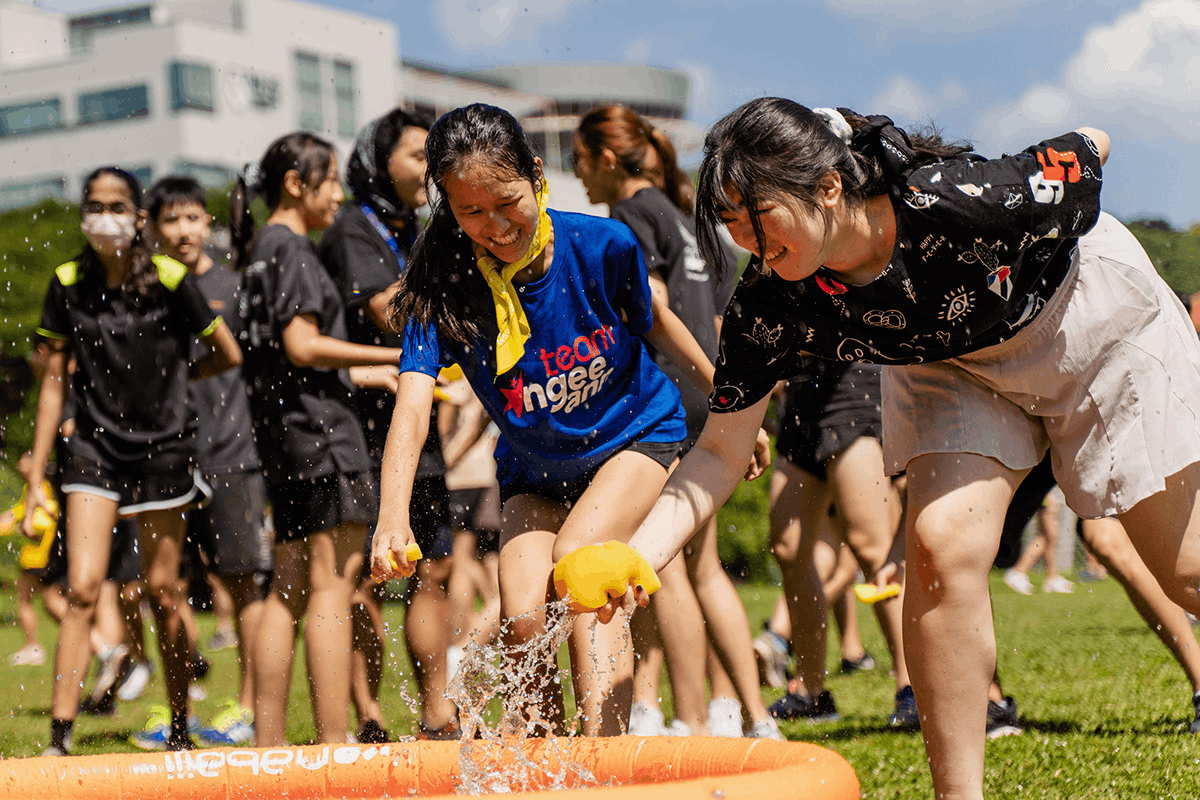 Image credit: Benjamin Gu
It’s time to put your reflexes to the test. Another classic beach day game is sponge dodgeball, where players launch soaked sponges at each other in a Wipeout-style battle.
Campers are split into 2 opposing teams, each lined up on either side of a playing field. Buckets of wet sponges are placed either in the centre or on both sides of the field, depending on the set-up.
Either way, the objective is the same – hit a player from the opposing team with a sponge to eliminate them from the game. If a player catches an opponent’s thrown sponge before it hits the ground, the thrower is out, and the catching team can bring 1 of their eliminated players back into the game.
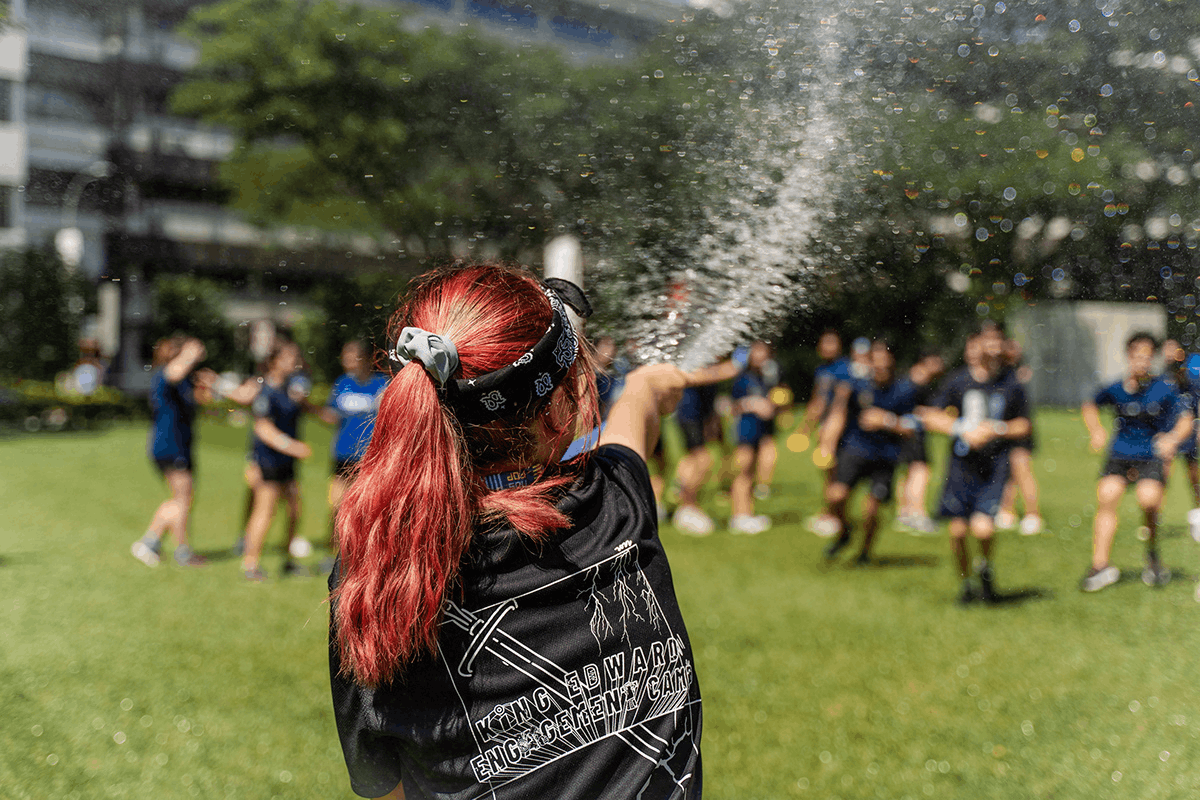
Image credit: Benjamin Gu
The game continues until all players on 1 team are eliminated, or until you run out of time, and the team with the most players left on the field wins.
There’s no way to stay dry in this game, but there are tricks to win before you get drenched from head to toe. Grab the fully soaked sponges first – the heavier they are, the farther and faster they fly. When throwing, turn your body sideways to make yourself harder to hit, and aim low at your opponents’ legs and shins so it’s trickier for them to catch the sponge.
3. Battleship
Take down opponents you can’t see with sponges
For a more chill version of sponge dodgeball, look no further than Battleship. In this wet game, players sit behind a barrier in fixed positions with their weapons of choice – you guessed it, sponges. The twist is, you’ll need to take out players on the other side of the barrier without being able to see where they are.
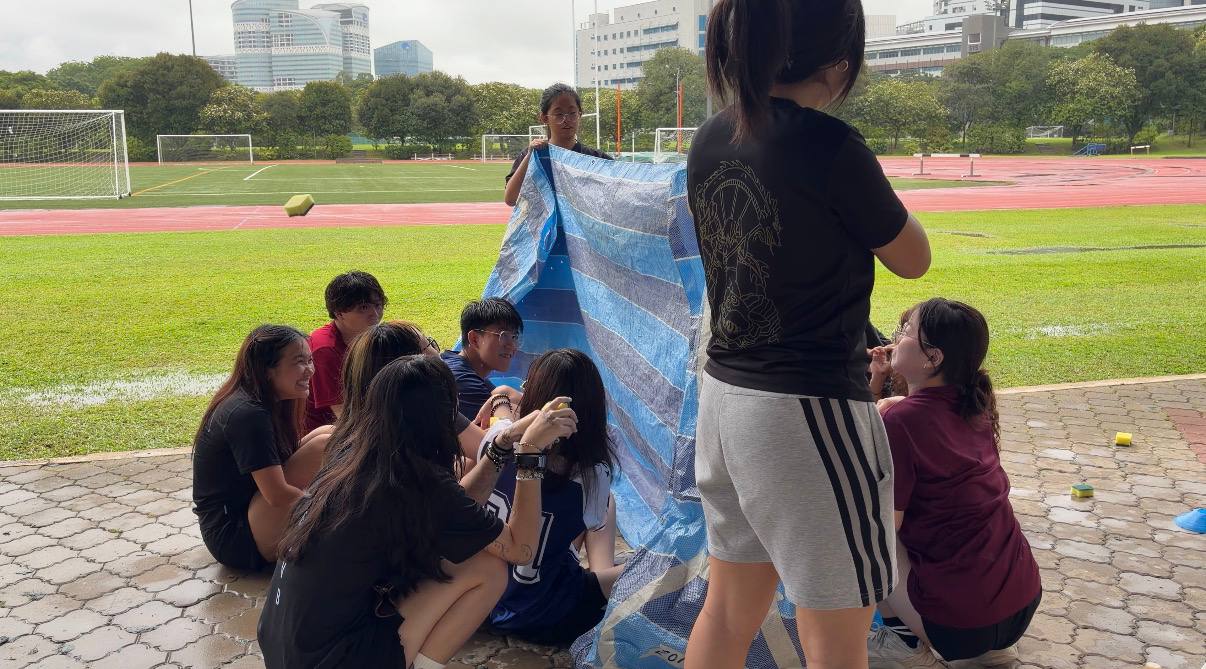 Image credit: NUS College of Humanities & Sciences Arts Camp 2026
Before the game starts, each team must strategise and decide how to position their players around 10 cone markers, after which positions cannot be changed. Teams need to put their heads together to figure out how to protect their own players while eliminating as many opponents as possible.
Once the game starts, players can only throw when their assigned number is called by the Gamemaster. The last team standing wins, but if both teams are still in play after 15 minutes, the team with fewer eliminations against them takes the round.
Your best shot at winning is spreading your teammates out, so you don’t risk multiple players being eliminated at once.
4. Team Pen Challenge
The game that turns a simple sketch into a team puzzle
The Team Pen Challenge is less physically taxing, but just as challenging as the rest when it comes to coordination and teamwork.
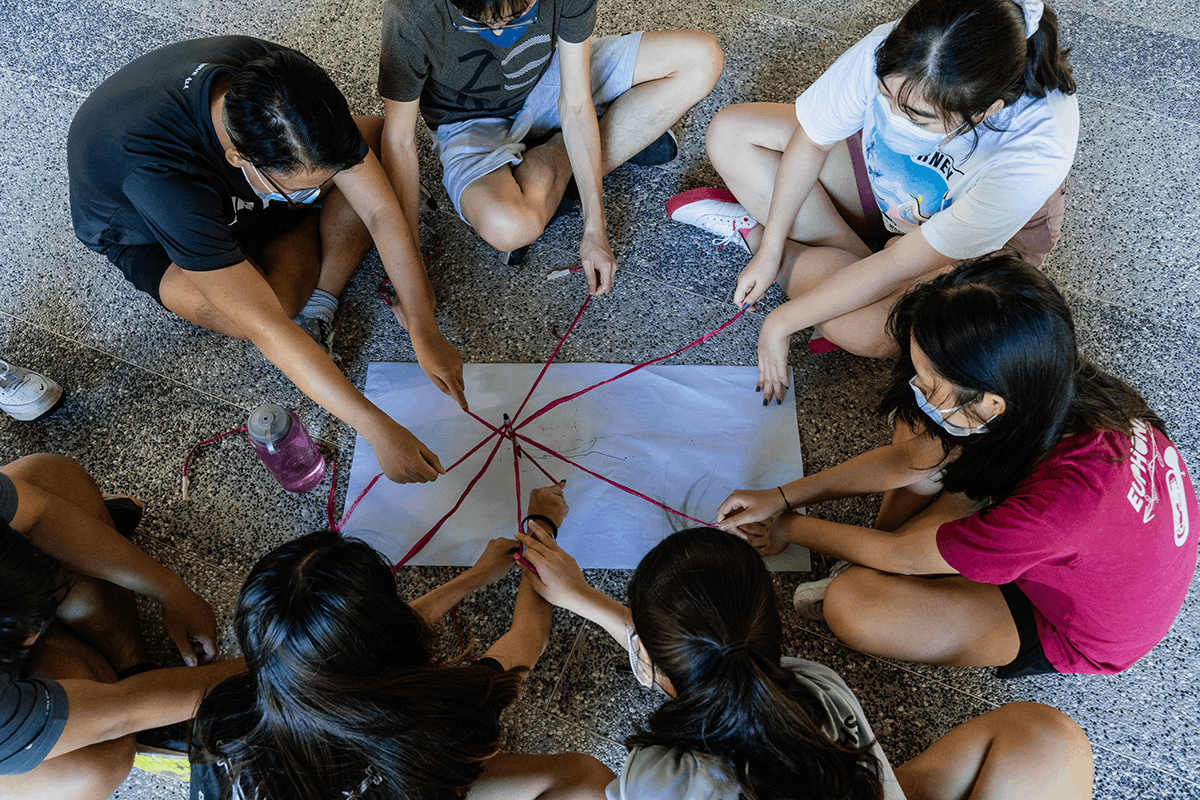 Image credit: Benjamin Gu
A single marker or sketch pen is attached to multiple strings, 1 for each player. As a team, you need to manoeuvre the pen by pulling or loosening each specific string without physically touching the pen itself. Think of it like a spider’s web, where each string affects all others.
You’ll be tasked to draw a simple shape, recreate a line drawing, or write a word on a blank sheet of paper. The hard part is keeping the pen upright, as every team member must keep their string taut but not overly tight to avoid flipping the pen.
To make things easier, nominate 1 person with a clear view of the paper to act as the team’s “eyes” and give verbal directions, like what direction to move in and when to lower or lift the pen.
5. Minefield
Find your way through obstacles with your eyes closed
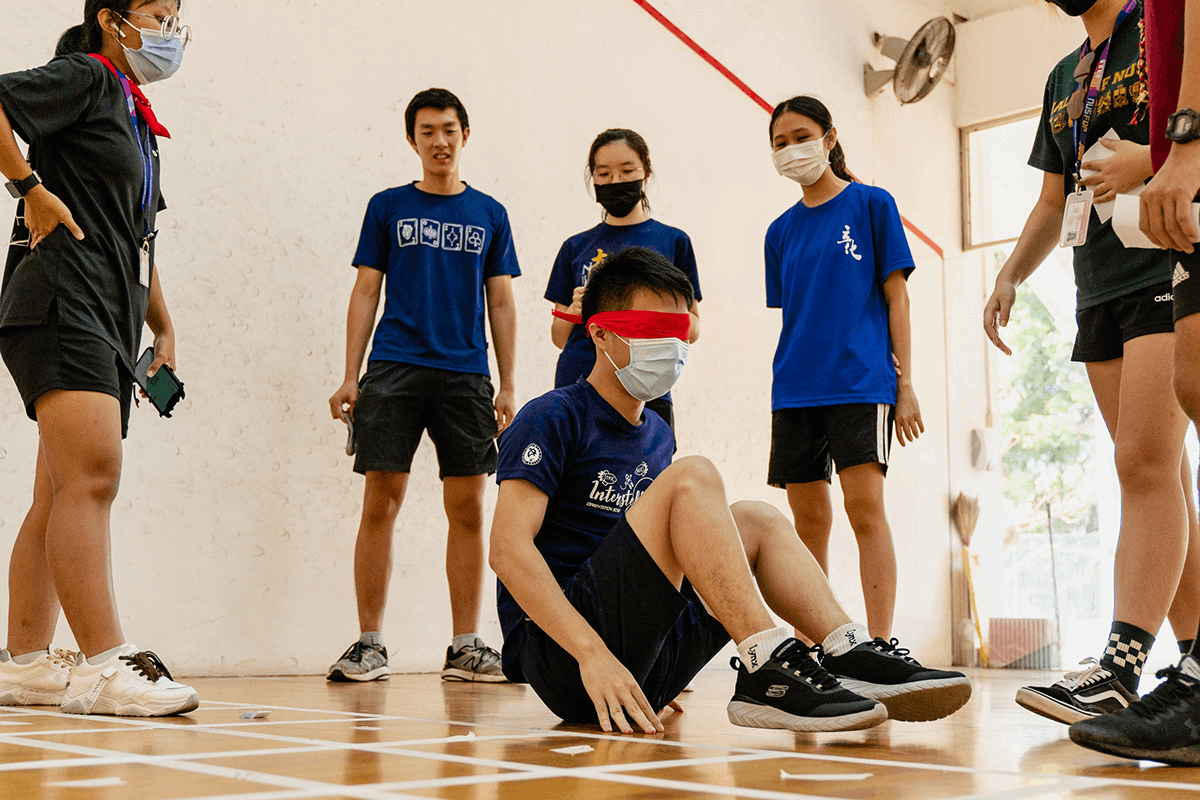
Image credit: Benjamin Gu
If you thought The Floor Is Lava was tough, wait till you try Minefield. Your team’s mission is to help a blindfolded teammate navigate an obstacle course through verbal instructions only.
Random objects like balls or cones, or taped-off zones, are situated all around a demarcated space to serve as “mines”. The blindfolded team member must avoid these mines and make it to the end of the course, relying only on their team’s feedback to steer them the right way.
If the blindfolded player touches or steps on a mine, they must restart from the beginning. Once they successfully exit the minefield, they’ll switch roles so other players get a turn.
One way to beat the game is by using clock-face directions, like telling your teammate there’s a mine at their “12 o’clock”. Fair warning, it might trigger some NS flashbacks for the guys, but hey, it does work pretty well when things get chaotic.
6. The Balancing Game
A deceptively simple race that tests your coordination
Also known as the egg and spoon game, The Balancing Game requires participants to race to the finish line while balancing an egg on a spoon. The egg is usually replaced with a ping pong ball, and in more difficult versions, the spoon is replaced by chopsticks.
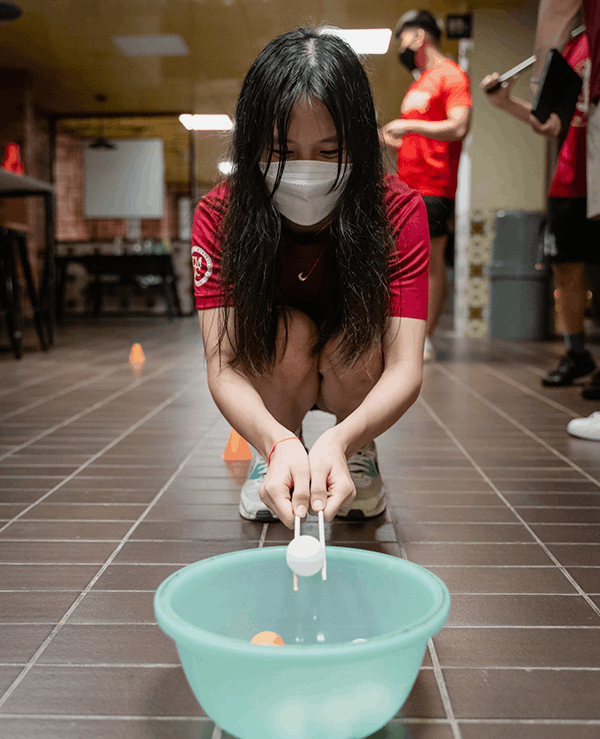
Image adapted from: Benjamin Gu
To play, participants line up at the starting line with the ping pong ball balanced between their chopsticks. On the “Go” signal, they walk or run to the finish line. If the ball falls, the player must either restart or stop, rebalance the ping pong ball on the chopsticks, and then continue. Adjusting the ball with your free hand is usually not allowed.
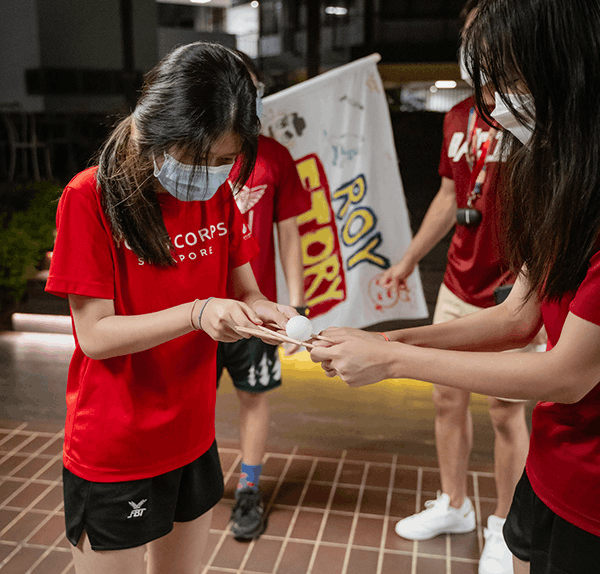
Image adapted from: Benjamin Gu
Sometimes this is played as a relay race, so small teams of 4 or more must pass the ping pong ball to each other without dropping it. The goal is to reach the end first without dropping the ball.
You’ll probably be tempted to look ahead of you, but keep your eyes on the ball and your head in the game – bonus points if you caught that High School Musical reference. Don’t grip the chopsticks too tightly or you’ll end up shaking the ball loose, and avoid looking up too often or you’ll drop it faster than you think. Slow and steady really does win this race.
7. XOXO / Human Tic Tac Toe
The tag-team edition of a childhood classic
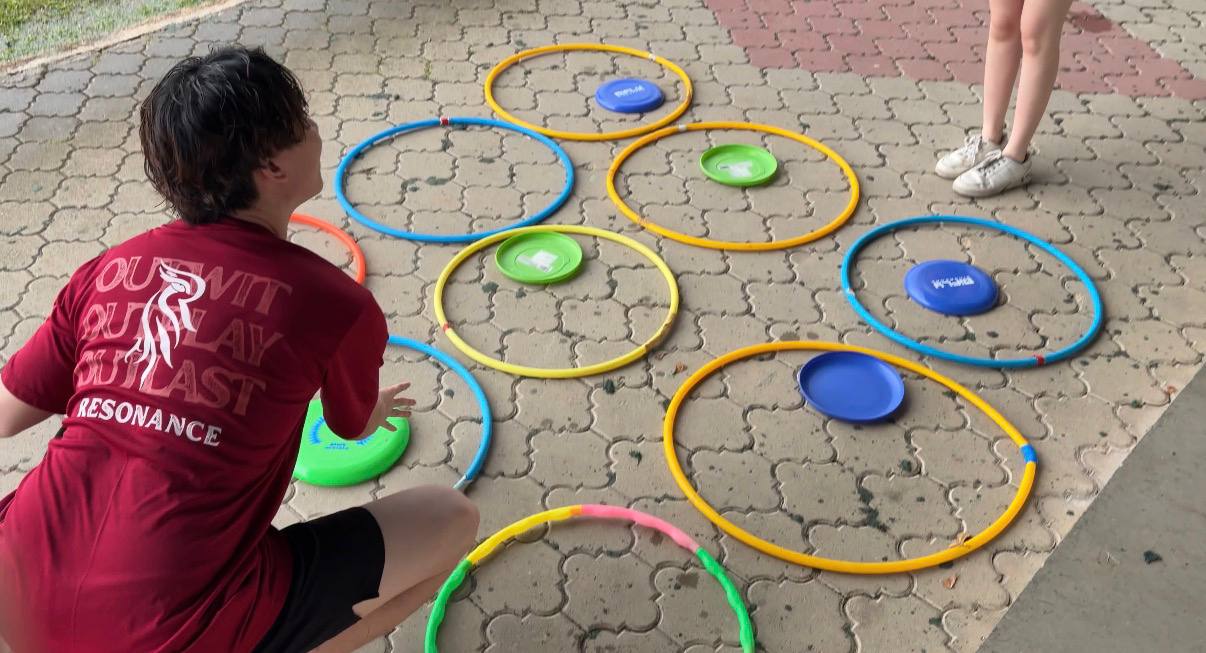 Image credit: NUS College of Humanities & Sciences Arts Camp 2026
Tic Tac Toe might be straightforward on paper, but Human Tic Tac Toe – or XOXO – takes the game to a different level. Like the egg and spoon race, this game puts your balancing skills to the test.
Players start from behind a line and move one at a time towards a Tic Tac Toe grid made up of 9 hula hoops. The catch? They must hold a plastic bowl of water over their head with 1 hand, making sure not to drop or spill it the whole time.
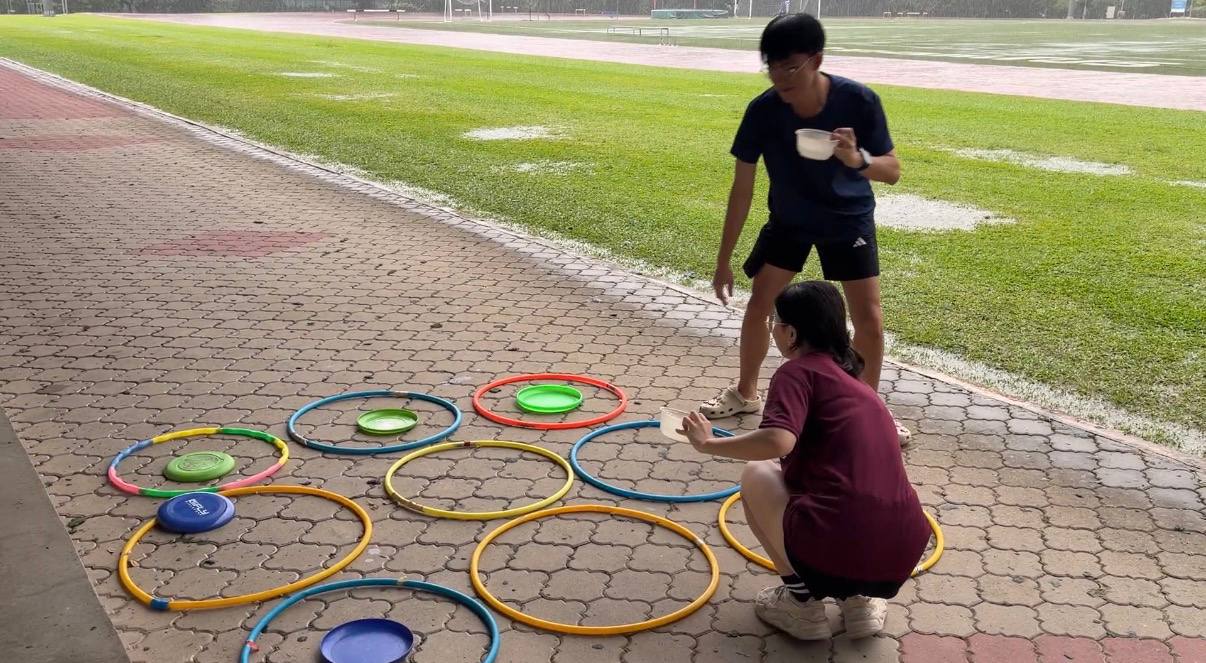 Image credit: NUS College of Humanities & Sciences Arts Camp 2026
The first 3 players from each team place their team’s frisbee discs into the empty spaces. Every player after that must shift their own team’s discs to either form a line of 3 to win, or block the opposing team from winning. The objective is to win as many rounds as possible.
The age-old Tic Tac Toe move still applies here – secure the centre slot early so you can form a line before the other team steals your spot.
8. Head pong
Pass ping pong balls using only your head
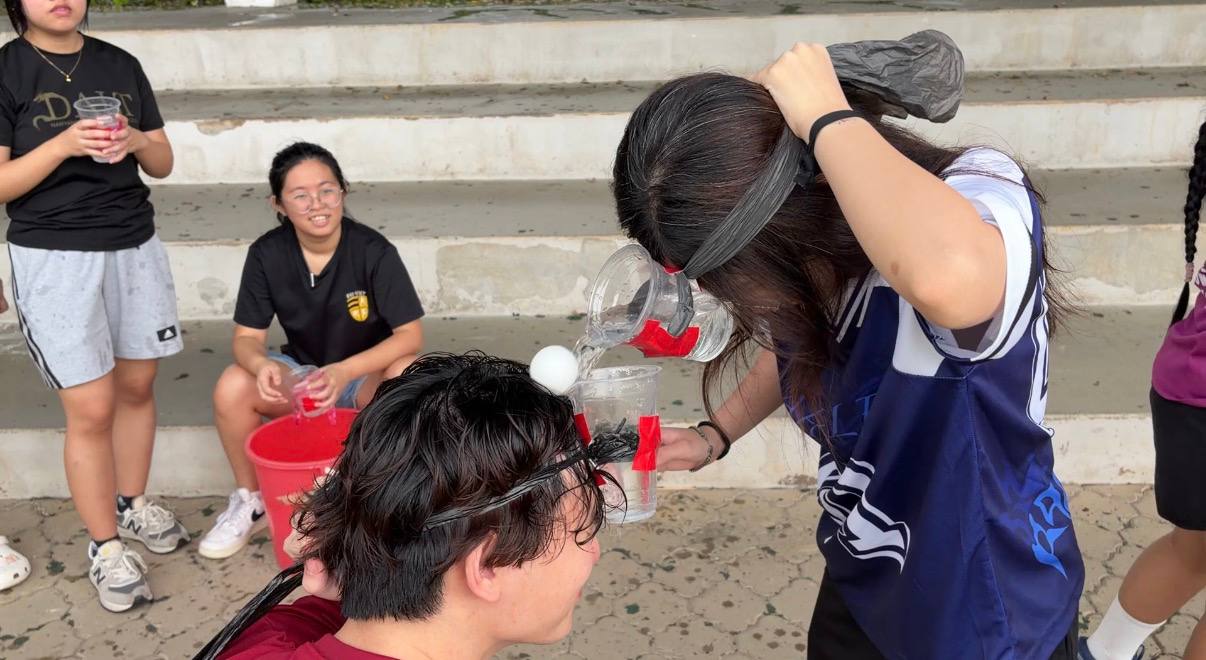
Image credit: NUS College of Humanities & Sciences Arts Camp 2026
It feels like every college show or movie seems to have a mandatory beer pong scene, but don’t let the name fool you; head pong is an entirely different game, though it sounds similar.
Players start with a cup of water attached to their head. They each take turns tipping ping-pong balls into the cup attached to their team member’s head by moving only their head. Depending on the round, players have to pass the balls either forward or sideways. The team that successfully moves the most water and ping pong balls wins.
Heads up: If you know the round is forward passing, try pairing teammates of similar height so you don’t spill as much when passing.
9. Balloon Drop
Get the balloon into the bucket without letting it fall
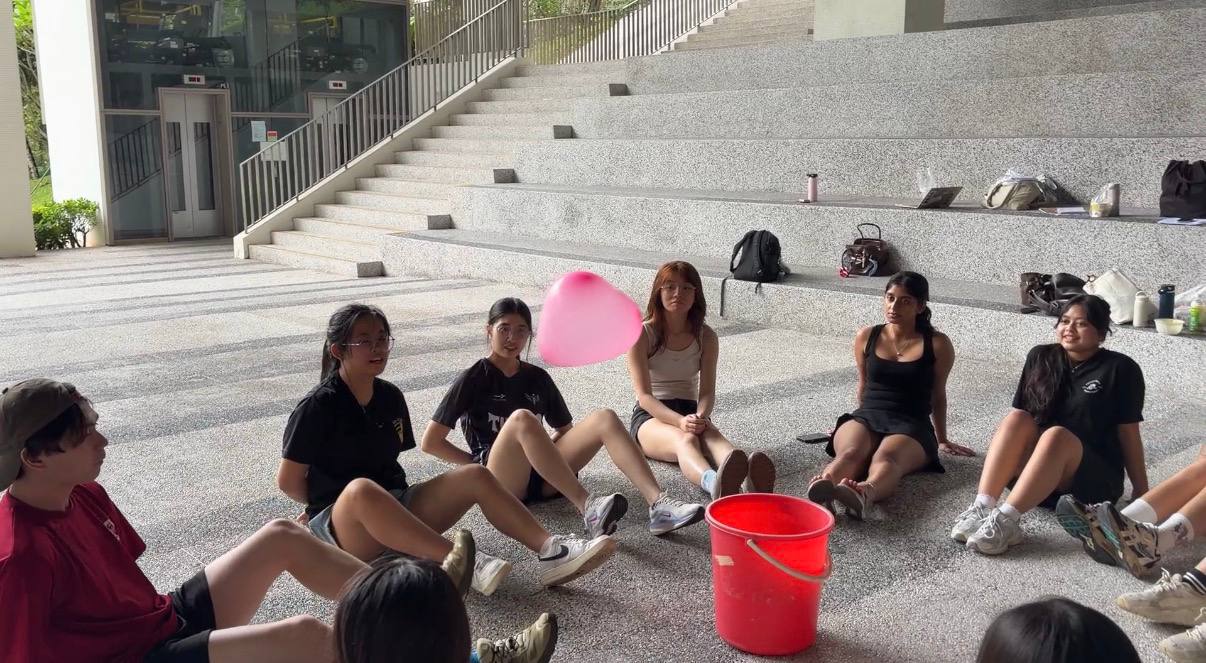 Image credit: NUS College of Humanities & Sciences Arts Camp 2026
For anyone who survived those viral at-home core workout challenges a few years back, this one’s going to feel a little too familiar.
Balloon Drop is one of the few games on the list that lets you play while sitting down, so you can finally catch a break from running around.
Players sit in a circle and work together to guide a balloon into a bucket placed in the centre, using only designated body parts to move the balloon. You’ve got just 7 minutes to get it in. Sounds easy, until you realise how chaotic it gets. If the balloon touches the ground, the Gamemaster will reset the round by dropping the balloon back into the circle.
Time to strengthen those core muscles and maybe stop skipping leg day.
10. Captain’s Ball
AKA everyone’s favourite recess game
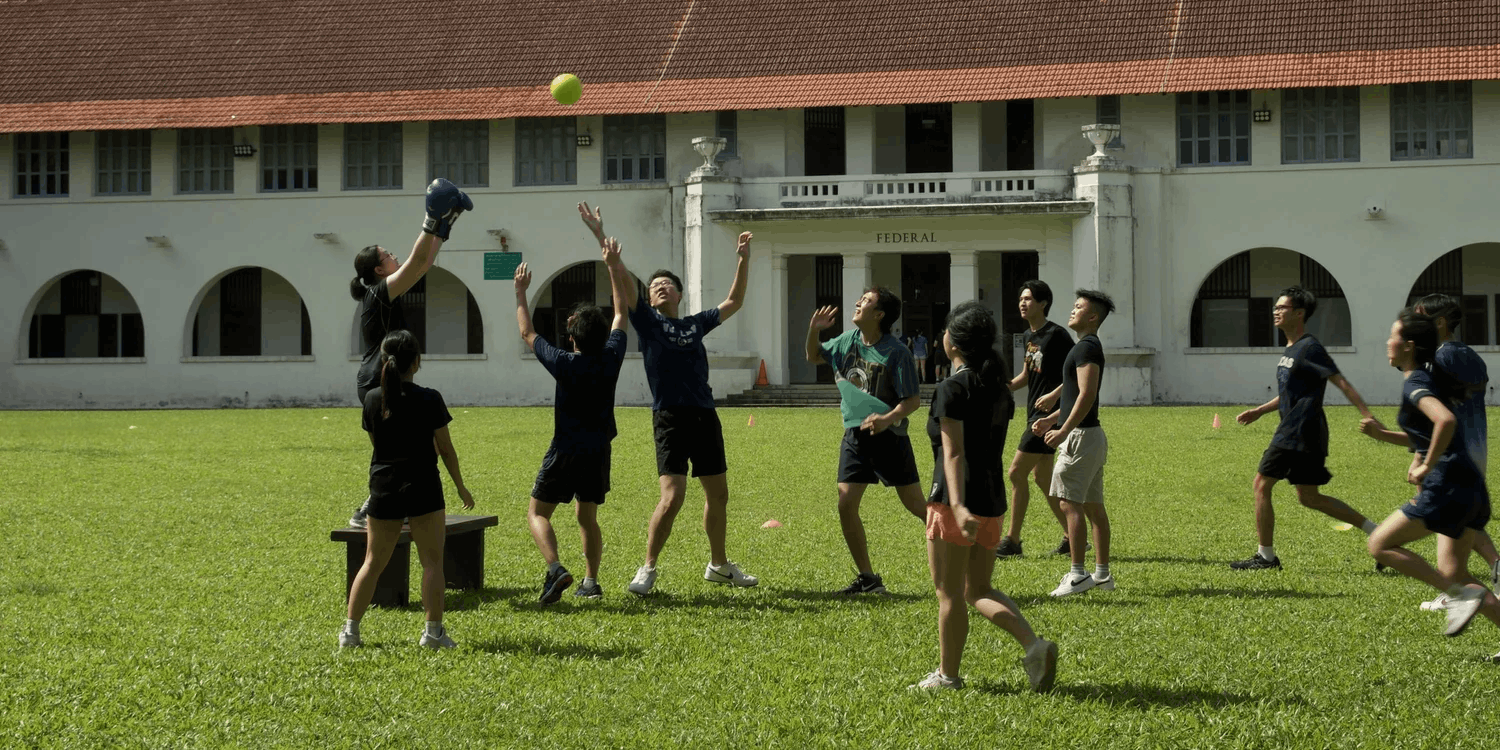
Image credit: NUS Law Orientation
You’ve probably played this with friends during PE lessons before, but here’s a quick recap in case you forgot.
Captain’s Ball is essentially a mini netball game, but with a captain or catcher instead of a goal ring. Each team’s “Captain” stands on a bench at one end of the court, and a “Defender” defends the opposing team’s captain. The rest of the players are runners – there’ll be 5 to 10 players on the court at a time.
Players can’t hold the ball for more than 5 seconds, and they’re also not allowed to run with it or dribble it like in basketball. Instead, they must pass the ball to teammates to move it up the court. A point is awarded when a teammate successfully passes the ball, and the captain catches it with both hands without losing their balance on the stool.
P.S. Assigning players to shadow key shooters isn’t exactly a secret weapon, but it’s still an effective way to intercept passes and boost your team’s chances of winning.
11. Tug of War
The ultimate test of strength and teamwork
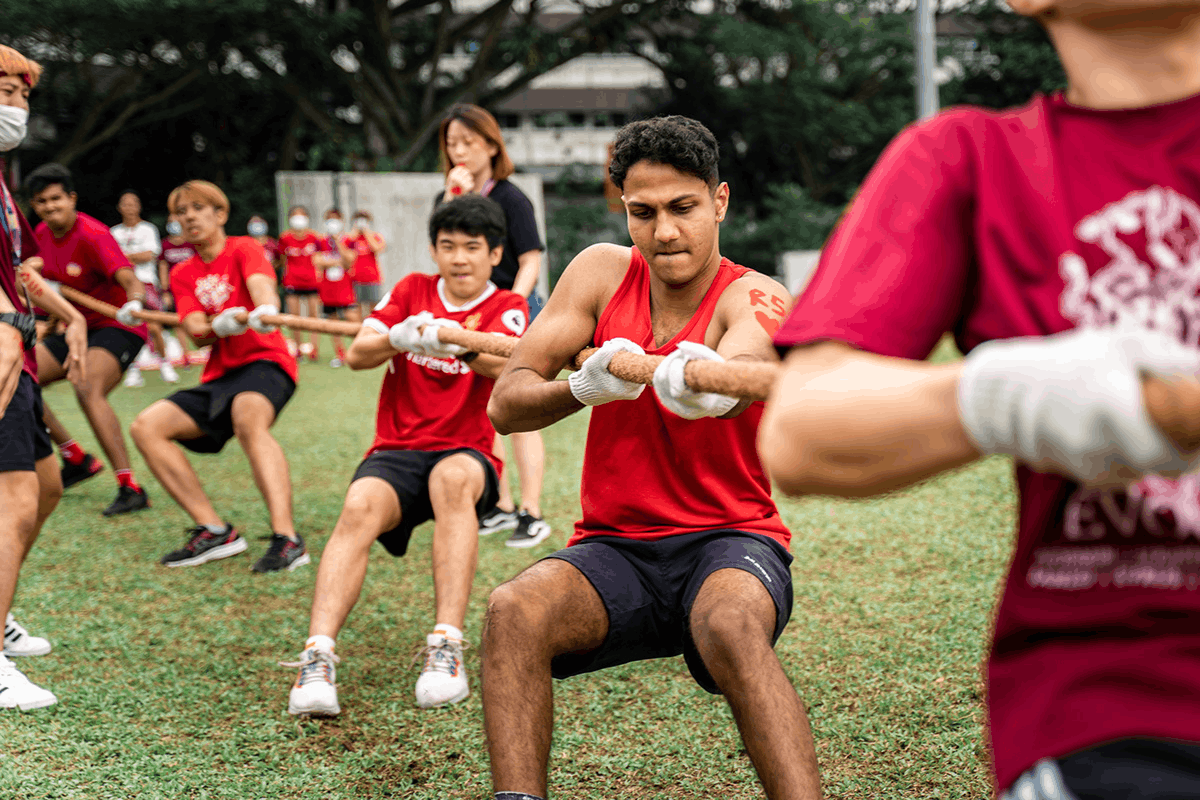
Image credit: Benjamin Gu
Another staple of any orientation camp, Tug of War is not for the faint-hearted – though it’s thankfully way less intense than the version in Squid Game. Fun fact: the exact time and place the game originated are a total mystery, but it’s popped up all over the world, from Egypt to Hawaii and Japan to South America, across centuries.
The setup is simple – a centre line is marked on the ground, and a handkerchief is tied to the middle of the rope. 2 opposing teams of equal numbers line up on either side, and both teams pull the rope on the referee’s signal.
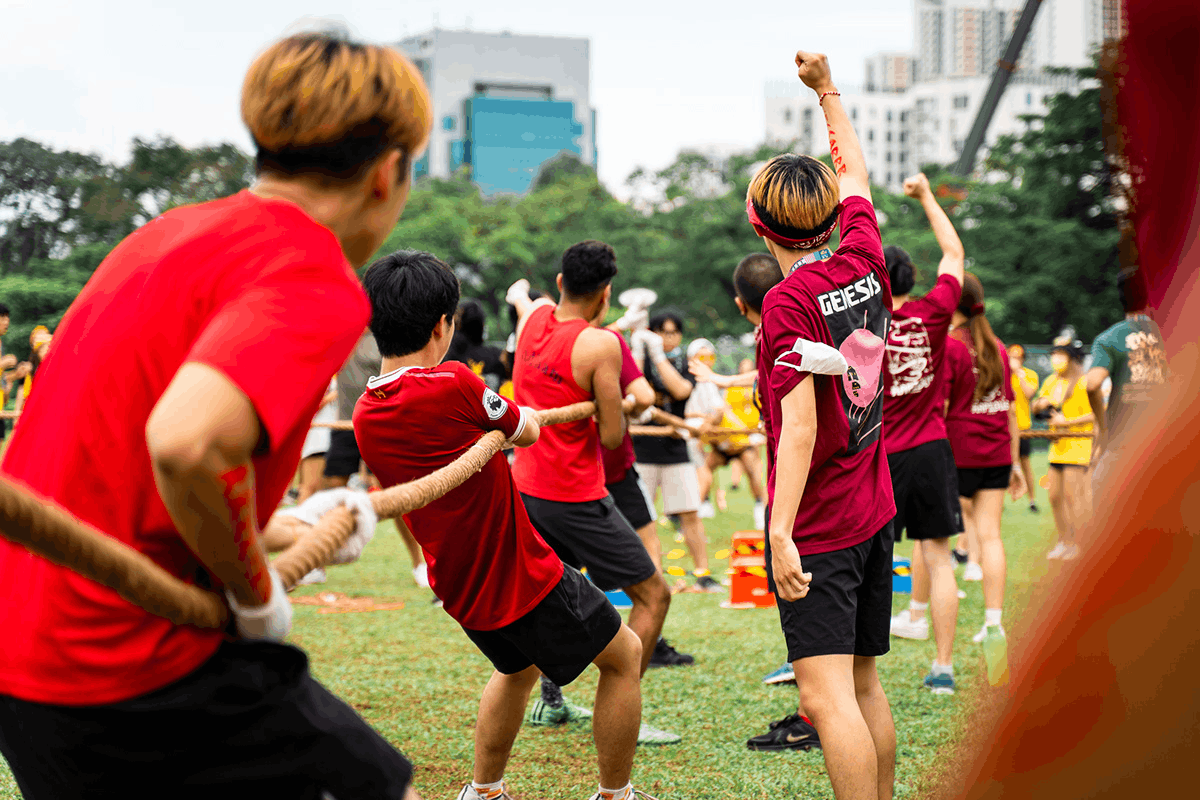
Image credit: Benjamin Gu
The 1st team to yank the marker far enough onto their side so that the centre marker passes into their territory wins. Games are usually best-of-three.
Pro tip: Line your team members up with the shortest in front and tallest at the back to create a slight downward pulling angle, and position your heaviest and strongest team member at the very end of the rope to secure your baseline.
Bonus: Amazing Race
A campus-wide scavenger hunt with mini games
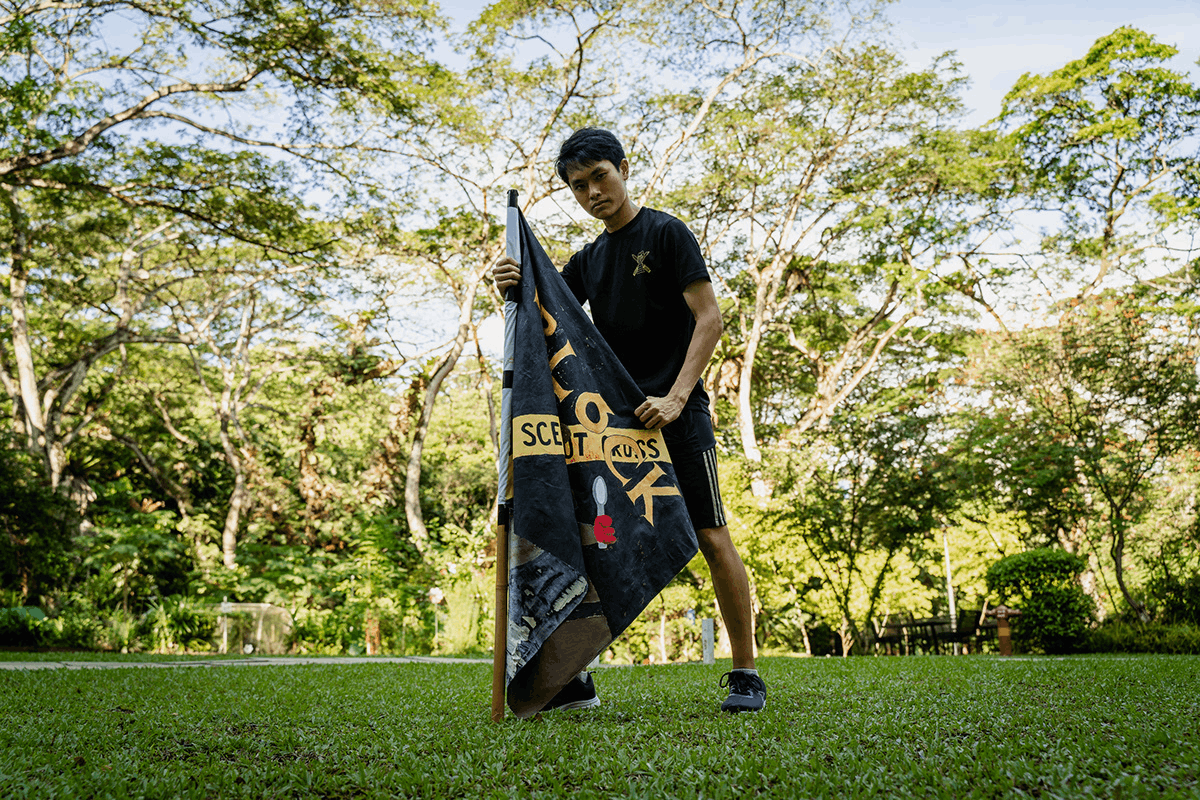
Image credit: Benjamin Gu
Not to be confused with the American TV show of the same name, the orientation camp version of Amazing Race sends freshmen on a scavenger hunt to complete challenges at stations, usually found at key locations, so they can quickly learn their way around campus.
These station games tend to be more chill, like beanbag toss, where players throw beanbags into holes from a distance to score points. Another example is the bottle cap flick, where the goal is to slide bottle caps as close as possible to a target.
Make fun memories with these orientation games
It’s always handy to remember that the goal of any orientation camp isn’t to become a pro at the games or win the team-based competitions, but to get comfortable with making small talk and becoming familiar with your peers.
Don’t worry if you don’t hit it off immediately with anyone either; you’re bound to find your tribe in time – you have 3 to 4 years ahead to meet friends after all. Just be open to trying new things and putting yourself out there, whether it’s making new connections or exploring your academic interests. All the best, freshies!
More guides to university life:
- The unexpected side of university exchange
- Guide to university halls at NUS
- 14 NTU hacks for freshmen
Cover image adapted from: Benjamin Gu