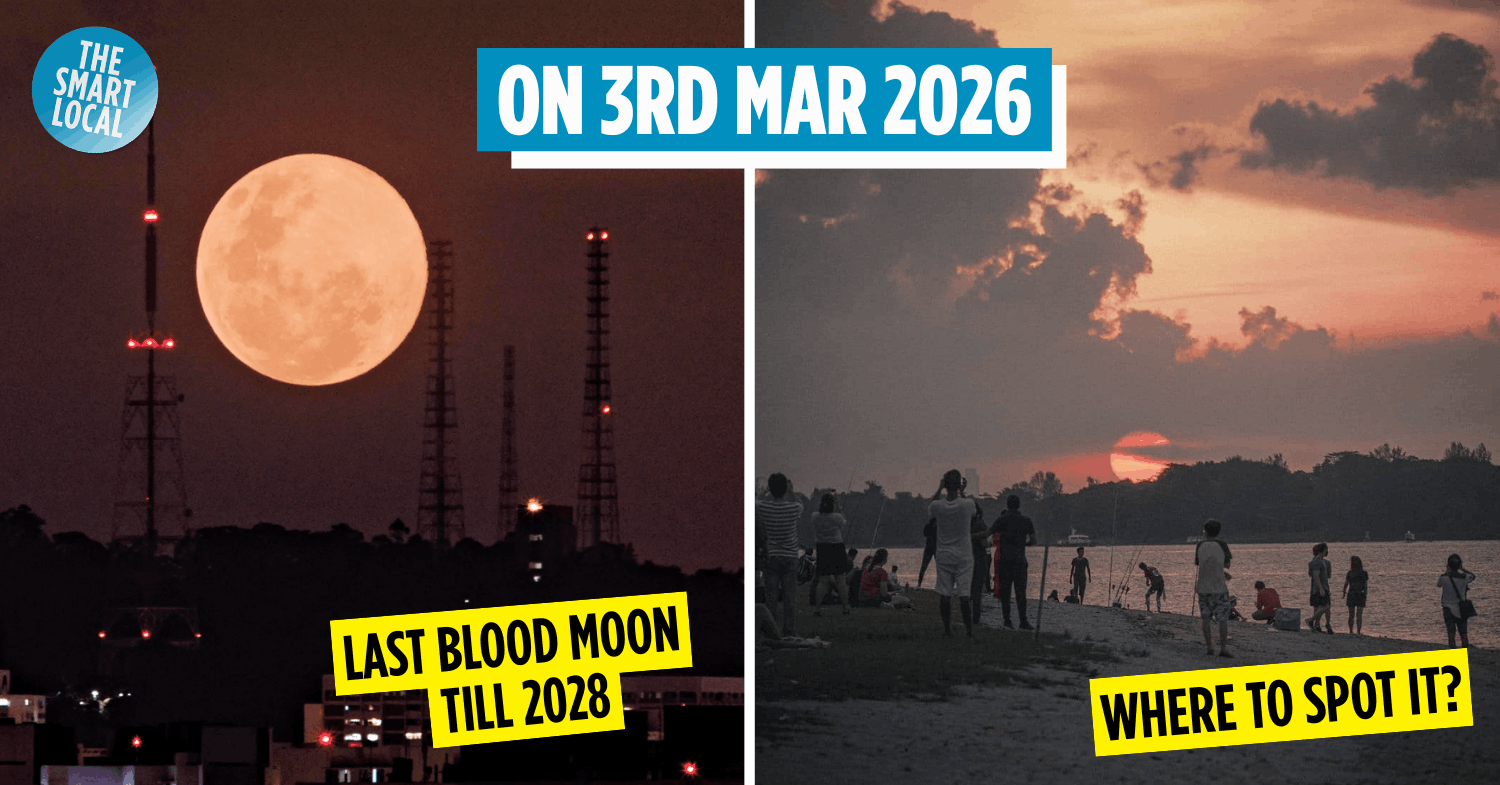

Total Lunar Eclipse in Singapore
It seems like 2026 is shaping up to be a stellar year as we’re getting 3 supermoons, with the most recent being the Wolf Supermoon, which appeared in January. But for the last time until 31st December 2028, a rare total lunar eclipse is set to darken our skies and flood our social media feeds next month in March.
You might want to mark your calendar for this one, as these rare total lunar eclipses only happen around every 3 to 4 years in Singapore. Here’s where and how you can catch the upcoming celestial event.
What is a total lunar eclipse?
You might have heard of a “blood moon” before, but despite the scary-sounding name, it actually refers to the moon’s red glow during a total lunar eclipse.
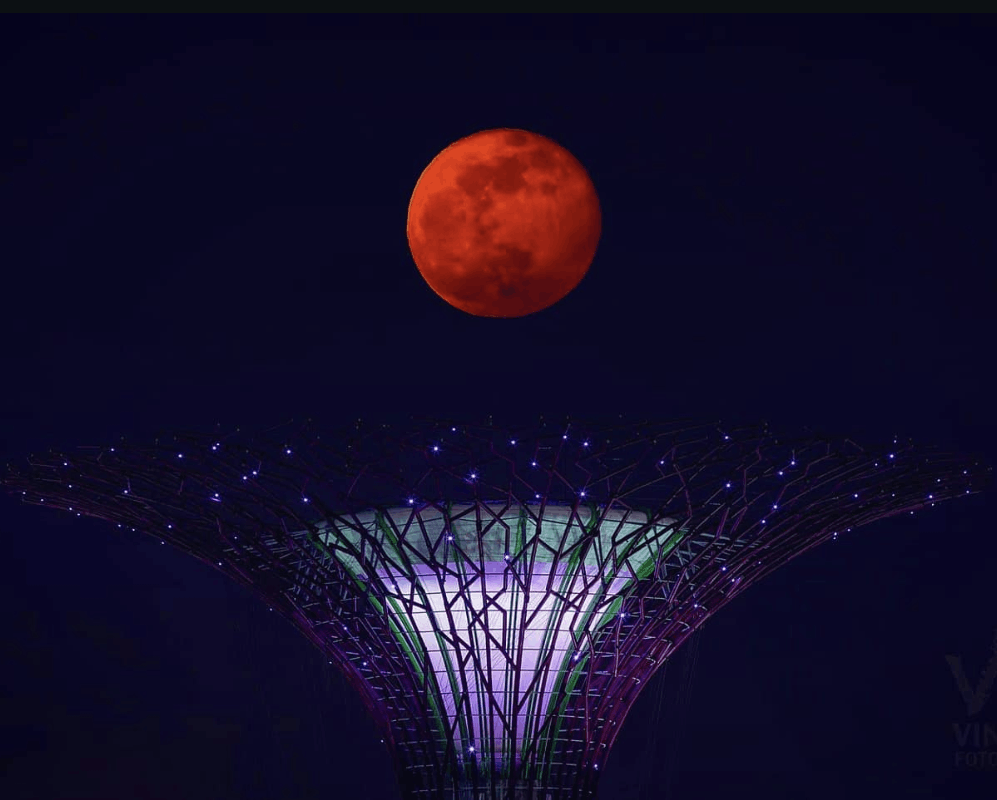
Image adapted from: @sivamballa via Instagram
In the past, ancient civilisations saw the blood moon as a celestial omen, but the vivid red hues we see are actually the result of planetary alignments and a little bit of physics.
Don’t worry if it’s been a while since you were in a science class, because we’ve broken it down for you.
According to NASA, during a lunar eclipse, the Earth sits directly between the sun and the moon, casting a shadow, which explains why you see the moon slowly darken in the early phases of an eclipse.
What makes a total lunar eclipse special is that the moon enters the darkest inner area of Earth’s shadow, or the umbra, causing the moon’s “halo” effect when both planets are perfectly aligned.
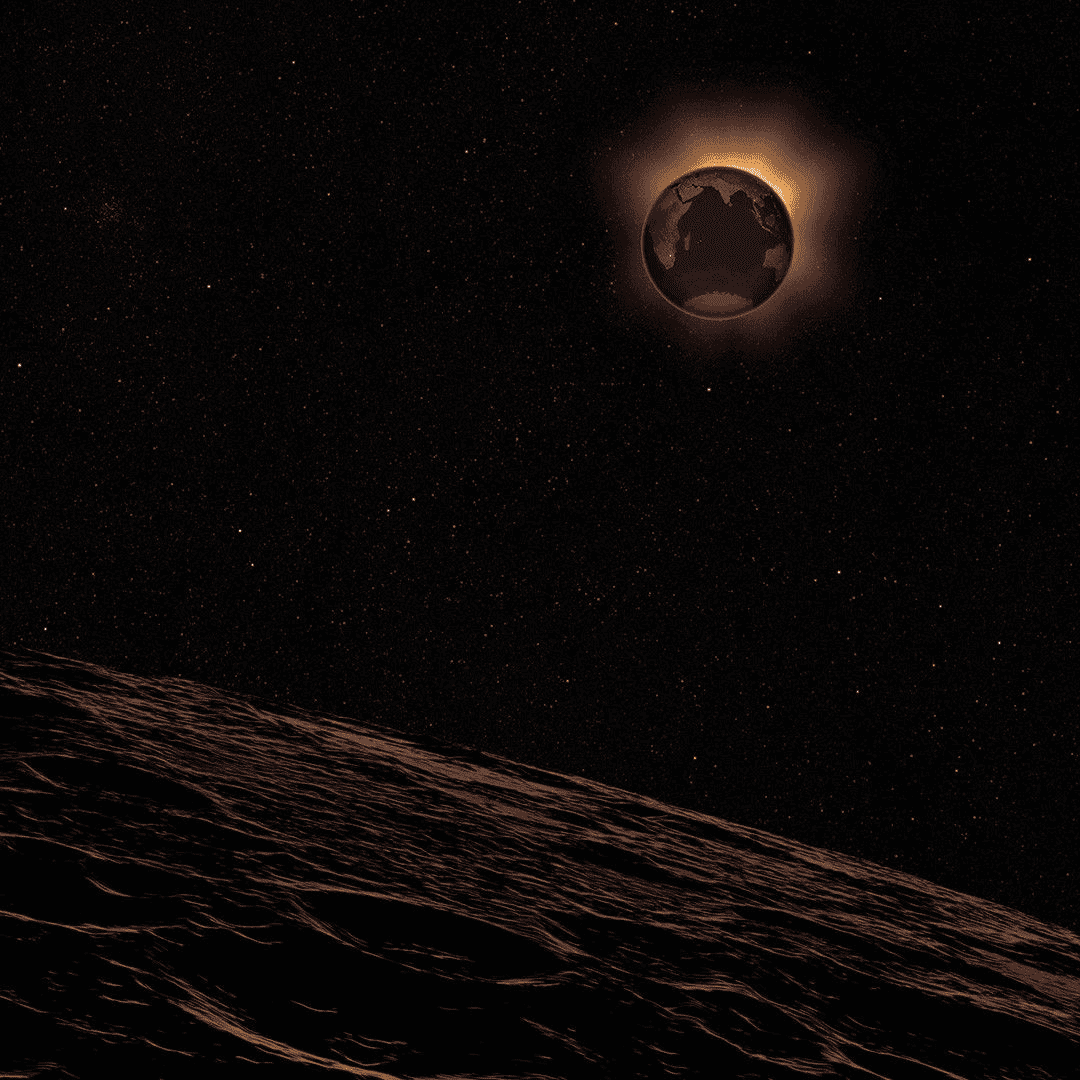 Image credit: NASA
When sunlight filters through the Earth’s atmosphere, colours with shorter wavelengths like blues are dispersed away, while those with longer wavelengths like red are bent towards the moon’s surface, giving the moon its reddish-brown glow. The more debris and dust there is in the Earth’s atmosphere, the more vibrant the hue.
When & what time can we view the total lunar eclipse in Singapore?
The upcoming total lunar eclipse falls on 3rd March 2026, and will be visible in the evening starting from around 7.15pm, so you should have plenty of time to find a good spot to watch the moonrise after you knock off from work.
If you’re hoping for that Insta-worthy shot, your best bet is to find a spot with a view of the horizon without any trees or buildings in the way, as the moon will be quite low in the sky during this phase.
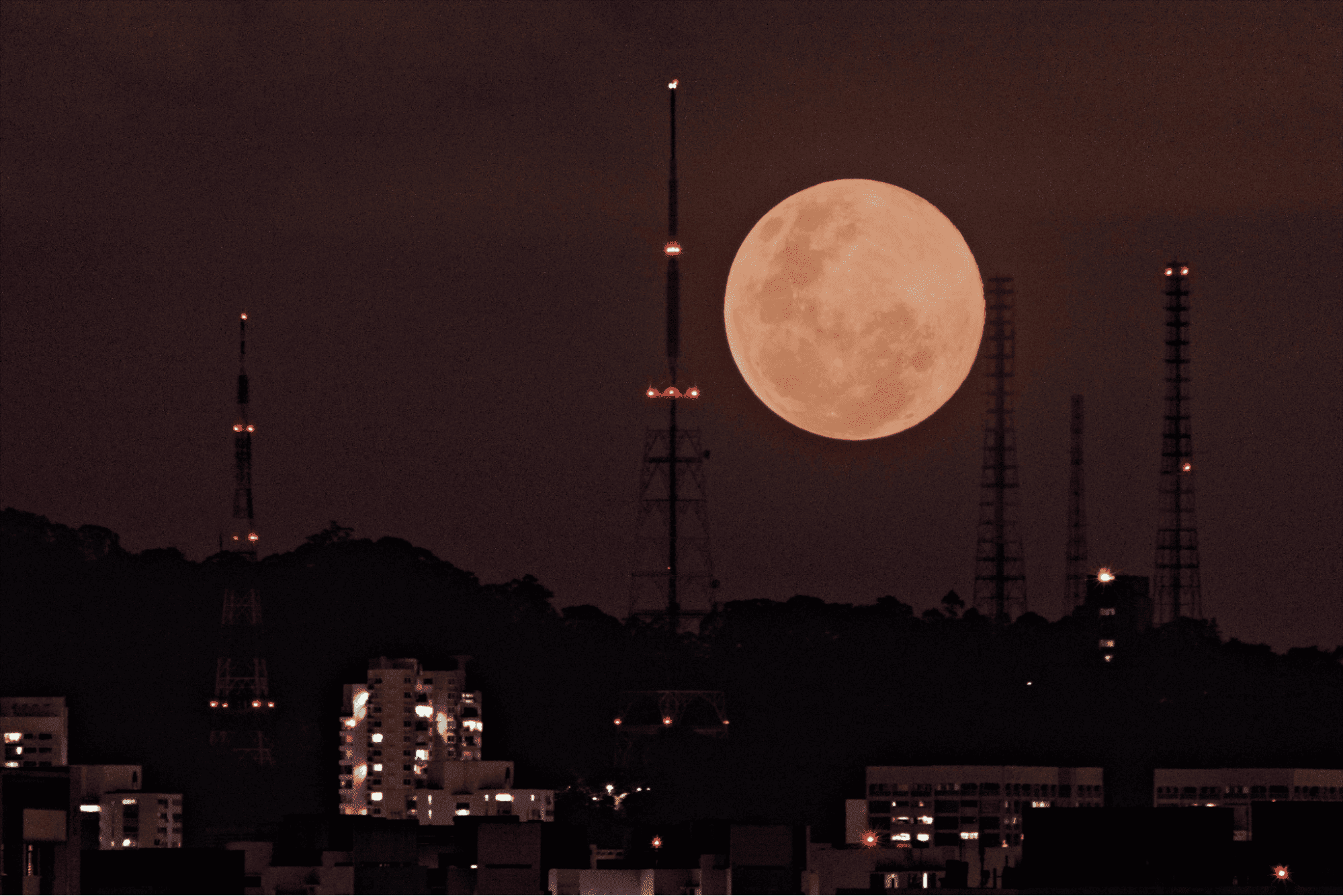 Image credit: @Rando_Stranger2142 via Reddit
The maximum eclipse will happen at 7.33pm, so you might want to get your binoculars ready around this time. For the aspiring Nat Geo photographers among us, you’ll want to mount your camera on a tripod and set exposures for several seconds or longer to capture the blood moon in all its glory.
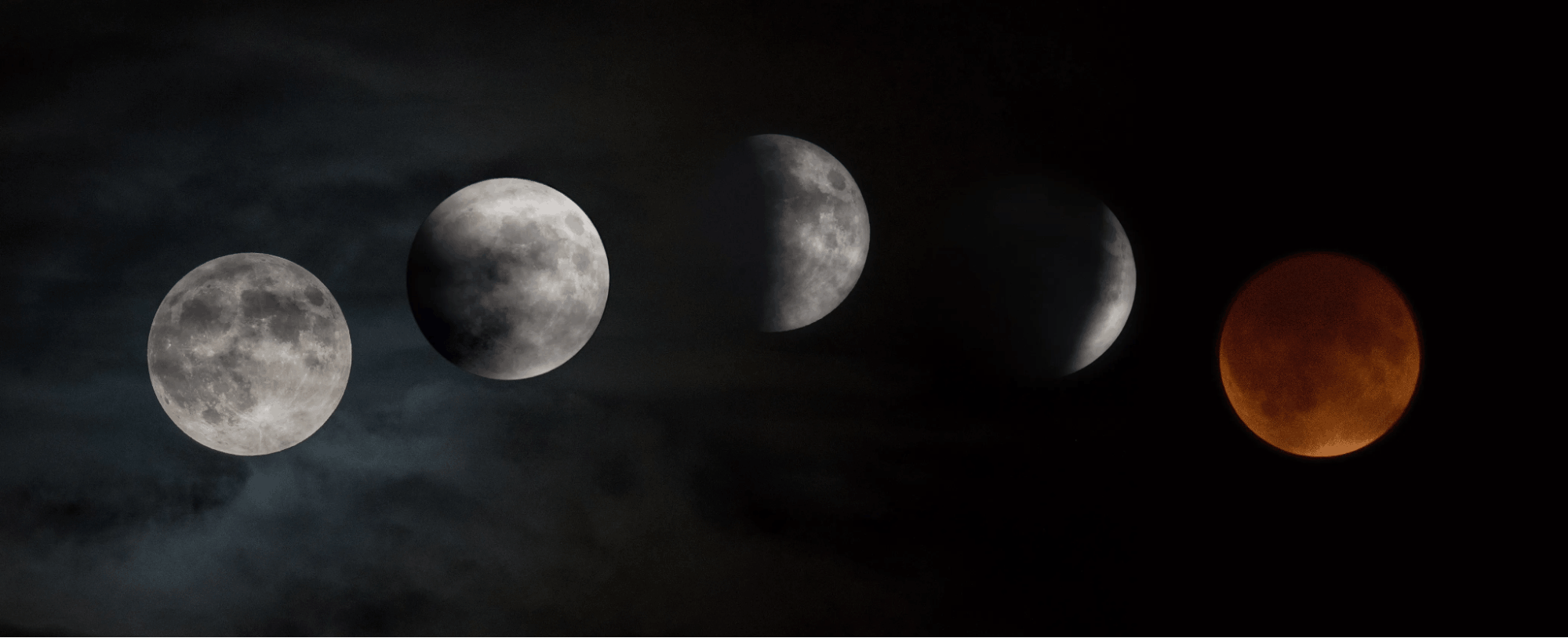
Image credit: NASA
After 8.02pm, the moon will start moving out of the Earth’s shadow, and the red glow will dissipate. By 9.17pm, the moon will be completely full, shining bright and silver again.
Where to spot the total lunar eclipse in Singapore?
For a front-row seat on all the action, book your tickets and head down to the total lunar eclipse viewing at Science Centre Singapore.
The free standard ticket gives you priority access to the queue to see the eclipse at 30x magnification through 1 of 15 high-powered telescopes, with more telescopes to be set up as the moon rises. Ticket holders should aim to reach between 6pm and 7.15pm. Arriving any time after that means you’ll have to wait with walk-in participants for their telescope viewing.
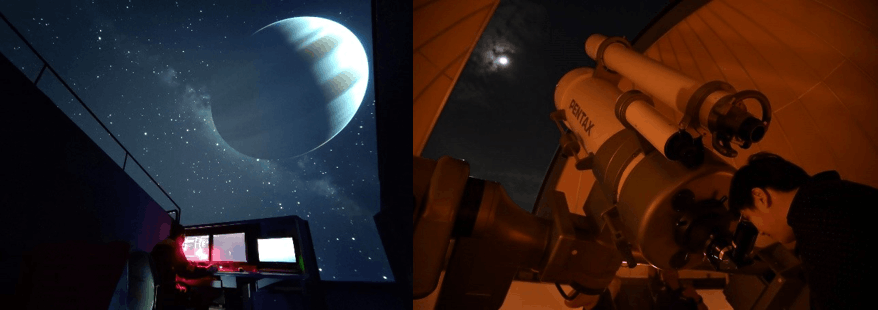
Image credit: Science Centre Singapore
For the curious folks out there, it might be a good idea to upgrade to the $4 bundle ticket. On top of the telescope viewing, you’ll also get access to the Digital Planetarium Show happening in the Omni-Theatre at 5pm, 5.40pm, 8.10pm, and 8.50 pm.
During the 20-minute show, the centre’s Science Educators will share more information about how the total lunar eclipse occurs and the 2 other planets – Jupiter and Saturn – that will be visible that night. Fun fact: constellations might be easier to spot during the eclipse too.

Image credit: Science Centre Singapore
The fully eclipsed moon will be most visible from the Science Centre Singapore between 7.47pm and 8.02pm.
Tickets will be up for grabs on the Science Centre Singapore website from 20th February 2026 onwards, or you can head down to the main entrance and register at 6pm on 3rd March 2026. Ticket holders for Digital Planetarium shows at 5pm and 5.40pm may register directly at Omni-Theatre before each show.
If you prefer to watch from the comfort of your own home, the event will also be livestreamed on the Science Centre’s YouTube channel.
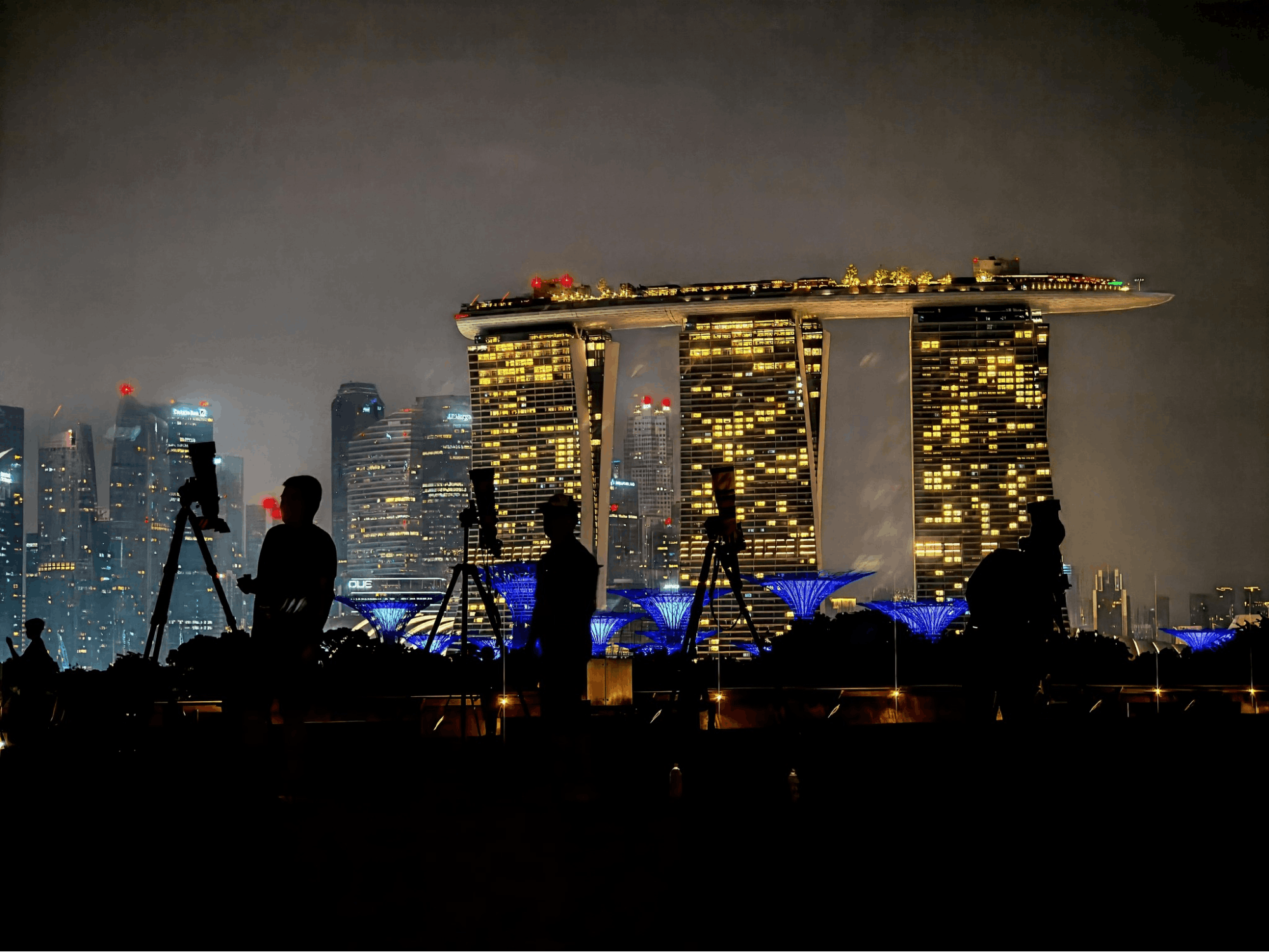 Image credit: Simon Lim via Facebook
For those who want to moon-gaze with a view, locations like Marina Barrage, East Coast Park, and the Southern Ridges offer unobstructed views.
Save the date & catch the rare total lunar eclipse in Singapore
Pack a few snacks, bring a picnic mat, and sit back and relax as the heavens grace us with a rare celestial show.
For more nature-related articles:
Cover image adapted from: @Rando_Stranger2142 via Reddit, @therealruiqi via Instagram