
Singaporean innovations that made a global impact
Singapore has limited land, few natural resources, and a population that still needs to get around, eat and drink every day. So we’ve had to get good at one thing in particular: solving problems. That’s how we ended up with a congestion pricing scheme as early as 1975, recycled water, and a vertical farm 23.3m tall.
Here are 6 Singaporean innovations that started as answers to local problems, then went on to make a difference far beyond our shores.
1. ERP
World’s first full-scale automated electronic congestion pricing
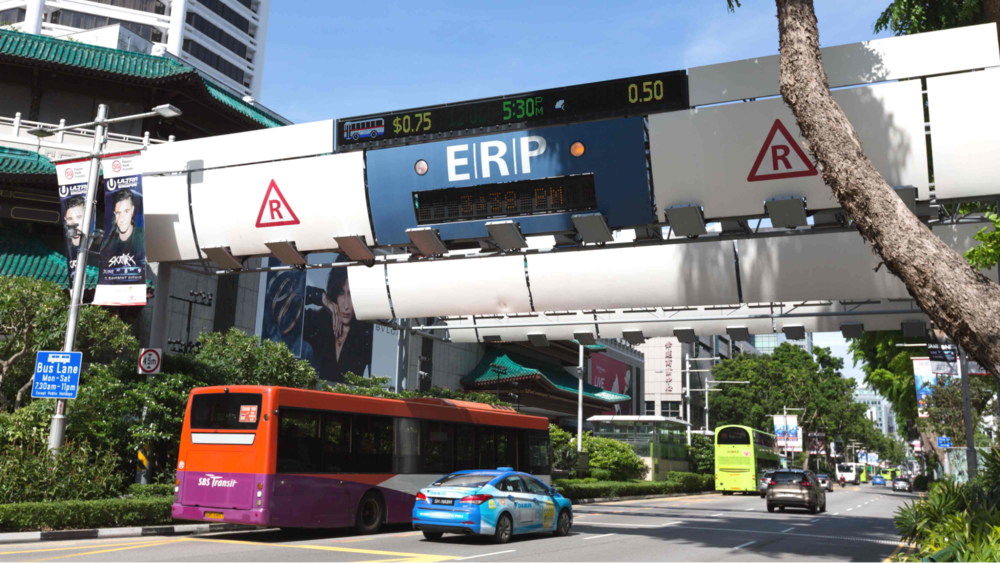 Image credit: Motorist Singapore
Mention ERP (Electronic Road Pricing), and any Singaporean who’s a driver is likely to grimace. But did you know that this congestion charge is a Singaporean innovation which has now been adopted by many other countries worldwide?
Way before the ERP gantries hit the streets, Singapore had already been experimenting with road pricing through the Area Licensing Scheme (ALS), the world’s first urban traffic congestion pricing system, introduced in 1975. Back in those days, motorists had to purchase and display a physical, paper area licence on their vehicle dashboard to enter the zone during morning peak hours.
Then, in 1998, Singapore rolled out the ERP. Vehicles fitted with an In-vehicle Unit (IU) would be automatically identified as they drove through a gantry, with the congestion charge automatically deducted from their card.
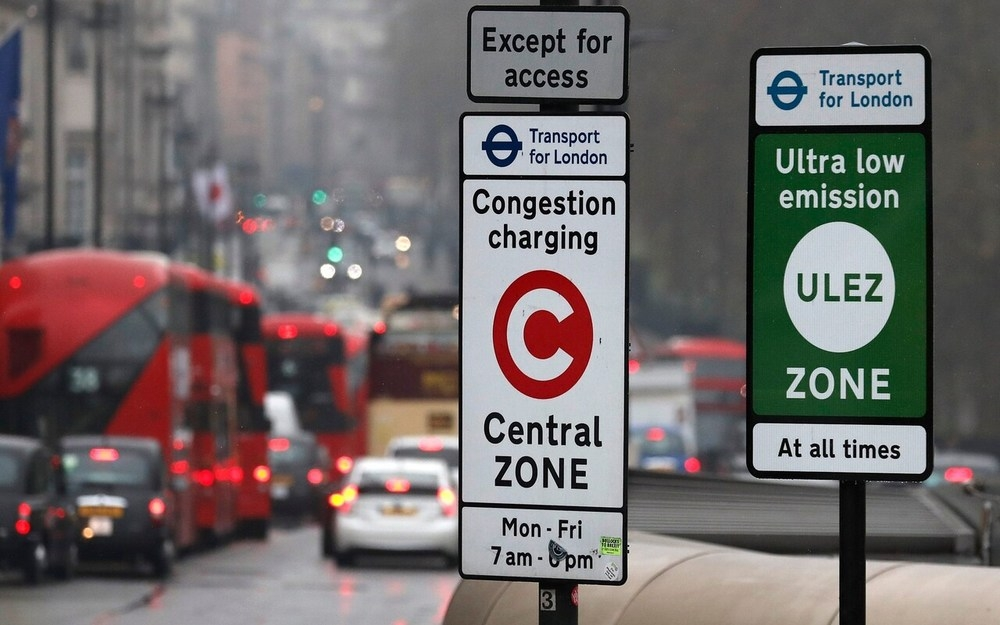 Image credit: OECD
It was the world’s first full-scale application of electronic road pricing specifically for the management of congestion on the roads. Today, road pricing has become a familiar urban-planning tool in cities including London and Stockholm, with Singapore regularly being used as a case study when it comes to congestion charging.
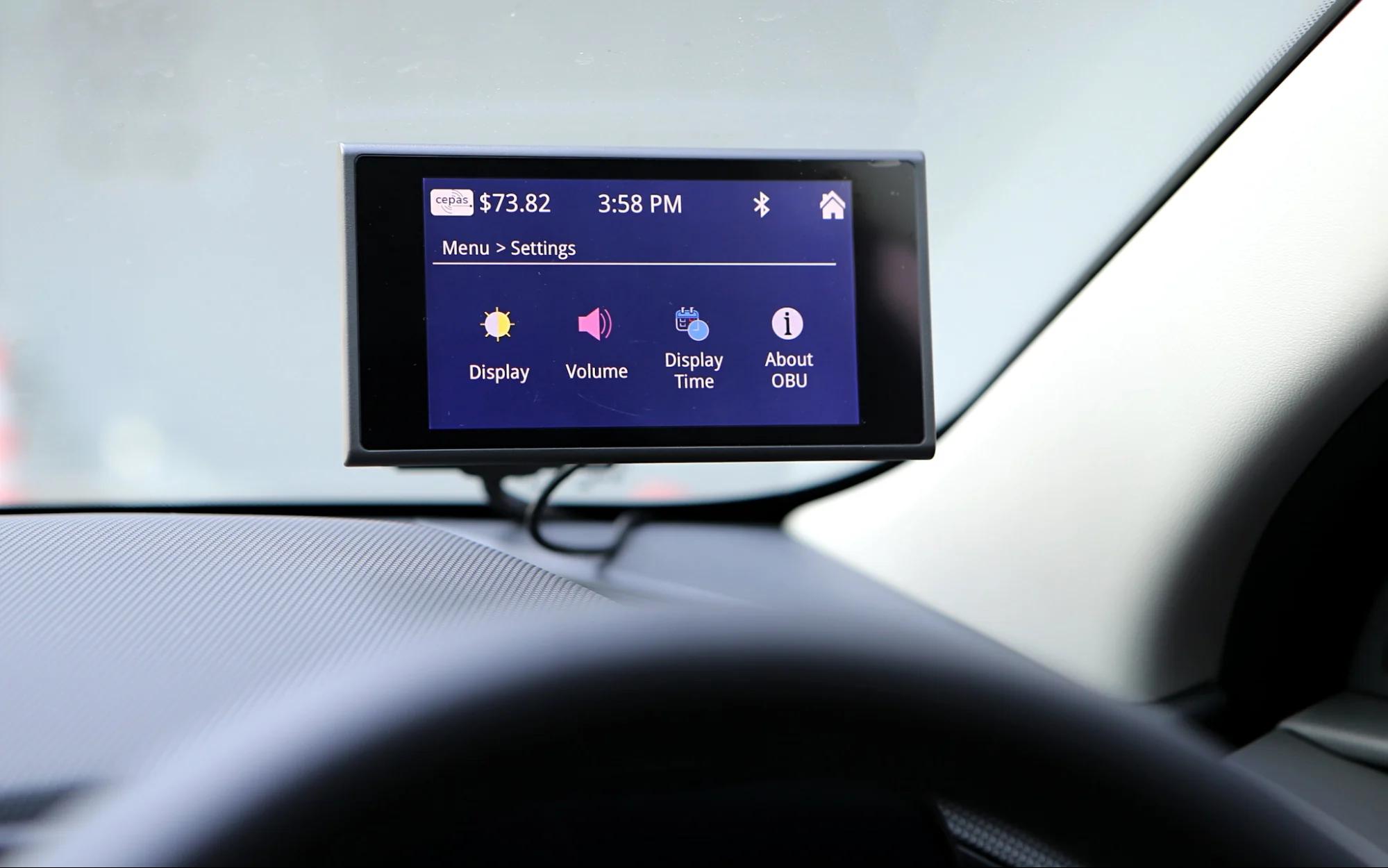 Image credit: Motorist Singapore
As you might expect, Singapore isn’t resting on her laurels, with ERP 2.0 being phased in. The updated system uses satellite technology instead of solely depending on physical gantries, with the new On-Board Unit system now mandatory for all Singapore-registered vehicles.
2. Greenphyto
The world’s tallest indoor vertical farm
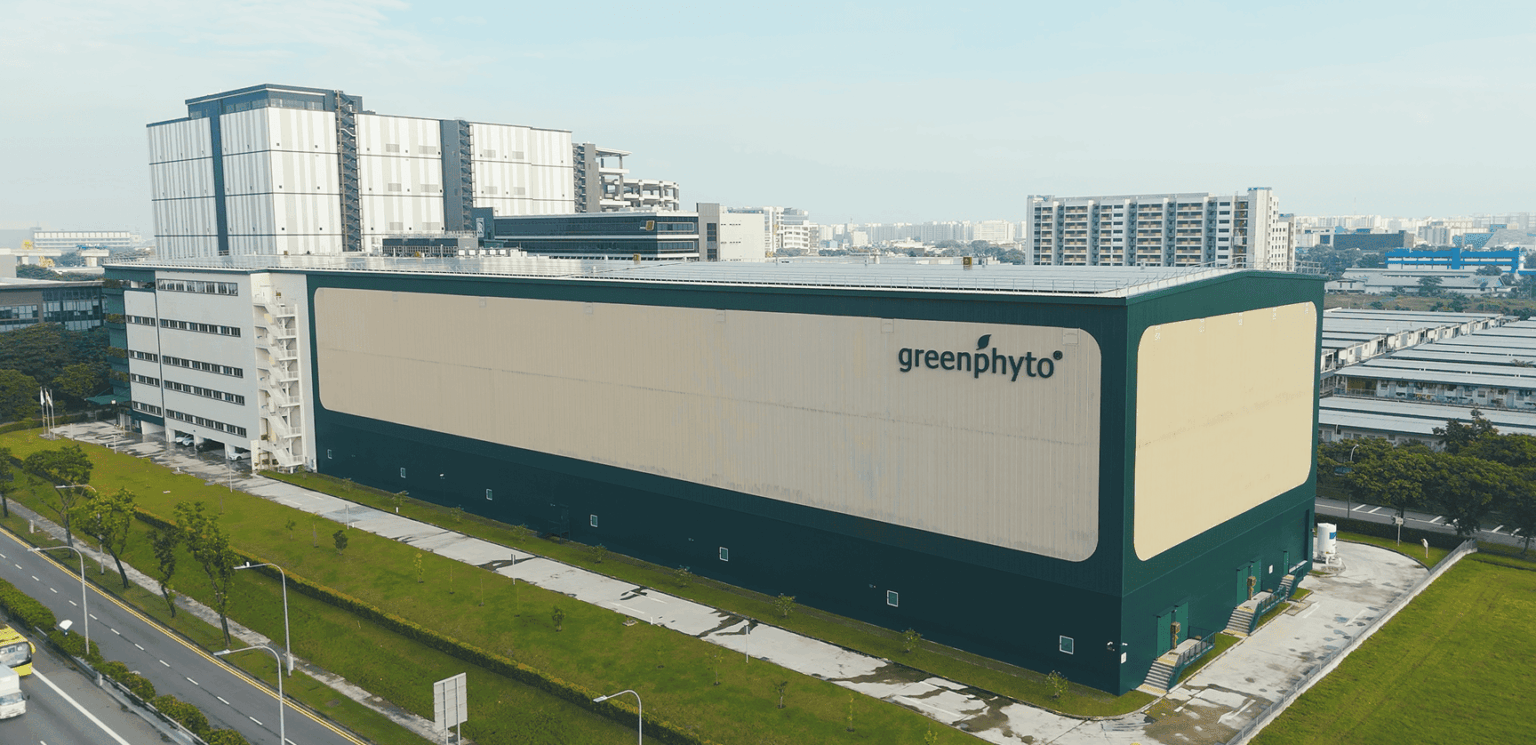 Image credit: Greenphyto
When you have limited land, it makes sense that the next step is to build upwards, or go belowground. For home-grown agritech company Greenphyto, up was the answer when they opened their flagship indoor farm in Jurong West this January.
The farm features hydroponic towers that are 23.3m tall – officially recognised by Guinness World Records as the tallest vertical farm grow rack in the world.
@hydrogreenssg A glimpse into our farm 🌱 Behind every pack of Hydrogreens is more than just fresh greens — it’s over a decade of passion, purpose, and innovation in growing food for the future. Hear from our founder, Susan Chong, as she shares the vision behind Greenphyto and the journey that continues to shape sustainable farming in Singapore. #HydrogreensSG #Greenphyto #VerticalFarming #TheGreenerGreens #ProudlySingaporean
That’s roughly the height of a 7-storey building, except instead of flats, you’ve got leafy veggies stacked across 12 levels. Each tower houses 500 racks of greens, allowing them to produce approximately 2,000 tonnes of veg a year at full capacity.
The hydroponic facility is fully automated, incorporating AI, robotics, and predictive analytics to manage crop production. Its technology monitors factors involved in growing crops indoors, allowing vegetables to be produced in a climate-controlled environment regardless of the weather outside.
That’s especially relevant for dense cities with little to no agricultural land space – a problem that isn’t uniquely ours.
3. NEWater
Turning used water into a global water-resilience case study
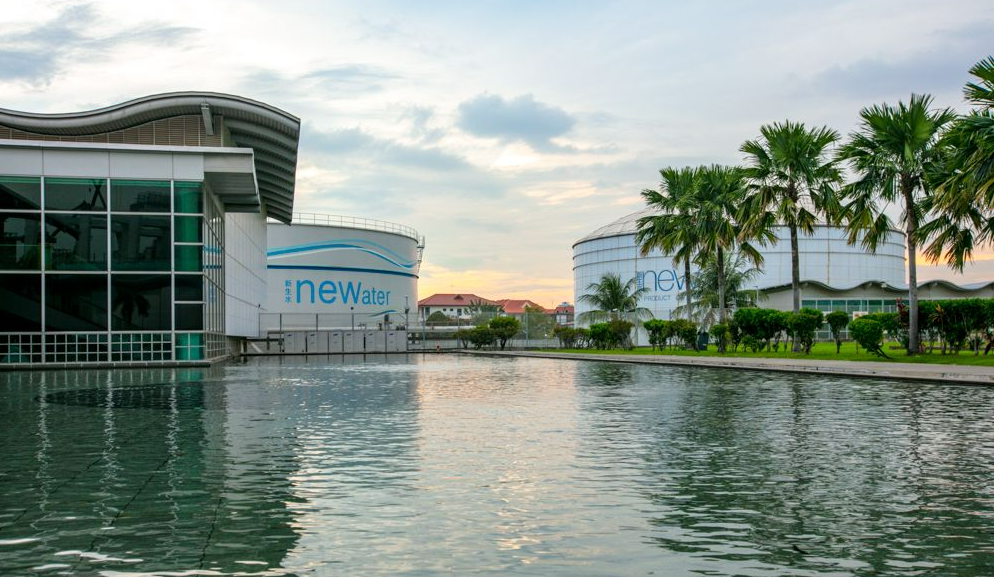 Image credit: PUB
If neither green tech or ERPs have impressed you, then surely NEWater will. It epitomises the saying “necessity is the mother of invention”, providing a solution to our lack of natural freshwater resources.
Where others see used water as waste, Singapore has transformed it into a water source so clean, it’s good enough for wafer fabrication factories to use. ICYMI, these are specialised factories where microscopic silicon disks are transformed into microchips and semiconductors, and they require ultra-clean water because even a single microscopic dust particle or chemical ion can ruin the circuit.
In fact, PUB says NEWater’s quality consistently exceeds the drinking water standards set by the World Health Organisation (WHO) and the US Environmental Protection Agency, based on some 20,000 tests.
NEWater made its public debut in 2002, although research into water reclamation in Singapore dates way back to the 1970s. However, it was not produced on a large scale until more recent decades, when membrane technology became more advanced.
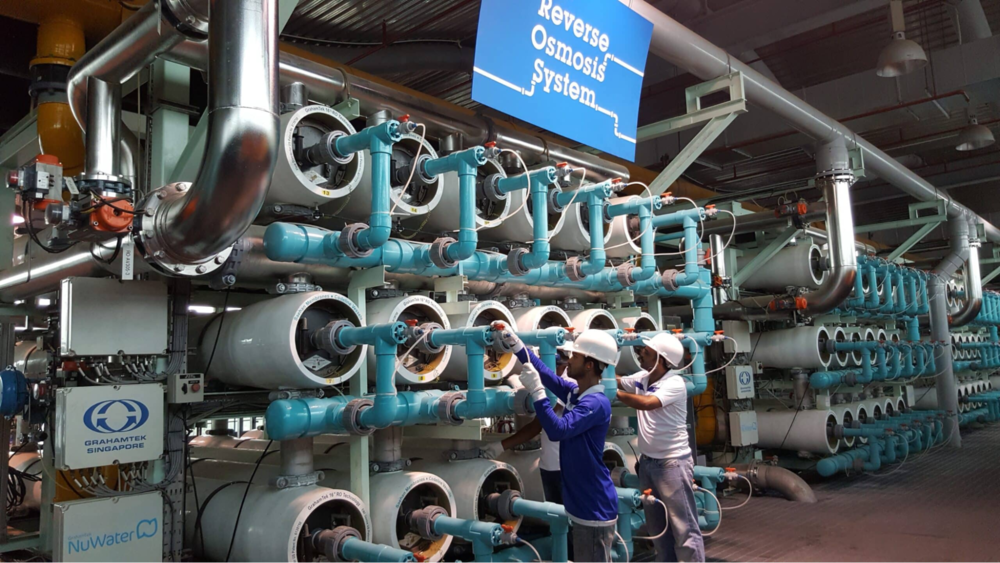
Image credit: Maser Singapore
The 3-step process sees the water being passed through microscopic hollow-fibre membranes that trap solids, bacteria, and protozoa, then forced through semi-permeable membranes under high pressure. Finally, high-intensity UV light disinfects the water, before alkaline chemicals are added to restore the water’s pH balance.
And yes, the world is impressed – the World Bank calls Singapore’s transformation from water scarcity to water resilience a global benchmark. The Singapore Water Centre was launched in 2024, aimed at facilitating international knowledge exchange, and to help advance water management solutions for other water-scarce countries in the world.
4. Gardens by the Bay’s Supertrees
Giant sculptures that are not just pretty to look at
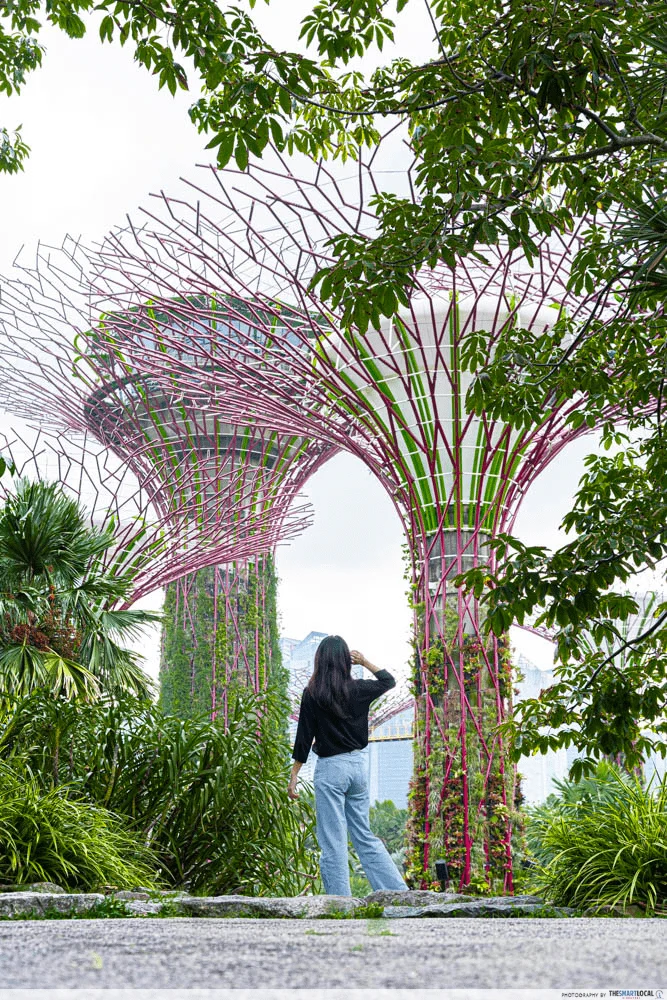
Hitting you with another did you know – did you know that the Supertrees at Gardens by the Bay (GBTB) are not merely decorative?
Standing between 25mand 50m tall, the 18 Supertrees are vertical gardens covered in plants, and have made their mark in countless postcards, photos, and images of the Singapore skyline. The plant-covered Supertrees are obvious, but less so is the fact that 11 of them incorporate environmental functions into their design.
Some of the Supertrees have been built with photovoltaic cells mounted on their canopies, harvesting solar energy that’s used to illuminate them at night, while others are integrated into the Gardens’ conservatory systems and act as exhaust structures for hot air.
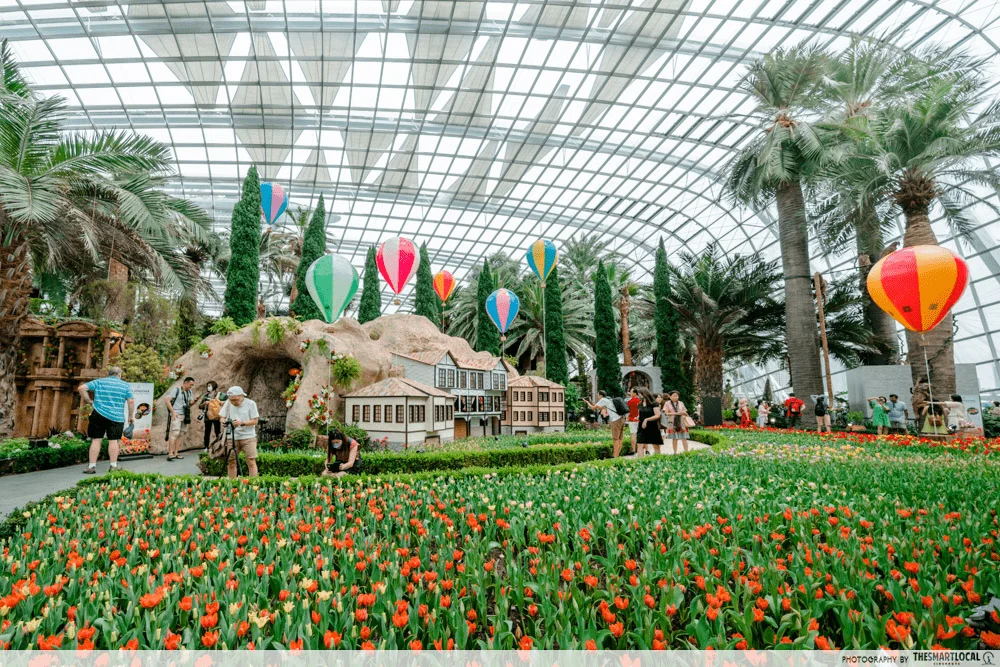
All 18 of the trees are just part of a larger system that runs GBTB. The conservatories – Flower Dome and Cloud Forest – are cooled with technologies such as displacement cooling, specialised glass, shading, and energy recovery to reduce energy consumption by roughly 30% as compared with conventional cooling technologies.
But you aren’t going to visit GBTB and think: Wow, what revolutionary technology! The infrastructure that keeps the entire park running has been so cleverly camouflaged you wouldn’t even know it’s there.
Few buildings will replicate the conservatories outright, but engineers have pointed to lessons from their cooling approach – such as desiccant dehumidification and making use of waste heat – for buildings in hot, humid cities in Asia and the Middle East.
5. Changi Airport
Seamless processes at the world’s most-awarded airport
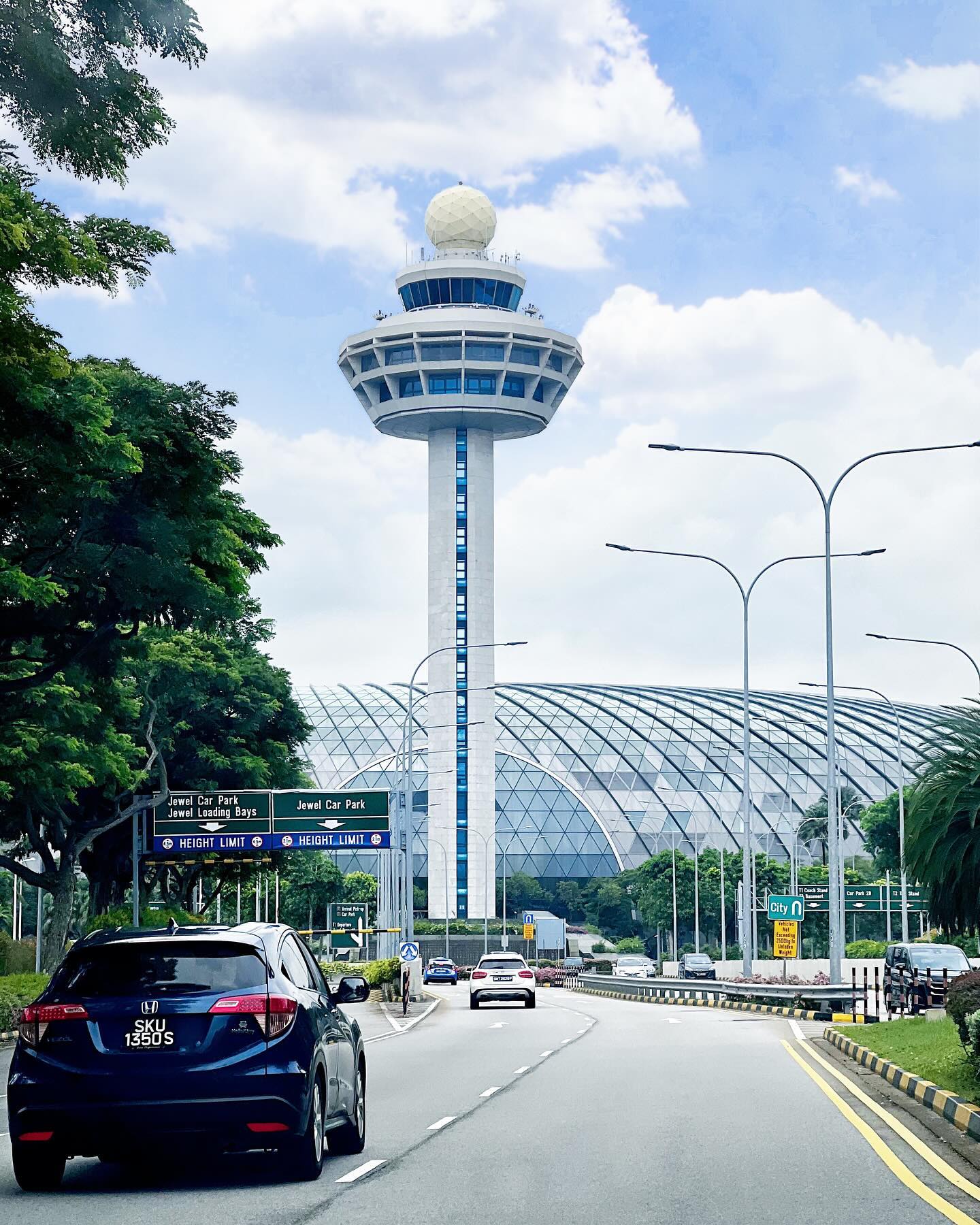 Image credit: @travelsnapwithme via Instagram
Because the systems that come into play in our daily lives as Singaporeans work so well, it’s easy to forget how much thought went into them. Changi Airport is a clear-cut example. According to Changi Airport Group, it is the world’s most-awarded airport, with 722 Best Airport awards to date, including 14 Skytrax World’s Best Airport titles.
Automated airport processes probably don’t seem revolutionary to most of us because we’ve grown up with this as the default. But have a look around when you travel, and you’ll see why we say it’s a luxury to be able to arrive at the airport, check in, and get to your gate in under 30 minutes. Or land, get through immigration, pick up your bags, and be home in as little as 1 hour.
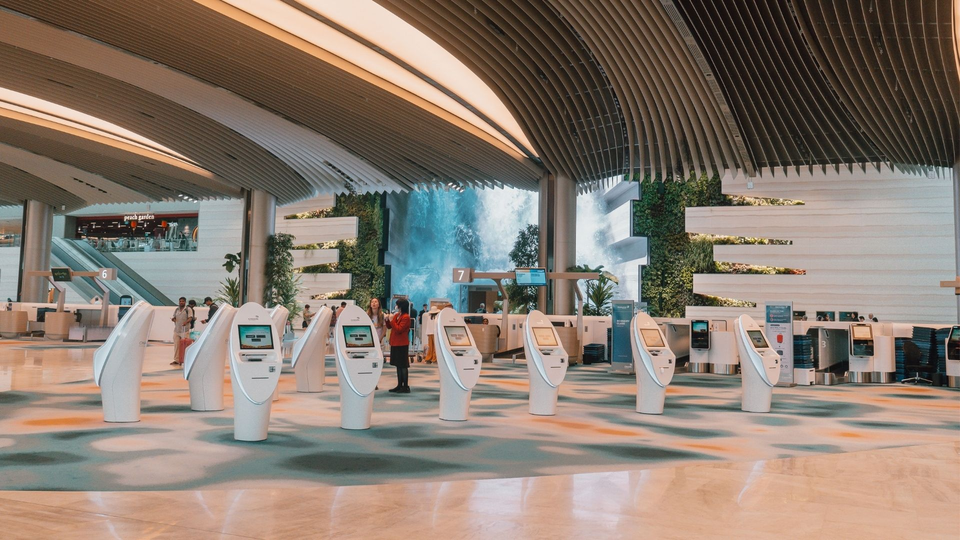 Image credit: Changi Airport
When Terminal 4 opened in 2017, it became the first Changi terminal built around an end-to-end automated departure process known as FAST – Fast And Seamless Travel. Think: Self-check-in kiosks, automated bag drops, automated immigration, and facial recognition through the departure journey.
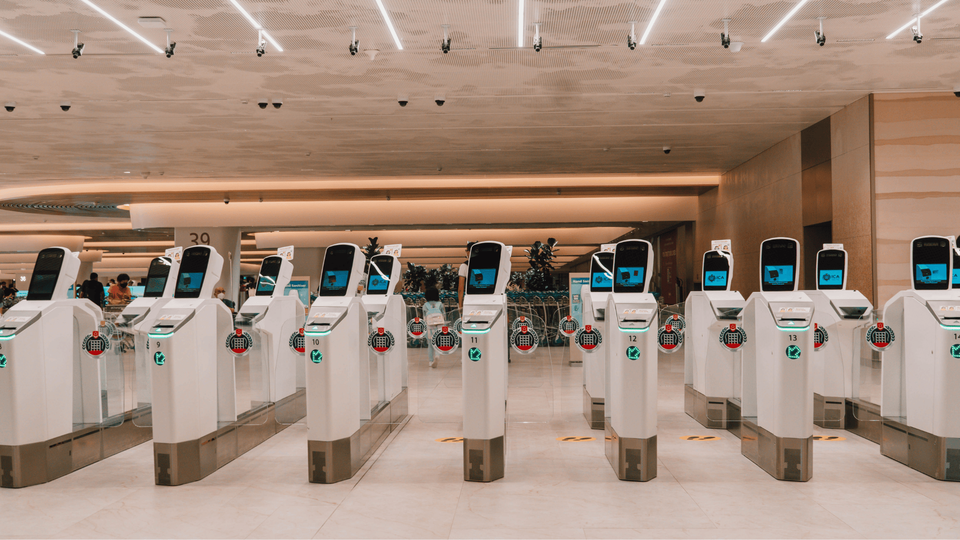 Image credit: Changi Airport
9 years on, you can now clear immigration using facial and iris biometrics, so Singapore residents and eligible foreign travellers don’t even need to use their passports.
Of course, we can’t claim to have made these technologies an international standard on our own. Airports worldwide have also been developing automated technologies, but Changi has unquestionably become one of the industry’s most visible reference points for combining automation with passenger experience.
Perhaps the biggest sign that the technology works is that we don’t even notice it anymore. The fact that we can print our own bag tags, drop off our luggage with a facial and passport scan, then head to the boarding gates is entirely a level of convenience that has, for us, become an expectation rather than a novelty.
6. PSA Singapore
One of the world’s largest shipping hubs which doesn’t sleep
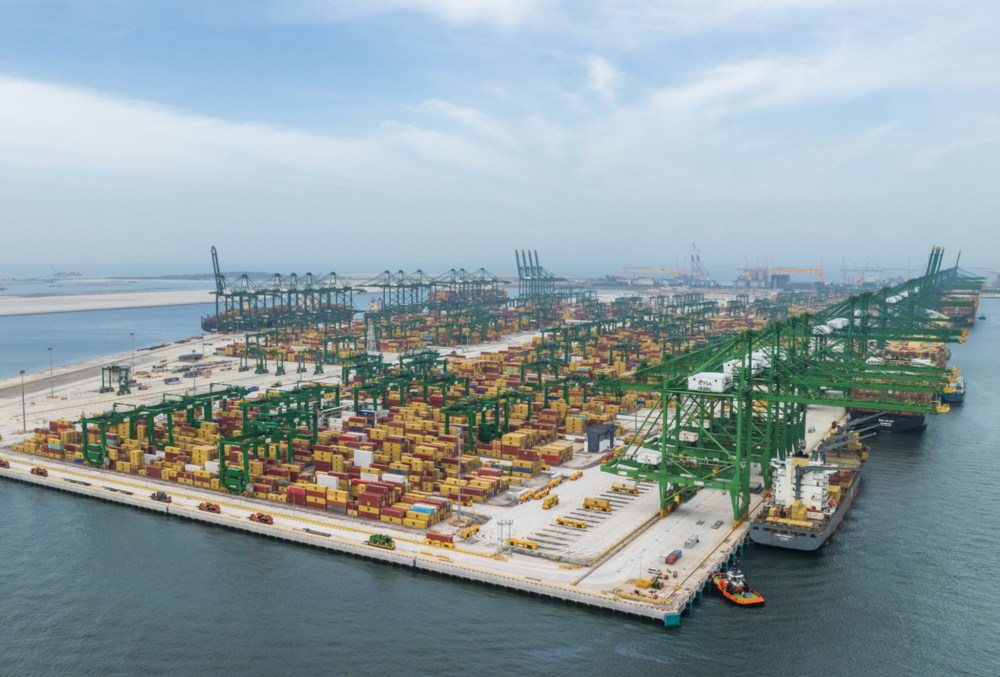
Image credit: Port of Singapore Authority (PSA)
The Port of Singapore Authority (PSA) is one of the world’s biggest transhipment hubs, working around the clock and moving an enormous volume of cargo between ships every day.
What we see: Taobao packages at our doorsteps, imported meats and exotic fruit in the supermarkets, and big-name fashion brands in the malls.
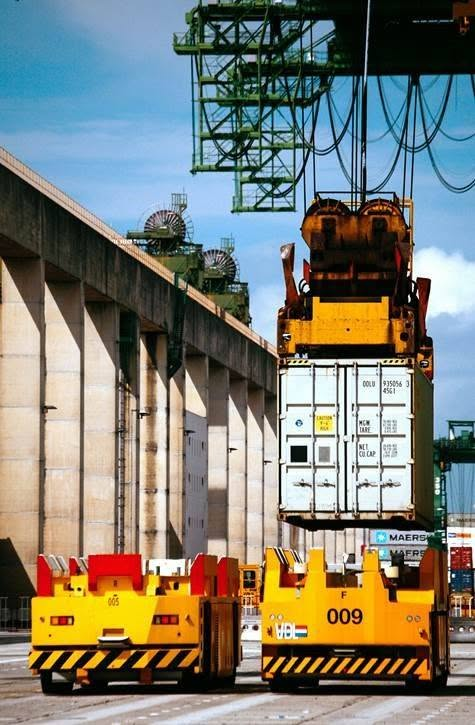
Automated Guided Vehicles (AGV) at PSA.
Image credit: PSA Singapore
What we don’t see: The port, its staff, Automated Guided Vehicles (AGV), and automated rail-mounted gantry cranes that move containers between wharf and yard, to say the least, that allow us to move goods at the efficiency that we do.
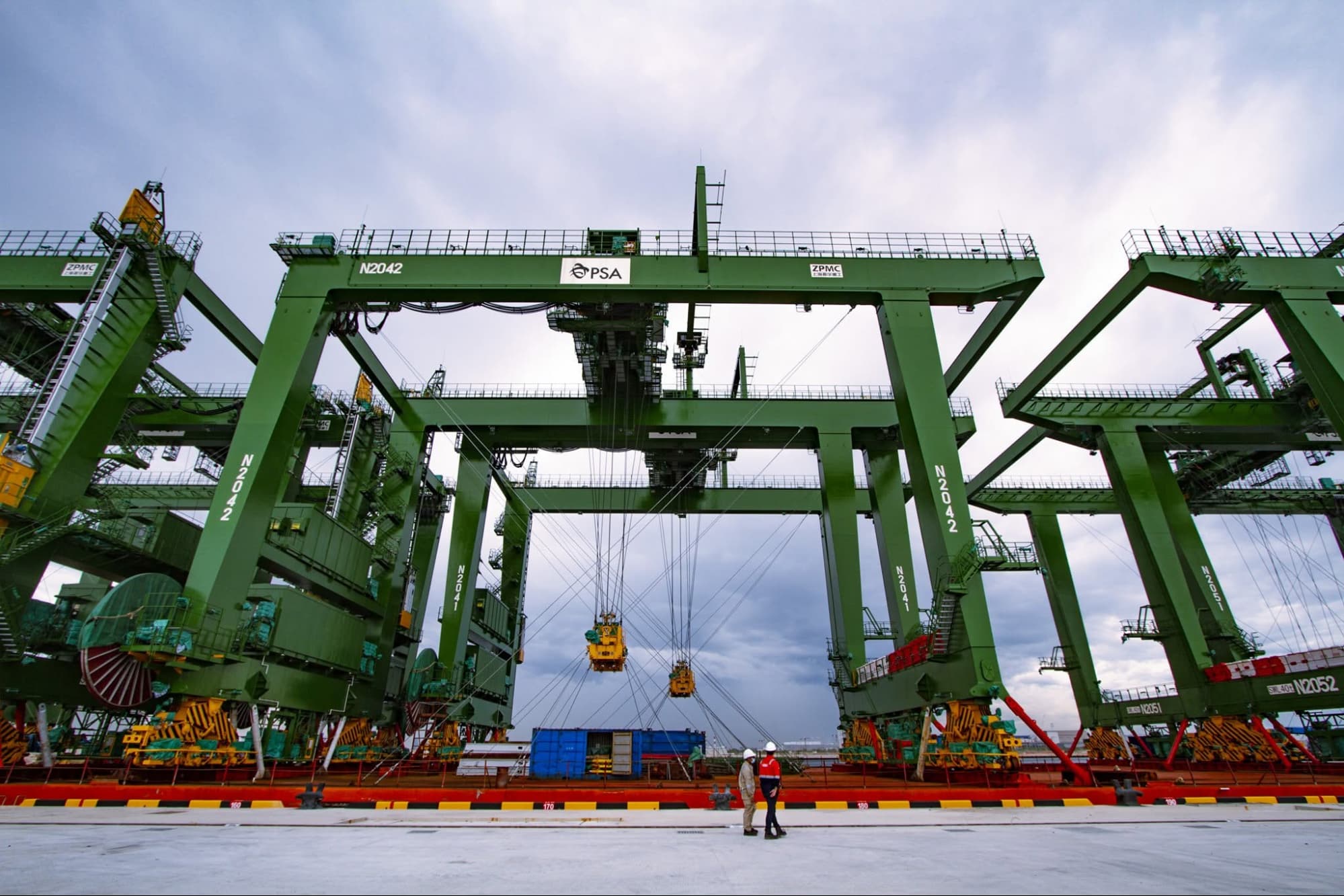 Automated cranes at PSA.
Image credit: PSA Singapore via Facebook
When it’s completed in the 2040s, the mega port that is Tuas Port is expected to become the world’s largest fully automated container terminal at a single location, with capacity for up to 65 million TEUs (20-foot equivalent units) a year.
Far from solely operating Singapore’s terminals, PSA is a global port group with more than 60 deepsea, rail, and inland terminals, spread across over 180 locations in 45 countries. Their Singapore-developed digital systems are employed across many parts of its network, while integrating local systems and global equipment across its international operations.
Singaporean innovations making a difference in the world
None of the innovations above are exceptionally flashy for the sake of being flashy – they all began with a problem to be fixed. A smarter way to manage congestion, turning waste water into a needed resource, working around land scarcity, and so on.
That’s also what makes STEM (Science, Technology, Engineering, and Mathematics) useful in the first place. It’s not so much about memorising formulas for an exam, and more about figuring out how those concepts can solve problems that we actually face. The next generation of problem-solvers is already at work.
That idea is at the heart of the National STEM Championship: Game On (NSTEMC:GO) 2026, the revamped version of the former National Science Challenge. In this championship, teams of Secondary 3, IP Year 3, and Grade 9 students from all over the country are given STEM challenges, designed to test scientific thinking, teamwork, and creative problem-solving.
Across the competition, students also encounter challenges involving organisations from different STEM fields, including the Health Sciences Authority, Ngee Ann Polytechnic, Micron, Thermo Fisher Scientific, and the Defence Science and Technology Agency (DSTA), giving them a glimpse of how STEM knowledge is applied beyond school.
This year’s revamped format also mixes hands-on challenges with new team dynamics and game-based elements, putting students in situations where they have to think on their feet and adapt as the competition progresses.
Take one of the Phase 1 challenges, “Octopus Lair”, as an example. Teams were told that an underground lair was leaking acidic chemicals into the surrounding waters, threatening coral reefs and marine life. To save the day, they had to answer riddles to identify the unknown acid and the compound it would form, then write and balance the chemical equation for the neutralisation reaction, all against the clock.
The scenario is made up, but the problem behind it is real: more acidic seas make it harder for corals and shellfish to build their shells and skeletons. That was just 1 of 4 ocean-themed stations, which also tested risk assessment, maths and route planning, and hands-on physics. In the “Sea Jelly Fields” challenge, teams had to build a balloon “sea jelly” that sinks in plain water but floats in salt water, using Archimedes’ Principle to get the biggest difference between the 2 tanks.
We shan’t spill too many details, ‘cause it’s better saved for your viewing experience watching the finalists battle it out. Starting from 18th October, catch new episodes every Sunday at 6pm on both TheSmartLocal and Science Centre Singapore’s YouTube Channels, where the students will be putting STEM to work on problems that look a lot like the ones in this list.
Who knows? One of the students on screen today might end up responsible for the next Singapore-made innovation that the rest of the world starts paying attention to.
Find out when National STEM Championship: Game On 2026 is out
This post was brought to you by Science Centre Singapore.
Cover image adapted from: Motorist Singapore, Changi