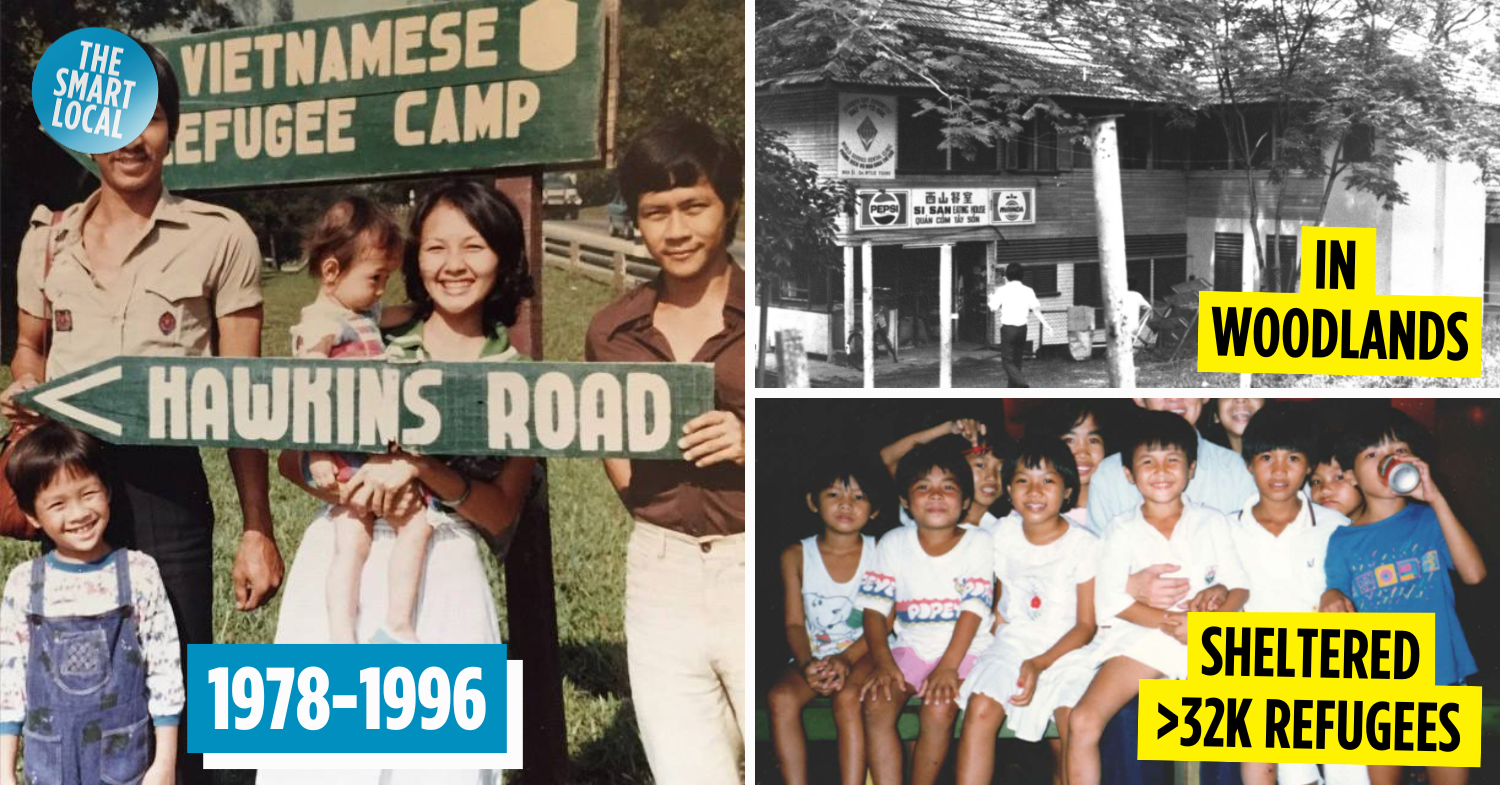

Hawkins Road Camp in Woodlands
When you hear the term “refugee camp”, your mind might wander to wartorn areas far from home. Yes, but for the purposes of this article, no – as it turns out, our little red dot has housed a refugee camp, and not too long ago too. Hawkins Road Camp, which was located in what’s known as Woodlands today, was in existence as recently as 1996. Here’s the story behind it.
What was Hawkins Road Camp used for?
A stopover for Vietnamese refugees after the Vietnam War
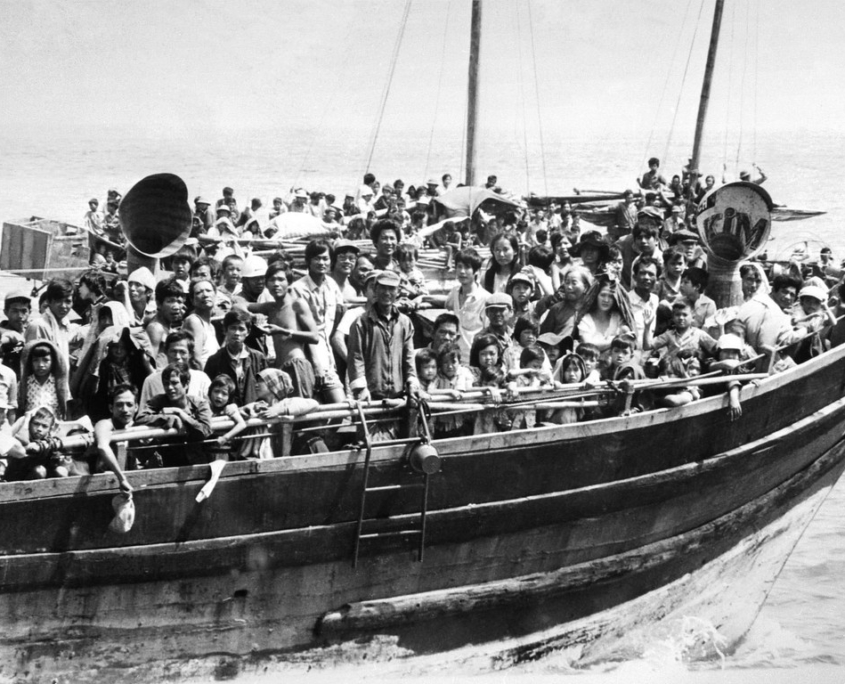
Image credit: Flickr
Let’s wind the clocks back to 1975 – the year of the Vietnam War. North Vietnam had invaded the South, and reunified Vietnam under communist rule. Vietnamese citizens fled the country, often by boat, which led to them being dubbed the “boat people”. Many ended up adrift in Southeast Asian waters, rescued by foreign navies or eventually landing on their shores.
Singapore was no exception. The country took them in in spite of the fact that we were still a developing nation back then, with few resources to handle an exodus of refugees. Hence, we had a strict policy: no permanent settlement, just temporary shelter until the United Nations High Commissioner for Refugees (UNHCR) official found a country that was better equipped to take them in. These countries included the United States of America, Canada, Australia, France, and Australia.
What was life like at Hawkins Road Camp?
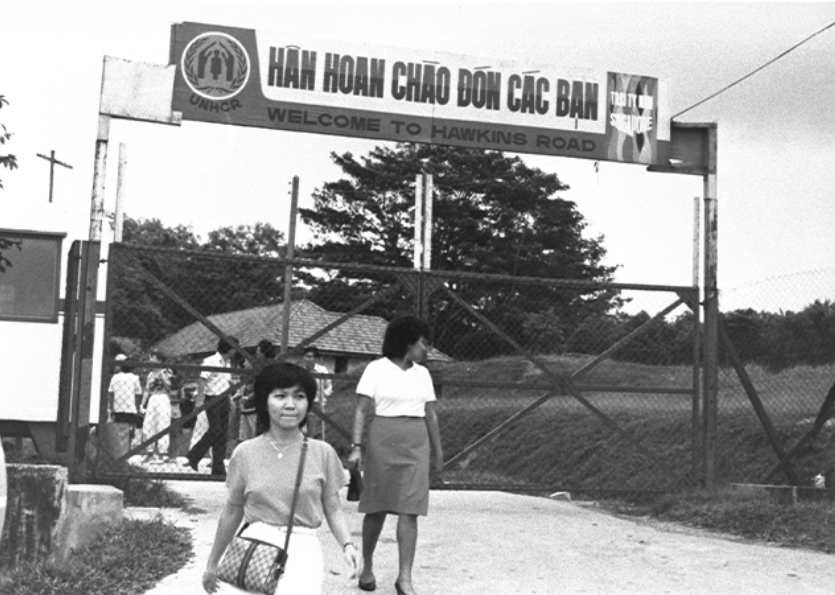
Image credit: National Archives of Singapore
In 1978, Singapore took in her first batch of refugees at the site of a former British military barracks at Hawkins Road – currently Admiralty Road West. Due to its small size of 5.5 hectares, the camp could only house 150 individuals at any point in time. However, that also meant that the refugees did not have to deal with issues like overcrowding or food shortages, which were commonplace at other camps in the region.
The refugees were housed in simple dormitory-style barracks with sleeping mats, and were given $2.50/day to buy and cook their meals. They were also allowed to leave the campsite to work and earn extra money.
“Hawkins Road, in comparison with other refugee camps, was I guess to them probably a Hilton,” Commander John Ingram, a logistics officer with the Royal Australian Navy, was quoted as saying. He and his wife were an integral part of the volunteer refugee support network.
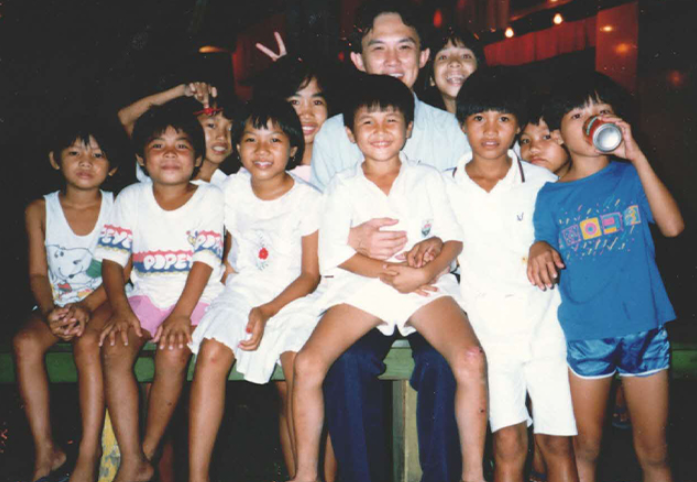
Singaporean volunteer Gabriel Tan taught English to the kids for a while, even forming a bond with them.
Image credit: Gabriel Tan
While life inside the camp was defo a far cry from a luxury hotel, the place was equipped with a minimart, clinic, church, temple, and even a couple of makeshift classrooms for the kids. This ensured that beyond getting the basic food, water, and shelter, other things like their dental, educational, and even religious needs were well taken care of.
Heck, the place even had a football field and volleyball court.
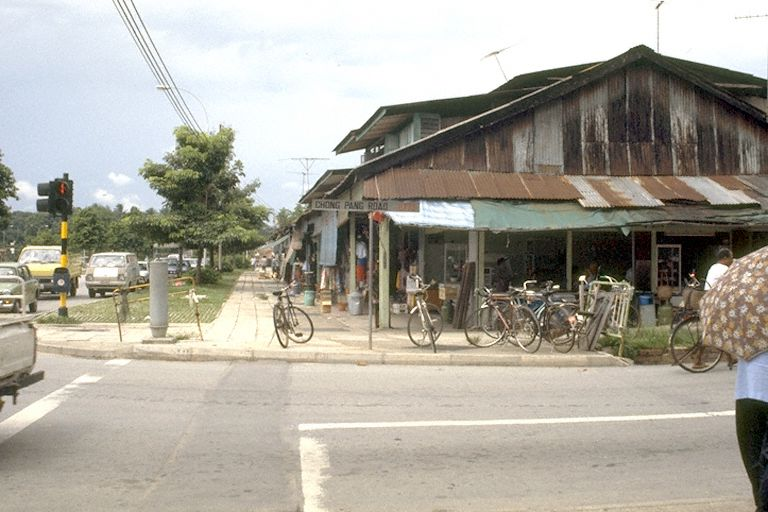
Image credit: National Archives of Singapore
Of course, one could only be satisfied with the in-camp facilities for so long. Fortunately, they were also allowed to leave the camp after 12pm each day for other recreational activities like shopping. They’d visit nearby towns like Chong Pang – Yishun West today – and even mingle with the locals, with whom some of them kept in touch even after leaving Singapore.
The bonds forged between them were so strong that there’s even a dedicated Facebook group – Vietnamese Boat People Refugee Camp – around, aimed at reconnecting former refugees and locals online.
Life after Hawkins Road Camp
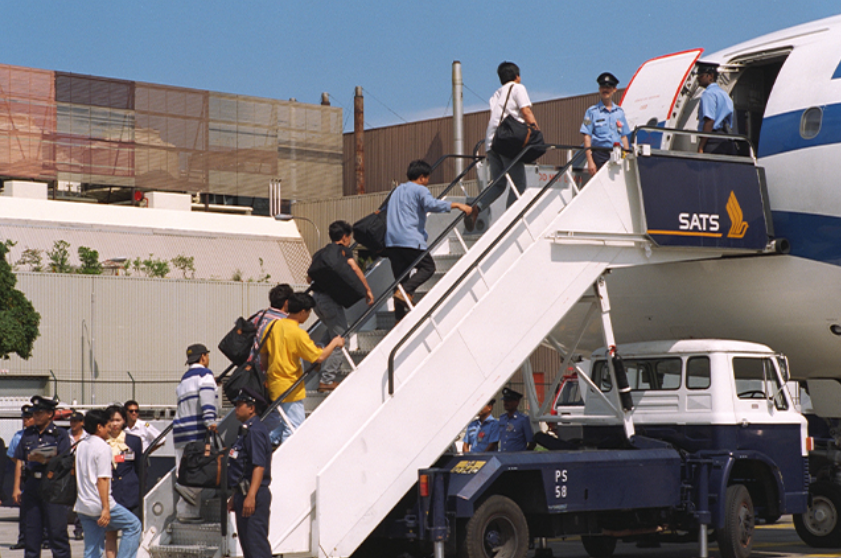
Image credit: National Archives of Singapore
By the end of June 1996, a total of 32,457 refugees had passed through Hawkins Road Camp. The last batch of 99 people was repatriated to Vietnam, which had by then cooled off politically. Hawkins Road Camp was shut down and demolished afterwards; the area has mostly been reclaimed by nature. While there’s little to no trace of its physical existence today, the impact it has had on all the refugees it’s housed will definitely live on.
Hawkins Road Camp, Singapore’s first & only refugee camp
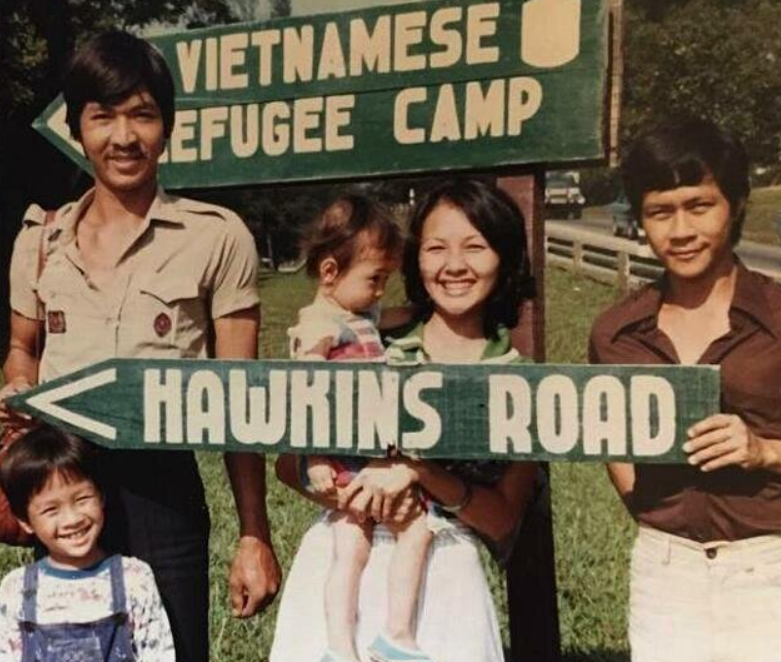
Image credit: National Archives of Singapore
Today, that area is located near Admiralty Road West, near View Road Hospital. Although there’s nothing exactly you could do there, the place is near attractions like Yishun Park and Northpoint City, where the refugees might have passed through decades ago when they visited the former Chong Pang district.
For other nostalgic places, check out:
Cover image adapted from: National Archives of Singapore, Gabriel Tan