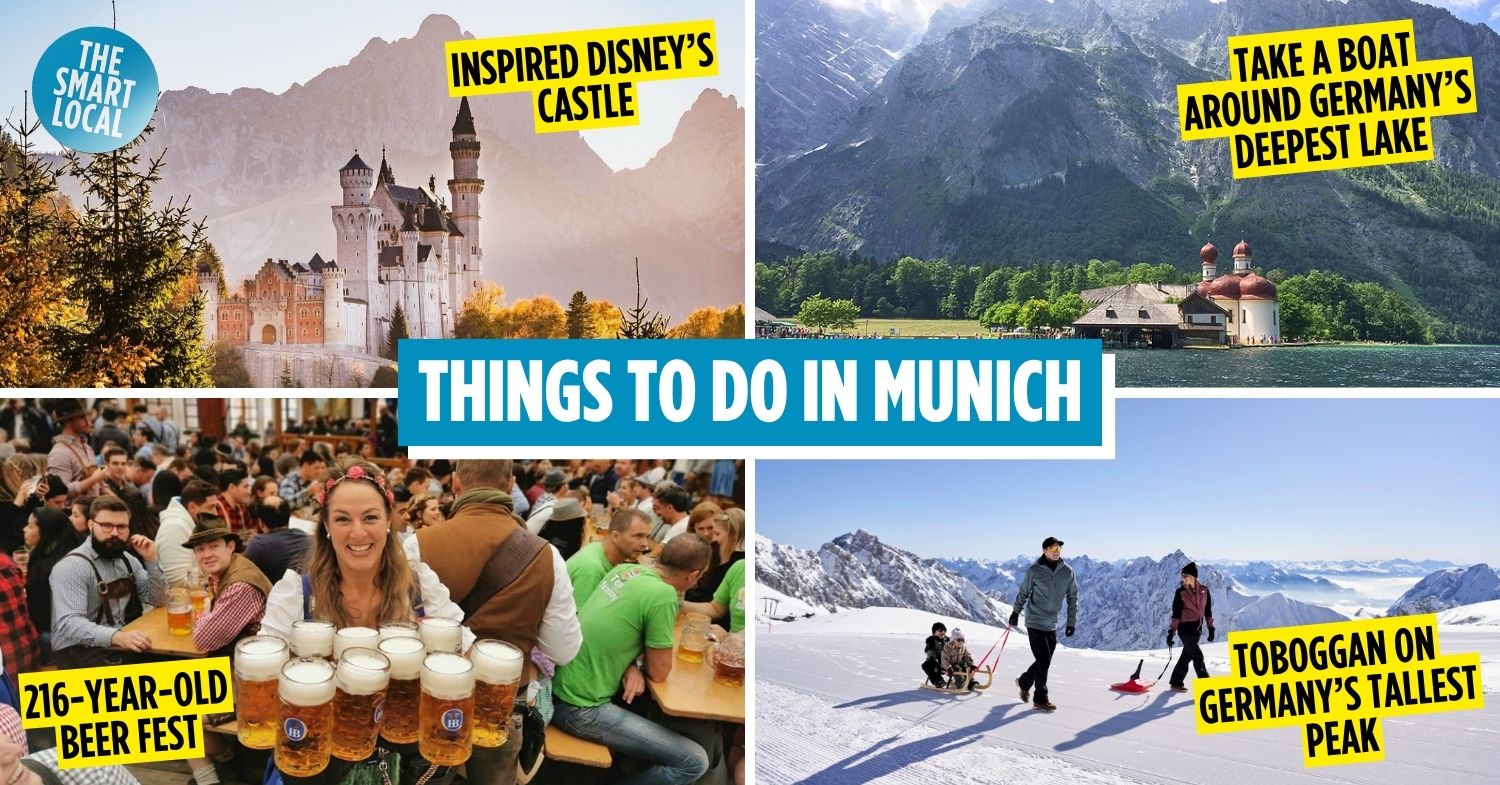

Things to do in Munich
Mention Munich and most people picture 2 things: beer halls and Oktoberfest. That’s a shame, because Bavaria’s capital is arguably the best base in Germany for the Alps. With castles straight out of a storybook, emerald lakes, and painted mountain villages all a mere day trip away, the city itself changes completely with the seasons, from beer gardens in spring, to Christmas markets come winter.
If you’re looking for some inspo, here are 14 things to do in Munich, no matter which season you fly in.
The current exchange rate is S$1 = €0.70 as of 11th November 2026, and prices in the article are accurate as of 11th November 2026.
Table of Contents
1. Neuschwanstein Castle
Real-life fairytale castle that inspired Disney
I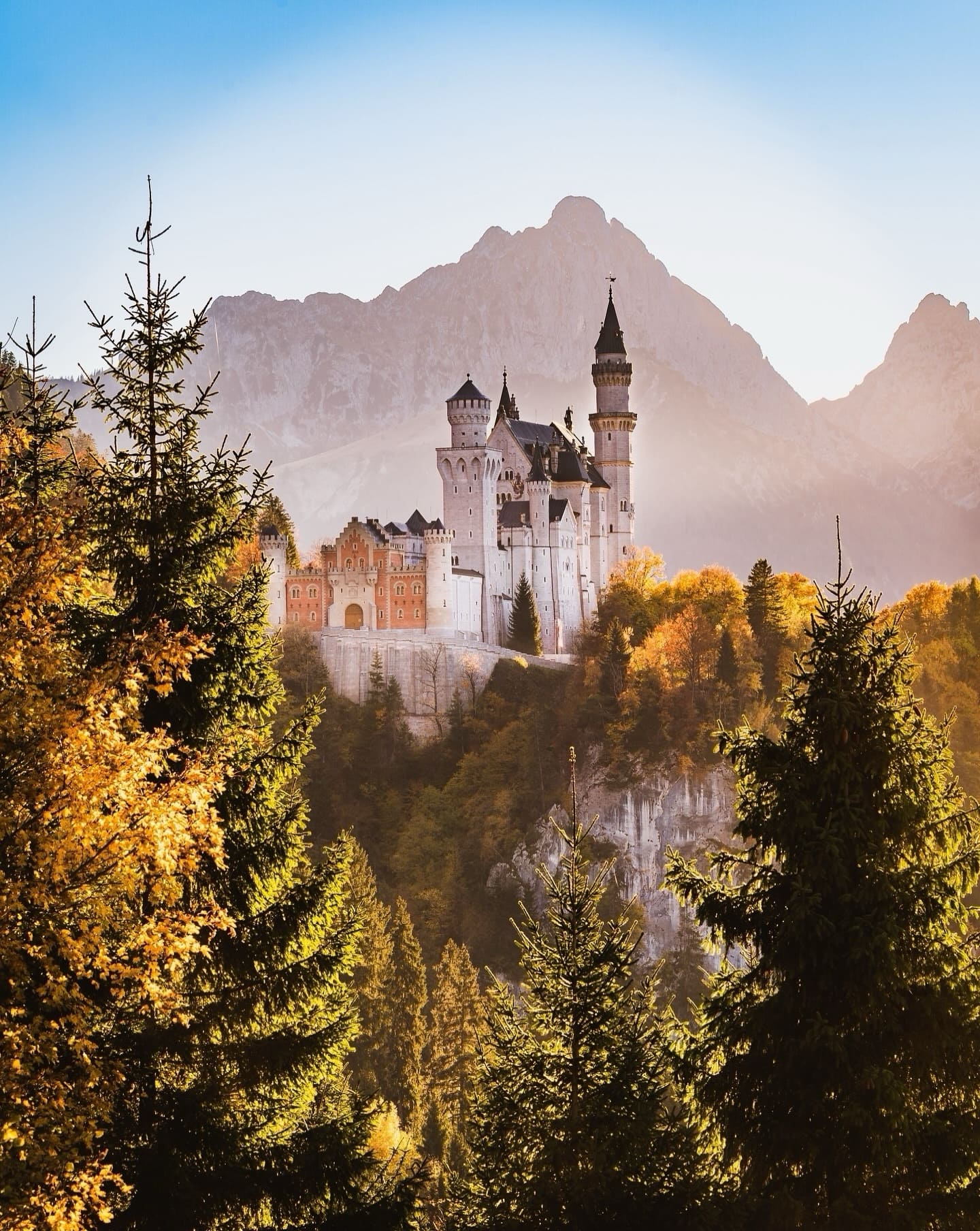 mage credit: @visitbayern via Instagram
No Munich trip is complete without the castle you’ve seen on a thousand postcards. Neuschwanstein Castle was commissioned in 1869 by King Ludwig II, who was nicknamed “fairytale king”. Sadly, he never got to see this ambitious project finished before he passed away, and the castle was opened to the public in 1886, mere weeks after that.
Visits are by timed guided tour only, and each tour takes around 30 minutes, bringing you through rooms that pay homage to composer Richard Wagner’s operas. Tickets cost €21 (~S$31) plus a €2.50 (~S$3.70) online booking fee, and it’s recommended that you book your tickets online ahead of your intended visit date, as they do sell out.
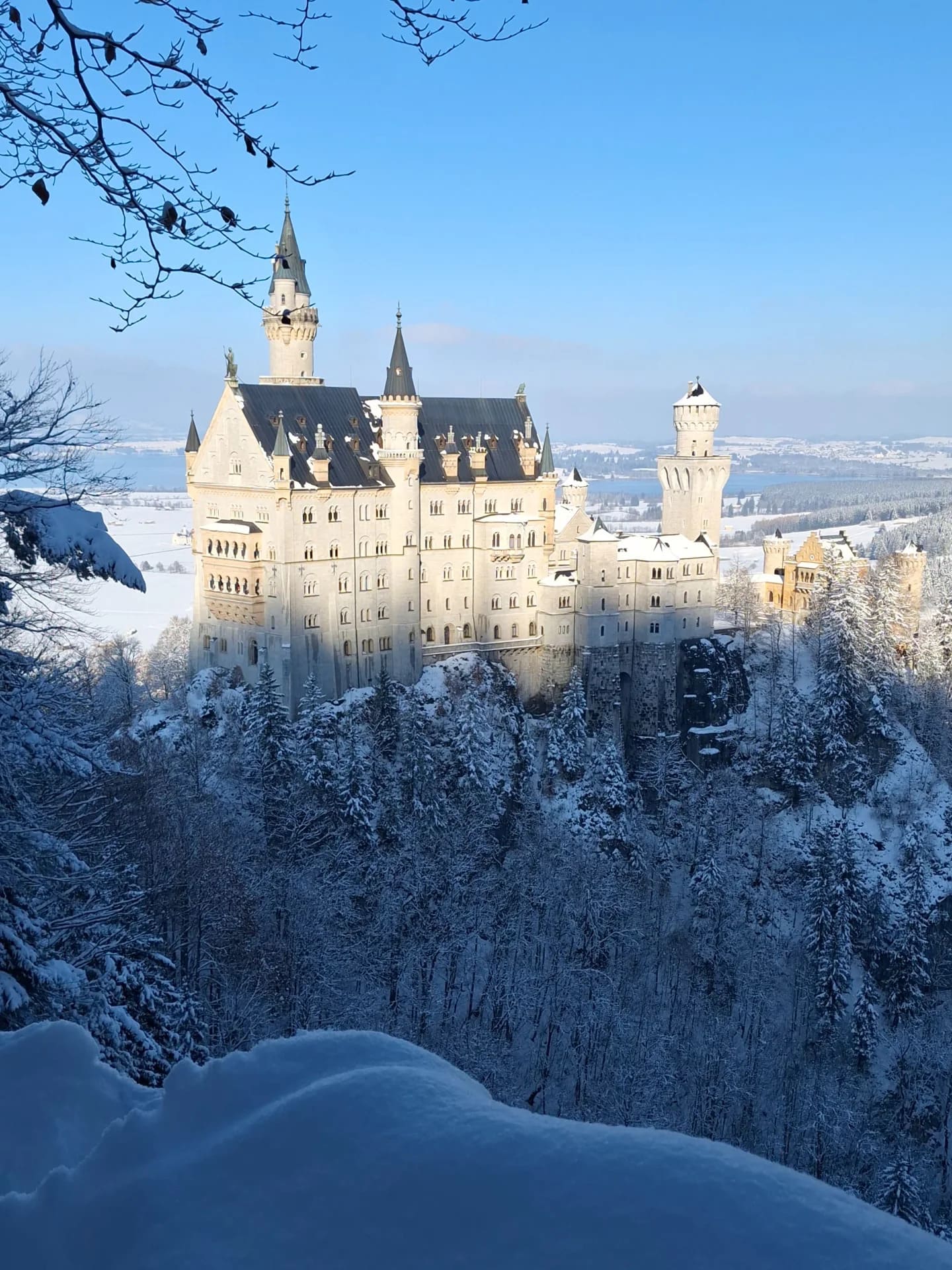 Image credit: @europewithlily via Instagram
The castle sits about 2.5 hours by train from Munich, near the town of Füssen. You should note that the walk to the castle is approximately 40 minutes, winding up a steep hill. Alternatively, you can take a shuttle bus or horse-drawn carriage, though there is a final 10-minute uphill walk after that.
Pro tip: go in autumn for red-golden forests, or hold out till winter to catch a snowy scene that’s straight out of a fairytale.
Season to visit: All seasons
Address: Neuschwansteinstraße 20, 87645 Schwangau, Germany
Opening hours: 28th Mar-15th Oct 9am-6pm | 16th Oct-27th Mar 10am-4pm (Closed on 1st Jan, 24th, 25th & 31st Dec)
Contact: +49 8362 9398877 | Neuschwanstein Castle website
2. Linderhof Palace
The only palace that Ludwig II finished, with an underground grotto lake
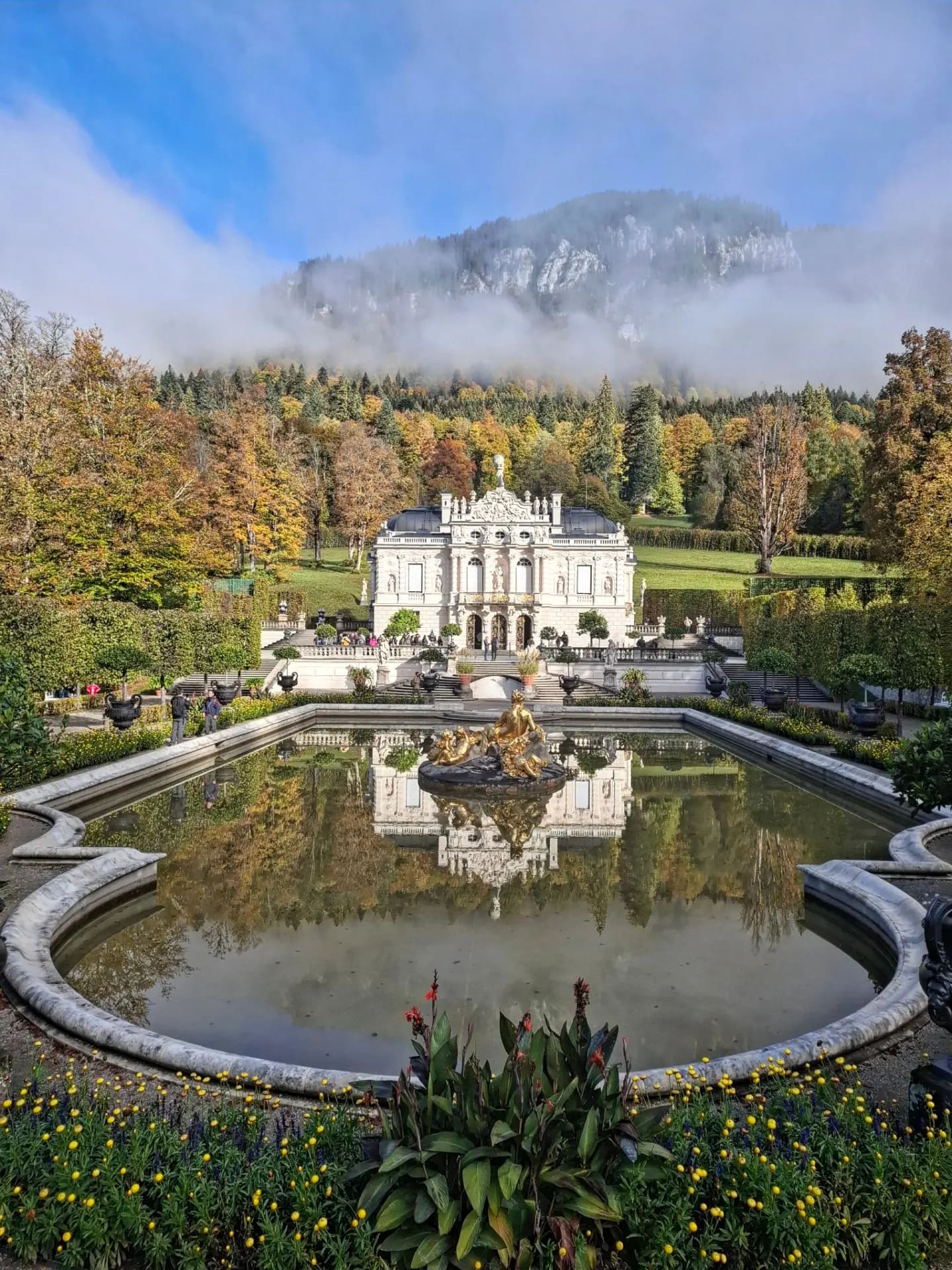 Image credit: @la.lidija via Instagram
Ludwig II never got to see Neuschwanstein Castle completed, but he did stay somewhere else just as spectacular – Linderhof Palace – AKA one of the palaces that was completed in his lifetime.
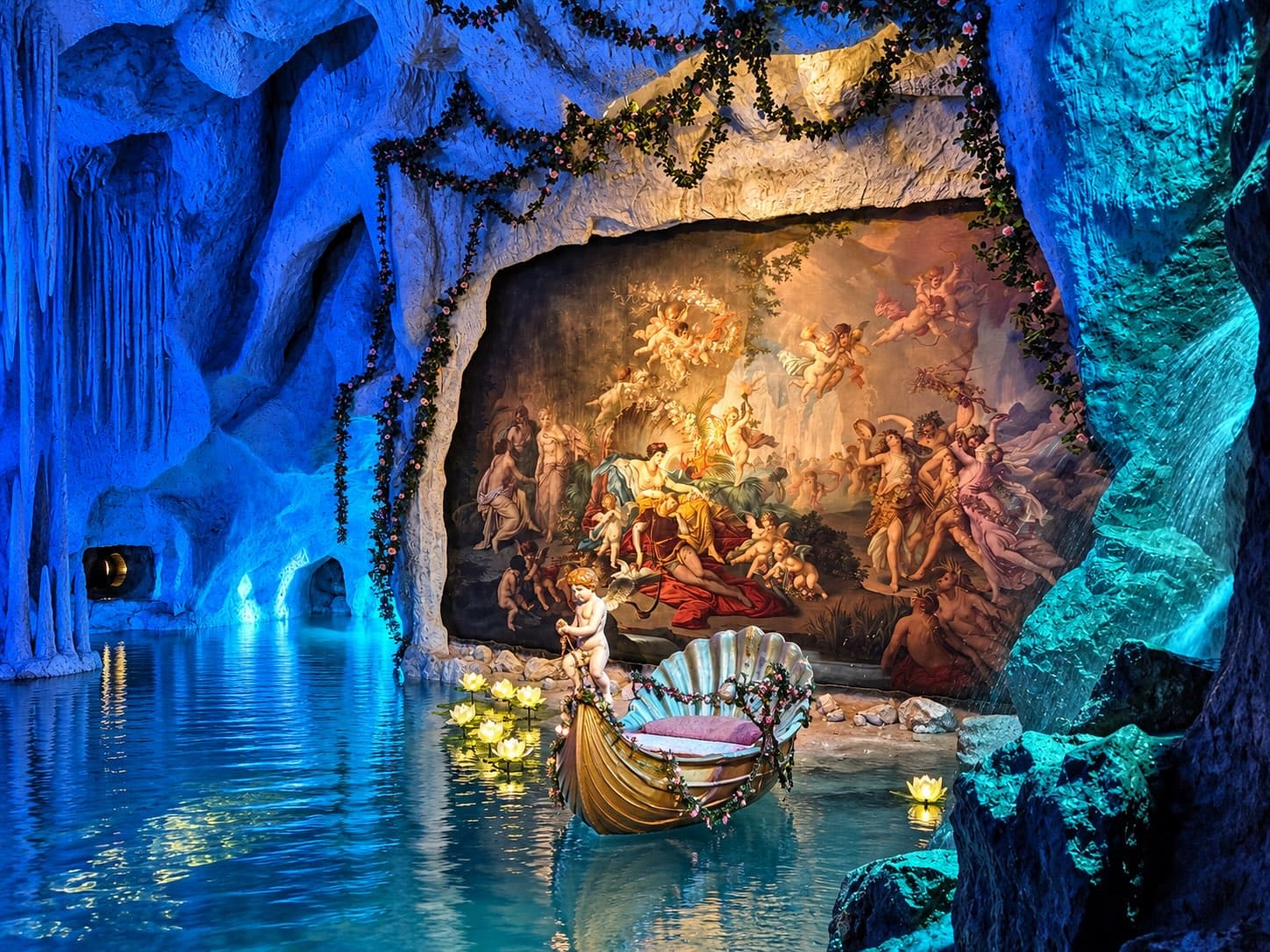 Image credit: @steven2759 via Instagram
It was here that he spent more time than any of his other palaces, and if you see the Venus Grotto, you might just understand why. The artificial dripstone cave, 90m long and 14m tall, was the largest of its kind in the 19th century, and had an interactive stage which allowed Ludwig II to feel like he was in Wagner’s opera, Tannhäuser.
Fun fact: the stage was designed to Wagner’s exact stage directions, and also inspired by the Blue Grotto in Capri, which Ludwig II never visited, but was fascinated with. It was also Bavaria’s first permanent electric lighting system back in Ludwig II’s day, with lamps that had exchangeable colored glass discs to shift the mood of the artificial lake and waterfall!
Palace tours at Linderhof Palace run every 5 to 10 minutes, each lasting around 25 minutes. Grotto tours only take place from April to October each year, when the Venus Grotto and other ancillary buildings in Linderhof are open.
A palace-only ticket costs €11 (~S$16), or €18 (~S$27) with the Venus Grotto added.
Season to visit: All seasons, but the Venus Grotto and ancillary buildings are not open in autumn and winter.
Address: Linderhof 12, 82488 Ettal, Germany
Opening hours: 15th Apr-15th Oct 9am-6pm | 16th Oct-14th Apr 10am-4.30pm (Venus Grotto is closed in winter)
Contact: +49 8822 9203-0 | Linderhof Palace website
3. Herrenchiemsee Palace
Palace on an island in Bavaria’s largest lake, modelled after Versailles
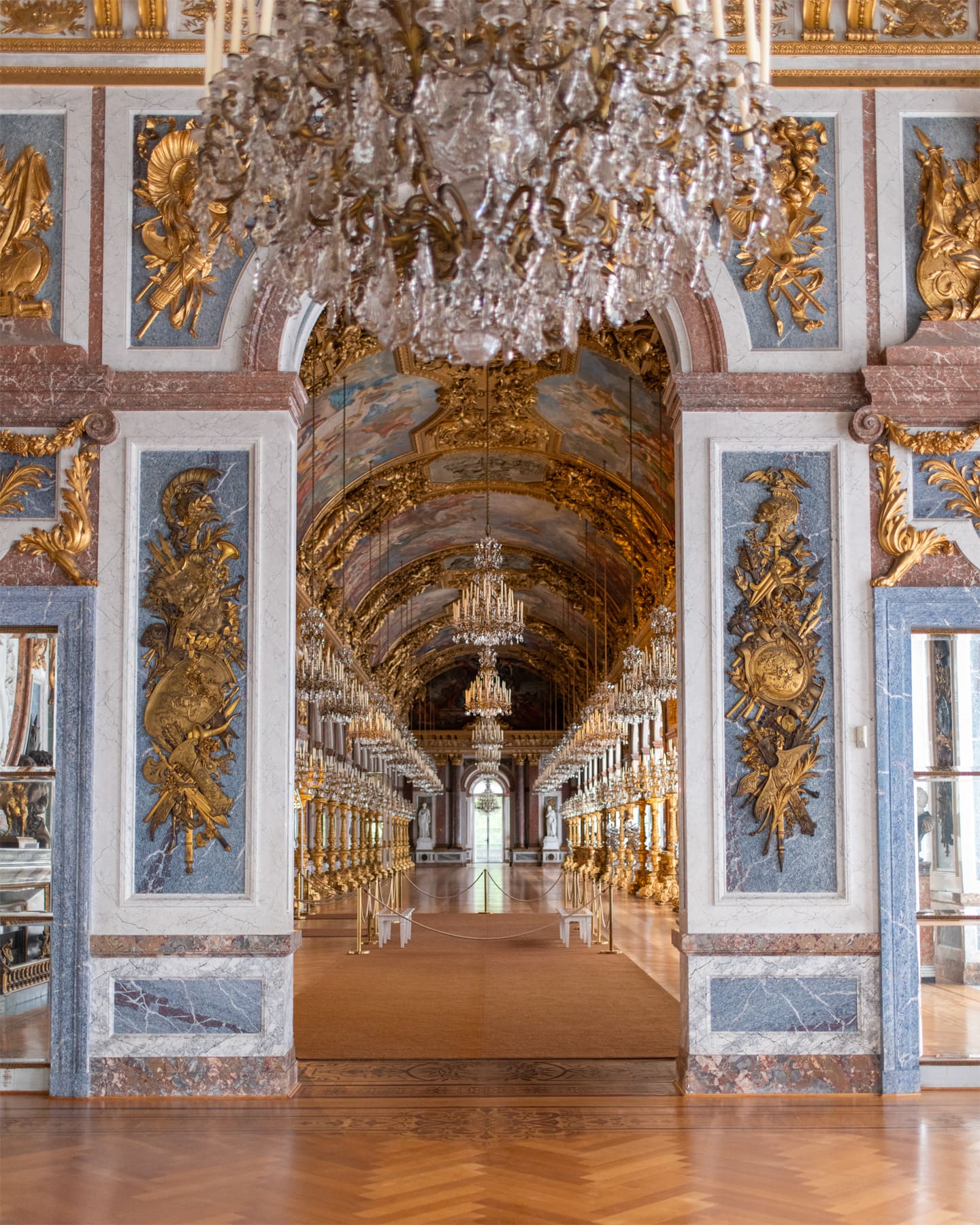 Image credit: @schloesserverwaltung.bayern via Instagram
Another of Ludwig II’s names is Mad King Ludwig, thanks to his history of paranoia, extreme reclusiveness, and how he drained the royal treasury to build his extravagant, impractical castles. Today, Herrenchiemsee Palace stands as the 3rd of his fantasy castles, built on Herreninsel, an island in Bavaria’s largest lake.
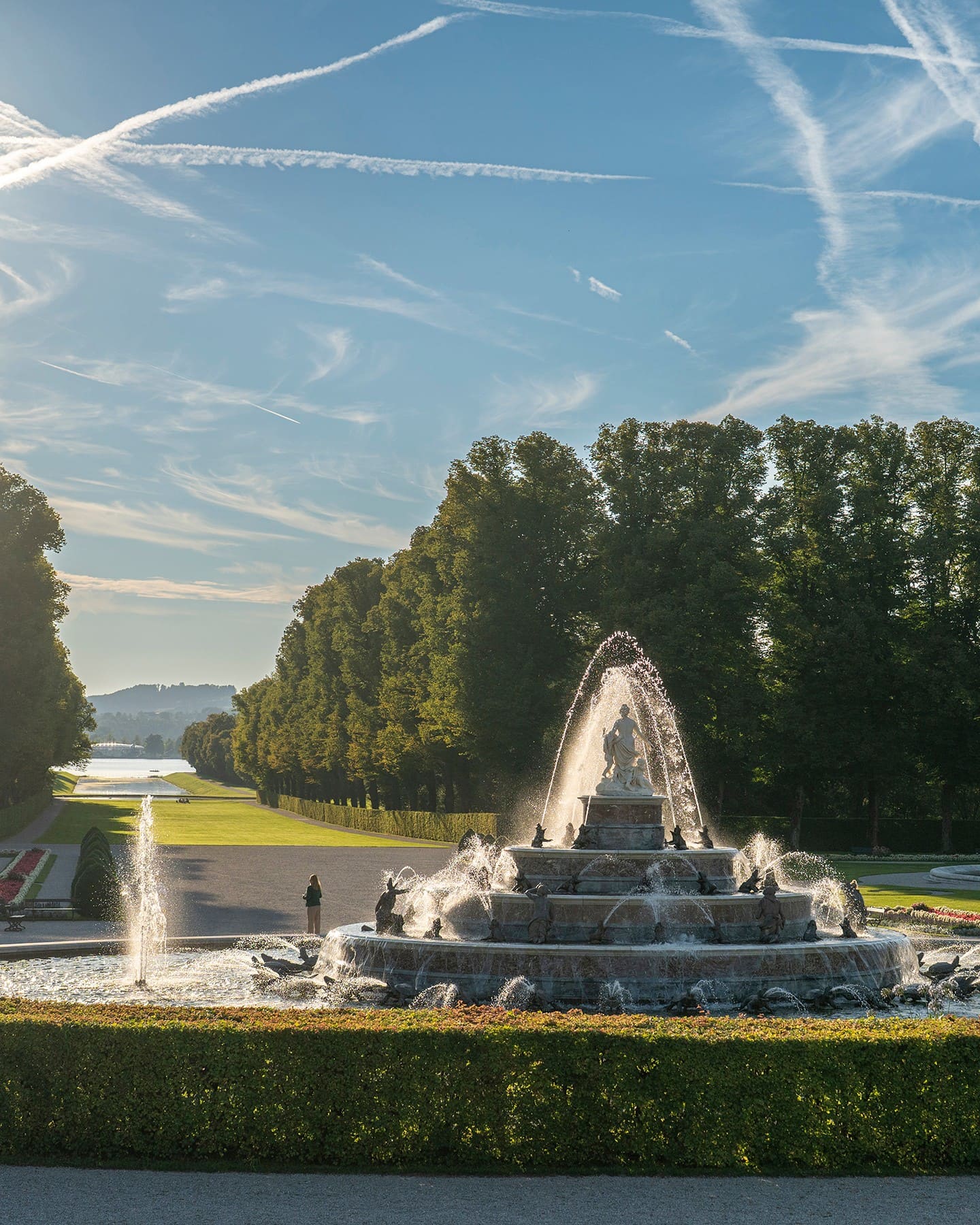 Image credit: @schloesserverwaltung.bayern via Instagram
It’s so big, Chiemsee is also affectionately known as the Bavarian Sea. But its location is not the only fantastical part of this palace – it was modelled after Versailles in France, with its very own Hall of Mirrors that’s even longer and grander than the OG!
Then, there’s the magnificent marble State Staircase, and Tischlein-deck-dich, or “little table serve dinner”, a mechanical, lowerable dining table inspired by a Brothers Grimm fairytale.
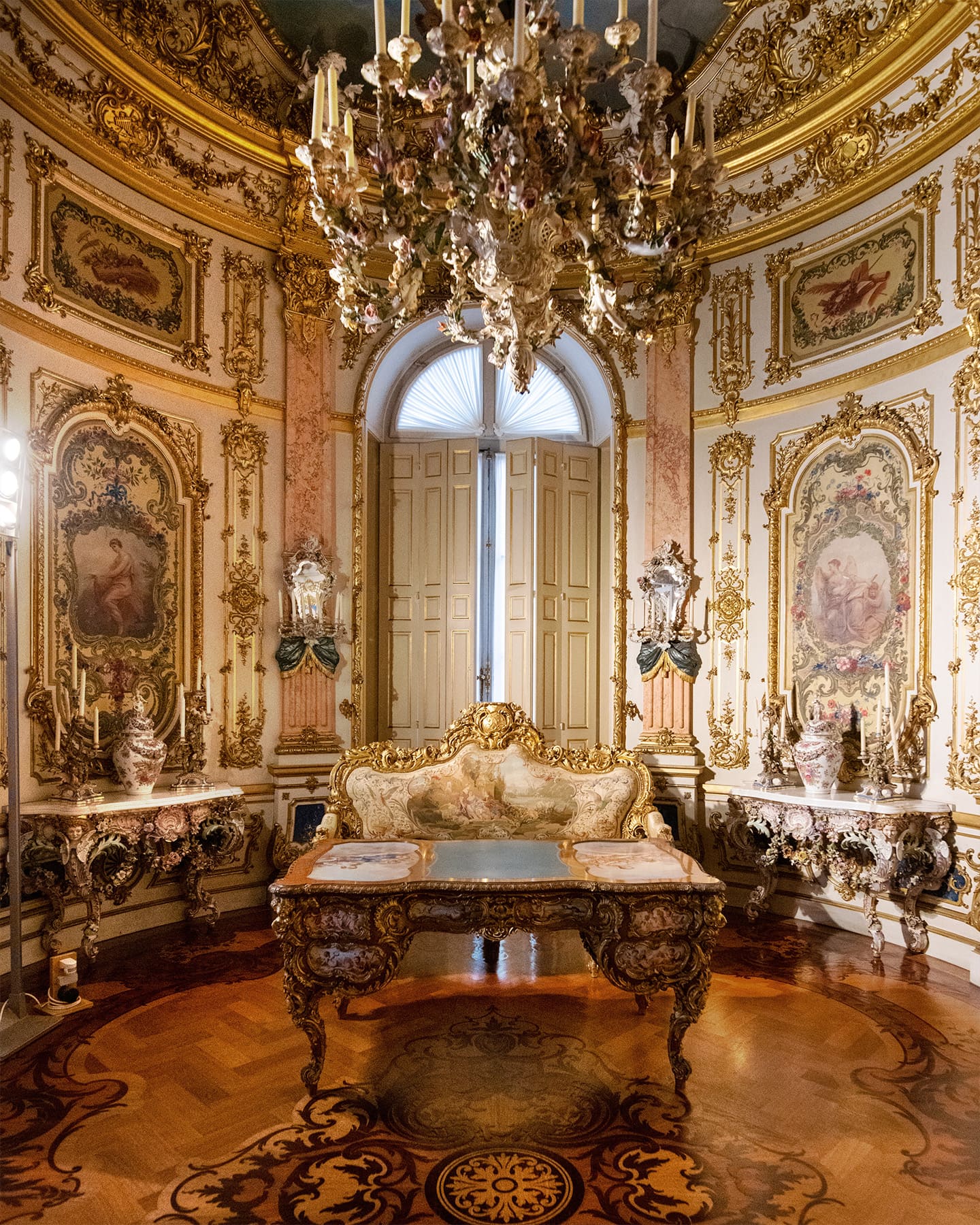 Image credit: @schloesserverwaltung.bayern via Instagram
Herrenchiemsee Palace was the final and most luxurious of Ludwig II’s projects, and you can see it too on one of the many English tours that run daily. Each tour lasts approximately 40 minutes.
To get there, you’ll have to hop on an hour-long train from Munich to the lakeside town of Prien, before taking a 20-minute boat ride to the island. The island combination ticket, covering the palace tour, the King Ludwig II Museum, and the old Augustinian monastery, costs €14 (~S$20). Boat tickets are sold separately, at around €13.60 (~S$20) for a return trip from Prien that stops at both islands.
P.S. Make a day out of your trip by visiting nearby Fraueninsel, where the 1,200-year-old Kloster Frauenchiemsee is still home to a small community of Benedictine nuns, and you get to feast on smoked Chiemsee fish.
Season to visit: All seasons, but outdoor fountains are not in operation during winter.
Address: 83209 Herrenchiemsee, Germany (boats depart from Prien-Stock harbour)
Opening hours: Apr-24th Oct 9am-6pm | 25th Oct-Mar 10am-4.45pm (Closed on 1st Jan, Shrove Tuesday, 24th, 25th & 31st Dec)
Contact: +49 8051 6887-900 | Herrenchiemsee Palace website
4. Nymphenburg Palace
Ice-skate on the frozen canal in Germany’s largest Baroque palace
I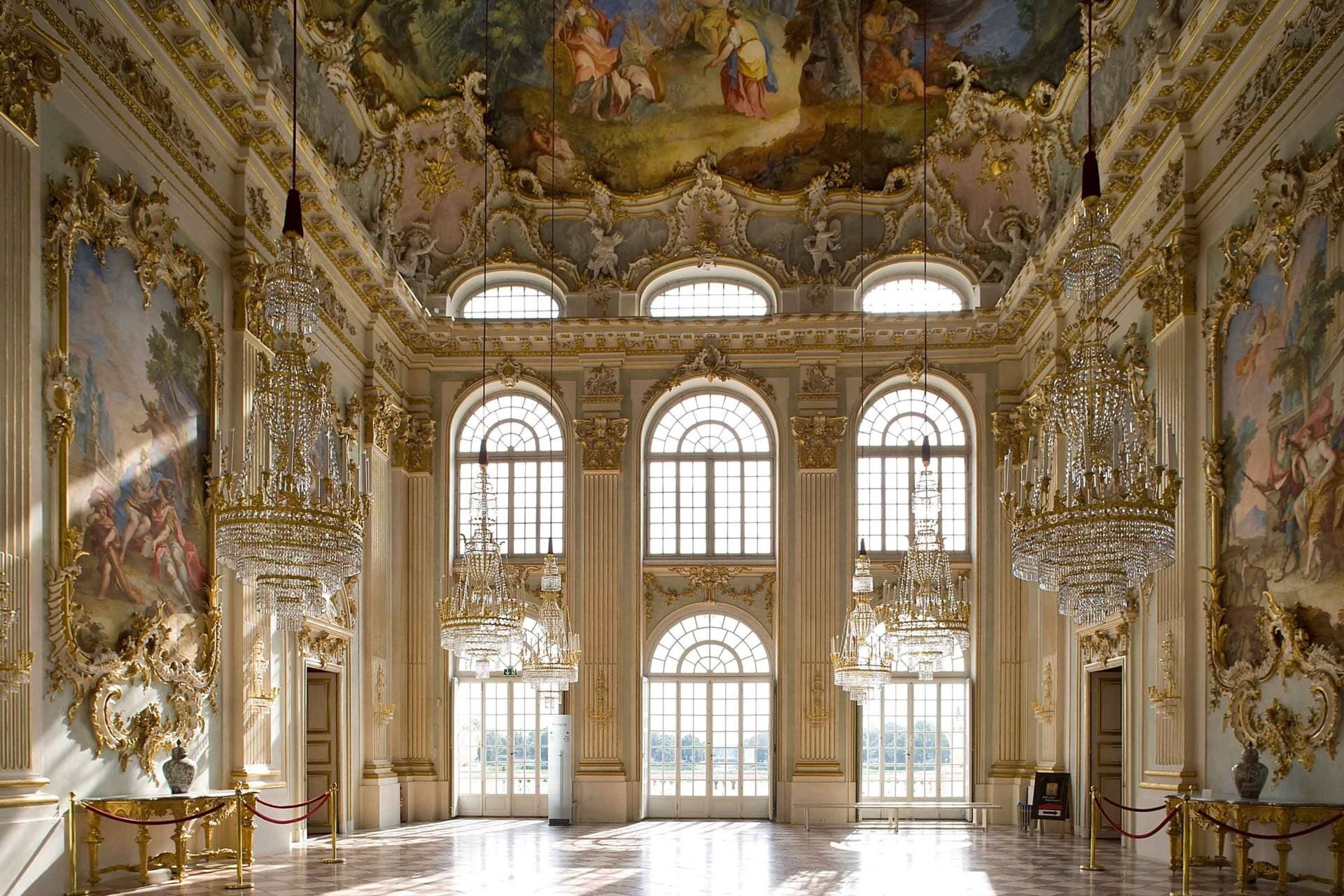 mage credit: Simply Munich
If you’re looking for a palace within Munich, look no further than Nymphenburg Palace, which was the summer residence of Bavaria’s ruling Wittelsbach family from 1664. Today, it’s the largest Baroque palace in Germany, with a free-to-enter park, canal, and gardens.
Inside, you’ll find the Marstallmuseum, one of the most important court stable museums in the world, with its collection of ornate royal carriages and sleighs. Here too is the Museum of Nymphenburg Porcelain, a private collection of Nymphenburg porcelain from the 18th to the 20th centuries.
A combination ticket gets you into the palace and both museums for €16 (~S$24) in winter, or €20 (~S$30) from April, when it also covers the park pavilions. Palace-only entry is €10 (~S$15). Do note that the other park palaces within the park are not open in winter, so you’ll have to visit in the warmer summer months to explore the numerous pleasure pavilions.
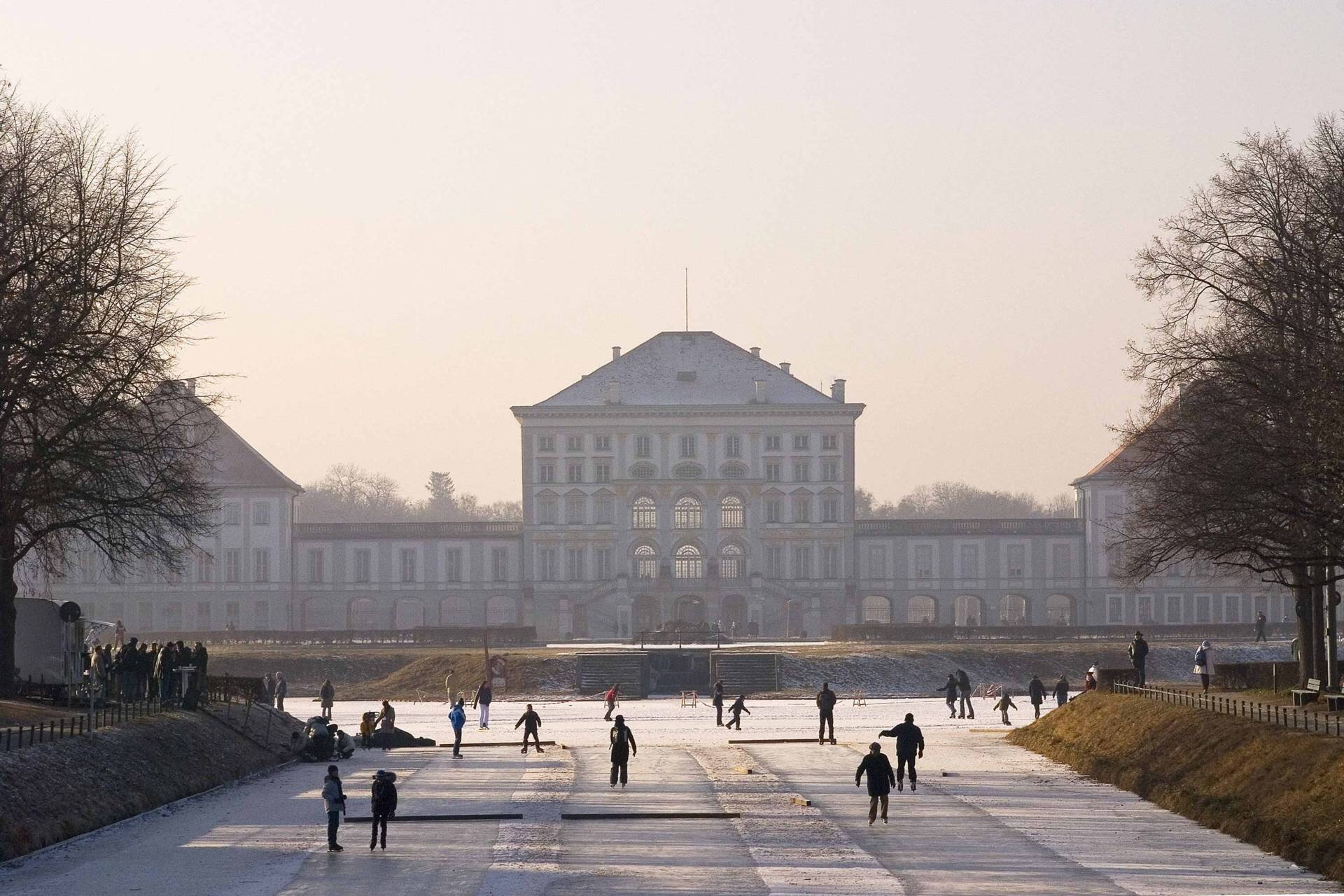 Image credit: Simply Munich
For those of you coming in winter, it’s when the mercury dips below zero that the palace takes on new life – when the long Nymphenburg Canal freezes over, it’s transformed into an outdoor skating rink, with the stately palace as your backdrop.
Season to visit: All seasons, but ice skating is only available in winter. Outdoor fountains, the park cafe, and smaller park palaces are closed in winter.
Address: Schloß Nymphenburg 1, 80638 Munich, Germany
Opening hours: 1st Apr-15th Oct 9am-6pm | 16th Oct-31st Mar 10am-4pm (Closed on 1st Jan, Shrove Tuesday, 24th, 25th & 31st Dec)
Contact: +49 89 17908-0 | Nymphenburg Palace website
5. Zugspitze
Germany’s highest peak, where you can toboggan on a glacier
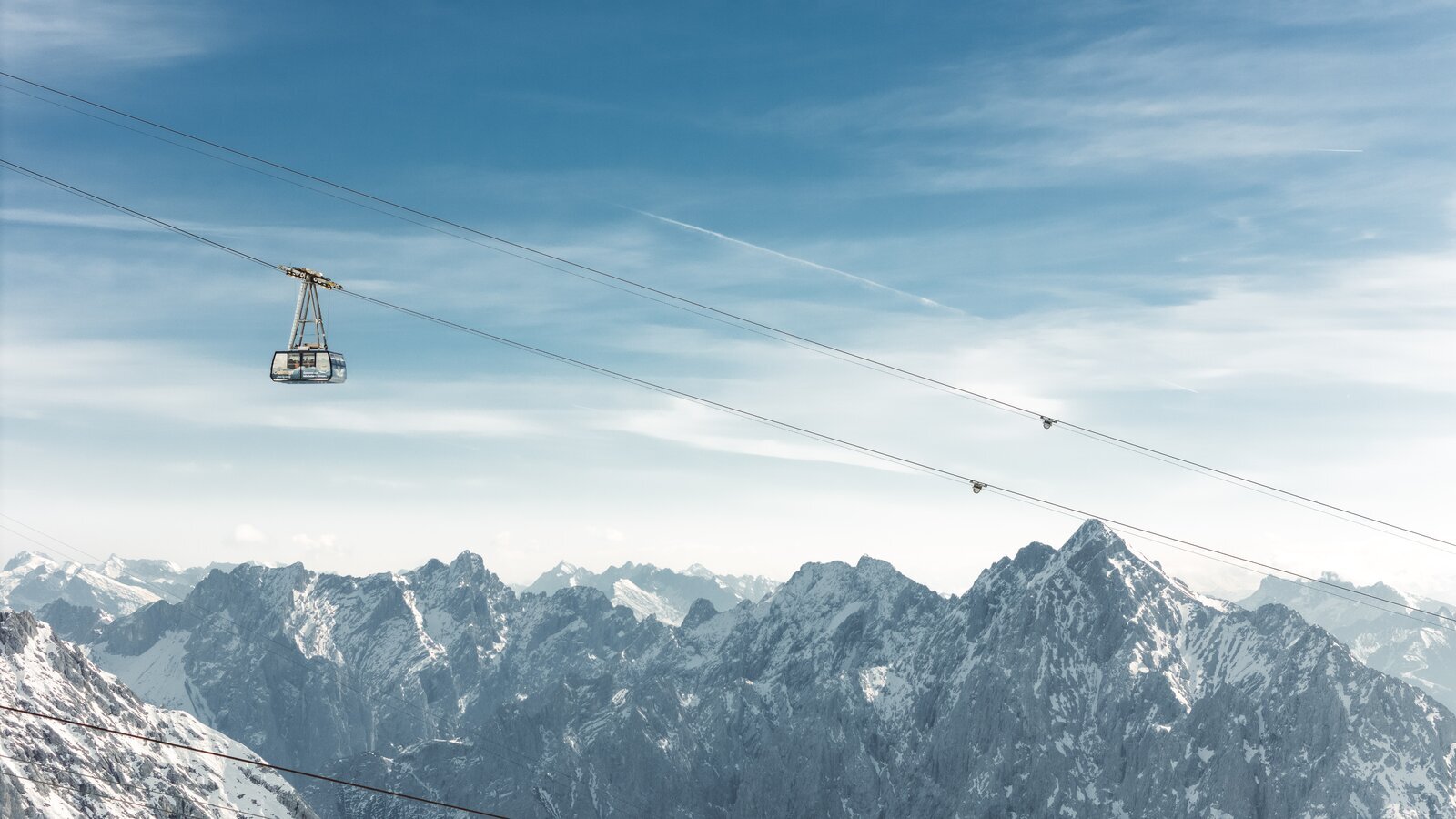 Image credit: Zugspitze
Get that top of the world feeling at the highest point in Germany, or Zugspitze. Standing at 2,962m above sea level, it’s the tallest peak in the Bavarian Alps, on the border between Garmisch-Partenkirchen in Bavaria and Tyrol in Austria.
For all its height, it only takes 10 minutes on the record-breaking Seilbahn Zugspitze cable car from Lake Eibsee directly to the top, where on a clear day you can see peaks across 4 countries: Germany, Austria, Switzerland, and Italy.
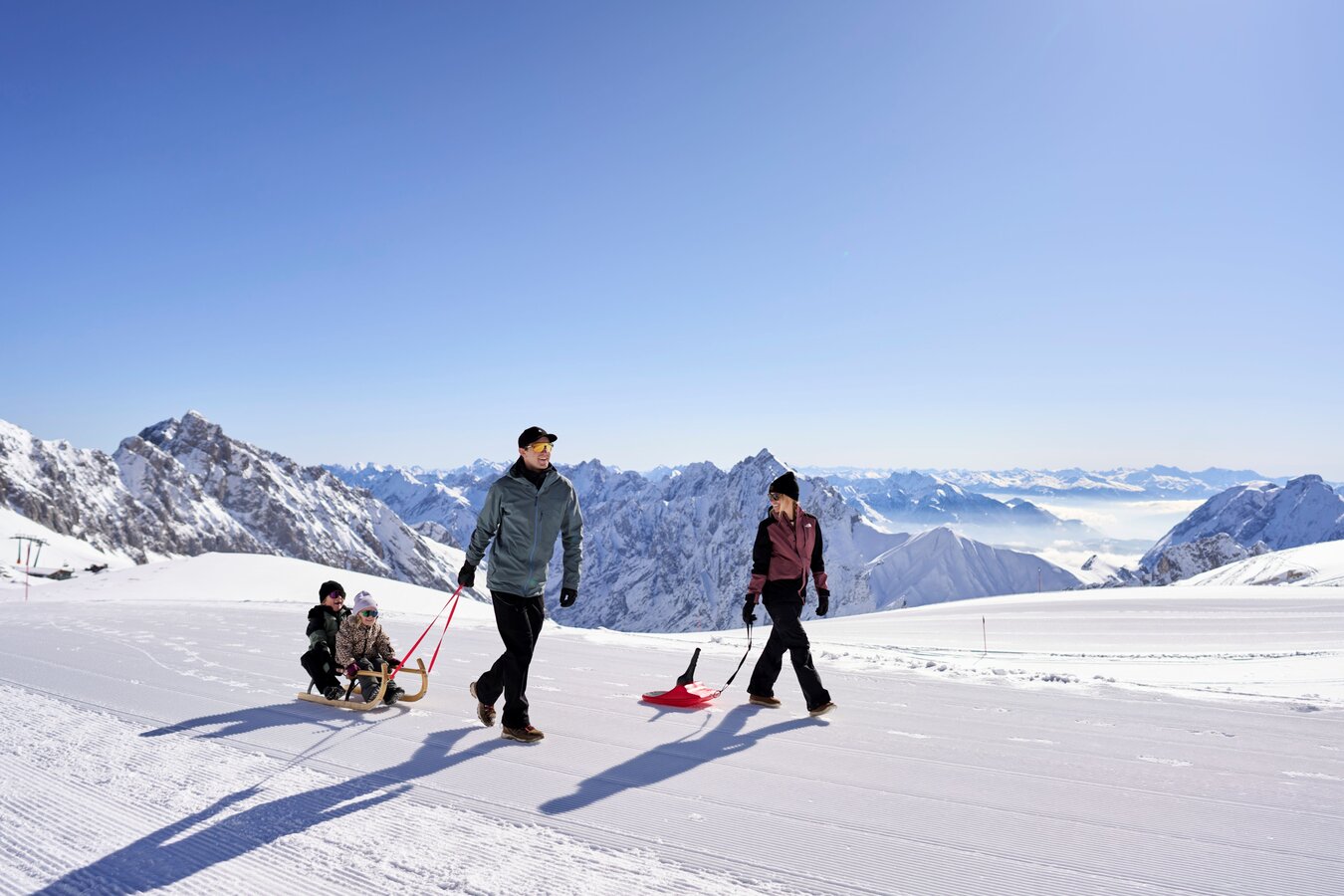 Image credit: Zugspitze
Besides skiing in winter, there are free toboggan runs which you can rent bob sledges or wooden sledges to go down on. There’s a milder family toboggan run, or the more thrilling glacier toboggan runs, each measuring 500m. Hikers take note: there are both summer and winter trails on this mountain, so gear up for views to last a lifetime.
We recommend getting the Ticket Zugspitze that includes one ascent and one descent using the Cable car Zugspitze, the historic cogwheel train, and unlimited use of the Gletscherbahn cable car, AKA Glacier Cable Car, on the same day. It’s priced at €78 (~S$115) for adults, €62.50 (~S$89) for youths aged 16 to 18, and €39 (~S$56) for children aged 6 to 15.
Season to visit: Best in summer and winter. Spring is good for valley hikes and lake walks. Many facilities close or have limited operations during the autumn months for maintenance works.
Address: Olympiastraße 27, 82467 Garmisch-Partenkirchen, Germany
Opening hours: Sep-Jun 8.30am-4.45pm, Daily | Jul-Aug 8am-5.45pm, Daily (Cable car)
Contact: +49 8821 797-0 | Zugspitze website
6. Mittenwald & Oberammergau
Alpine villages that look like a painting
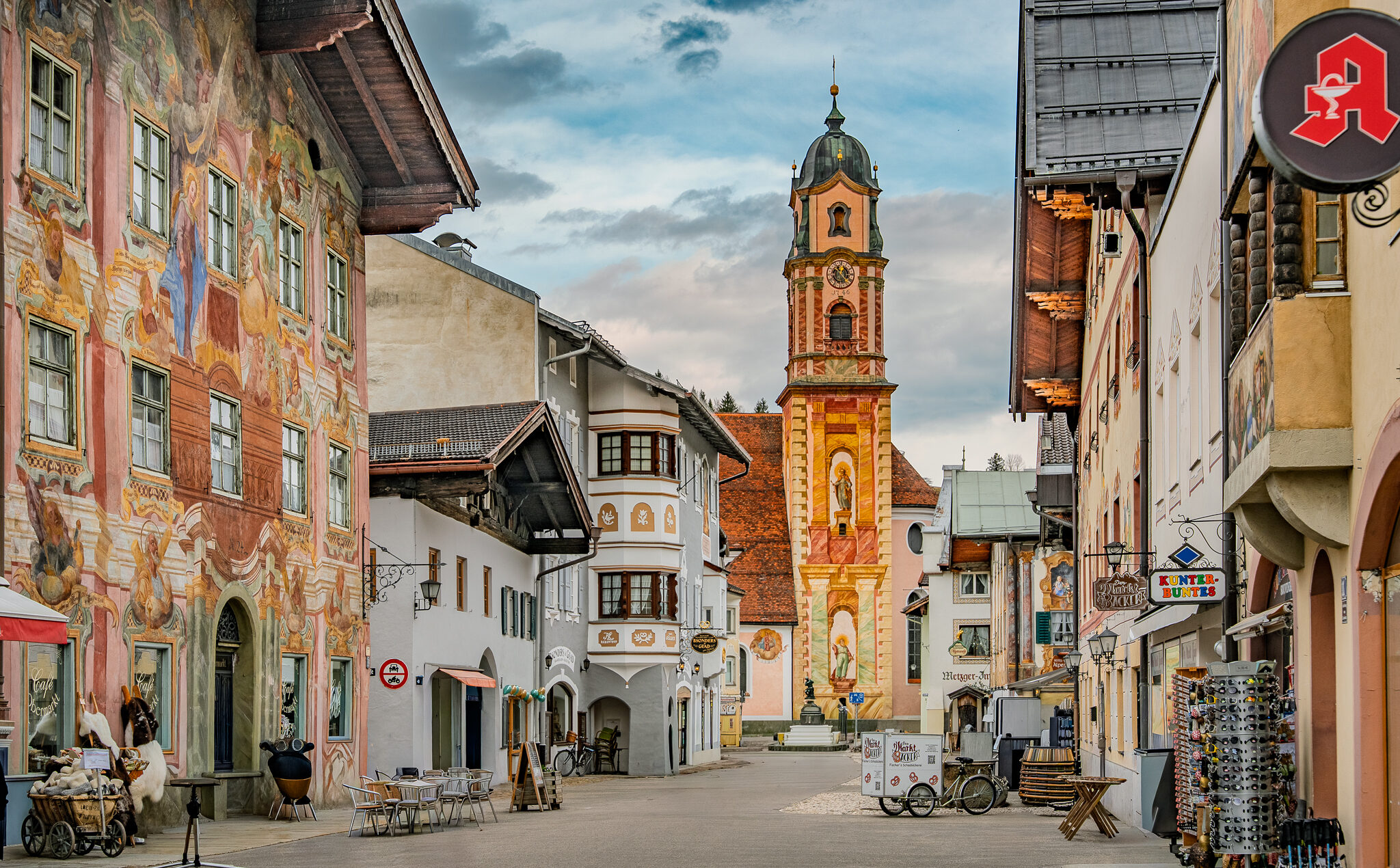 Mittenwald.
Image adapted from: @abelartsg via Instagram
Also near the Austrian border are Mittenwald and Oberammergau, 2 small villages that look like they’ve been plucked from a painting. In these villages, you’ll find Lüftlmalerei, a centuries-old Bavarian tradition of outdoor mural and fresco painting, native to the Alpine regions of southern Germany and Austria.
Johann Wolfgang von Goethe famously described Mittenwald as a lebendes Bilderbuch, or living picture-book. The town is also famous for its violins, and you can explore its musical history at the Geigenbau Museum, from the time of Matthias Klotz, back in 1689.
Over in Oberammergau, a massive Passion Play is held every 10 years – the next will be in 2032 – depicting the suffering, death, and resurrection of Jesus Christ. The first play was held in 1634, after the village had made a promise to God to perform such a play if their town was spared further deaths from the bubonic plague.
Make it a bucket list item to visit these towns in December for a wholly different, magical scene, complete with snow, Christmas lights, and scents of gluhwein.
Season to visit: All seasons
Contact: Mittenwald website | Oberammergau website
7. Königssee
One of Germany’s cleanest & most beautiful lakes, with a 500-year-old salt mine nearby
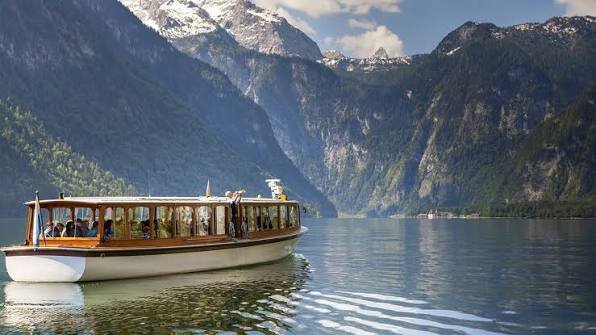
Image credit: Bayerische Seenschifffahrt
Tucked inside Berchtesgaden National Park near the Austrian border, Königssee is one of Germany’s most beautiful, and its deepest lake. Only electric-powered boats, rowboats, and pedal boats are permitted here, as they have been for 100 years, to preserve the pristine ecosystem of the lake.
Midway through your boat trip, the boat glides to a halt facing a massive limestone cliff named the Echo Wall. This is the point when your boatman will play a trumpet towards the cliffs, the sound of which bounces back in a distinct multi-fold echo that almost sounds like a musical duet with the mountain.
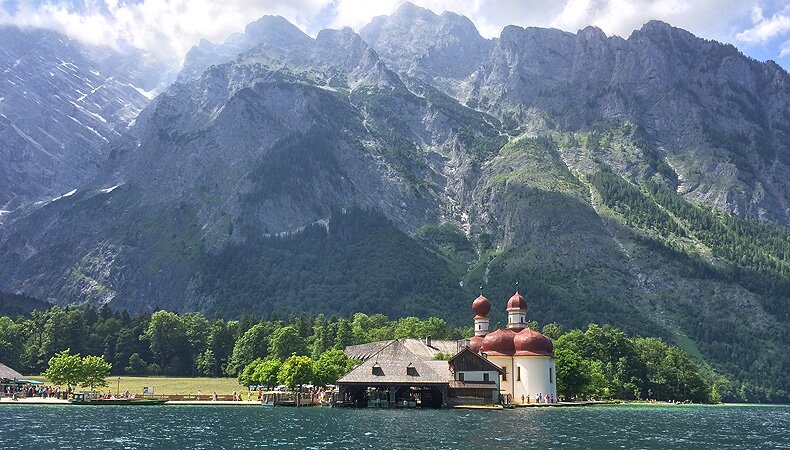
Image credit: Bayerische Schlösserverwaltung
The journey will also take you to Saint Bartholomä, a pilgrimage church founded in 1134 with red onion domes, framed by the sheer east face of Mount Watzmann. A return ticket to St. Bartholomä costs €23.40 (~S$35), and 50% off for children aged 6 to 17.
Round off the day at the Berchtesgaden Salt Mine nearby, which has been running since 1517. You’ll suit up in miners’ gear, ride a mine train into the mountain, whizz down wooden miners’ slides, and cross an underground lake by raft. Tickets cost €26.50 (~S$39) for adults, and €13.50 (~S$19) for children aged 4 to 16.
Season to visit: All seasons, but the boat runs on a limited schedule and route in autumn and winter.
Address: Seestraße 3, 83471 Schönau am Königssee, Germany
Contact: +49 8652 1760 | Königssee website
8. Frühlingsfest
“Spring Festival”, running since 1965
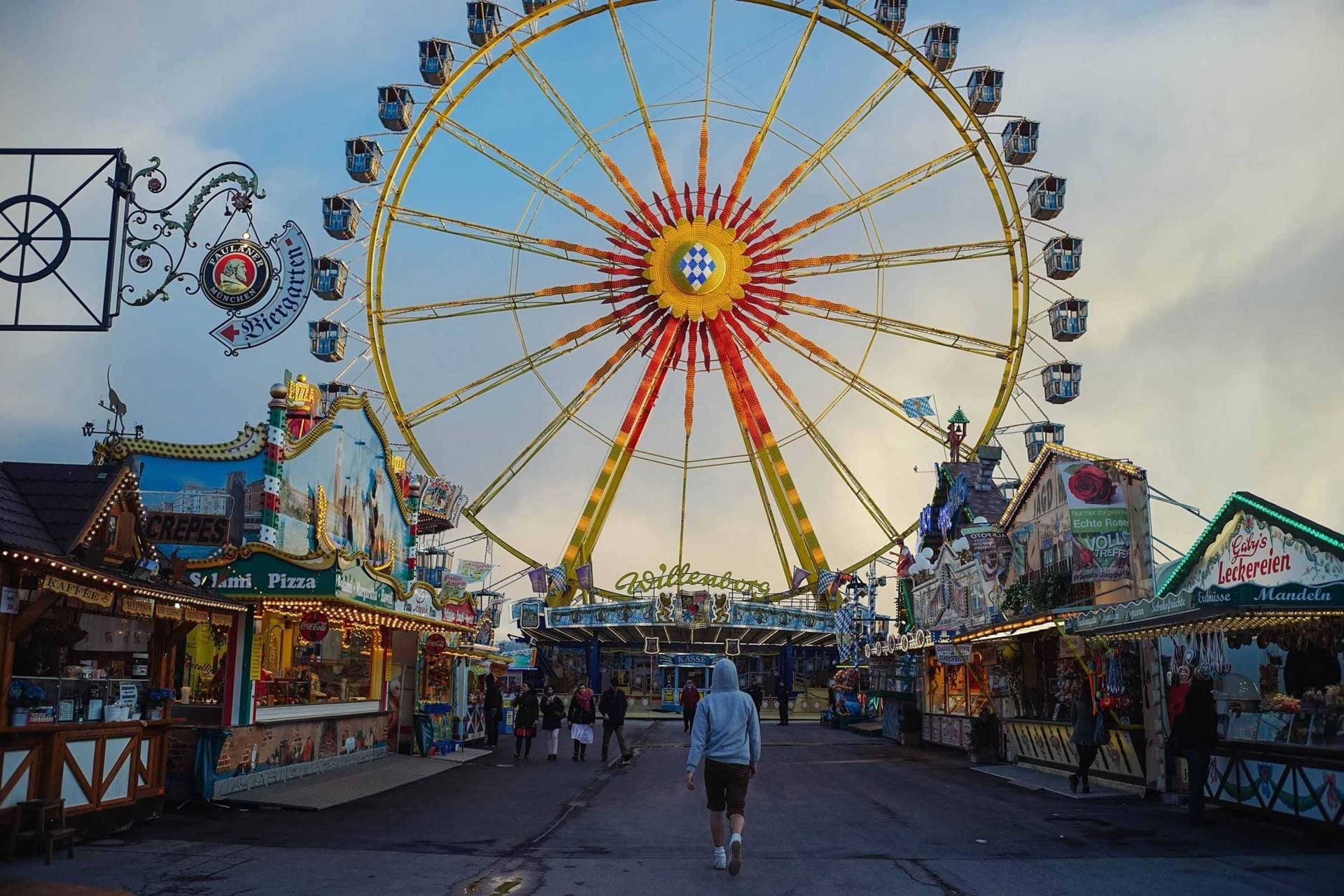 Image credit: Simply Munich
There’s plenty to do and celebrate in Munich year-round, and there’s no better way to kick off the winter gloom than with Frühlingsfest, or “Spring Festival”, which takes over the famed Theresienwiese fairground each April and May.
Affectionately known as Oktoberfest’s little sister, this festival has been running since 1965, and marks the city’s first big folk festival of each year.
Think beer tents, a ginormous Ferris wheel, parades, and an amusement park. If the festivities of Oktoberfest are too large-scale for your liking, then perhaps you’d like to visit Frühlingsfest instead for more local vibes.
Plus, entry to Frühlingsfest is free. Plan ahead for Spring 2027, when the festival will run from 16th April to 2nd May 2027.
Season to visit: Spring
Address: Theresienwiese, 80336 Munich, Germany
Contact: +49 (0)89 233-96500 | Frühlingsfest website
9. Oktoberfest
World’s biggest beer festival
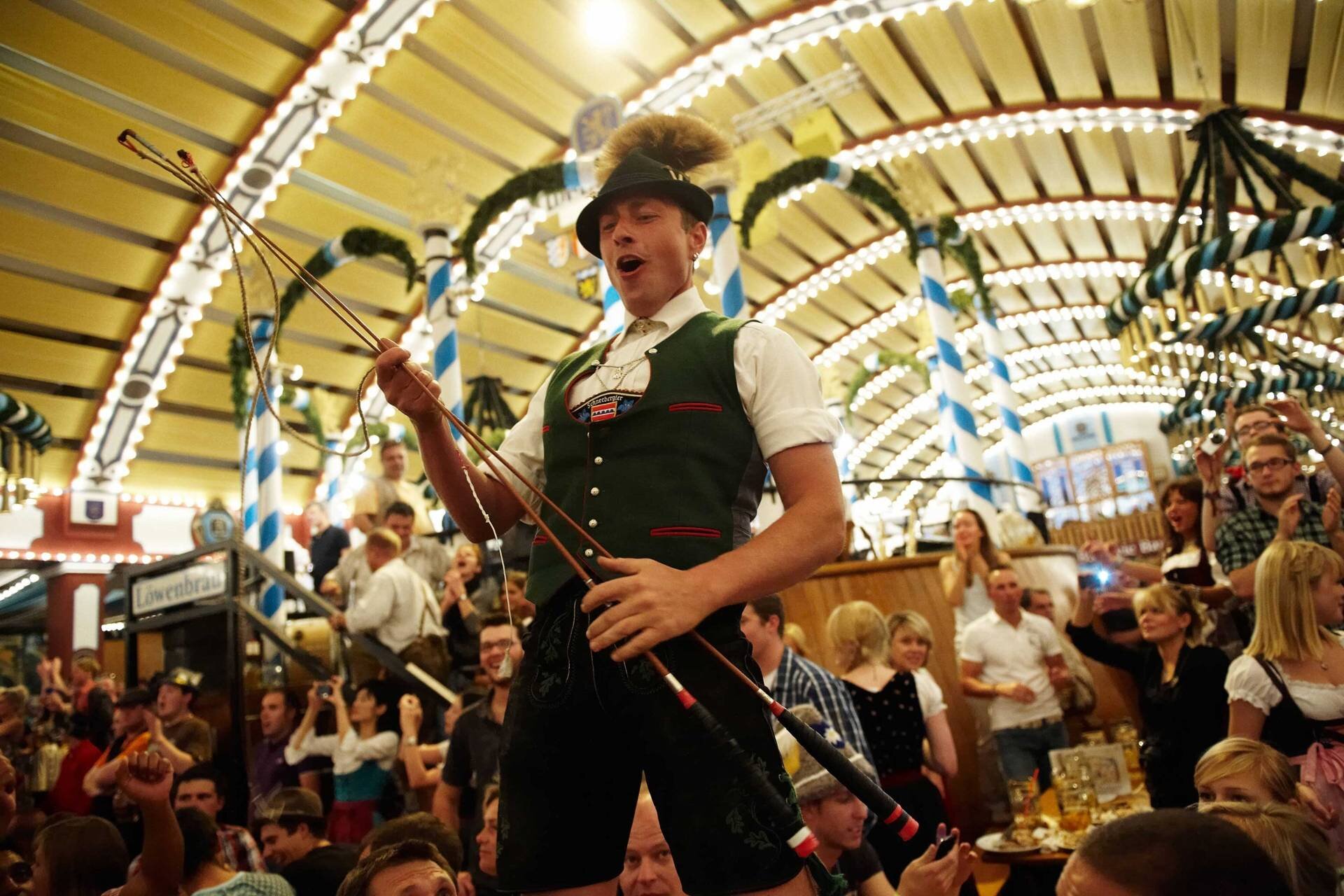 Image credit: Simply Munich
Oktoberfest needs little introduction. It’s celebrated all around the world, but Munich is where it all began in 1810, when Crown Prince Ludwig of Bavaria married Princess Therese of Saxe-Hildburghausen on the fields outside the then city wall.
Every autumn since, Theresienwiese, AKA Therese’s Meadow, sees millions of dirndl– and lederhosen-clad people descend on its fairgrounds for over 2 weeks of beer tents, brass bands, carnival rides, and traditional Bavarian nosh.
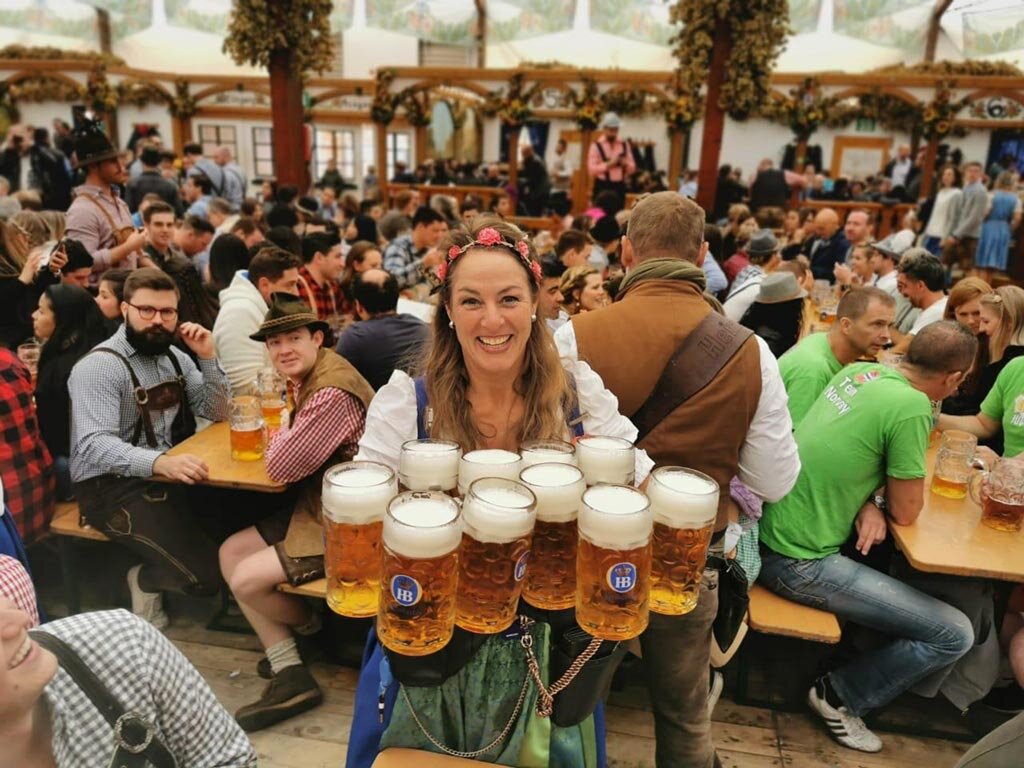
Image credit: Oktoberfest Tours
Entry to Oktoberfest is free, and the 2027 edition will run from 18th September to 3rd October 2027. You may want to reserve tables ahead of time, especially in the big tents, and even more so on weekends.
Fun fact: no beer can be served at the festival before the mayor of Munich taps the first keg in the Schottenhamel tent at noon on opening day!
Another highlight is the Trachten und Schützenzug – a historical costume parade that takes place on the first Sunday of the festival – a 7km-long procession with over 9,000 participants that will march through the city.
Season to visit: Autumn
Address: Theresienwiese, 80336 Munich, Germany
Opening hours: Mon-Fri 10am-11.30pm | Sat, Sun & PH 9am-11.30pm (Beer tents), Mon-Thu 10am-11.30pm | Fri 10am-12am | Sat 9am-12am | Sun & PH 9am-11.30pm (Festival grounds & rides)
Contact: +49 89/233-96500 | Oktoberfest website
10. Christkindlmarkt
Munich’s oldest Christmas market, with a 25m-tall Christmas tree
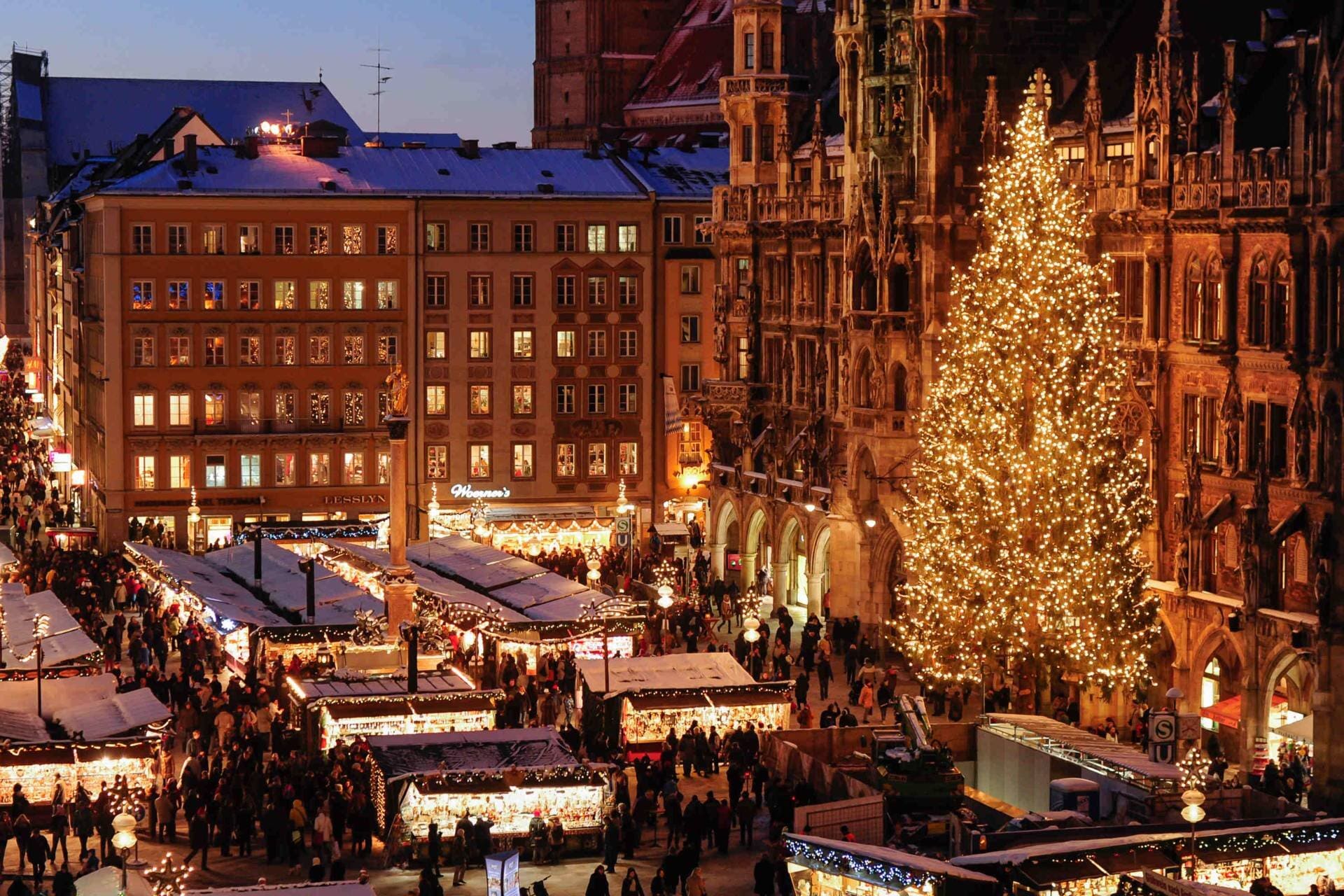 Image credit: Simply Munich
There’s never a lull season in Munich, because come winter, Marienplatz, the historical and cultural heart of Munich, is transformed into a Christmas wonderland. The Christkindlmarkt, as it’s called, dates back to the 14th century, but made its home in Marienplatz from 1972.
This year’s market runs from 20th November to 24th December 2026, with more than 130 stalls selling everything from handmade ornaments to Christmas mulled wine. Taking centre stage is a 25m-tall Christmas tree, while Yuletide tunes drift down from the town hall balcony, making sure your senses are all filled with festive cheer.
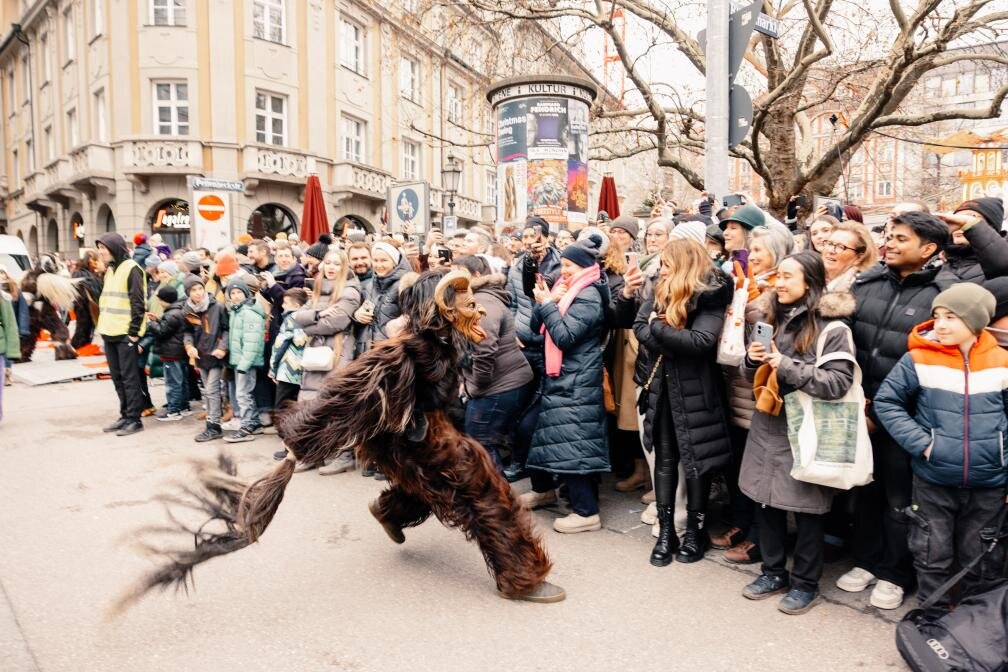
Image credit: Münchner Christkindlmarkt
If you’re here 13th December, that’s when you can catch the Krampus run, where performers dress up as the horned, demon-like creature Krampus and march through Marienplatz roaring, ringing heavy bells, and playfully chasing and swatting spectators’ legs with birch branches.
Season to visit: Winter
Address: Marienplatz & Rindermarkt, 80331 Munich, Germany
Opening hours: Mon-Sat 10am-9pm | Sun 10am-8pm | 24th Dec 10am-2pm
Contact: +49 (0)89 233-96500 | Christkindlmarkt website
11. Tollwood Winter Festival
Circus shows & global street food at a modern winter market
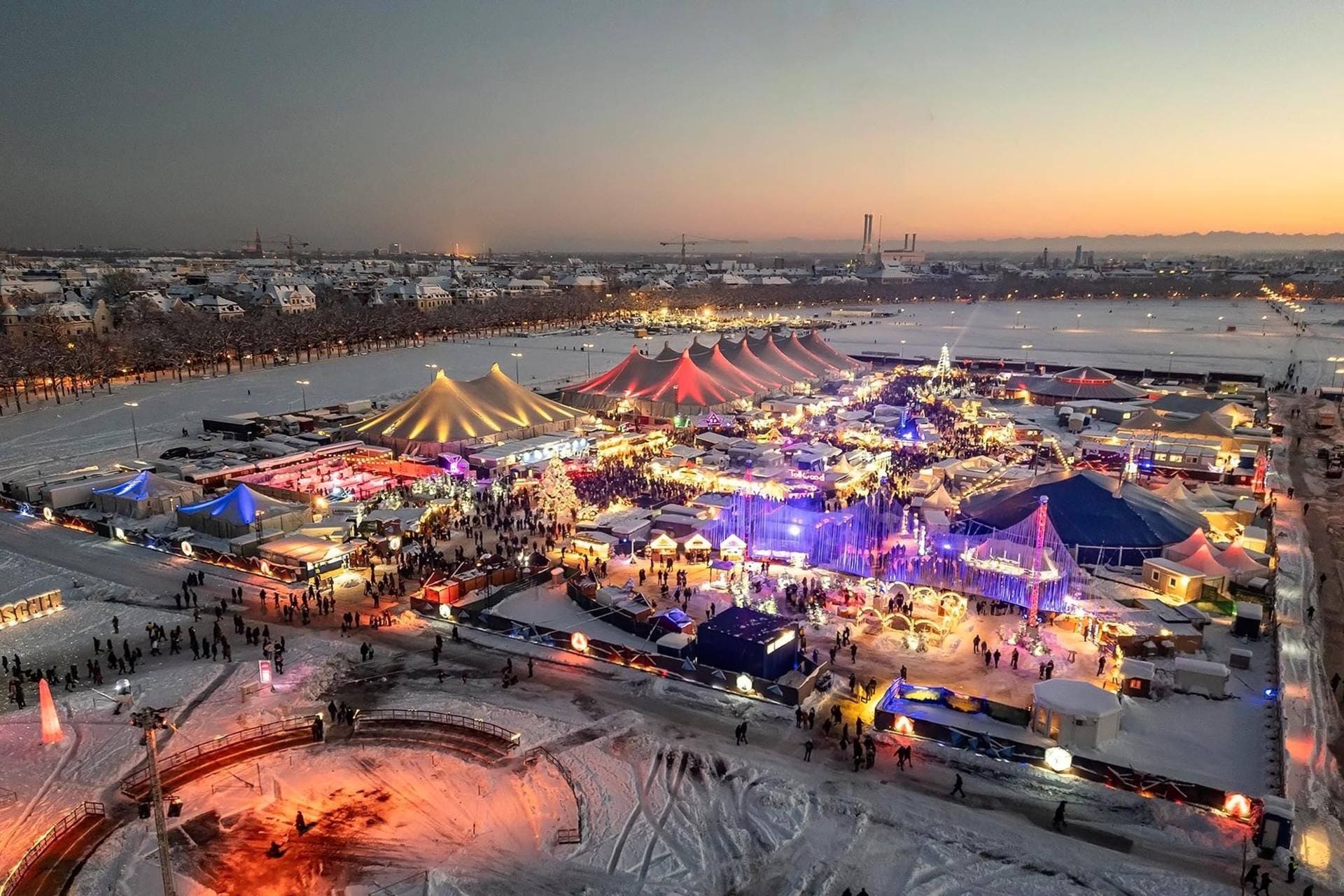 Image credit: Simply Munich
Another Christmas market that you can visit while you’re in Munich is Tollwood Winter Festival, a modern, eco-conscious alternative to the more traditional ones. This year’s edition goes from 24th November to 23rd December 2026, before a separate New Year’s Eve party on 31st December 2026.
Since the turn of the millennium, it’s been held at – you guessed it – Theresienwiese, and combines a winter market with an arts and culture programme, where most of the cultural events are free to attend.
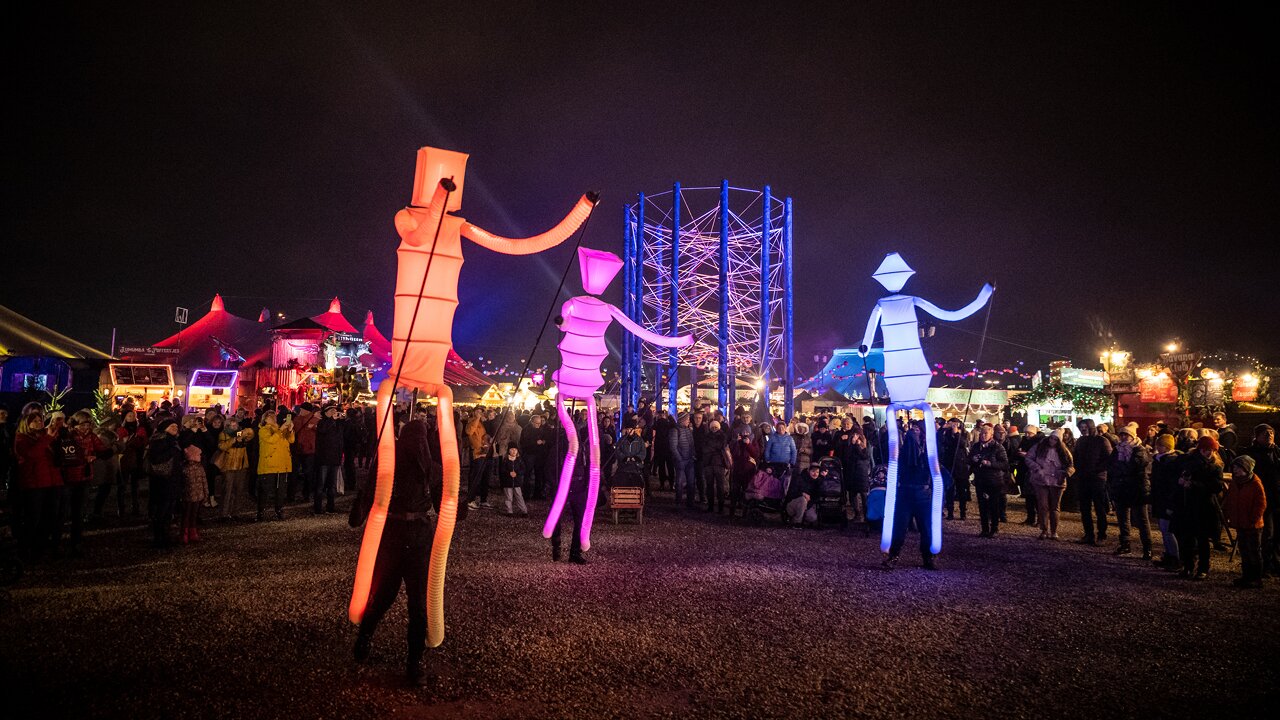 Image credit: Tollwood
Outside of the free events, you can opt to go for ticketed performances at the Grand Chapiteau, a big top that this year will host acts including Australian acrobatics company Gravity & Other Myths.
This year’s festival will see 4 curling rinks for the first time, and you’ll want to check them out, because these “sustainable rinks” will be run without water and electricity!
Alongside all the funsies is a selection of global street food the likes of Greek specialities to burritos – all made with organic produce.
P.S. There’s a summer edition of the Tollwood Festival each year too, and next year’s will take place from 17th June to 18th July 2027. Unlike the Winter Festival, the Summer one is held at Olympiapark Süd.
Season to visit: Winter
Address: Theresienwiese, 80336 Munich, Germany
Opening hours: Mon-Fri 2pm-10pm | Sat-Sun 11am-11.30pm
Contact: +49-89-3838500 | Tollwood Winter Festival website
12. Eisbach wave
Watch surfers ride a river wave in the Englischer Garden
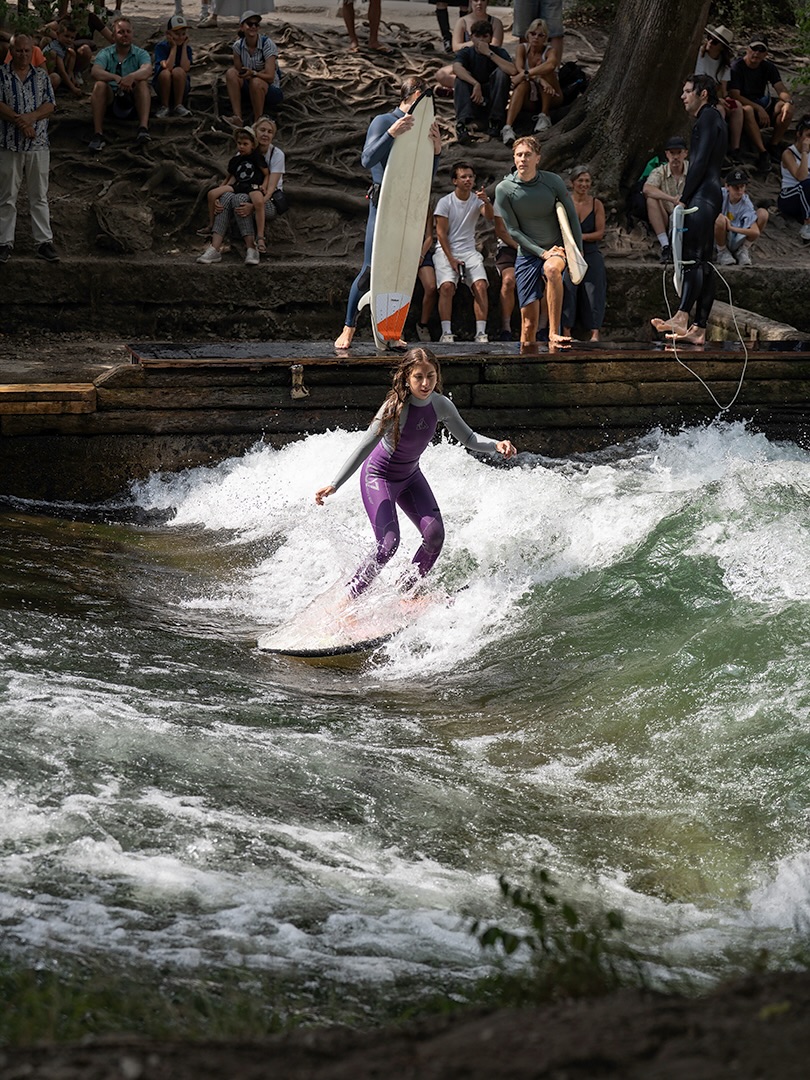
Image credit: @gertkelu via Instagram
Munich is a landbound city, yet it is home to one of the world’s best-known surfing spots – the Eisbach wave. This standing river wave at the southern tip of Munich’s Englischer Garten is caused by a combination of fast-flowing water hitting underwater concrete blocks and a sudden drop in the riverbed, and sees surfers in wetsuits riding the churning water all year round.
Image credit: @gertkelu via Instagram
The wave disappeared for a while when the channel was dredged last year, but it re-formed on its own, and surfing was officially permitted again in May 2026.
Unless you’re a seasoned surfer, it’s not recommended that you try to hit the waves here. Instead, grab some popcorn, find a spot on the bridge, and catch the pros in action before you take a walk in one of Europe’s largest city parks. Do note that night surfing has been banned after the reopening, so there’s no surfing to watch between 10pm and 5.30am.
Season to visit: All seasons
Address: Prinzregentenstraße, 80538 München, Germany
Opening hours: 24 hours, Daily
Contact: +49 163 1782127 | Eisbachwelle website
13. Viktualienmarkt
Market with >100 stores & a 1,100-seater beer garden
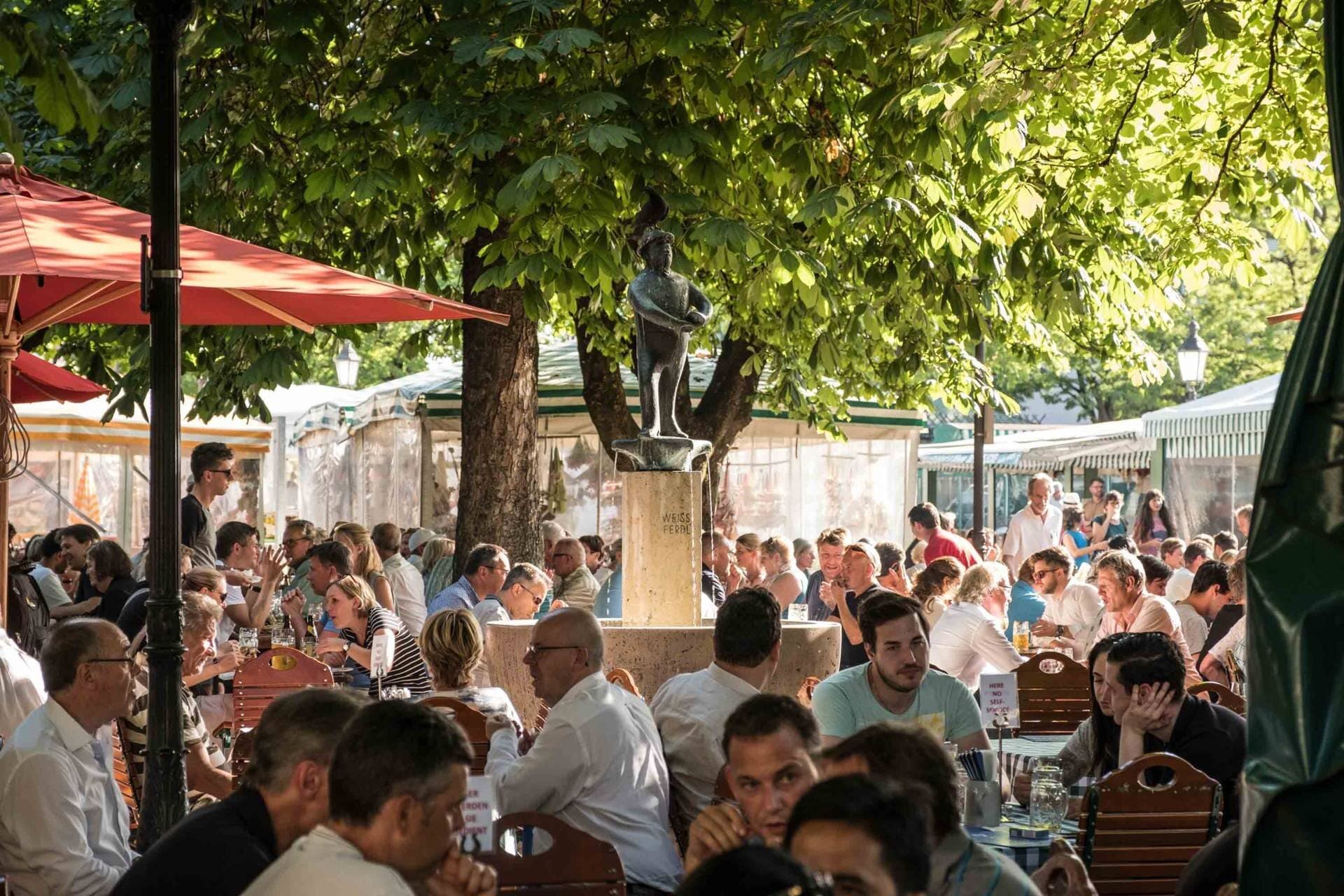 Image credit: Simply Munich
The Viktualienmarkt is a historic open-air food market square in the heart of Munich that’s been held daily, except on Sundays and public holidays, since 1807. Housing over 100 independent stores, you’ll find everything from Bavarian cheese and sausages to flowers, fish, honey, and even spices here.
It’s just a short walk from Marienplatz, and at its centre sits a 1,100-seater beer garden that rotates between Munich’s 6 biggest breweries: Hofbräu, Spaten, Augustiner, Hacker-Pschorr, Paulaner, and Löwenbräu.
With your beer, you’ll want some food, and here’s the good news: you can bring your own brotzeit, AKA packed snacks, or purchase whatever you like from the market stalls. Regardless of season, you can be sure the beer garden is always packed.
Season to visit: All seasons
Address: Viktualienmarkt, 80331 Munich, Germany
Opening hours: Mon-Sat 8am-8pm (Closed on Sundays & Public Holidays)
Contact: +49 89 89068205 | Viktualienmarkt website
14. Ingolstadt Village
Outlet shopping with up to 60% off
We love our discount shopping, and when you’re in Munich, Ingolstadt Village is the place to check out. The luxury outlet village is less than an hour away from Munich, and has more than 100 boutiques stocked with past-season collections, slashed up to 60% off original retail prices.
Brands here include Arc’teryx, Maje, Polo Ralph Lauren, and Samsonite, just in case you need an extra suitcase to bring everything home in. The best part? Tax-free shopping. ‘Nuff said.
Book your spot on the Shopping Express from Karlsplatz, which departs at 9.30am each morning, and leaves Ingolstadt Village at 4.30pm. Return tickets are €10 (~S$14) on weekdays and €20 (~S$28) on Saturdays. Children under 6 years old ride free.
Season to visit: All seasons
Address: Otto-Hahn-Straße 1, 85055 Ingolstadt, Germany
Opening hours: Mon-Fri 10am-8pm | Sat 10am-10pm (Closed on Sundays)
Contact: +49 (0)841 8863100 | Ingolstadt Village website
Fly to Munich with Singapore Airlines
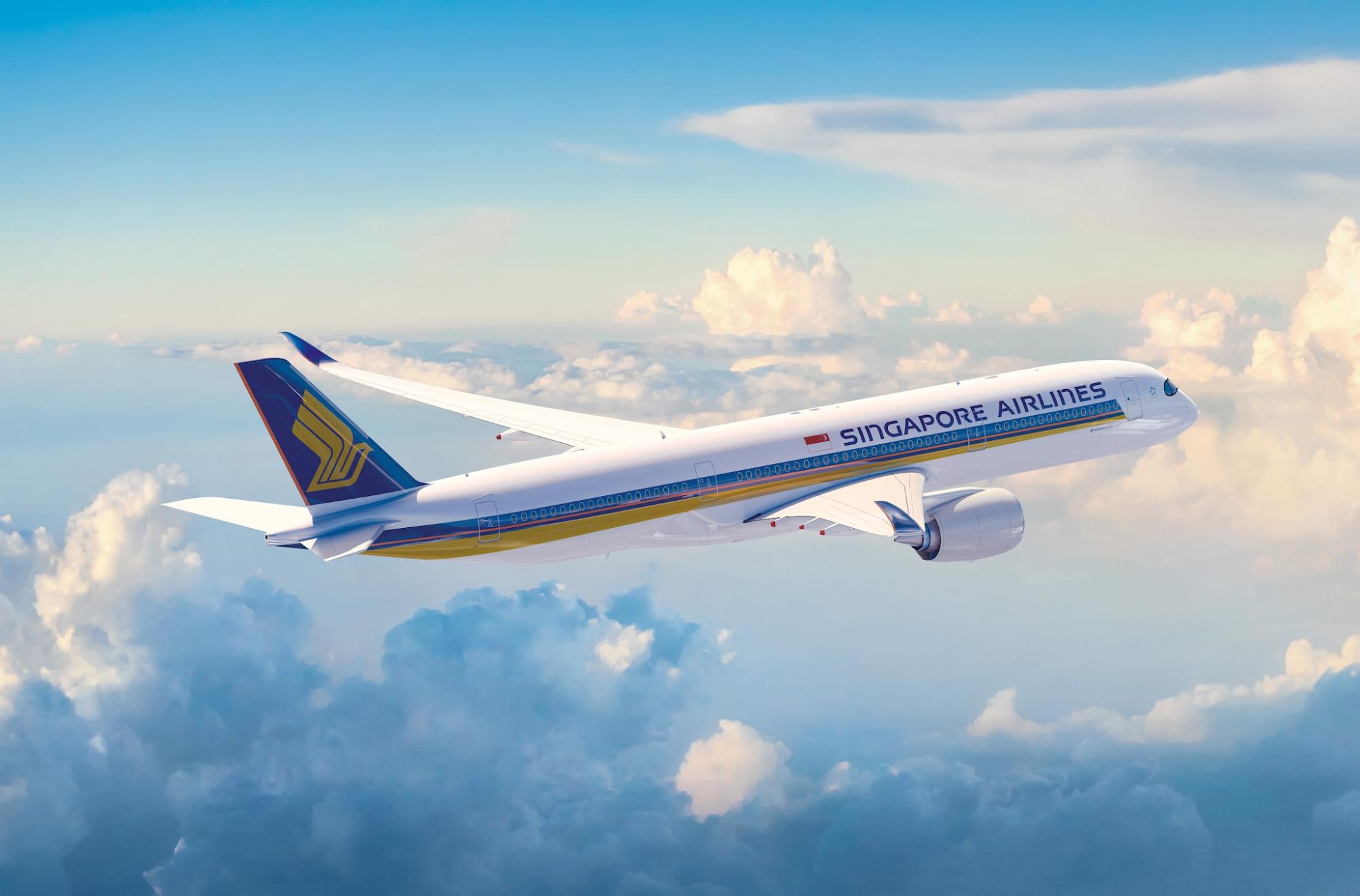 Image credit: Singapore Airlines
A European holiday doesn’t have to break the bank, especially when you have Singapore Airlines’ promotional fares starting from $1,158*, and direct flights from Singapore to Munich that’ll save you the hassle of transiting somewhere else.
And now, with an extra 3 flights a week, that’s 10 flights weekly to the Bavarian capital; the new SQ340 departs Singapore at 12.55pm on Mondays, Wednesdays, and Fridays, landing in Munich at 7.40pm the same evening – just in time for dinner.
These new flights on SQ340 and SQ339 will see you fly on the Airbus A350, designed for comfort regardless of cabin class. Plus, you’ll get to preorder your main course up to 24 hours before you fly on Premium Economy Class and above with Book The Cook, and enjoy an upgraded suite of amenities.
Let’s not forget the free unlimited Wi-Fi across all cabins when you add your KrisFlyer number to your booking, and their upgraded KrisWorld in-flight entertainment system, which features more than 2,500 entertainment options across films, television programmes, music, and podcasts!
Whether you’re thinking of chasing snowy castles and Christmas markets this winter, planning ahead for beer gardens in Spring, or choping your mates for Oktoberfest 2027, let this list be the sign you were waiting for to book those tickets and be up, up, and away!
Book your Singapore Airlines flight to Munich
This post was brought to you by Singapore Airlines and Munich Airport.
*Blackout dates, flight restrictions and other terms and conditions apply.
Cover image adapted from: @visitbayern via Instagram, Bayerische Schlösserverwaltung, Oktoberfest Tours, Zugspitze