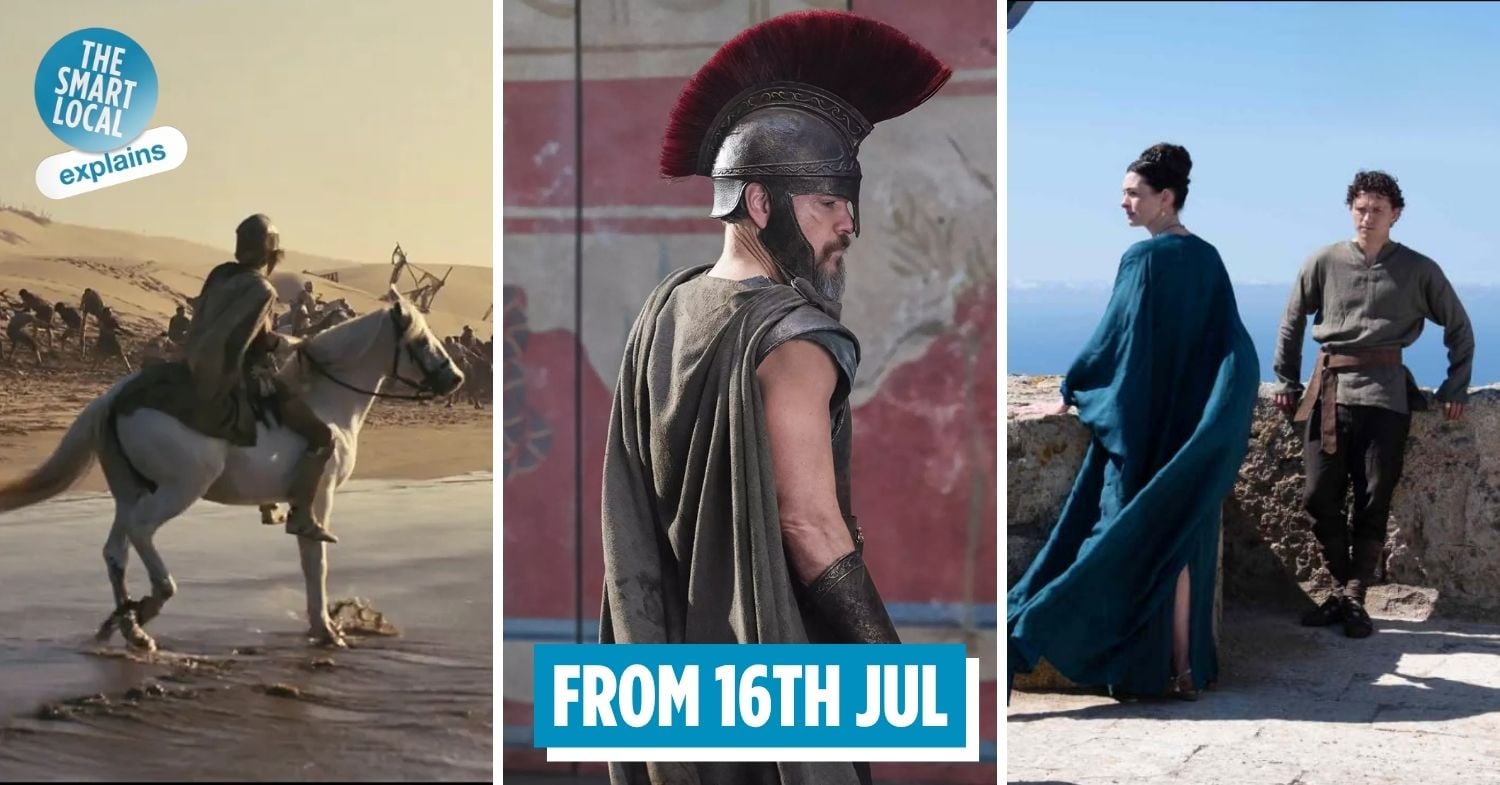

Christopher Nolan’s The Odyssey
Mention Greek mythology, and chances are that you’ll think of Hercules, Zeus, Hades, and, for some of us, Percy Jackson. Perhaps you might even get the gods mixed up with their Roman counterparts, like Mars, Minerva, and Venus, but that’s okay – you’re not alone.
There’s been much ado about the upcoming Christopher Nolan epic, The Odyssey, which hits cinemas on 16th July 2026, and the 12,000-line OG poem is not exactly easy bedtime reading. Lest you emerge from the cinemas confused, here’s a quick 101 on all you need to know about Greek mythology:
Table of Contents
- Christopher Nolan’s The Odyssey
- 1. Greek mythology is more than Zeus & Hercules
- 2. Olympus & its gods are at the heart of almost every myth
- 3. Greek heroes were the OG Batman
- 4. Every monster has a story to tell
- 5. No Greek myth exists without a lesson on human nature
- 6. What is the Trojan War?
- 7. Who is Odysseus & what is The Odyssey about?
- 8. Everyone you’ll meet in The Odyssey
- 9. Why did it take 10 years for Odysseus to get home?
- 10. Why is The Odyssey one of the world’s greatest stories?
- See Christopher Nolan’s The Odyssey come to life in IMAX
1. Greek mythology is more than Zeus & Hercules
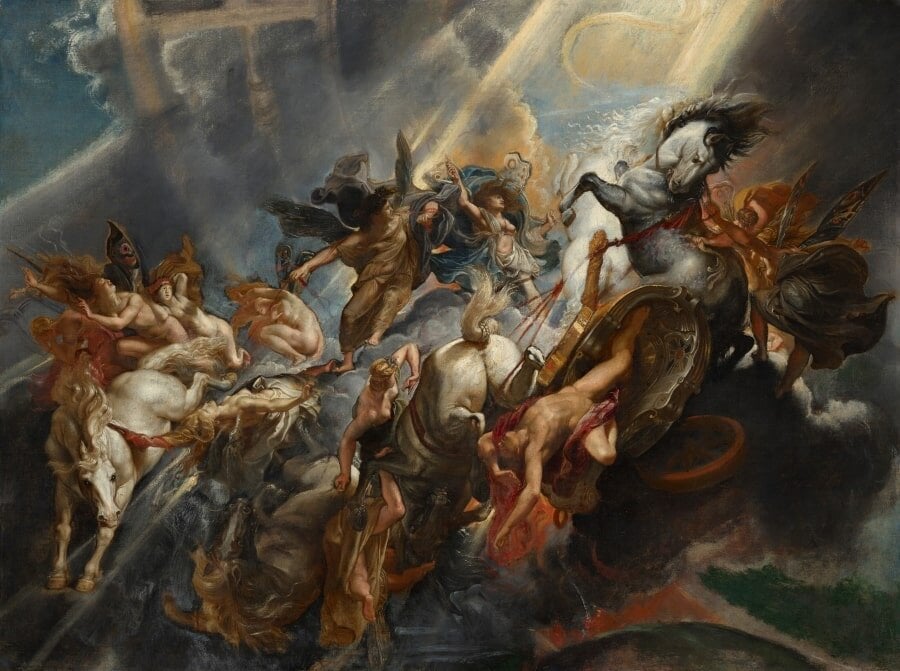
The Fall of Phaeton, Peter Paul Rubens (1604-1605).
Image credit: Asper Magazine
First, what is Greek mythology? There is no single source or origin story of the myths we know today. Rather, it’s a collective body of stories, rooted in oral tradition that began as far back as the Bronze Age – or more than 5,000 years ago.
There were gods, monsters, heroes, and semi-divine humans, overcoming impossible odds and waging wars in realms both mortal and divine. Like many stories around the world, many were means by which to explain the world, life, and the human condition, with some myths rooted in historical fact.
Greek mythology is, in fact, the blueprint for Roman mythology, which came about some 10 centuries later. As the ancient Romans plundered their way across the world, they absorbed and overlaid the storytelling of Greek myths onto their own values and traditions; some Greek gods were simply given Roman names.
This, in turn, laid the foundation for the extensive influence that Greek mythology has on the arts and literature of what we know as Western civilisation, and even popular culture today.
TL;DR: No, Hercules does not appear in The Odyssey.
2. Olympus & its gods are at the heart of almost every myth
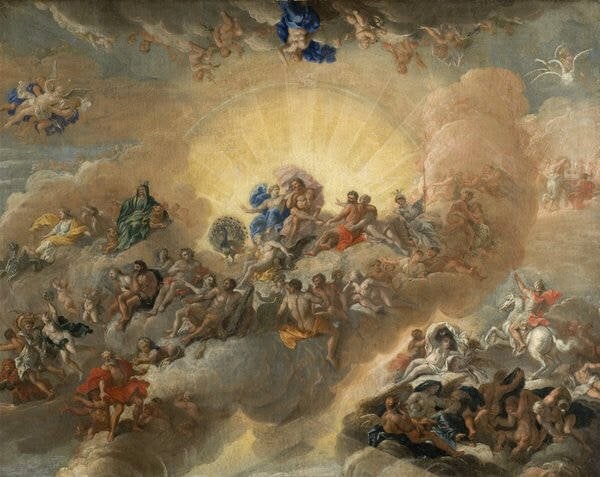
Gods on Mount Olympus, Antonio Verro (1690).
Image credit: University for the Creative Arts
In Greek mythology, the gods didn’t merely spectate from the sidelines. They were deeply intertwined in the lives of mortals, with almost every major myth tracing back to the whims of one or more gods.
Fun fact: There are more than 3,000 deities in the pantheon of Greek mythology, but you need only concern yourself with the 12 Olympians, AKA the primary residents of Mount Olympus. To put it simply, they’re like a giant, dysfunctional family whose petty rivalries, grudges, and alliances often spilled over into the mortal world, dragging humans into the mess.
Here they are, and what they stand for:
- Athena: Goddess of wisdom and strategic warfare.
- Poseidon: God of the sea, earthquakes, and horses.
- Zeus: King of the Gods, ruler of sky and thunder.
- Hermes: Messenger god and guide to the Underworld.
- Hera: Queen of the Gods, goddess of marriage, family, and childbirth.
- Demeter: Goddess of the harvest, agriculture, and fertility.
- Apollo: God of healing, prophecy, music, and light.
- Artemis: Goddess of the hunt, wilderness, and the moon.
- Ares: God of chaotic, brutal war.
- Hephaestus: God of fire and the forge.
- Aphrodite: Goddess of love, beauty, and desire.
- Hestia/Dionysus, depending on source: Hestia, goddess of the hearth; Dionysus, god of wine and festivity.
If you’re wondering why Hades doesn’t appear on this list, even though he’s brother to Zeus and Poseidon, it’s because he rules over and resides in the Underworld. The 3 of them are the most powerful gods in town, and who overthrew their father – the Titan Kronos.
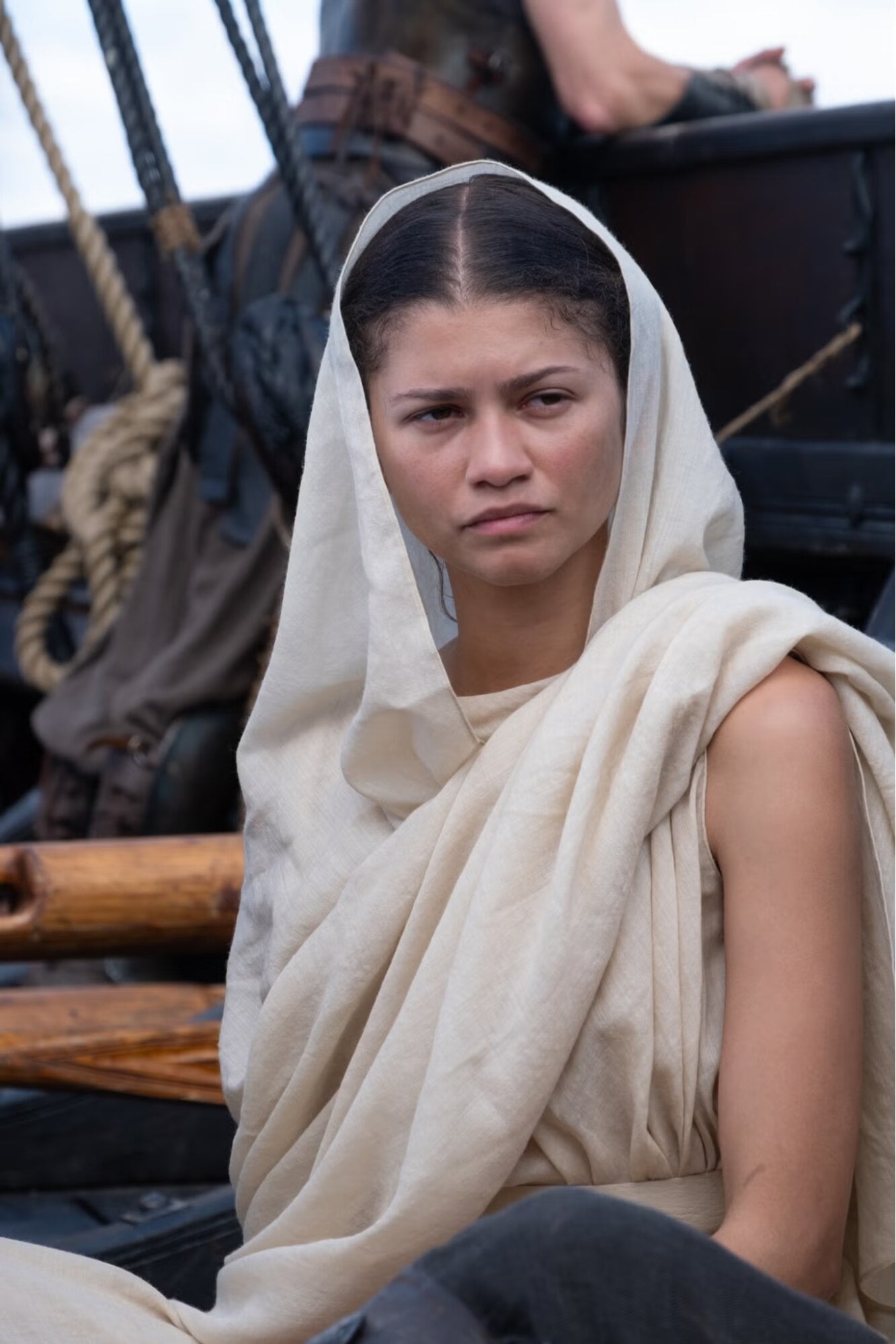
Zendaya as Athena.
Image credit: Universal Pictures
In Nolan’s adaptation, Athena is played by Zendaya. Zeus and Poseidon, while key to the OG poem, have been represented in the film by terrifying forces of nature, rather than physical appearances.
3. Greek heroes were the OG Batman
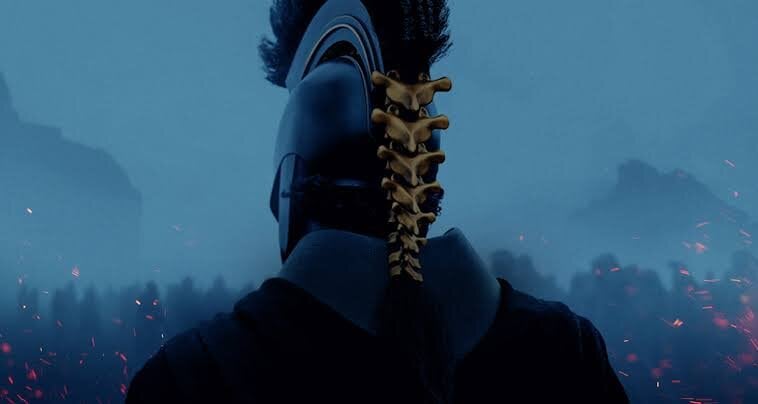
Image credit: Universal Pictures
Heroes, as Greek mythology tells us, are rarely perfect beings. Much like Batman, Iron Man, and even Wolverine, Greek heroes were often deeply flawed, and haunted by personal demons. The ancient Greeks even had a word for it – hamartia – literally translated, it means “missing the mark”. In the case of the heroes, a tragic flaw that causes their downfall.
Hamartia could take many forms: wrath, ambition, jealousy, and perhaps the most infamous of them all, hubris, AKA excessive pride. Achilles, for instance, is the demigod who gave rise to the phrase “Achilles’ heel”. Keep this in mind for later, but you then have Odysseus, one of Greek mythology’s greatest examples of hubris, whose pride sets the events of The Odyssey in motion.
4. Every monster has a story to tell
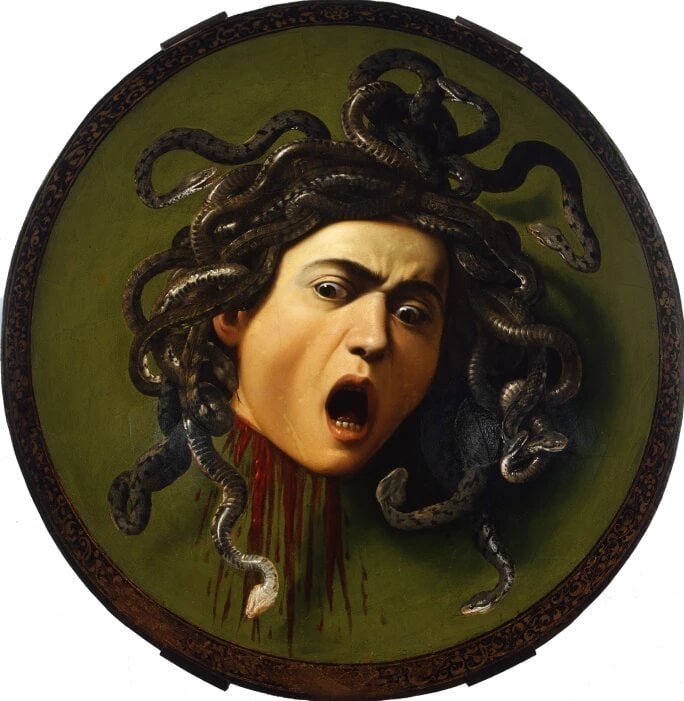
Head of Medusa, Michelangelo Merisi da Caravaggio (1597).
Image credit: Sotheby’s
Greek monsters seem like the stuff of nightmares. Think: Medusa, with hissing snakes instead of hair, that turn anyone who meets her gaze into stone, the Cyclops Polyphemus, a one-eyed monster with a taste for human flesh, or Scylla, a former nymph with 6 snake-like necks, a lower body of 12 feet, and a ring of ravenous hounds sprouting from her waist.
And yet, these horrors aren’t simply obstacles for the heroes to overcome. In Greek mythology, there are monsters born, and monsters made. Peel back the layers, and you’ll often find tragedies at the heart of the latter. Many were once mortals or minor deities, or even divine offspring, cursed or transformed by the gods’ own whims.
You don’t have to look further than Medusa – once a beautiful priestess of Athena, she was violated by Poseidon in the temple, yet she was punished by Athena in turn. Or the Minotaur, the half-man, half-bull creature born of King Minos’s wife, after Minos angered Poseidon by refusing to sacrifice a magnificent white bull sent by the sea god.
Speaking of Poseidon’s children, you’ll meet the Cyclops Polyphemus in The Odyssey. The offspring of Poseidon and a sea nymph, he lived a lawless life in isolation, trapping and eating humans. Odysseus will also meet the Sirens, whose enchanting songs lured sailors to a watery grave, as well as Scylla and her counterpart, Charybdis, who was, in some versions of the myth, cast into the ocean by Zeus and turned into a ship-swallowing whirlpool.
5. No Greek myth exists without a lesson on human nature
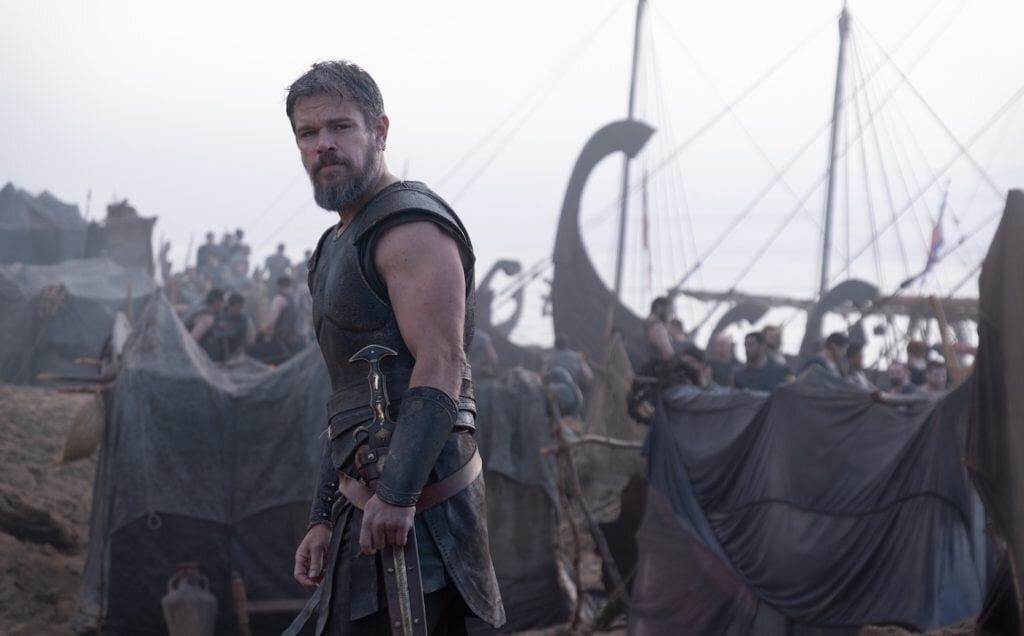 Image credit: Universal Pictures
Beyond the monsters and divine drama, almost every Greek myth carries a lesson, or warning if you will, about the limits of being human. It’s like Aesop’s fables, but on steroids. The ancient Greeks used myths to make sense of the world around them – and we’re talking about more than why the sun rises or rivers flood. Through these stories, they examined questions about love, grief, envy, vengeance, and what it means to be human.
How much ambition is too much? Can you outrun fate? What do you owe the gods – and what do you owe yourself? No one, the Greek myths tell us, can defy fate or outwit the gods.
The lessons are anything but gentle – Icarus flew too close to the sun and plunged to his death; Sisyphus tried to cheat death, and was condemned to spend eternity pushing a boulder up a hill, only to watch it roll back down. Tantalus stole from the gods; he was cursed to suffer eternal hunger and thirst, forever surrounded by food and water that remained just beyond reach.
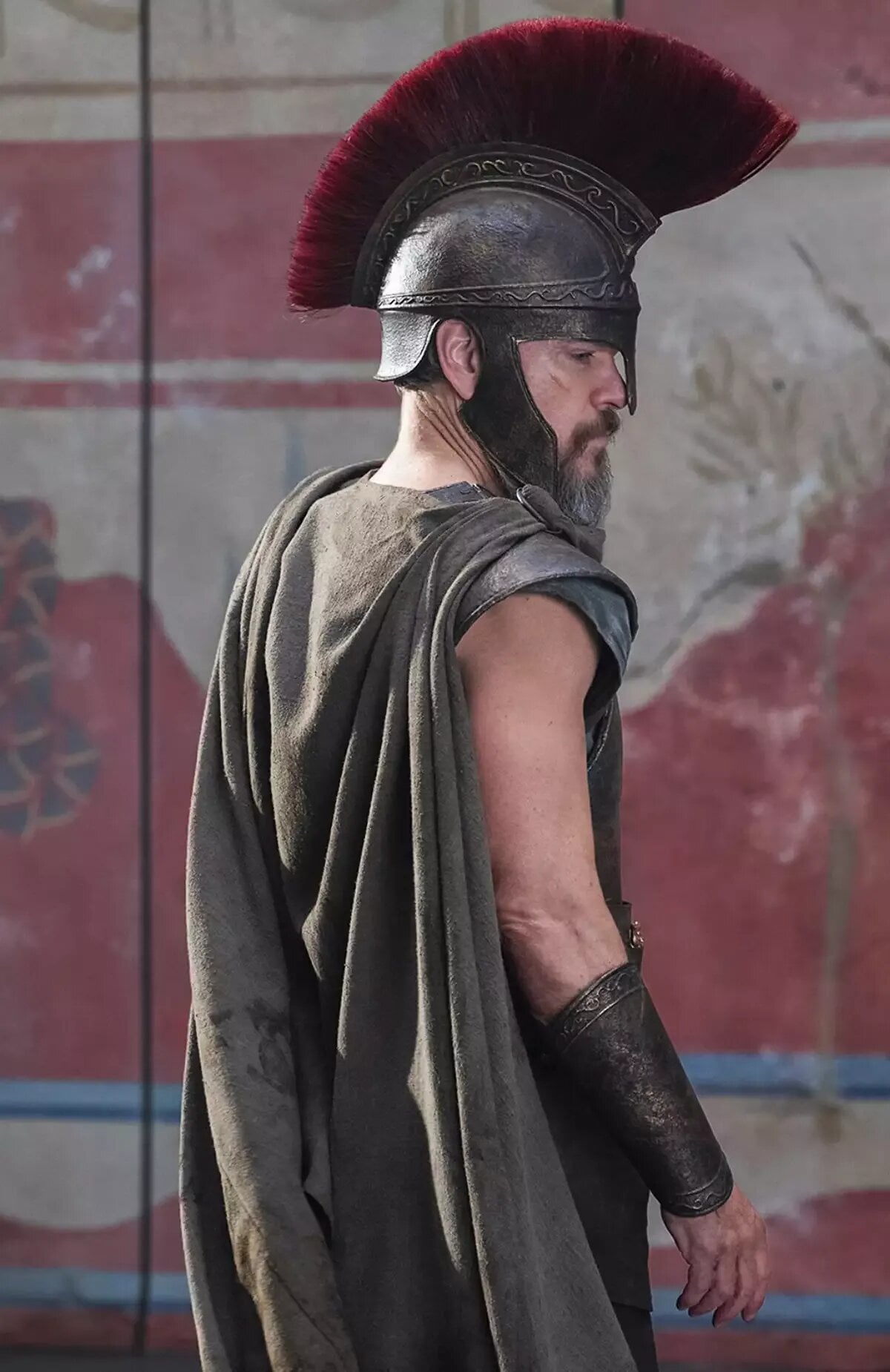 Image credit: Universal Pictures
Odysseus is no exception. The journey that he undertakes in The Odyssey is just as much a test of character as it is survival. Time and again, his intelligence is matched by his pride, and each time his cleverness crosses into arrogance, or hubris, the gods ensure there’s a price to pay. We don’t know how these themes will play out in Nolan’s adaptation, but it’s something you can keep in mind as you head into the cinemas.
6. What is the Trojan War?
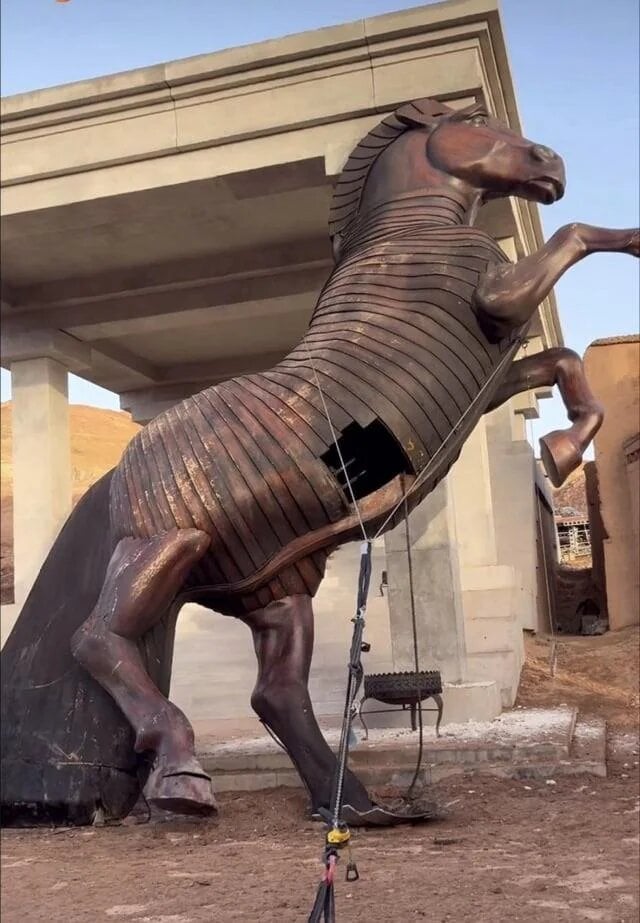
The Trojan Horse, seen on set for The Odyssey.
Image credit: AdamBerner2002 via Reddit
If The Odyssey was a sequel, then the Trojan War – yes, you may recall 2004’s Troy, starring Brad Pitt and Orlando Bloom – was the 10-year blockbuster that came before it. This war sets up the backdrop, and the reason, for everything that unfolds in The Odyssey, so you definitely need to sit tight for this recap.
It all starts, as many Greek myths do, with a squabble amongst the gods. At the centre of it is a golden apple inscribed “To the Fairest”, which sparks a beauty contest between Hera, Athena, and Aphrodite. Paris, a Trojan prince, is tasked with choosing the winner.
Each goddess tries to sway him with a gift, but Aphrodite ultimately wins by promising him the love of the most beautiful woman in the world – Helen of Sparta. Played in Nolan’s adaptation by Lupita Nyong’o, the only catch is this – she’s married to the Spartan king, Menelaus.
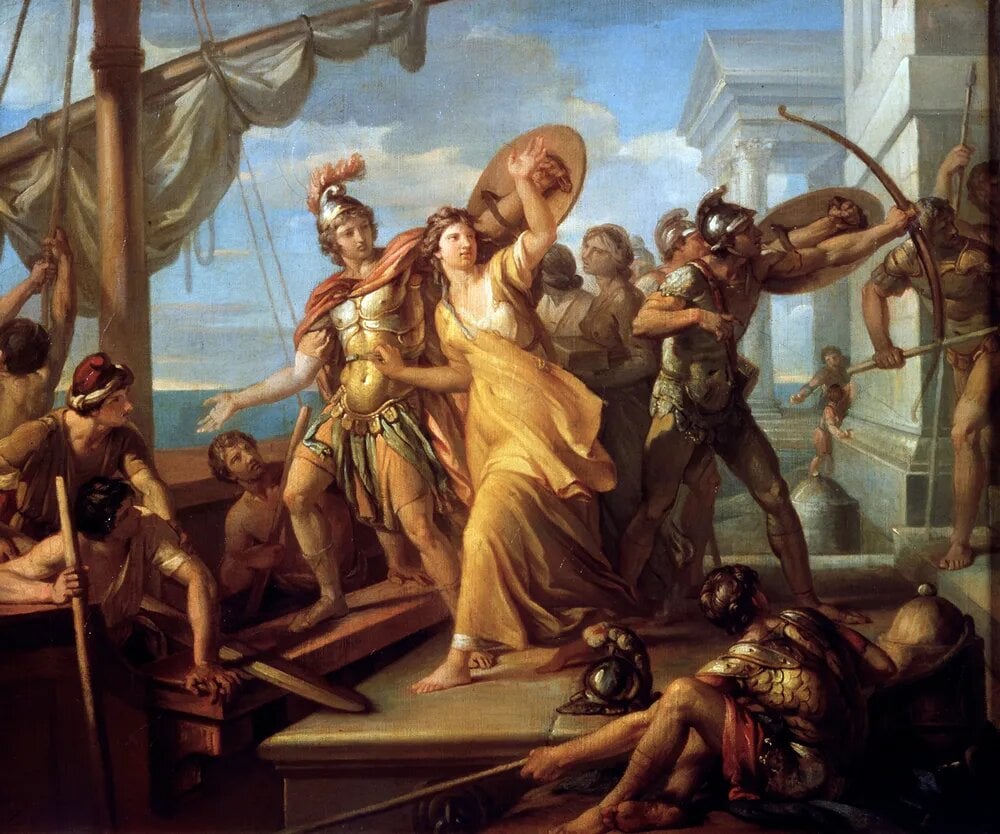
Paris Abducting Helen (1782-84), Gavin Hamilton.
Image credit: Brittanica
Depending on who you ask, Paris seduces or abducts Helen back to Troy, leaving Menelaus outraged and humiliated. Greece’s kings and armies rallied to bring her back, giving rise to the saying “the face that launched a thousand ships”.
Fun fact: Long before the Trojan Horse, Odysseus was already known for his quick thinking. Helen had loads of powerful suitors, and so to prevent civil war over her hand in marriage, Odysseus proposed that every suitor swear an oath to honour her eventual husband, and defend the marriage if anyone ever tried to steal her away.
When Paris took Helen to Troy, that oath came back to haunt them. Under the command of Agamemnon, king of Mycenae and Menelaus’ elder brother, the Greek kings and their armies set sail for Troy, where a brutal 10-year siege would unfold. Achilles earned his reputation as Greece’s greatest warrior on the battlefield, while Odysseus, the King of Ithaca, became known for his cunning and strategy.
It was Odysseus who eventually devised the Trojan Horse of lore, tricking the Trojans into opening their gates. The rest, as they say, is history – for the Trojans at least. For Odysseus, it was just the beginning of a long, long journey home.
7. Who is Odysseus & what is The Odyssey about?
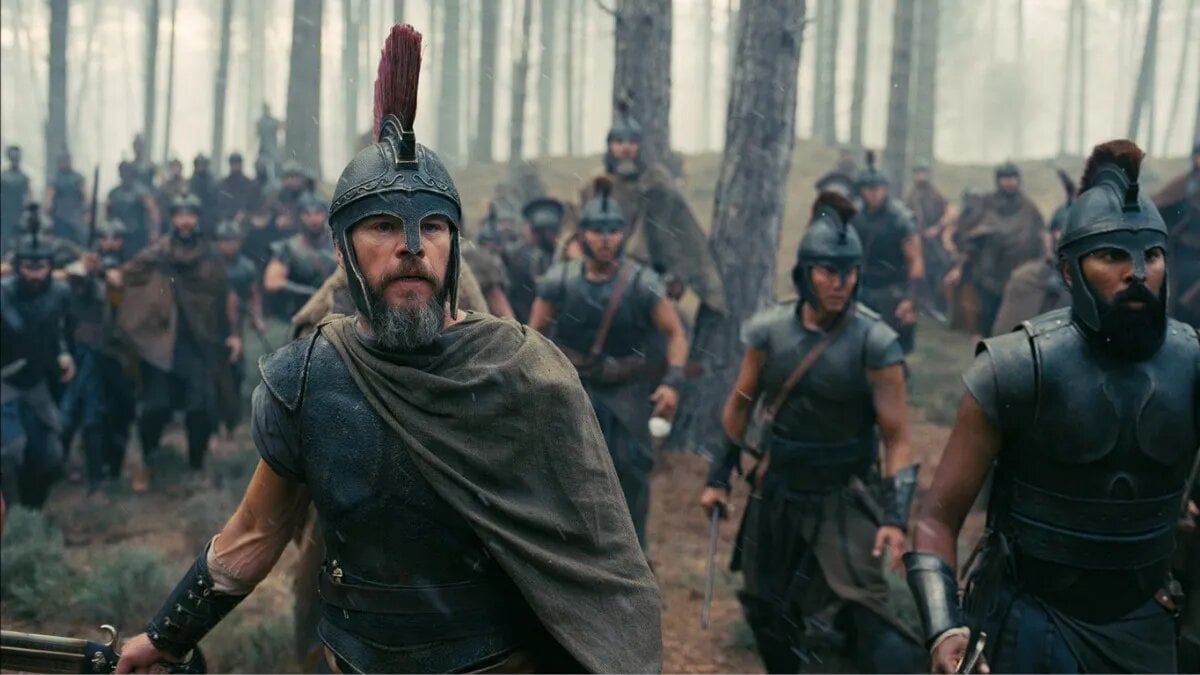 Image credit: Universal Pictures
By now, you know some things about Odysseus: he’s the King of Ithaca, the brains behind the Trojan Horse, and a man so clever, he angered the gods with his hubris.
Played by Matt Damon in Christopher Nolan’s adaptation of Homer’s epic poem, Odysseus is also cunning, a gifted liar when it suits him, and endlessly resourceful. Damon describes his character as “an amazing strategist, a very wily person”, and that sums it up.
To talk about The Odyssey, you’ll have to know who Homer is. The Greek poet is estimated to have lived around the 8th century BCE, and penned The Iliad, which focuses on the last year of the Trojan siege and Achilles’ wrath, as well as The Odyssey.
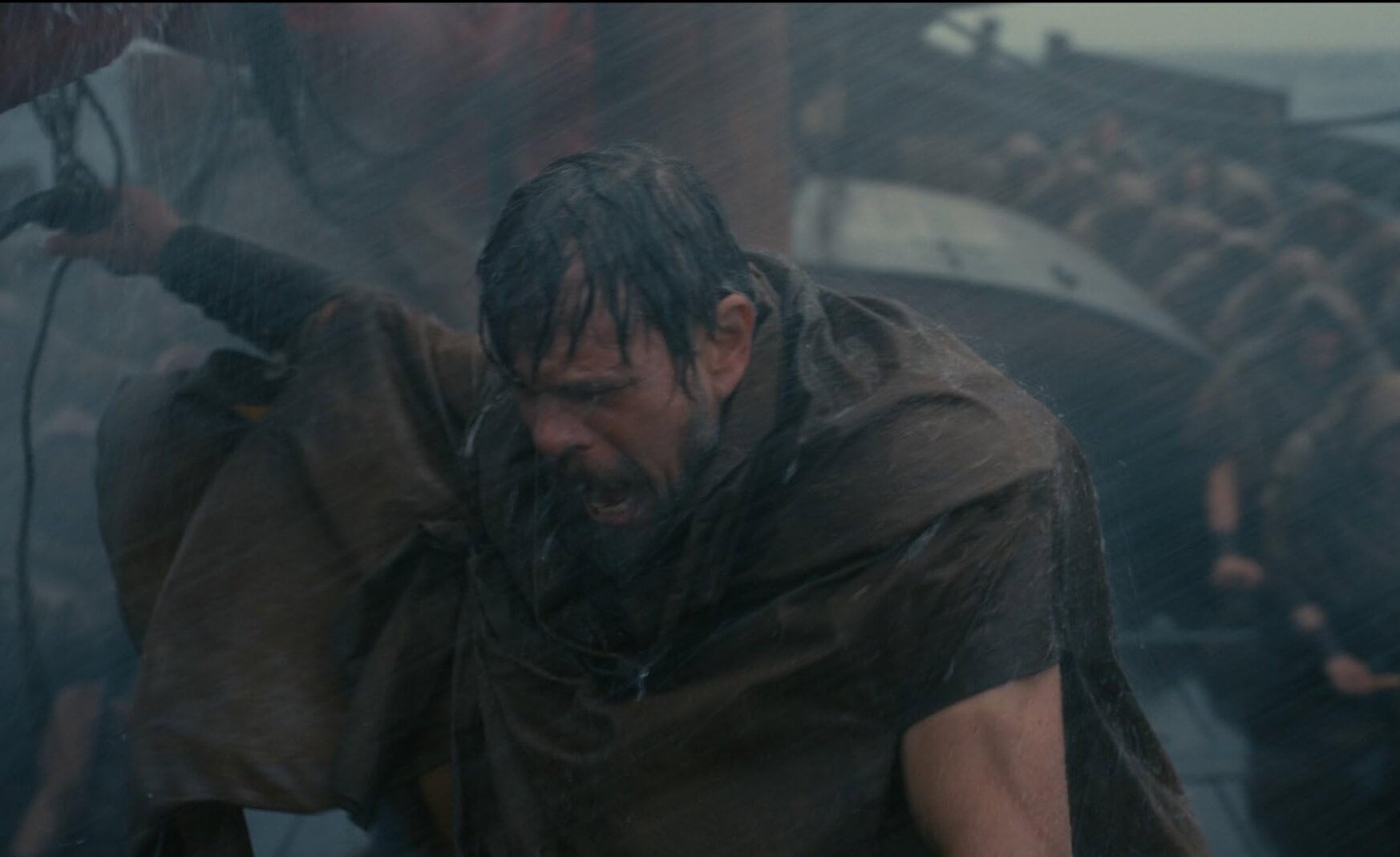 Image credit: Universal Pictures
The Odyssey picks up from the end of the Trojan War, when Odysseus sets off to return home to Ithaca, his wife Penelope (Anne Hathaway), and son Telemachus (Tom Holland). Instead, the journey unravels into a 10-year-long voyage, where he encounters shipwrecks, monsters, temptations, the wrath of the gods, and all sorts of unpleasantries.
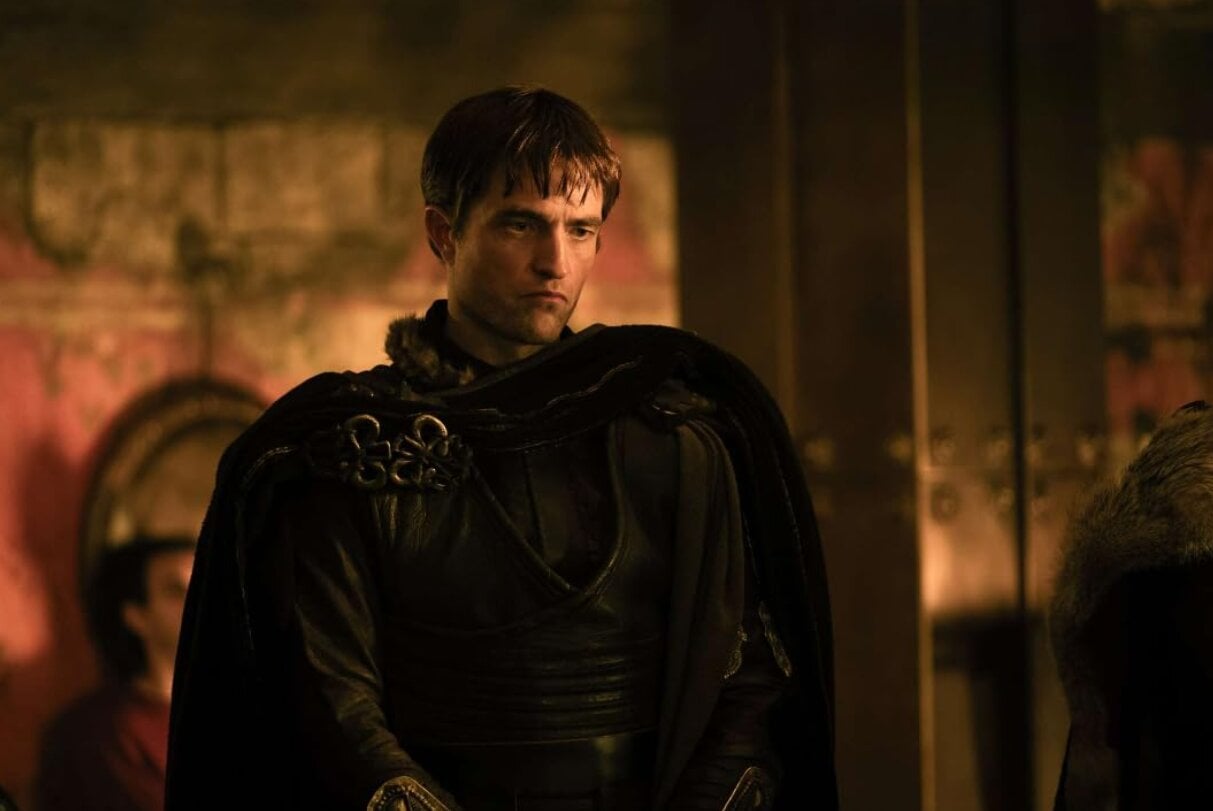 Robert Pattinson as Antinous, one of Penelope’s suitors.
Image credit: Universal Pictures
Meanwhile, there’s Penelope, left in Ithaca, having to fend off scores of suitors seeking to take Odysseus’ place as king and husband. Then, there’s Telemachus, growing up without a father, not knowing what has become of him.
More than an adventure, The Odyssey is about resilience, identity, and home – themes that are still relevant today, and why it’s been given the IMAX treatment in its Nolan adaptation.
8. Everyone you’ll meet in The Odyssey
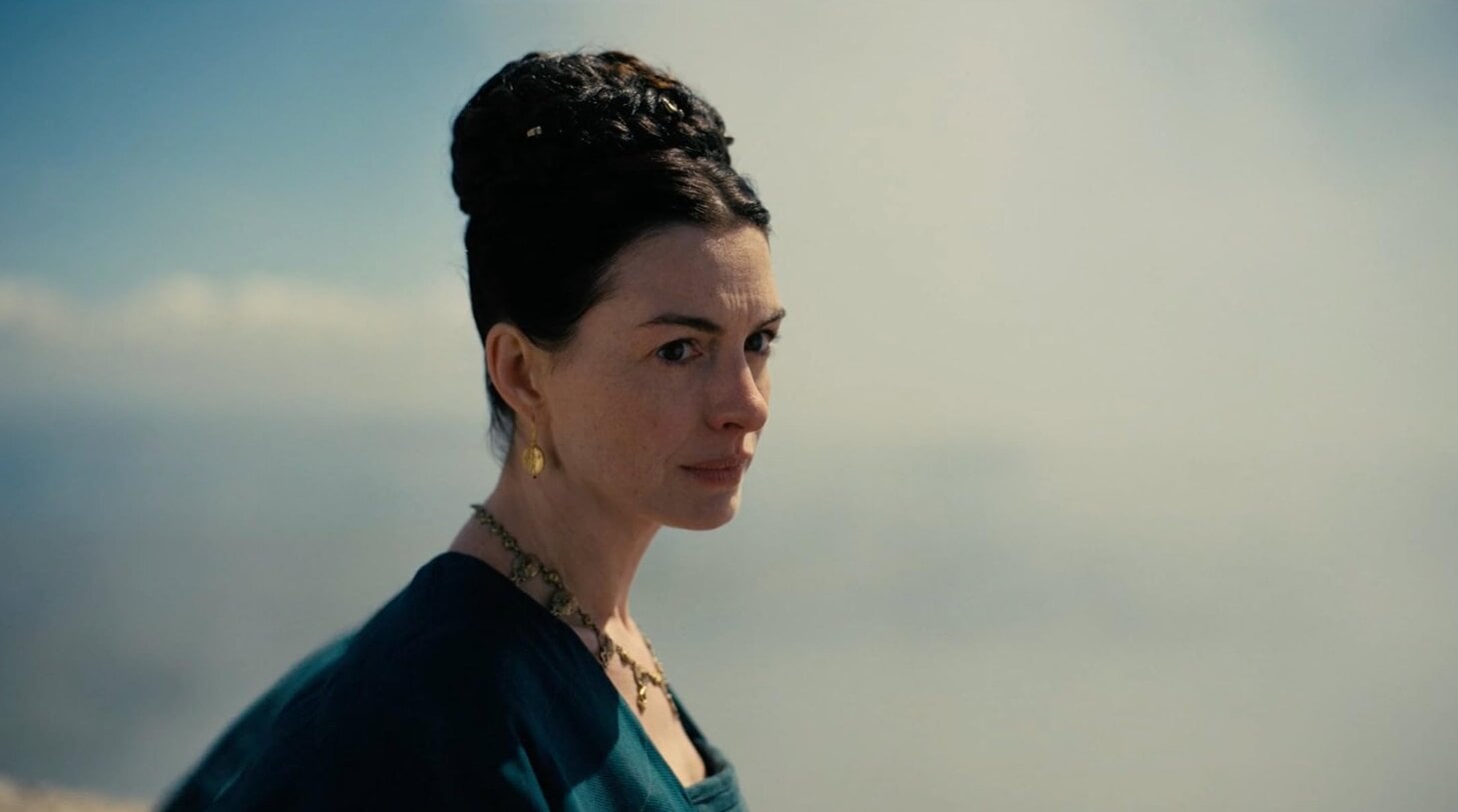 Anne Hathaway as Penelope.
Image credit: Universal Pictures
When Homer wrote The Odyssey, it was intended for an audience already familiar with the numerous characters in it. For the average modern viewer, Nolan’s film needs to fill in gaps of knowledge, which results in divergences from the source material.
In any case, here’s your cheat sheet to the who’s who of The Odyssey, who plays the role in Nolan’s production, and notable modern adaptations, if any:
| Character | Homer’s The Odyssey | Nolan’s The Odyssey |
| Odysseus | Title character who’s trying to make his way home after 10 years of fighting in the Trojan War. | Matt Damon |
| Penelope | Mrs Odysseus, trying to keep suitors at bay while waiting for her husband to return. | Anne Hathaway |
| Telemachus | Odysseus Junior, who embarks on his own coming-of-age journey as he seeks his missing father. | Tom Holland |
| Eumaeus | Loyal swineherd. | John Leguizamo – Nolan made his character blind. |
| Athena | Odysseus’ divine protector. | Zendaya |
| Circe | Witch who turns Odysseus’ men into pigs. | Samantha Morton |
| Calypso | Nymph who keeps Odysseus stranded on her island for years. | Charlize Theron |
| Cyclops Polyphemus | Outsmarted by Odysseus, whose hubris leads to him being cursed by Polyphemus. | Bill Irwin |
| Antinous | Suitor seeking Penelope’s hand. | Robert Pattinson |
| Helen of Troy/Sparta | The face that launched a thousand ships. | Lupita Nyong’o |
| Clytemnestra | Queen of Mycenae, Helen’s half-sister. | Lupita Nyong’o |
| Sinon | Doesn’t appear in Homer’s Odyssey, but is the Greek warrior and spy who allowed himself to be captured by the Trojans, convincing them that the Greeks had sailed away.
This persuaded the Trojans to bring the wooden horse into the city, not knowing that the Greek warriors were hiding within. |
Elliot Page |
9. Why did it take 10 years for Odysseus to get home?
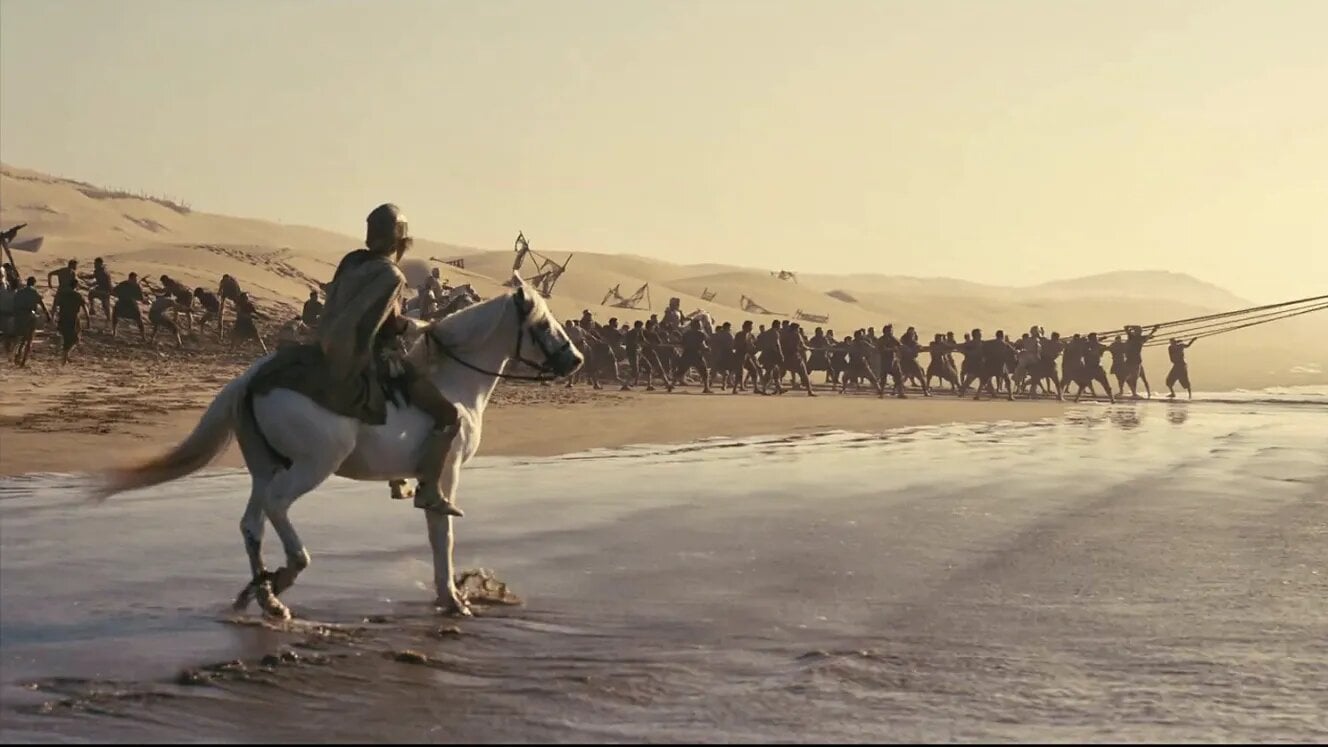 Image credit: Universal Pictures
A journey that ought to have been made in weeks ended up taking Odysseus 10 years. It’s almost like a chain of unfortunate events, starting from his and his men’s sacking of Cicones, which was their first stop after the Trojan War, and being attacked in retaliation.
Some of the highlights of Odysseus’ 10-year journey, based on Homer’s epic, include:
- Getting lost in Zeus-sent storms.
- Being trapped by the Cyclops Polyphemus, where Odysseus watched some of his men eaten.
- He blinded Polyphemus, who called to his father Poseidon to curse Odysseus: that Odysseus never gets home to Ithaca, unless he’s fated to return, in which case he should reach home late, lonely, and broken. Polyphemus also cursed Odysseus to lose all his shipmates along the way, and return to a home overtaken by chaos.
- Landing on Aeaea, where they lived for 1 year with the witch Circe after Odysseus outsmarted her. She tells Odysseus that he has to go to the Underworld to get home.
- Running into the Three Perils: the Sirens, Scylla, and Charybdis.
- Odysseus, the last man standing, drifting on a piece of wood to Calypso’s island and meeting the nymph, who fell in love with him and kept him prisoner for 7 years.
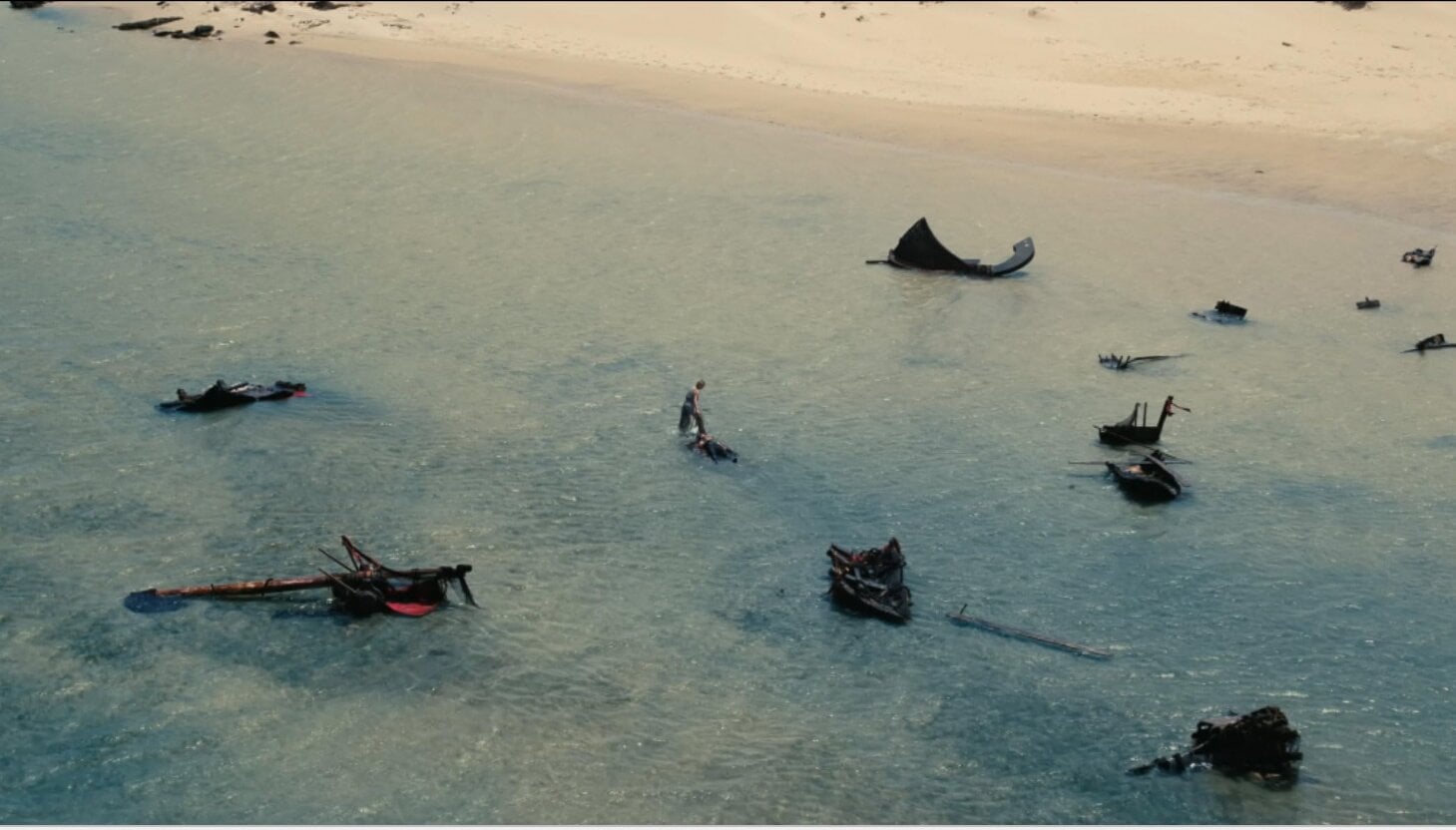 Image credit: Universal Pictures
Poseidon did attempt to foil his final legs home with a storm, but Odysseus washed ashore on Scheria, where he won the King and Queen over with his tragic tale, and their fast-sailing ships sent him home at last to Ithaca.
10. Why is The Odyssey one of the world’s greatest stories?
Did you know: The Odyssey is why we even have the word “odyssey” in our vocabulary today?
Remove the monsters, Greek names, and all that – it leaves you with the skeleton of a hero’s journey, which you’ll find underpins everything from Moana to Star Wars. Strip the 12,000 lines down to its essence, and the questions they ask are just as pertinent today, 3,000 years later.
Examine the major themes of the poem – homecoming, hospitality, temptation, coming of age, loyalty, vengeance, justice, fate – and you’ll find they’re just as central to us in this modern age. Sure, we’ve traded bronze swords for emojis and modern warfare, but human nature hasn’t changed all that much.
This meme has got it all figured out. Turns out, we’re all on our own odysseys too.
See Christopher Nolan’s The Odyssey come to life in IMAX
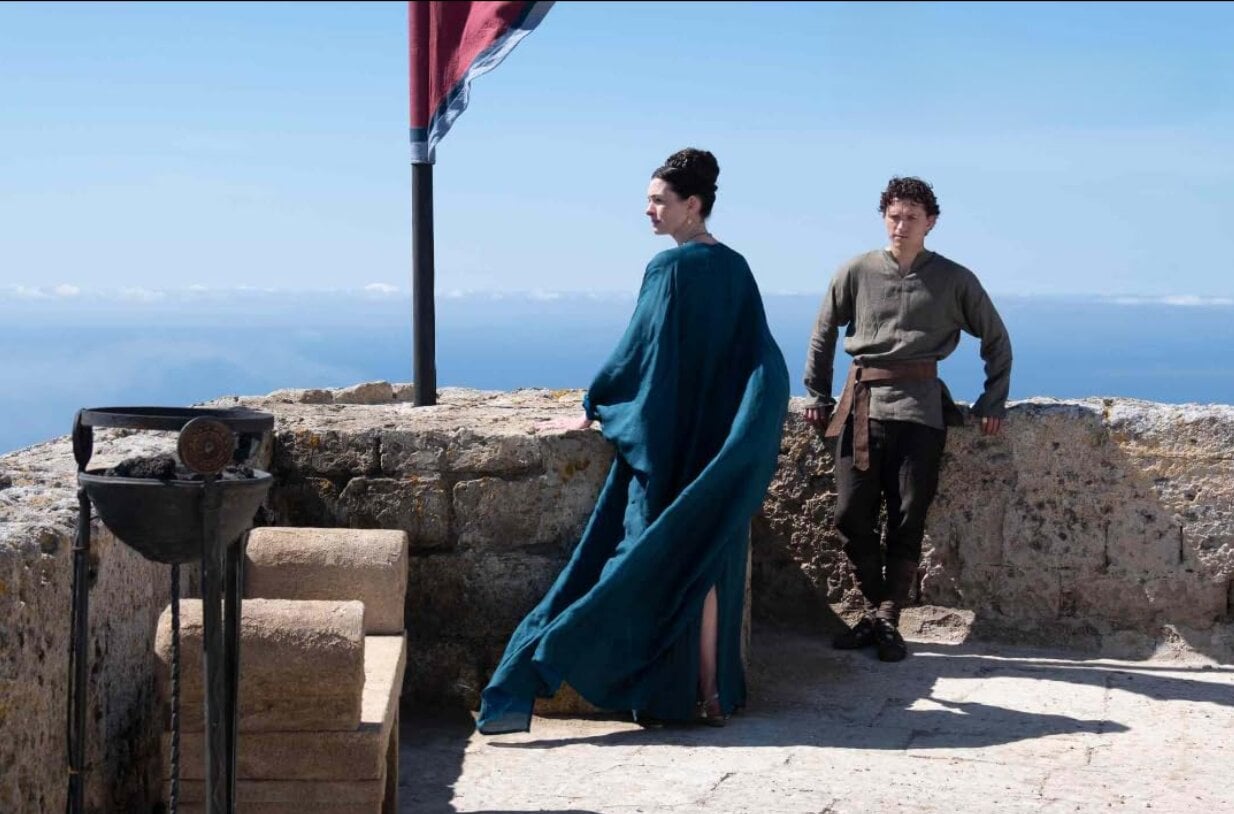 Penelope (Anne Hathaway) & Telemachus (Tom Holland).
Image credit: Universal Pictures
If there’s one thing Nolan has never done by half-measures, it’s scale – and The Odyssey may be his most ambitious production yet. It’s the first of its kind, shot entirely on IMAX film cameras across multiple formats, using over 2 million feet of film.
You’re transported to locations across Morocco, Greece, Iceland, Scotland and more, and for once, it’s no green screen manipulation or shipwreck in a flooded set. Even the score by Ludwig Goransson was built from bronze gongs and electronic textures, in a soundscape that’s as old as the myth itself.
A poem that epic requires a production of equal value – and Christopher Nolan has brought it to life in a way only he can. And yes, it’s not a 100% print-to-screen edition. Instead, the Oscar-winning director has reimagined it through his own lens – as classical historian Tom Holland puts it, “It honours Homer while simultaneously making something new of him.”
All that’s left is for you to catch this masterpiece of a blockbuster, and you must watch it in IMAX, as Nolan intended, for a complete immersion into Odysseus’ world.
The Odyssey hits the silver screen on 16th July 2026, and advance bookings for the show are already available at selected theatres. At Shaw Theatres, in particular, you can catch exclusive 35mm film screenings – consider this your heads up when you book your tickets.
Get your tickets to The Odyssey here
This post was brought to you by UIP.
Cover image adapted from: United International Pictures Singapore