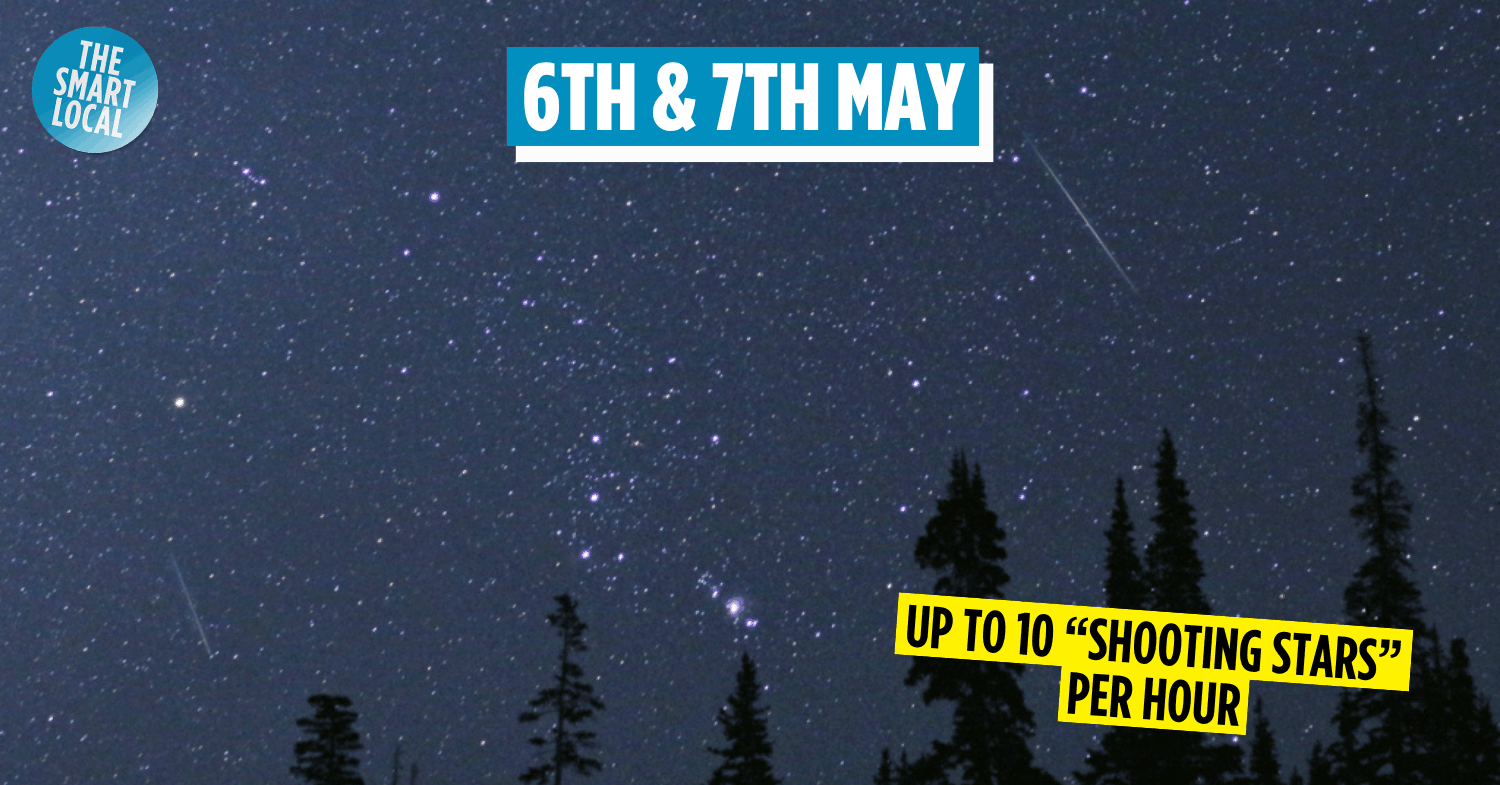

Eta Aquarids meteor shower
Don’t fret if you missed the Lyrids meteor shower back in April – your stargazing redemption arc is here, because another celestial show is headed our way.
The Eta Aquarids meteor shower is set to make its annual appearance in May 2026, giving us another chance to spot streaks of light across the night sky and sneak in a quick wish while we’re at it. Here’s when and where to catch it in Singapore.
What is the Eta Aquarids meteor shower?
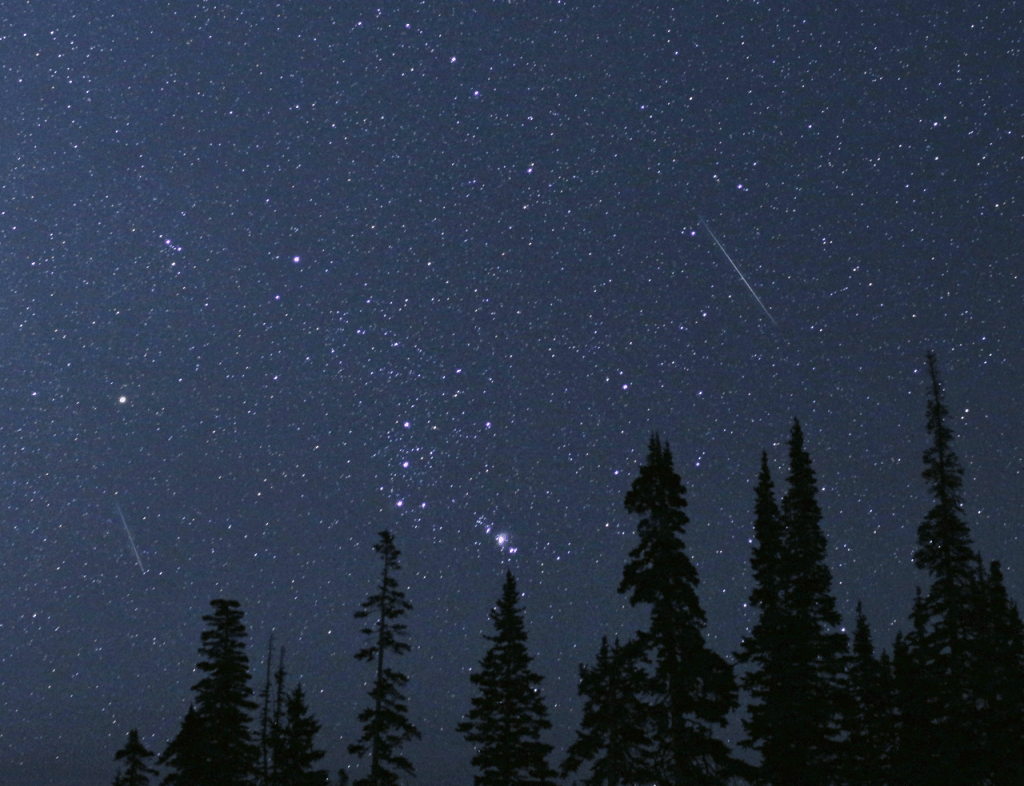
Image credit: NASA
Every early May, the Eta Aquarids meteor shower reaches its peak, and these meteors are known for their speed. According to NASA, they travel into Earth’s atmosphere at about 65.4km per second. That speed is also why they leave behind glowing trails that can linger in the sky for anywhere from a few seconds to minutes.
As for the name, meteor showers are usually named after the point in the sky from which they appear to radiate. The Eta Aquarids meteor shower gets its name from Eta Aquarii, a star in the Aquarius constellation that’s one of the brightest.
When to catch the Eta Aquarids meteor shower in Singapore?
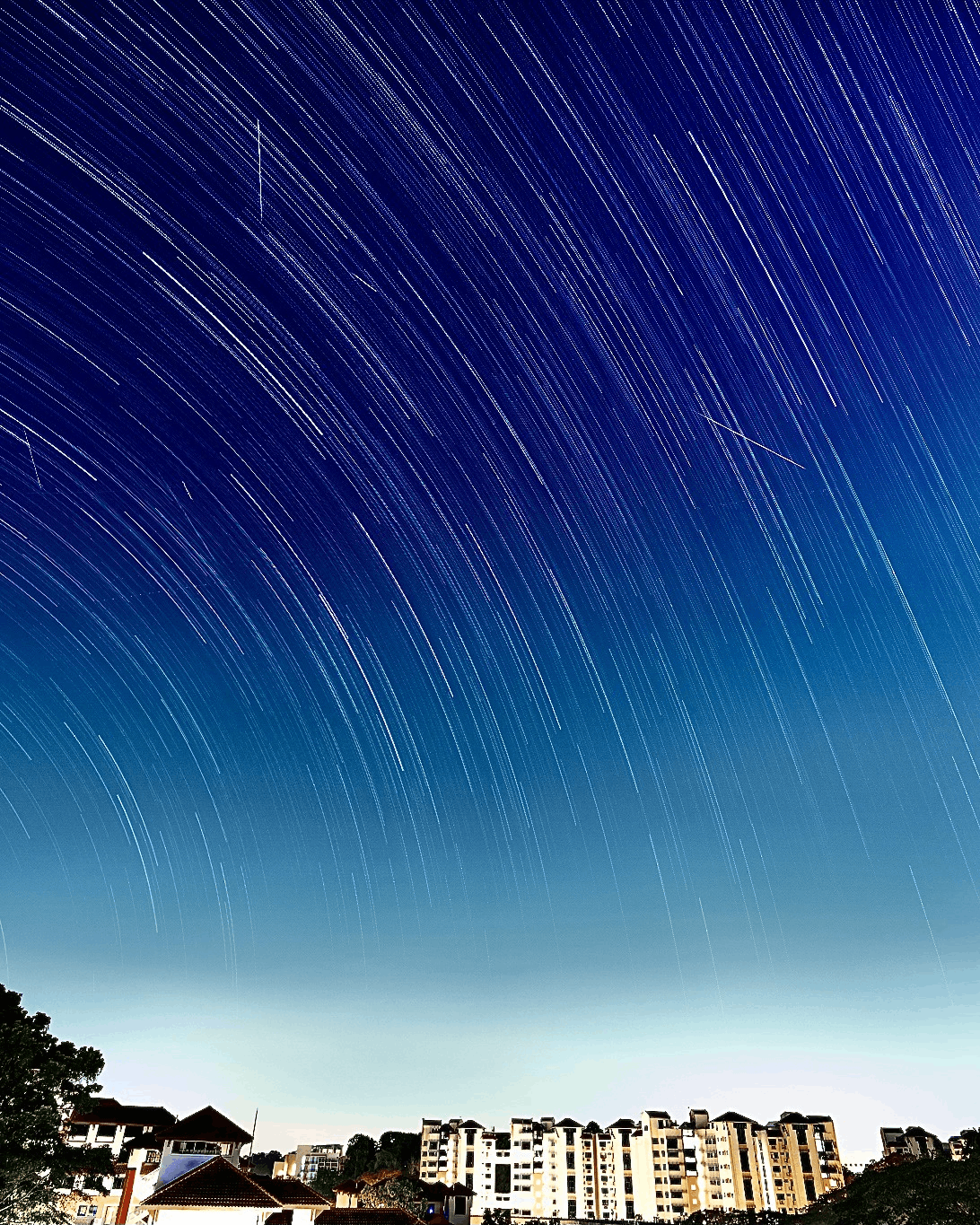
Lyrids meteor shower spotted in SG. Image for illustrative purposes only.
Image credit: PMO Photo by Ken Chua via Lee Hsien Loong on Facebook
Fun fact: the Eta Aquarids meteor shower has been active since 20th April 2026, and may stick around till 21st May 2026, so there’s a decent window to try your luck.
But circle 6th and 7th May 2026 on your calendar, because that’s when the meteor shower is expected to hit its peak. You may be able to spot up to 10 “shooting stars” per hour – the best time to camp for them is after 1am.
Where are the best viewing spots in Singapore?

Labrador Nature Reserve.
Image credit: Kaviya A via Google Maps
NASA recommends heading to locations away from city or street lights, such as beaches, reservoirs, nature parks, and open spaces, to have a better view of the meteor shower. Give your eyes about 30 minutes to adapt to the dark, and you’ll be able to spot the meteors.
However, keep in mind that cloudy weather conditions may affect visibility.
Do I need any special equipment to spot the meteor shower?
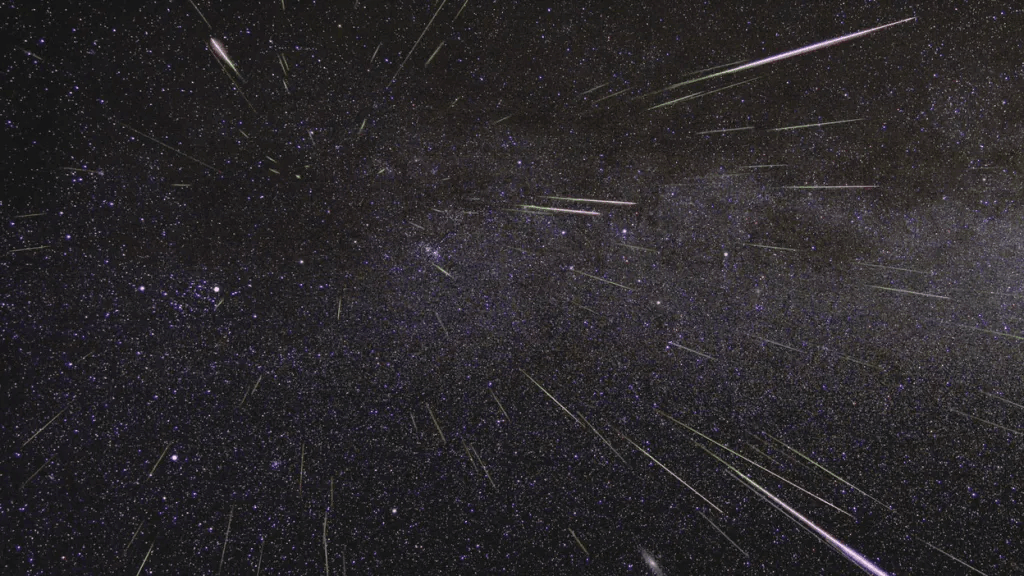
Image credit: NASA
Nope, no special equipment is needed. The Eta Aquarids meteor shower can be observed with the naked eye.
Mark your calendar for the Eta Aquarids meteor shower
Consider writing down your wishes – once those eye-catching “shooting stars” appear in the sky, you might just forget them from all the excitement. It’s also worth bringing along a reclining chair or picnic mat, so you can kick back and enjoy the show without craning your neck.
More nighttime activities:
Cover image adapted from: NASA