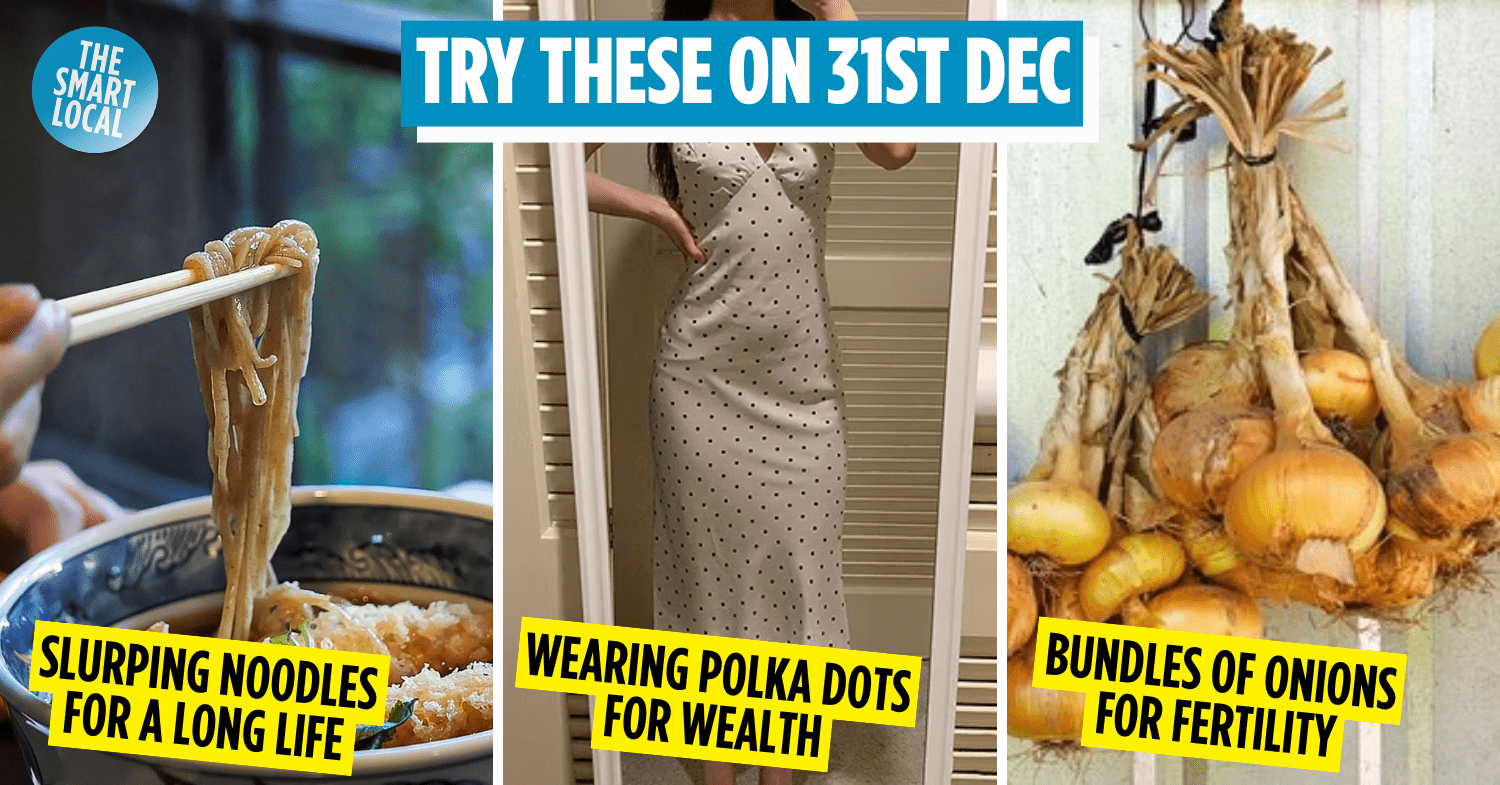

NYE traditions from around the world
For many, New Year’s Eve (NYE) is more than just fireworks and countdowns. Across the globe, it’s also a chance to wish good tidings for the year ahead. You’ve probably heard of the Spanish tradition of eating 12 grapes, but here are some other quirky NYE traditions from around the world that you might want to try on 31st December for maximum luck.
Table of Contents
- NYE traditions from around the world
- Where did these NYE traditions originate from?
- 1. Brazil – Jumping waves
- 2. Scotland – First-footing
- 3. Colombia – Empty suitcase
- 4. Türkiye – Smashing pomegranates
- 5. Japan – Slurping noodles
- 6. Italy – Eating lentils
- 7. Denmark – Jumping off a chair
- 8. Philippines – Wearing polka dots
- 9. Cuba – Throwing dirty water
- 10. Greece – Hanging a bundle of onions
Where did these NYE traditions originate from?
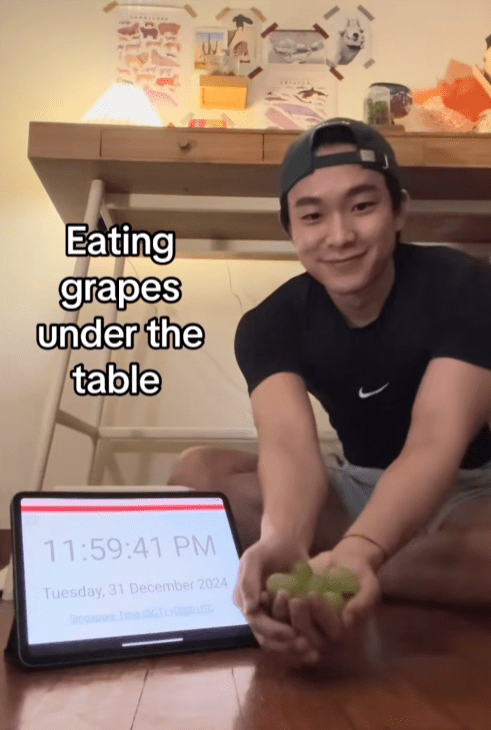
Screenshot from: @.joshposhgosh via TikTok
Most of these NYE traditions have been passed down through generations as religious or cultural practices to symbolically usher in the new year. They’re superstitions with a purpose – a way for people to wish for various positive outcomes, like wealth, abundance, travel, or simply good luck.
For instance, eating 12 grapes under the table is believed to bring good luck and prosperity – each grape is meant to represent a month of the coming year. As it’s gotten more popular over the last few years, folks have also started making a wish with every grape to set clearer intentions for the year ahead.
Other NYE traditions are more about leaving behind the bad and making room for the good. Think of them as a form of manifestation – traditions that help to start the year on the right foot.
1. Brazil – Jumping waves
Jump 7 waves for good luck
@sarah.liedtke Best NYE ever! 🥹 #nyeriodejaneiro #brasil #copacabana #riodejaneiro #nye #silvester #traveltiktok #travel
In Brazil, there’s a tradition of going to the beach and jumping over 7 waves as they pull into the shore. This tradition is rooted in Umbanda, an Afro-Brazilian religion that started in Rio de Janeiro in the early 20th century.
Each wave represents a deity, and with every jump, celebrants make 1 wish. Additionally, everyone rocks white outfits during the NYE celebrations – the colour symbolises purity and new beginnings, and is associated with Oxalá, a supreme deity of the Umbanda religion.
2. Scotland – First-footing
Have a dark-haired man enter your home first

Image for illustrative purposes only.
The Scots have their own name for the last day of the year: Hogmanay. A huge festival with street parties and fireworks is thrown in honour of the day, but there are some unique traditions that come along with the celebration.
One of the most famous is having a dark-haired man be the first to enter their home to bring good fortune for the upcoming year. He doesn’t come empty-handed either – symbolic gifts like coal, which represents warmth, and foods like shortbread and whiskey, are part of the tradition. In Dundee, a coastal city in Scotland, the man would even bring a preserved herring dressed in a crepe-paper skirt and bonnet, which symbolises good fortune.
3. Colombia – Empty suitcase
Walk around with an empty suitcase
@heyshetravels We have a tradition in Colombia to run around the block with a suitcase to symbolize lots of travelling in the New Year!! ✈️🧳🌏💫 #newyear2023 #2023 #nye #travellife #traveltiktok #newyearnewplaces #bucketlist #suitcasetravels
Another interesting tradition you can try is walking around with an empty suitcase. You can stroll around your house or neighbourhood, or set it in the centre of your living room and walk around it.
Countries from the Latin American region, like Colombia, do this to wish for more opportunities to travel in the new year. Other countries that practice this tradition include Ecuador, Mexico, and Panama. So if jet-setting is on your 2026 goals, better grab a suitcase and get moving.
4. Türkiye – Smashing pomegranates
Smash pomegranates for prosperity
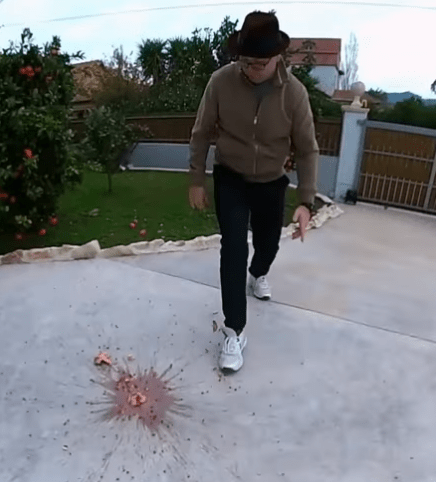
Screenshot from: @BlueBirdsAdventures via YouTube
Istanbul is a great city to visit during New Year’s, with streets glowing from festive lights and decorated trees. While you’re there, you might spot a pomegranate hanging outside a home, or even see one being smashed on a doorstep.
This tradition is believed to bring prosperity in the coming year, as pomegranate seeds symbolise wealth and fertility.
5. Japan – Slurping noodles
Slurp long soba noodles to symbolise long life
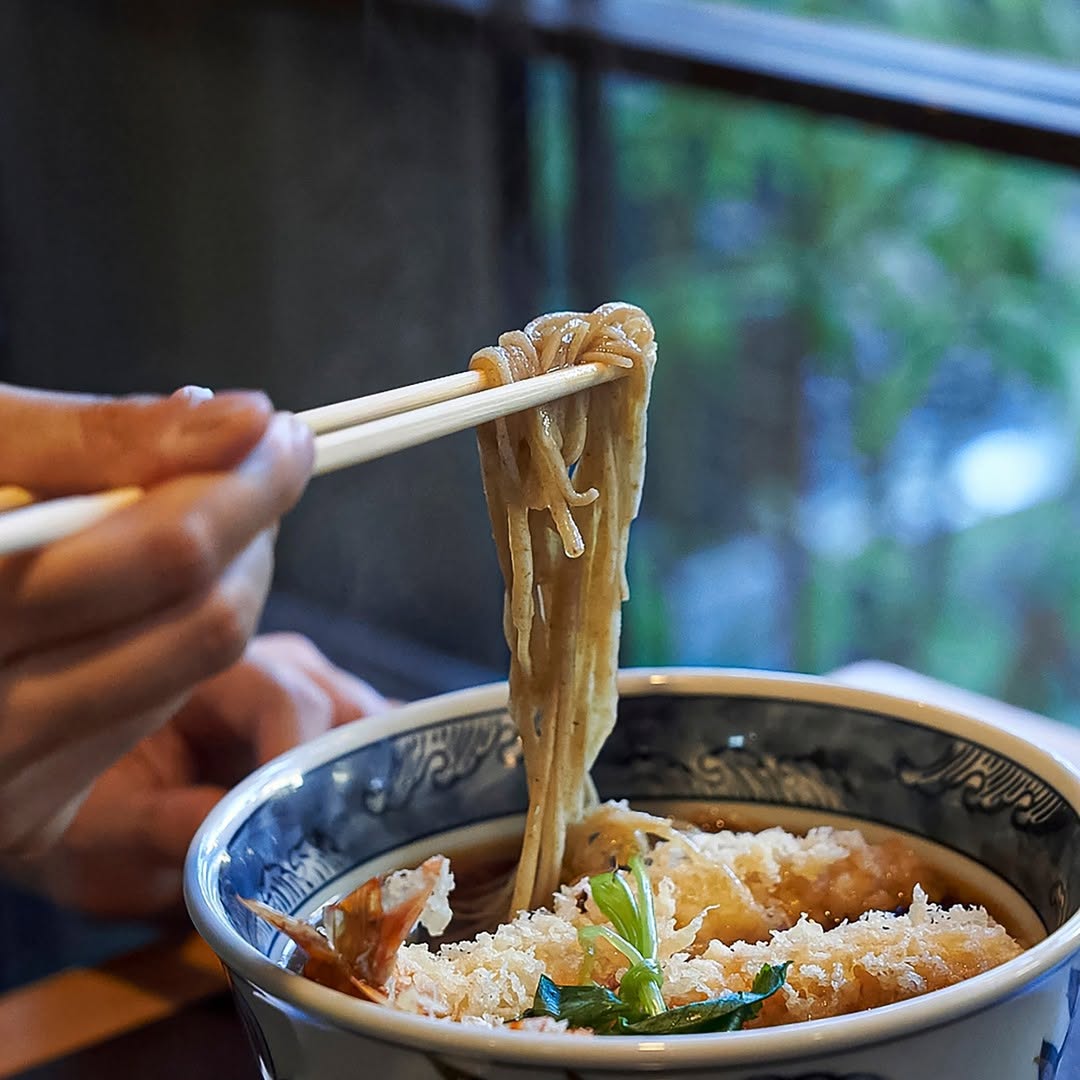
Image credit: @tokyo_gov via Instagram
Toshikoshi Soba is a traditional Japanese buckwheat noodle dish eaten to welcome the new year. The word “Toshokoshi” roughly translates to the passage from one year to the next, and slurping these long noodles is meant to symbolise long life and stability. This is definitely a tasty way to leave last year’s troubles behind and embrace peace and longevity.
You don’t have to go all the way to Japan to try it. In Singapore, you can get these Toshikoshi Soba at restaurants like Tokyo Soba or Healthy Soba IKI. Do note that you may have to make a reservation beforehand.
6. Italy – Eating lentils
Eat lentils for wealth
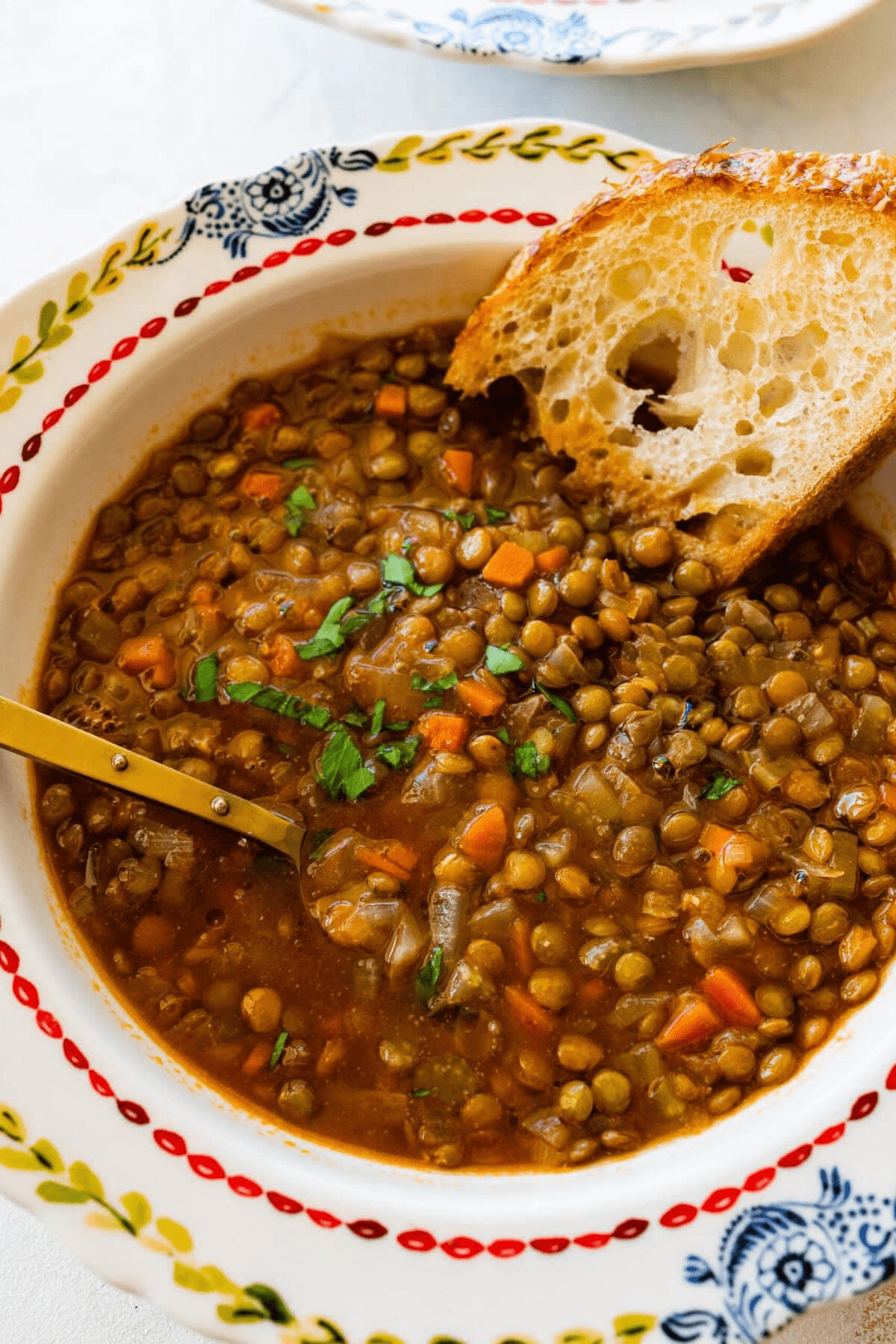
Image credit: Giovanni Gómez Méndez via Facebook
Another food you can try during your NYE celebrations is lentils. In Italy, the round shape of the lentils resembles coins, representing a prosperous year to come, so it’s common to enjoy a feast with lentil-based dishes like Lenticchie.
This tradition dates back to ancient Rome, where lentils were given out as gifts to wish good fortune. If you’re planning to try this out, remember to have the lentil dish right at midnight.
7. Denmark – Jumping off a chair
Jump off furniture to step into the new year

Safety first – make sure to check that the furniture is sturdy enough.
Image for illustrative purposes only.
To the Danes, it seems that “jumping into the new year” might be a bit more literal. At midnight, it’s tradition to stand on a chair, couch, or table and jump off it to physically step into the new year.
This custom comes from an old belief that loud noises, including fireworks and the popping of champagne, would ward off evil spirits. Nowadays, it’s mostly for good luck – and a great excuse to throw a nice, loud New Year’s Eve party.
If this is something you plan on trying, you might want to find a mattress that you can safely land on, and maybe warn your neighbours before the epic leap.
8. Philippines – Wearing polka dots
Wearing polka dots to ring in wealth
 Image adapted from: LE BRANCHÉ PH
Like the Italians, people in the Philippines also love their coin symbolism, but this time with a twist: polka dots. Filipinos believe that wearing polka dots on NYE will bring them great wealth and prosperity in the coming year because of the pattern’s resemblance to coins.
But that’s not the only tradition they practice. They also display 12 round fruits – like melons, grapes, and oranges – to wish for luck, and eat sticky rice to symbolise unity within the family.
9. Cuba – Throwing dirty water
Throw dirty water out onto the street to get rid of bad luck
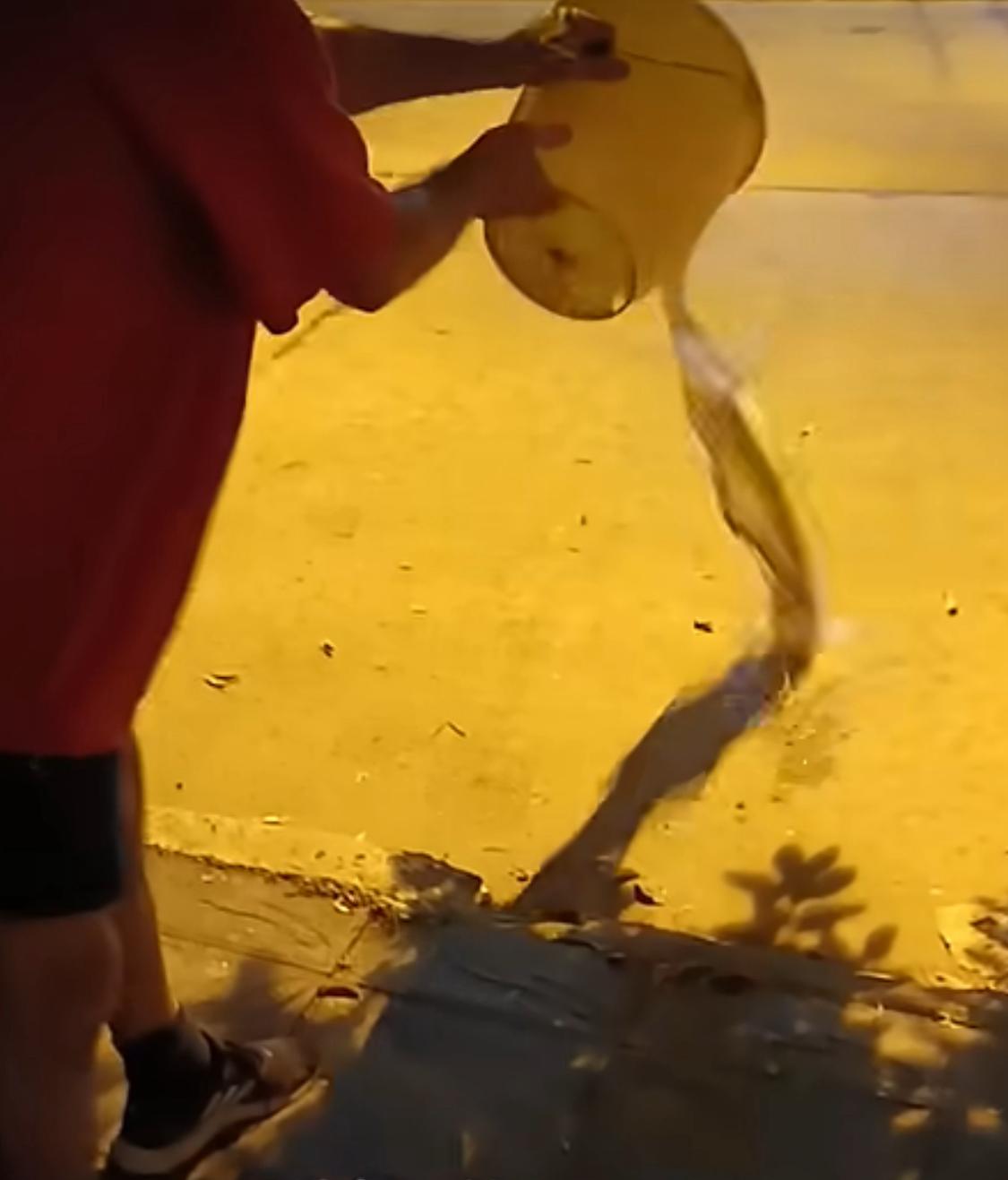
Image adapted from: @cubanargentina via YouTube
If you happen to be in Cuba for NYE, you might see people throwing dirty water out onto the street at the stroke of midnight. Don’t be alarmed – it’s just a cleansing ritual. Typically, Cubans clean their homes during the last day of the year, gathering all the dirty water as they go, and then throwing it out their door and onto the street right at midnight.
The dirty water represents the negative energy that has accumulated over the entire year, and throwing it out is a symbolic way of leaving troubles behind and bringing forth good luck for the new year.
10. Greece – Hanging a bundle of onions
Bundles of onions to symbolise fertility
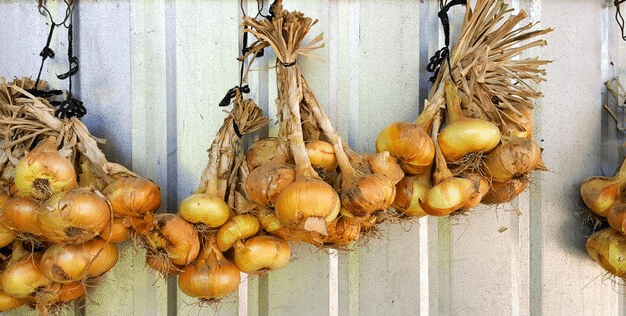
Image credit: Freepik
According to Ancient Greek tradition, onions symbolised rebirth and personal growth, thanks to how easily they spread and grow. Families hoping for fertility and abundance would hang bundles of onions over their door on the last day of the year.
They would also gather on New Year’s Eve or New Year’s Day, and host a large family gathering where they eat Vasilopita – a sweet cake with a hidden coin inside. Whoever finds the coin is said to be blessed with good luck for the year ahead.
Ring in the new year with these NYE traditions from around the world
Cultures around the world have such quirky but meaningful ways to ring in the new year. As we welcome 2026, why not try something a bit more adventurous? These traditions offer a fun way to wish for a year filled with blessings, opportunities, and many adventures to come.
For more NYE & 2026 reads:
Cover image adapted from: @tokyo_gov & @aksuntarim via Instagram, Freepik