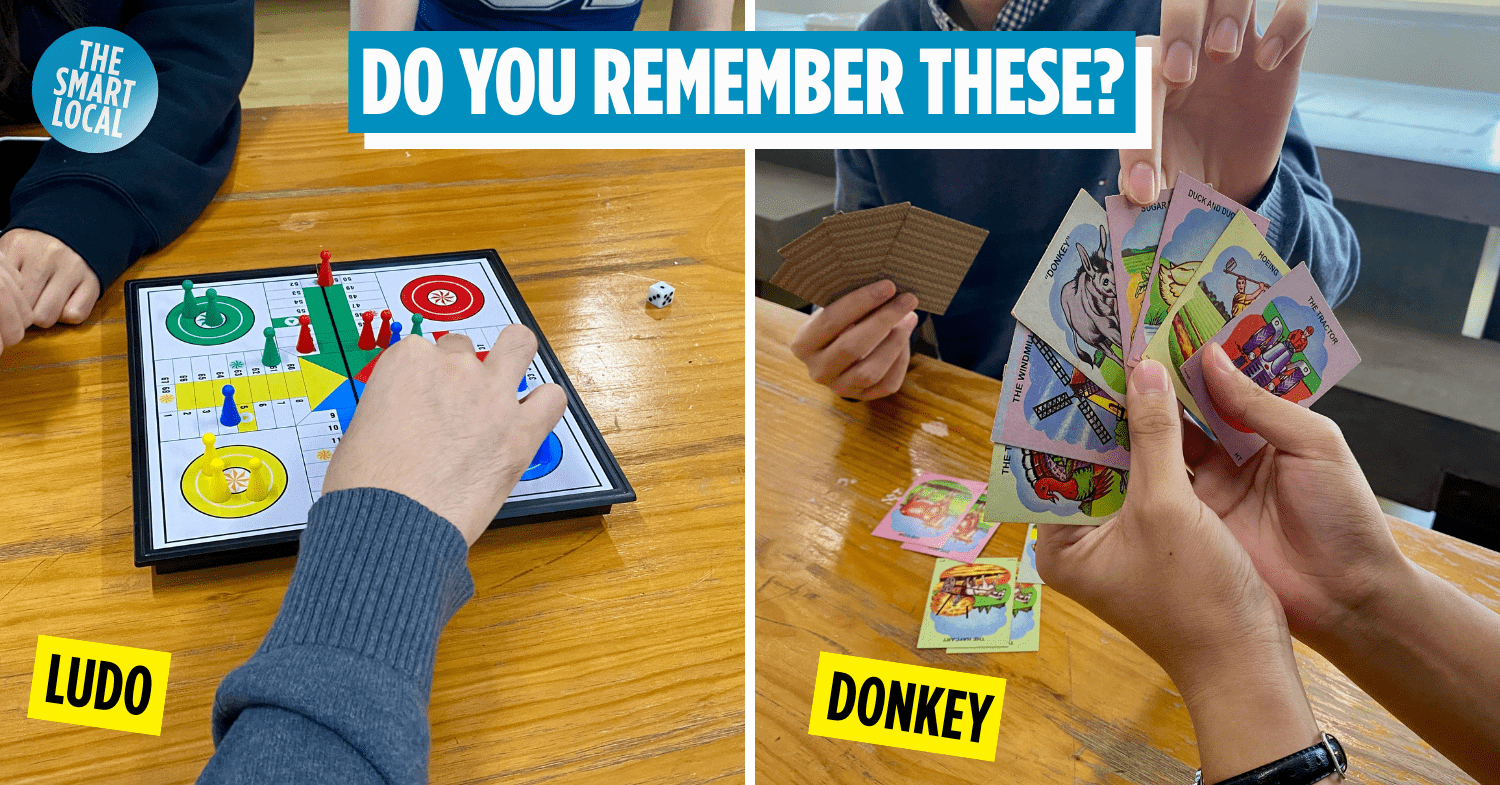

Nostalgic card & board games
As a Gen Z kid who grew up with Millennial siblings and cousins, I got pretty familiar with these games and even have some old sets lying around. Don’t you just miss those days? Festivities like CNY and Hari Raya used to mean hours of non-stop card and board games with family and friends.
Fast forward to now, and everyone’s glued to their screens, while these classic games are left by the wayside. But at some point, everyone needs a mobile phone detox every now and then, and what better way to spend that screen-free time than by enjoying some of these timeless faves?
Table of Contents
Are these card & board games hard to learn?
No, most of these games are quite beginner-friendly – even young kids can join in the fun. If you find yourself struggling with the gameplay, just keep practising and practising. The key is to take it slow and enjoy the process.
And when it comes to rules, our lovely Mr Google will always be there to lend a helping hand. House rules are an option too – everyone has that one questionable rule in Monopoly Deal or Uno that they’ll defend with their lives.
Where to buy these card & board games?
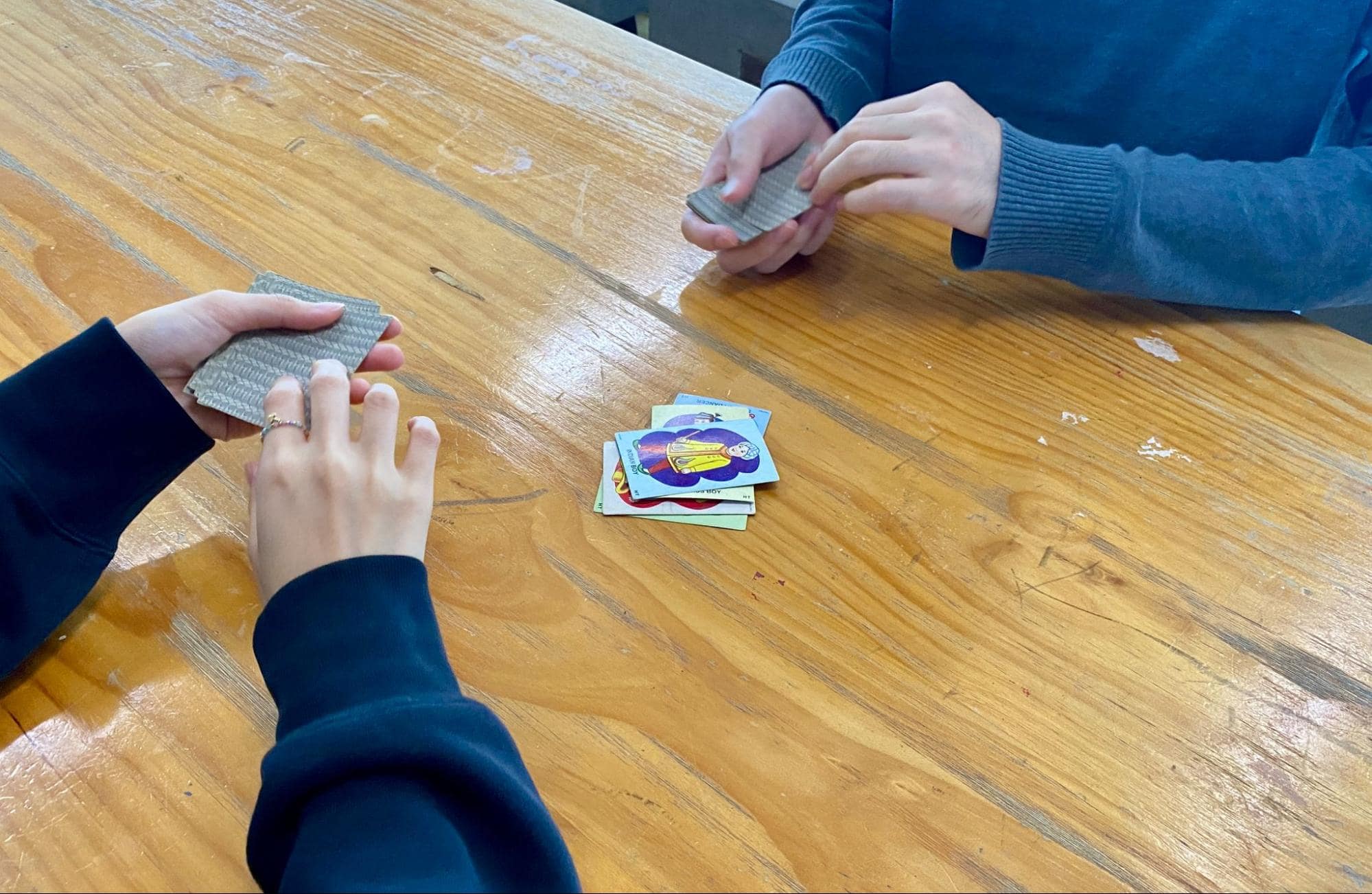 Image credit: ‘Arifah Malik
You’ll actually be able to find these games easily on online retailers like Amazon and Shopee. They’re reasonably priced and stick to the classic designs we all grew up with.
Or just ask your older family members if they still have any tucked away in storage. Not only will you be getting your hands on vintage items, but you will also get to soak up all the memories and love attached to those games.
– Card games –
1. Snap
Tests your focus & speed
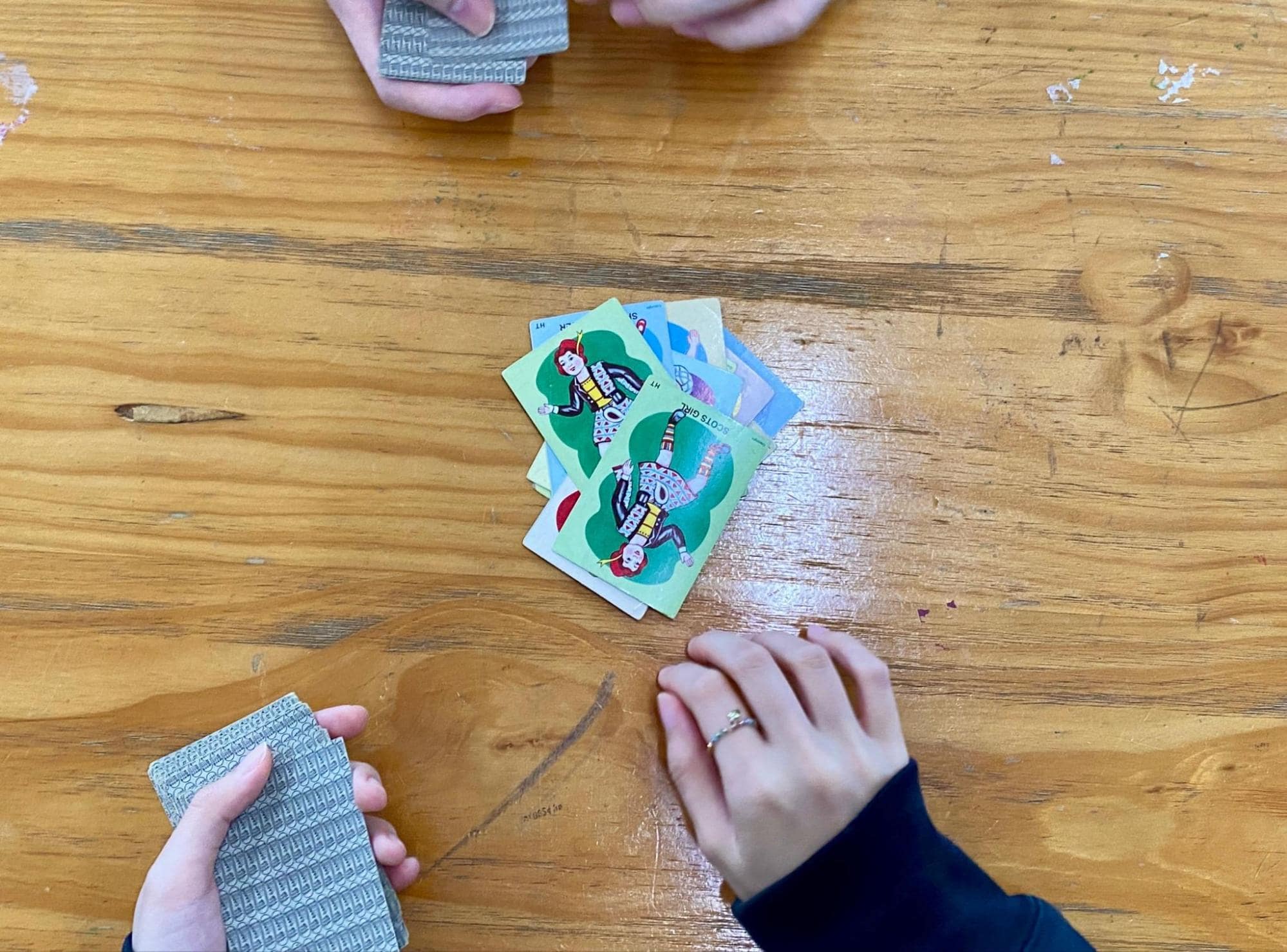 Image credit: ‘Arifah Malik
Growing up, the version I knew best was the one where you smack your hands on the card and yell, “Snap!” There’s nothing quite like that adrenaline rush when you realise you’ve successfully won that round.
The whole point of the smack is to determine who wins. Whoever has their hands right on top of the matching pair wins fair and square. Be warned – this will hurt more as you play, so try to be as calm about it as possible.
Number of players: 2 and up
Aim of the game: Collect as many matching pairs as you can.
How to play:
- Hand out all the cards to all players face down.
- Play “Black and White” AKA “Oh Ya Beh Ya Som” to see who goes first.
- The first player puts 1 card in the centre face up.
- Each player takes a turn to put down 1 card, clockwise.
- When 2 of the same cards land on the top of the pile, slap your hand on it and say, “Snap!”
- Whoever has their hands directly on top of the pair gets the cards.
How to end the game and win: The game ends after all the cards have been used up. The player with the most pairs wins the game.
2. Old Maid & Donkey
Focus on not losing as opposed to winning the game
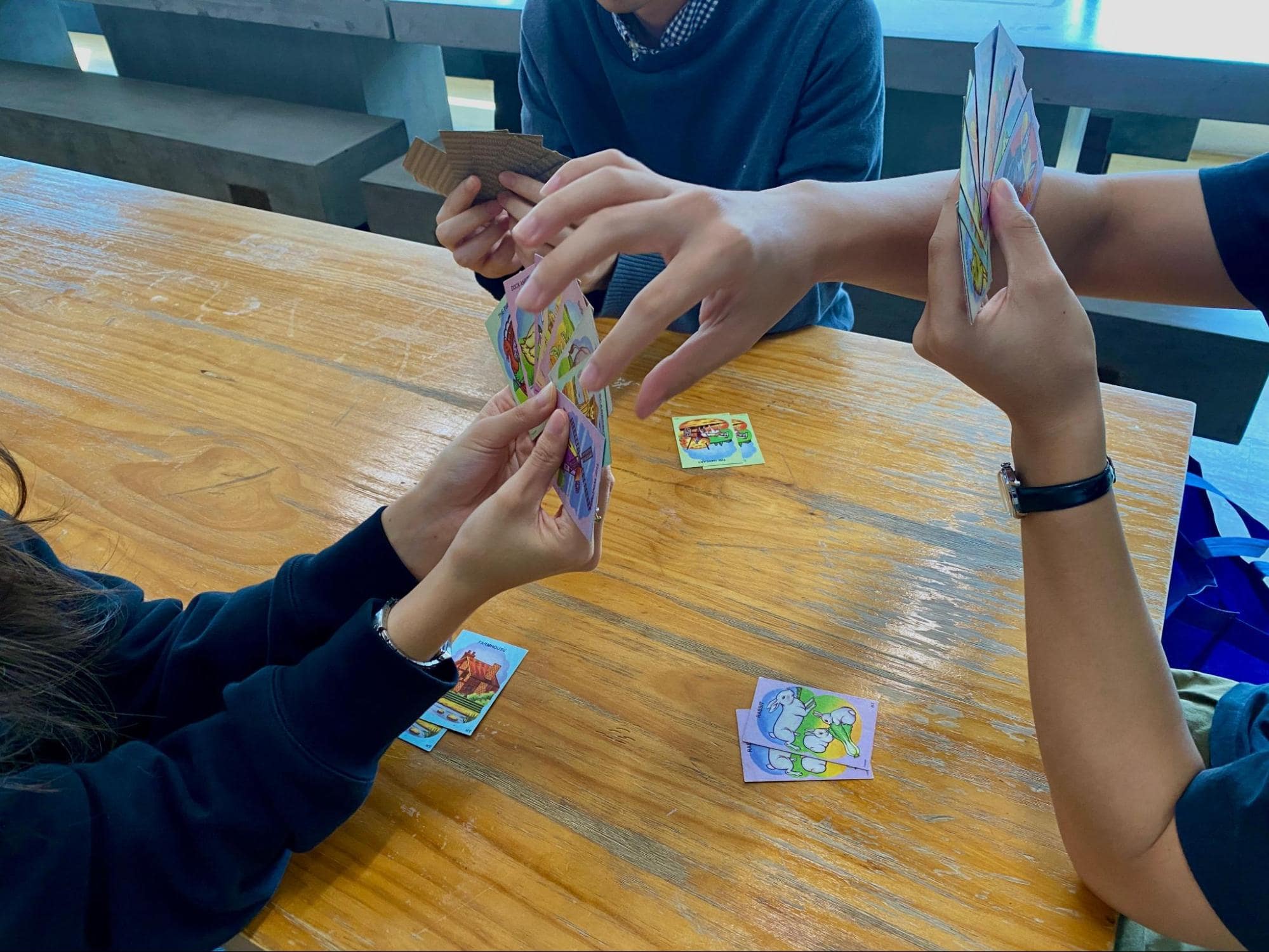 Image credit: ‘Arifah Malik
Some more absolute classics, but these 2 games are a little more ruthless. Old Maid and Donkey don’t end when someone wins, but rather, when someone loses.
The objective here is to match your cards into pairs. Cards will be traded between players, and as the pile slowly dwindles, the tension builds. And the unfortunate soul who ends up with the pair of Old Maids or Donkeys loses that round.
Number of players: 2 and up
Aim of the game: Avoid getting a pair of Donkeys or Old Maids.
How to play:
- All cards are dealt to the players.
- Players identify all pairs and place them face up on the table.
- Player 1 presents their cards on hand at random to Player 2 (the person to the right), and Player 2 picks a random card.
- Continue playing in an anticlockwise direction.
- As more pairs are unveiled, the pile of cards in play dwindles until the pair of Donkeys or Old Maids is left.
How to end the game and win: Continue playing until all the matching cards are found. The player with the pair of Old Maids or Donkeys loses. To decide a true winner, repeat the game until there’s 1 player left standing.
3. Happy Family
Time to test your poker face
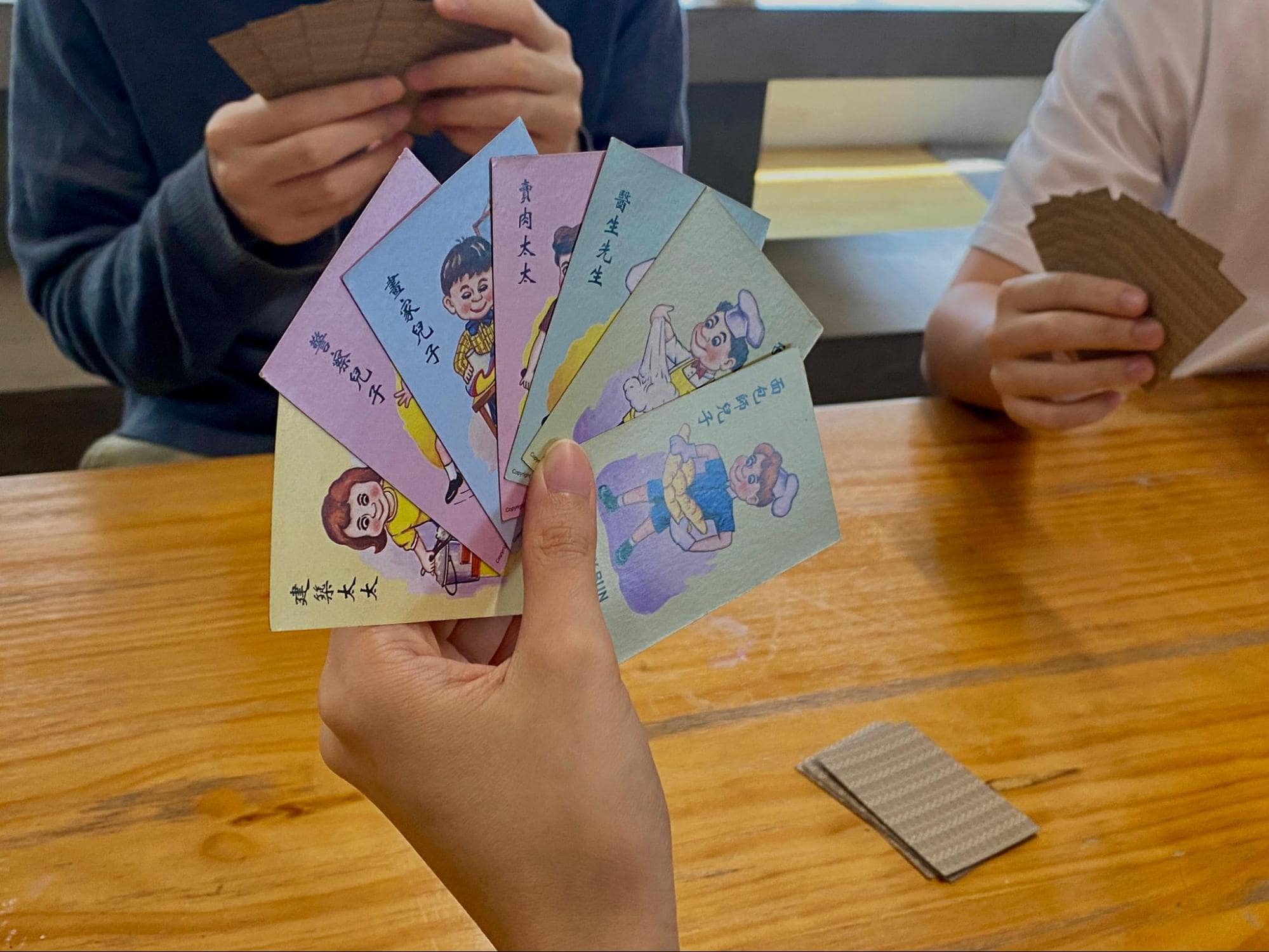 Image credit: ‘Arifah Malik
As we all know, there are 4 decks in the classic card games we grew up with. The final one in that set is Happy Family. Don’t let the name of the game fool you – it will turn your family gathering into a scene from Sherlock Holmes. You’ll be strategising against one another, turning on your parents, cousins, and siblings to figure out their hand.
Number of players: 2 to 4
Aim of the game: Collect all the families.
How to play:
- Each player receives 6 cards. If there are 2 players, each player gets 8 cards.
- The remaining cards are then placed face down in the centre, known as the “stock”.
- All players check the cards in their hands.
- If Player 1 has a yellow family card, they can pick any player and ask, “Can I have the mother from the yellow family?”
- If that player has the card, they will give the card up, and the game continues with the next player.
- If Player 2 doesn’t have the card, Player 1 has to take the top card from the stock. If it’s still not the card they need, it’s then the next player’s turn.
- If Player 1 happens to draw the card they need, they say, “Lucky dip!” Player 1 gets to keep the card and play another turn.
- Once families are complete, the player places the set face up in front of them.
How to end the game and win: The game ends only when all the families have been reunited. The player with the most families is the winner.
Get a set of Snap, Old Maid, Donkey, and Happy Family ($5.34).
4. Solitaire
Solo game perfect for introverts
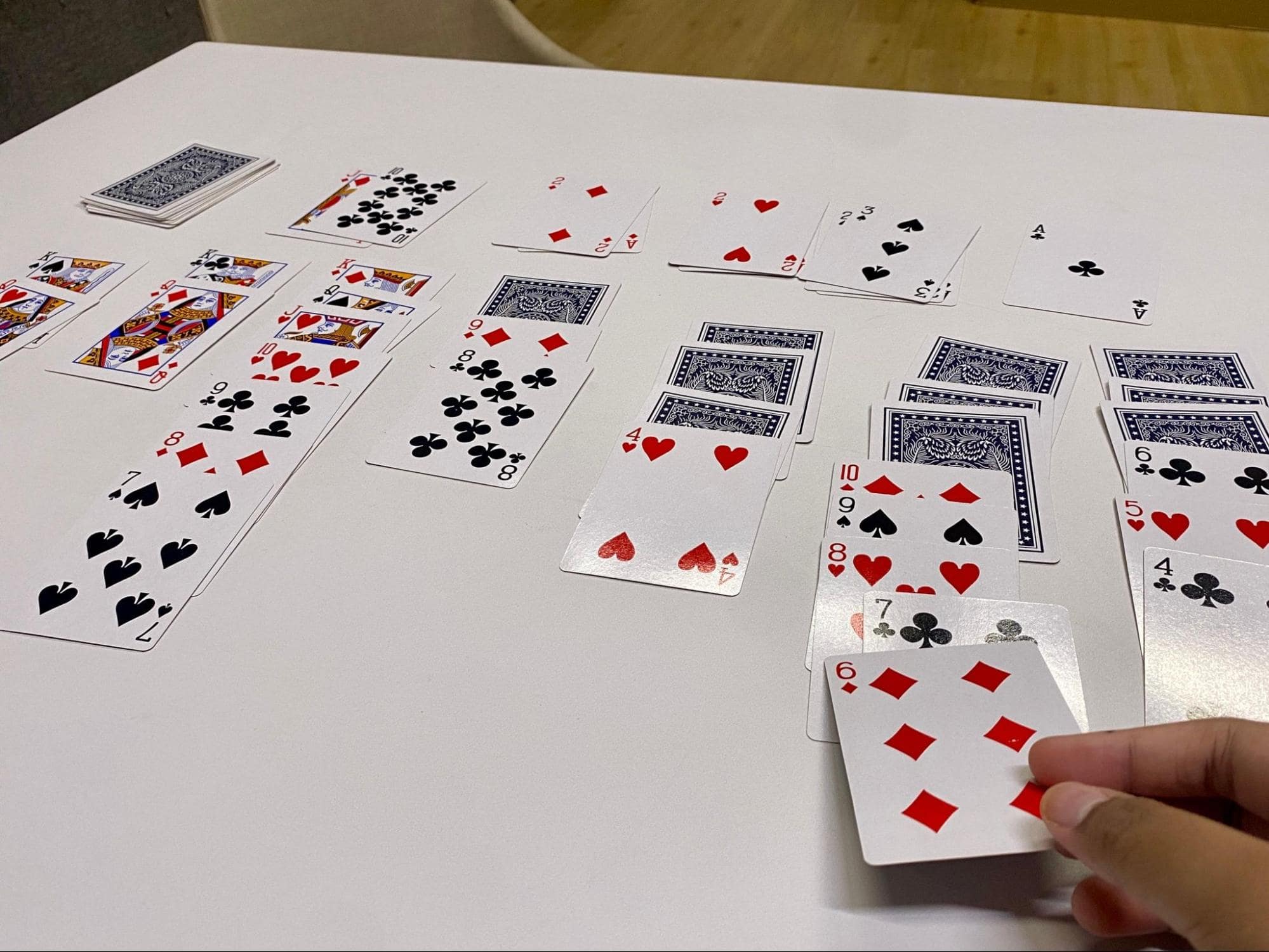 Image credit: ‘Arifah Malik
This is for the more introverted ones among us. Family gatherings can get overwhelming, and sometimes, it’s perfectly fine if you just want to enjoy some alone time. But instead of reaching for your phone, try playing Solitaire.
All you need is a standard deck of poker cards, and you’re good to go.
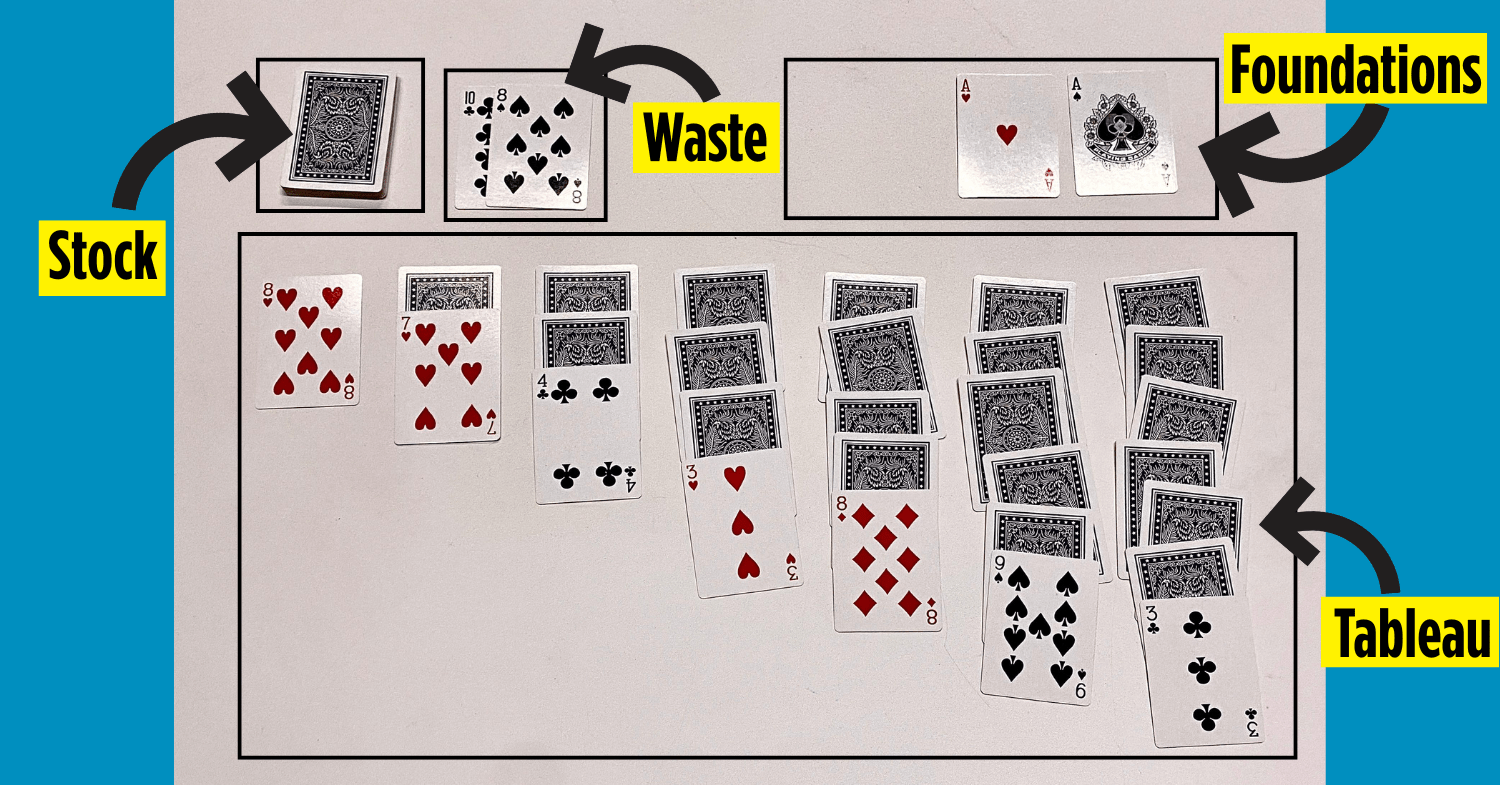 Image credit: ‘Arifah Malik
There are 4 main areas you’ll need to set up:
- The Tableau: The main table with 7 piles of cards.
- The Foundations: Where you start arranging the cards by suit or sequence. There would be 4 piles, one for each suit: hearts, diamonds, spades, and clubs.
- The Stock Pile (AKA “Hand”): The remaining cards are then left in a pile together, known as the “stock” or “hand”.
- The Talon Pile (AKA “Waste”): This is where you place the cards with no place in the Tableau or Foundations. Place them face up.
Number of players: 1
Aim of the game: To build foundations in order of sequence and suits using the entire deck.
How to play:
- The Tableau is dealt, with the top card of each deck faced up.
- Sort the cards in the Tableau in order of alternating suit and in number sequence. For instance, if you get a club, you can put either a heart or a diamond.
- If there are any Aces, place them aside as the base of a Foundation. Continue building the Foundations throughout the game.
- When there are no more moves, open 1 card from the Stock until you can move again.
- If you’ve cycled through the entire Stock, put them back face down and start sorting again.
How to end the game and win: Once all the cards are sorted into the Foundations, the game ends.
Get poker cards ($6.49).
– Board games –
5. Checkers
For those who like strategy-based games
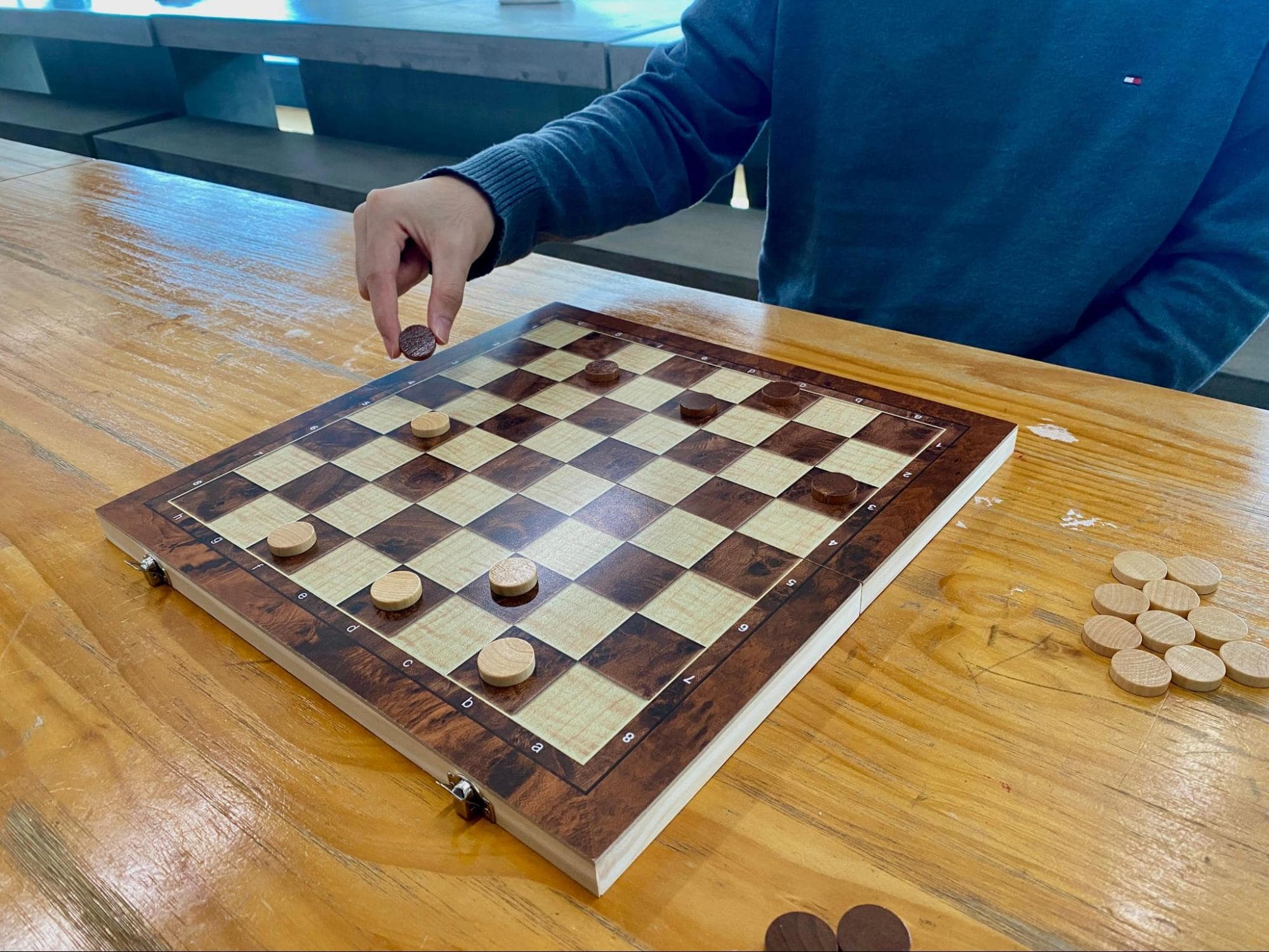 Image credit: ‘Arifah Malik
Checkers is like the younger sibling of Chess – the one you begrudgingly bring out to play with your friends. But don’t let the simplicity of the gameplay fool you. The right player will constantly keep you on your toes.
Number of players: 2
Aim of the game: Get all your opponent’s pieces off the board.
How to play:
- Both players place all their pieces only on the darker squares. The player with the black pieces starts the game.
- Regular pieces are only allowed to move diagonally forward.
- When you see an opening, jump your opponent’s pieces.
- Once your piece reaches your opponent’s end, that piece becomes a King. These pieces are allowed to move forward and backwards.
How to end the game and win: Once there is only 1 player’s pieces on the board, the game ends and the last player standing wins.
6. Snakes & Ladders
Great game for all ages that’s easy to pick up
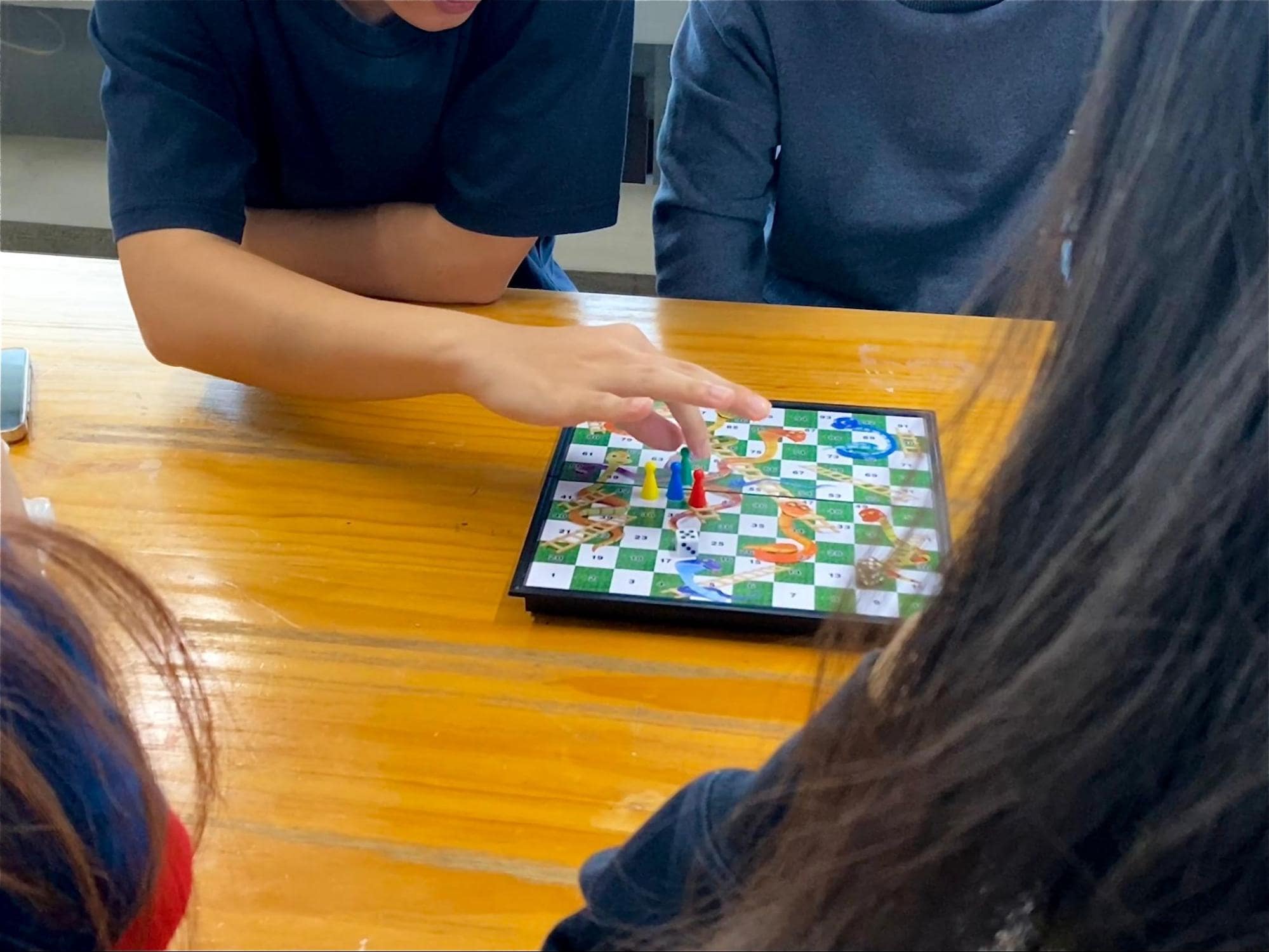 Image credit: ‘Arifah Malik
This game has probably caused more squabbles in school than group project drama. If you have a big family with many young children, Snakes and Ladders is a good game to have on hand. Hit the ladder, skip squares and inch ever closer to victory. But strike a snake, and you might just find yourself right back to the beginning.
Number of players: 2 to 6
Aim of the game: Get your piece to the “100” square.
How to play:
- Play “Black and White” to see who goes first.
- The first player rolls a die.
- Move the piece up according to the number on the die (1-6).
- If the piece reaches the bottom of a ladder, it goes up the ladder and jumps a few squares.
- If the piece hits the mouth of a snake, it goes down the snake and loses squares.
- Each player takes a turn in a clockwise direction.
How to end the game and win: The first person to reach the “100” square wins. To end the game, keep playing until everyone reaches the final square.
7. Ludo
600-year-old game turned childhood classic
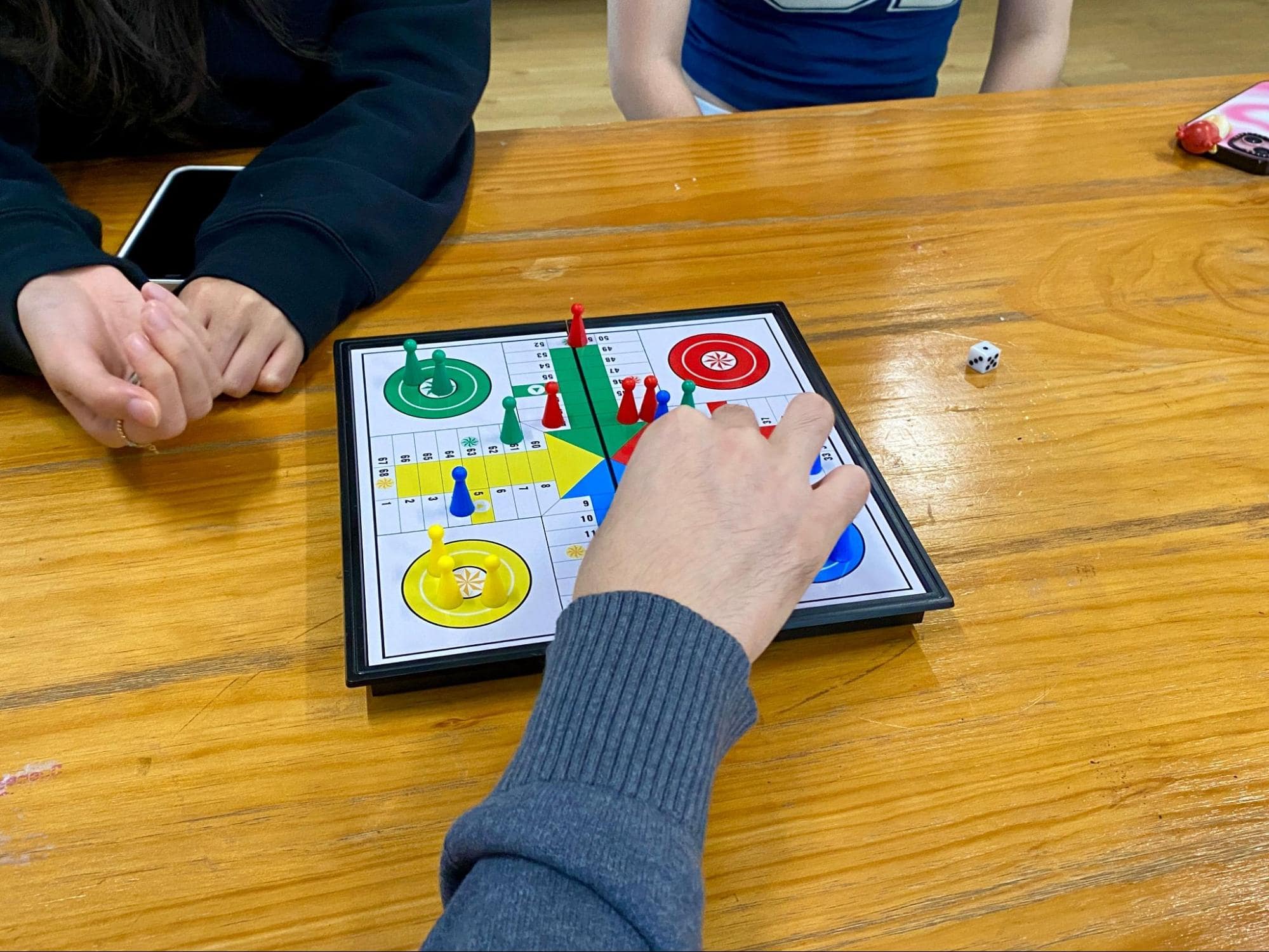 Image credit: ‘Arifah Malik
You’ve probably seen this game before, but never had the chance to try it. Trust us – Ludo is an absolute blast. Not only are you racing to finish your own game, but you’re also busy sabotaging everyone else along the way. Nothing bonds – or breaks – friendships quite like sending your cousin’s token straight back to the starting point.
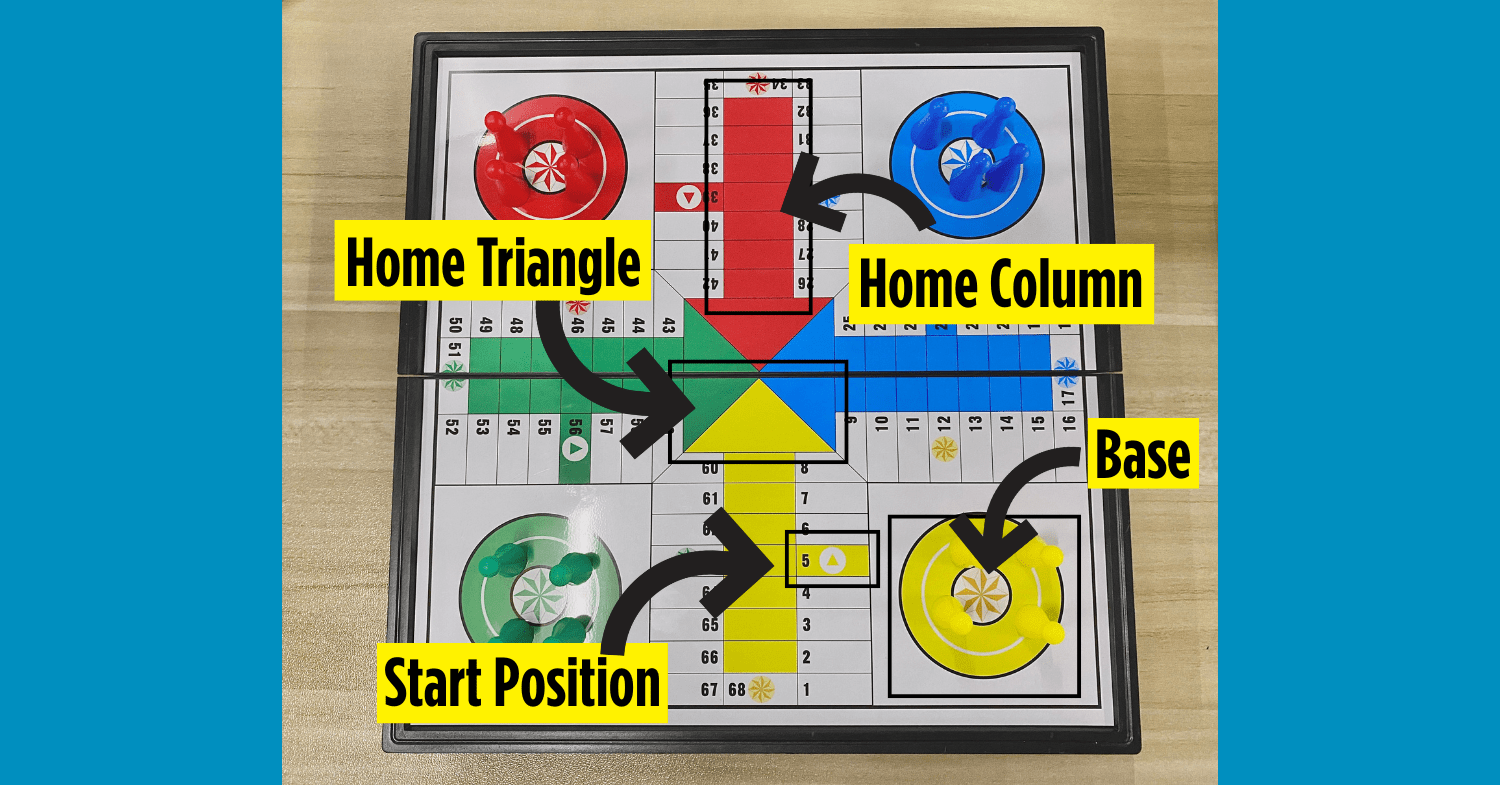 Image credit: ‘Arifah Malik
There are 3 sections to take note of:
- Home Column: A safe zone for your piece that leads up to the Home Triangle.
- Home Triangle: End goal. All pieces must reach here to win.
- Base: Where you store all your pieces that are not in play.
Number of players: 2 to 4
Aim of the game: Get all your pieces to the Home Triangle.
How to play:
- Everyone rolls a die. Whoever gets the highest number starts the game.
- With a 6, you can choose to either get a piece out of the Base or move an existing piece by 6 squares.
- Rolling a 6 also grants you an extra turn. But if you roll a 6 consecutively 3 times, you lose that turn.
- Keep rolling to move the pieces along in a clockwise direction.
- If a player lands on the same square as an opponent, the opponent’s piece is bumped back to the base.
- If 2 or more of a player’s pieces are in 1 square, that area is blocked. Only the owner of the blocked set can pass through it.
- When a piece enters the Home Column, it can no longer be attacked.
- To get the piece into the Home Triangle, an exact roll is needed.
How to end the game and win: The first person to have all 4 pieces in the Home Triangle wins. Keep playing until everyone’s pieces are in their Home Triangles to end the game.
Get a multi-game board consisting of Ludo, Checkers, and Snakes & Ladders ($14.44).
8. Backgammon
A game of luck & strategy
You know those game sets that come with a whole bunch of classics in one box? Backgammon is usually tucked away in there, but most of us never actually touch it. Well, better late than never. There’s a bit of a learning curve, but once you get the hang of it, you’ll definitely be fighting for the win.
Number of players: 2
Aim of the game: Get all your checkers off the board.
How to play:
- The checkers can be played in any combination – shift just 1, split between 2, or even move 4 if you roll doubles.
- No checker is allowed to be on the same stick as an opponent with 2 or more checkers.
- When the other player has 1 checker on a stick and you land at the same place, that checker will have to be moved to the Bar. Your opponent then has to get that checker out of the Bar before continuing the game.
- If you roll duplicates, that outcome doubles. Let’s say you roll double 5s – this means you now have a total of 20 moves.
How to end the game and win: Whoever gets their checkers off the board first wins, and the game ends.
Get a multi-game board with Backgammon, Chess & Checkers ($18.42).
Take a walk down memory lane with these nostalgic card & board games
Sure, you can find all these games online in this digital age, but nothing beats the feeling of slamming a card down or moving pieces across the board with your own hands. It’s also the perfect excuse to rest your eyes and actually put your phone aside for a bit.
More nostalgia pieces:
- P5 NDP memories
- Nostalgic childhood books for Singaporean kids
- Water bottles that everyone had as a kid
Cover image adapted from: ‘Arifah Malik
Photography by ‘Arifah Malik.
A portion of this content may contain referral links where The Smart Local may collect a commission. Our opinions remain our own.