
Flexible work arrangements in Singapore
From choosing where you work to when and how much you work, what kind of flexibility matters most to you? In Singapore, Flexible Work Arrangements (FWAs) became more commonplace during the pandemic, and since then, both employers and employees have been rethinking how, when, and where work gets done.
But beyond the buzzwords, what does flexibility look like in practice? We spoke to three Singaporeans who’ve embraced different types of FWAs, from compressed work weeks to remote working across borders and even transitioning to a part-time role.
Working 2.5 days/week at 74 years old
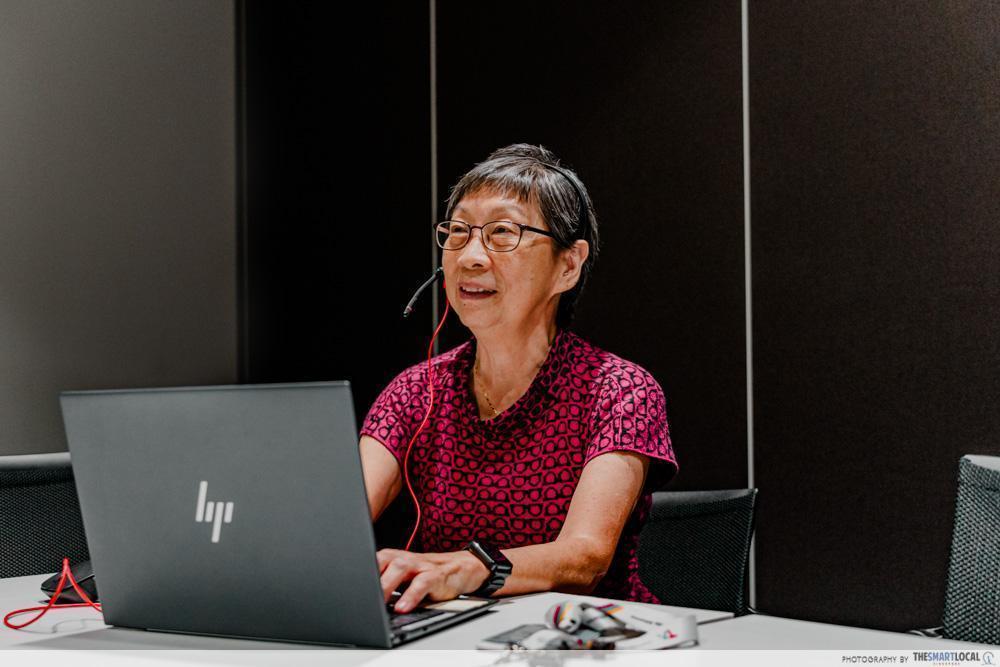
It’s true when they say that learning is a lifelong journey. I’m a 74-year-old Consultant at Tripartite Alliance for Fair and Progressive Employment Practices (TAFEP), and I don’t intend to stop working anytime soon. My time with TAFEP started in 2017, when I joined as a part-timer with the Employer Advisory Service Team.
Before that, I’d spent over 40 years in full-time work. By 2014, the demands of my job, coupled with caregiving responsibilities for my elderly siblings and retired husband, led me to consider retirement.
But before I could bid adios to working, I was given the opportunity to work part-time at TAFEP instead. This could not have come at a better time, as I was hesitant to give up working entirely. I’m glad that I had an open conversation about my caregiving needs with my employer, which led to a perfect solution: a part-time arrangement.
What makes this arrangement especially meaningful is that it benefits not just me, but my organisation as well. With over 4 decades of HR experience, I’m able to support TAFEP by training and advising employers on the Employment Act and related guidelines, and imparting my knowledge to younger colleagues. Despite my years in the workforce, the learning hasn’t stopped – I regularly research and keep up with new developments in the HR space to stay relevant and continue adding value.
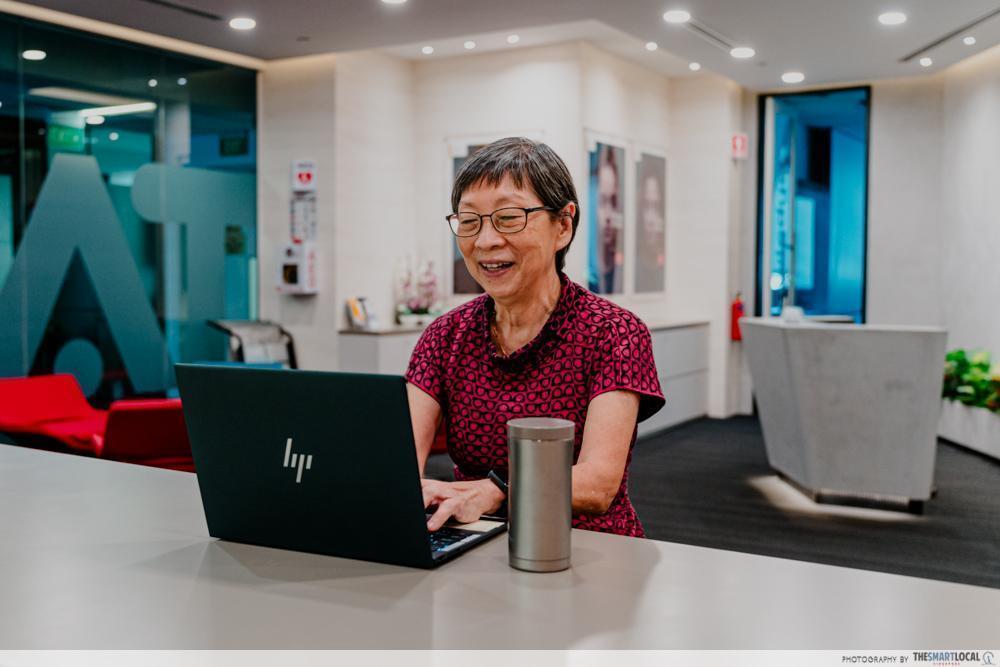
I now work at TAFEP 2.5 days per week, with the option of working from home (WFH) once a week. This WFH day is flexible, and I would coordinate it with days when I’m not required to meet my colleagues in person.
On such days, I conduct group training sessions and provide advisory support to employers through virtual and phone consultations. If I ever need to adjust my schedule, I simply inform my team lead. Also, my supervisor checks in regularly to ensure the arrangement continues to meet my needs.
This flexibility has made managing personal commitments far easier, and I feel genuinely supported by my organisation. It’s a strong example of how companies can make strategic decisions to retain mature employees in ways that serve both their people and business goals – such as maintaining a skilled and experienced workforce and ensuring consistent service delivery.
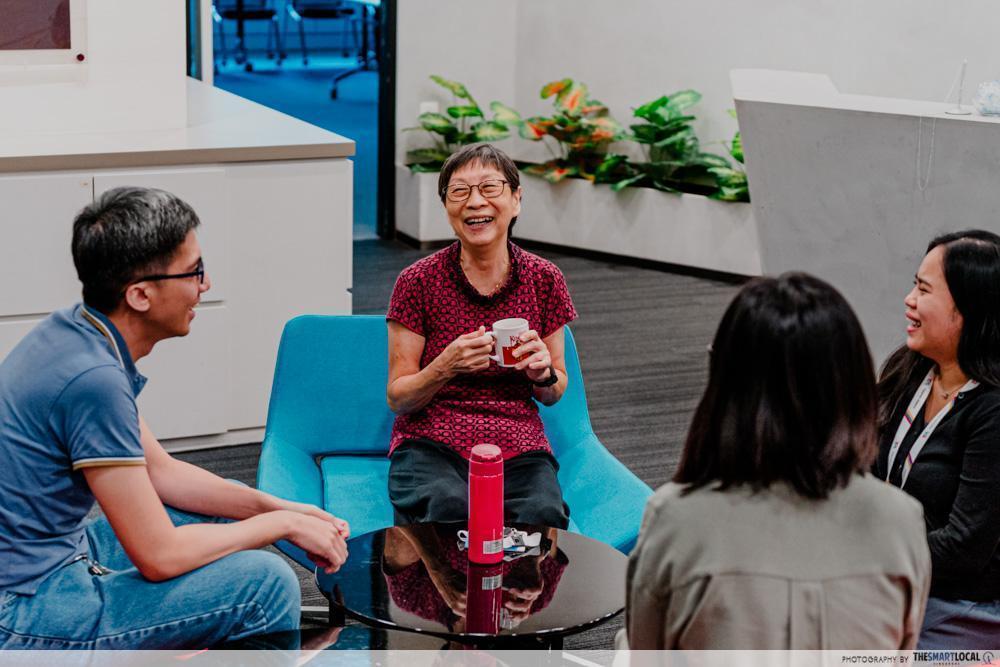
Being on a part-time work arrangement has made my life more fulfilling. It lets me join my family on vacations, exercise regularly, and continue my volunteer work.
It has also extended my career for longer than I thought possible. Through this FWA, TAFEP walks the talk as a progressive and age-friendly employer that values diverse talent across all life stages.
I never imagined I could work beyond 70, but yet here I am.
– Peggy Ang, 74
Compressed 4-day work week, with Mondays off
It might come as a surprise to some, but I’ve been with Focus on the Family Singapore Limited for more than a decade. I first joined the company as part of the Partnership and Outreach team, where I frequently networked with schools and companies. This meant a lot of client-facing work and a densely packed schedule with tonnes of meetings.
Lo and behold, I started to experience the much-dreaded burnout during my 7th year. I had also just moved to my own place with my spouse, and weekends were no longer designated chill me-times.
I had initially planned on going for a sabbatical to combat this. But Covid happened and made WFH the new normal. I found myself adjusting well to the momentum of working from home and enjoying the personal space at home. I was also able to begin my day at a less hurried pace without the rush-hour commute to the office.

At this juncture, my company offered for me to take on a new role in the Digital Transformation team, which I gladly accepted. It was a change of job scope and an exciting challenge. I would be working on revamping the Customer Relationship Management system, as well as redesigning business processes.
While this change was refreshing and something that energised me, it presented new challenges as well. The end of the circuit breaker also meant we had to return to offices, and activities started to fill my calendar again. My introverted self found the constant human interaction to be draining, and it didn’t take long before I felt the burnout returning.
I had to dig deeper and find a proper solution.
I signed up for my company’s coaching sessions, which offered 1-on-1 guidance tailored to my work-life goals. At the time, I was considering a shift to part-time work — but during one session, my coach (the CEO of Focus Singapore) suggested exploring a compressed work week instead. The arrangement would give me Mondays off, in exchange for working two additional hours from Tuesday to Friday.
As you might’ve guessed, this worked out really well for me. I gained a new understanding of my working style. The extra hour each day gave me more time to finish my work without rushing, and Mondays are spent catching up on rest, activities that recharge me, as well as household chores.
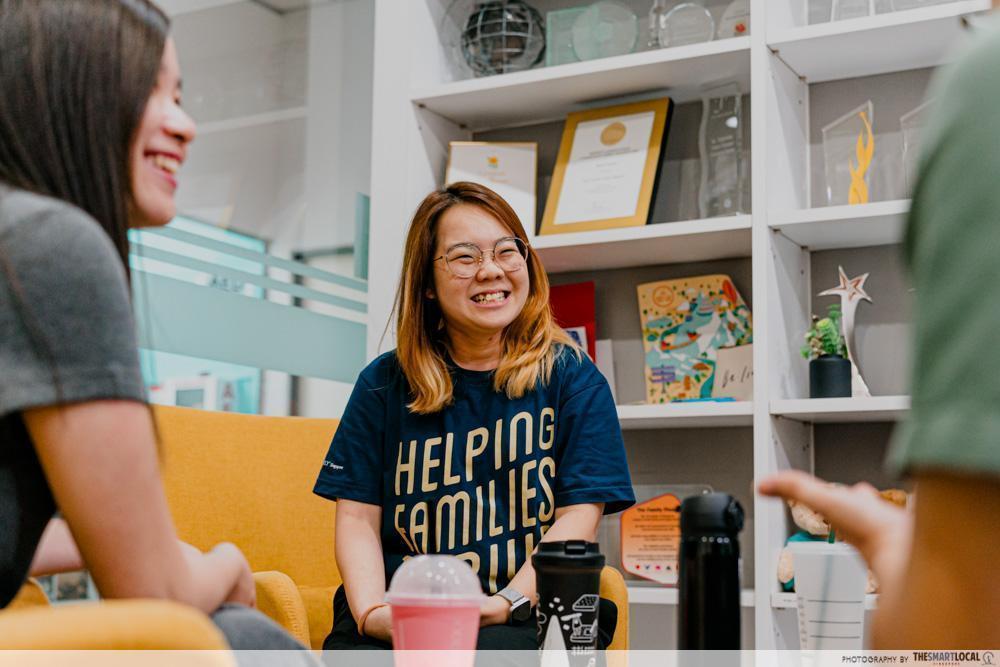
I was also given the flexibility to WFH on Tuesdays and Fridays. I reserved these days for deep-focus tasks like researching new digital solutions, redesigning business processes to improve efficiency, and preparing for upcoming meetings. In-person sessions were then concentrated on Wednesdays and Thursdays, allowing for a more purposeful and productive work rhythm.
As remote and hybrid setups become part of our organisation’s work-life efforts, we have also adapted the way we collaborate with one another. Trust and accountability have become the backbone of our work culture.
Needless to say, my burnout has been kept at bay. I’ve benefited from the extended rest on Mondays and also learnt to be more organised and intentional with my planning and time management to make this FWA effective for me and my organisation.
– Gena Chua, 34
Working remotely from Thailand
 In the TSL office.
As the Associate Director at TSL, I oversee a plethora of creative content, strategic planning, and people aspect of all the titles under the TSL umbrella. For the uninitiated, this includes sites like Must Share News, Uchify, ZULA, and Eatbook.
In 2022, my husband and I were given the chance to make Thailand our Home 2.0, thanks to the agricultural nature of my husband’s business.
Moving to Thailand was a pretty easy “yes” for us. We immediately started planning a 6-month timeline leading up to the move. Of course, uprooting your entire family and moving to another country was no easy task.
Another major concern I had was my job. At that point, I had already been with TSL for 7 years and was reluctant to part with the company. But I was also prepared for the unfortunate outcome of being unemployed, should this not work out.
My gameplan when speaking to my boss was simple – be honest, and prove that I will be just as productive. My good performance record and strong reliability definitely helped as well. I was also open to returning back to the Singapore office for key events 3-4 times a year.
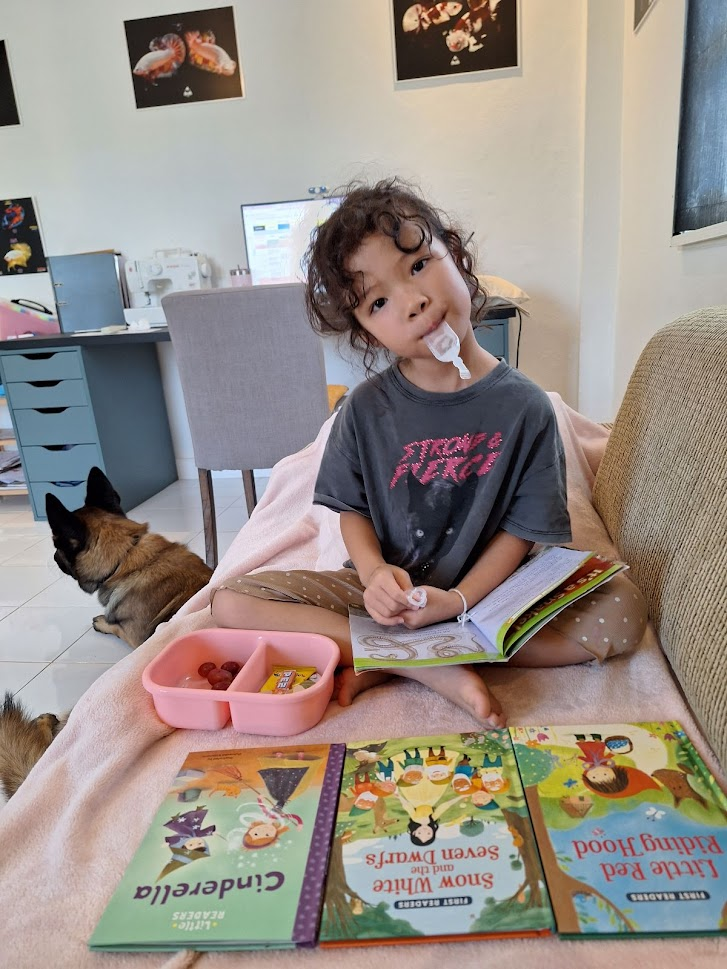 Taking care of my sick daughter while attending work meetings.
Image credit: Kimberly Lauren Wong
Thankfully, my boss was agreeable to this FWA. It also helped that our work-from-home arrangements during Covid proved viable, and my being in Thailand was kinda an extended version of that.
Thus began my “farmer life” in Thailand in July 2022. Thailand is an hour behind, so I start my workday at 8am when it is 9am in Singapore. Because there’s no office for me to travel to, I’m spared from the peak-hour traffic and am able to run errands before dropping my kids off at school.
The best part of my flexible workplace is spending more time with my husband and children without sacrificing my work quality. In the evenings, when my children have gone to bed, I’m able to catch up on work without distractions. I am able to speed through tonnes of emails, work on new projects, and problem-solve any internal management matters.
 The view from my window.
Image credit: Kimberly Lauren Wong
The shift in environment has been transformational – not just for my well-being, but also creatively. Living amidst nature has given me a refreshed perspective that’s sparked new ideas and ways of thinking. For a creativity-driven company like TSL, this adds real value. I approach challenges with renewed clarity and offer different angles that stem from a slower, more reflective pace of life.
This flexible setup also allows me to stay deeply connected and committed. Being in an environment that supports both my personal and family life enables me to bring more focus, energy, and creativity to my leadership. From a business standpoint, it’s a win-win – the company retained an experienced team member while also benefitting from the fresh perspectives I offered from working in a different cultural context.
Admittedly, my situation is pretty unique given my husband’s career. But I’m glad that this exciting milestone was achieved in my adulting journey. My productivity and work-life balance have significantly improved, and I’m able to solidify my relationship with my husband and kiddos.
– Kimberly Lauren Wong, 33
Flexible working arrangements in Singapore
With an ageing population in Singapore, finding the right talent becomes increasingly challenging. Failure to look after their talent will make businesses unsustainable. Employers who offer FWAs can attract and retain talent, leading to improved productivity and lower recruitment costs. At the same time, employees will feel valued and motivated when their work-life needs are met, creating a win-win situation for both parties.
As an employer, understanding the needs of your workforce and implementing effective FWAs can be a challenge. This is where TAFEP steps in.
They have an array of resources available for employers, including training programmes that provide guidance in implementing these FWAs for the company.
Employees and employers can also refer to the Tripartite Guidelines on FWA Requests to know how to request or handle FWA requests.
Naturally, not every arrangement will work for every organisation. Depending on your company’s needs, there are plenty of arrangements that employers can consider – from flexi-shift and job sharing to staggered time and phased retirement. It ain’t just about working from home.
So, is this truly the era of FWAs? It’s an easy “yes” for me. Everyone’s work and home life situations are different. But as long as employers and employees work hand-in-hand to build mutual trust, provide the necessary support, and share the same goals, this could be a reality for many.
Find out more about Flexible Work Arrangements on TAFEP’s website
This post was brought to you by TAFEP.
Photography by Ian Sim.