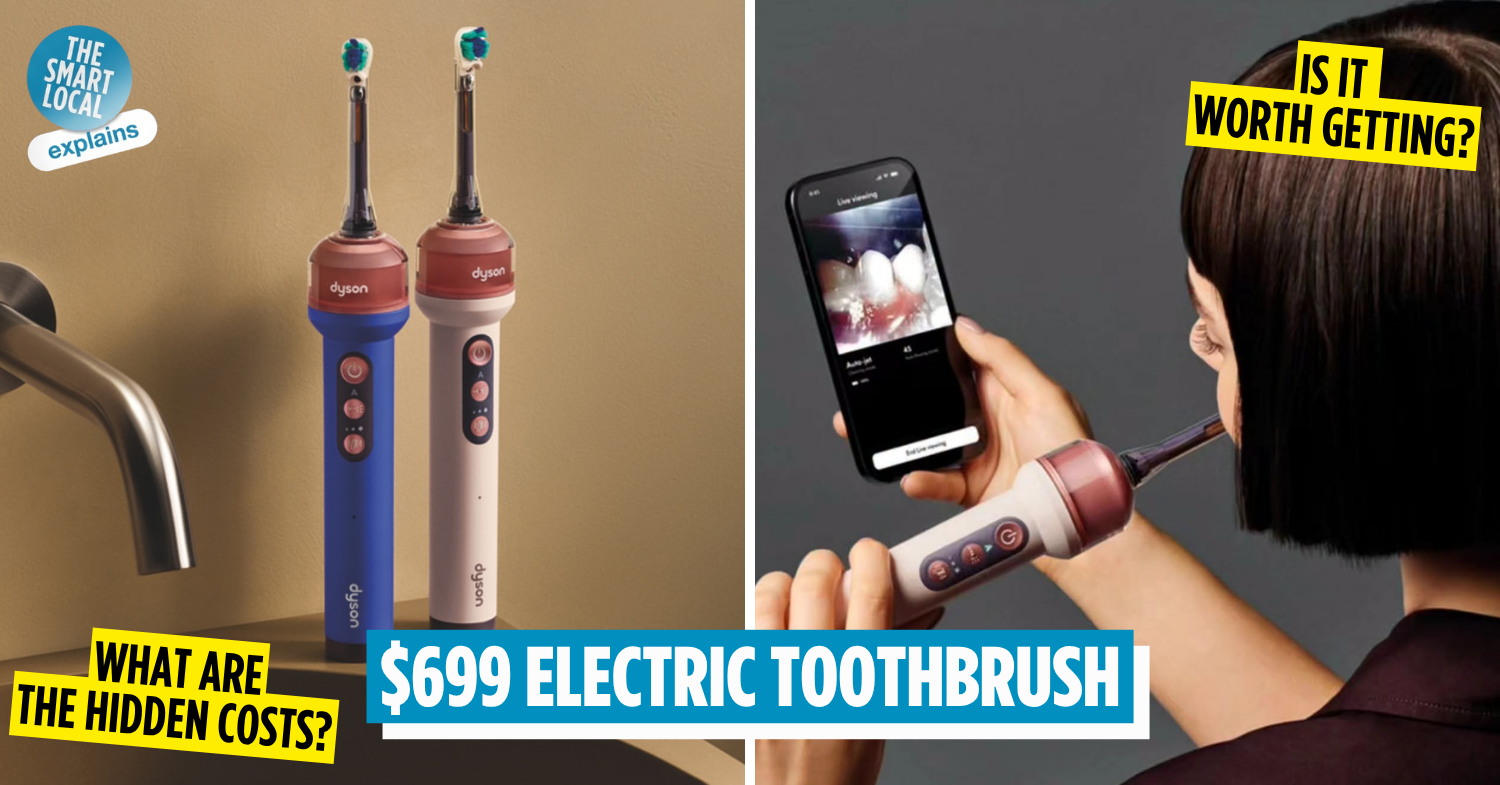

Dyson CameraJet toothbrush
If there’s one task we’d happily outsource to a machine, it’s brushing our teeth. While most of us have resigned ourselves to spending 2 minutes scrubbing our teeth twice a day, Dyson seems to think even that is too much work. Its solution? A $699 CameraJet toothbrush, which promises to do the heavy lifting for us.
Yes, you read that right – a toothbrush that costs more than some people’s monthly grocery budget and almost as much as the average intern’s monthly pay. Apparently, keeping your teeth clean has become a luxury affair.
Because we know you’re probably wondering if a toothbrush is really worth $699, we’ve broken it all down for you.
What is the Dyson CameraJet toothbrush?
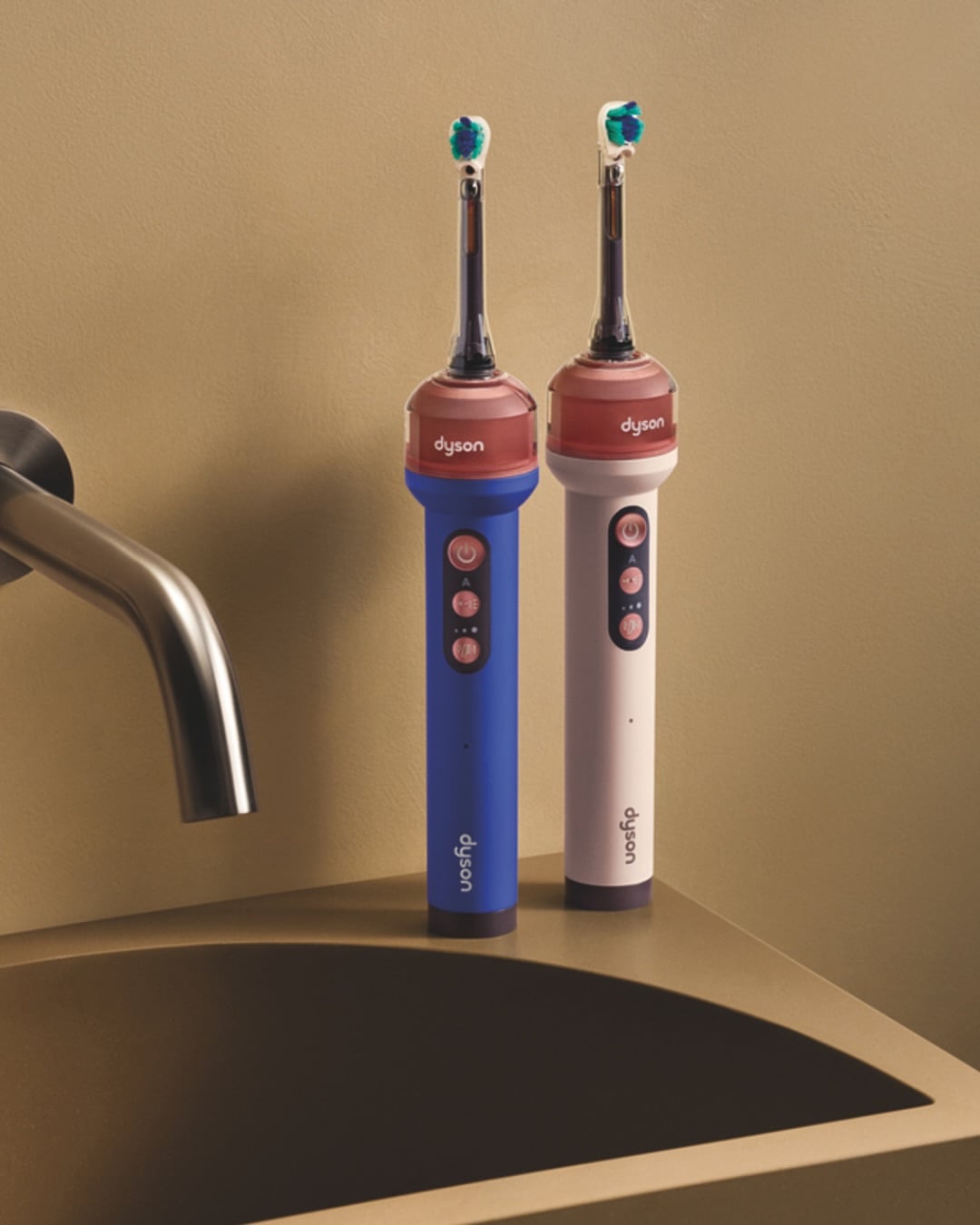
Image credit: Dyson
The CameraJet is a premium 3-in-1 smart electric toothbrush available in 2 colours – ceramic pink and ceramic ultra blue – that is making waves online. It promises to brush, floss, and rinse your teeth all at once, because apparently, even our mouths are expected to embrace multitasking now.
Its built-in camera and AI technology also connect to the MyDyson app (App Store | Google Play) via Wi-Fi and Bluetooth, giving you a live, dentist-like view of your teeth alongside insights into your oral hygiene. Basically, it’s like having a dentist on speed dial, except this one lives in your bathroom.
Is the Dyson CameraJet toothbrush worth purchasing?
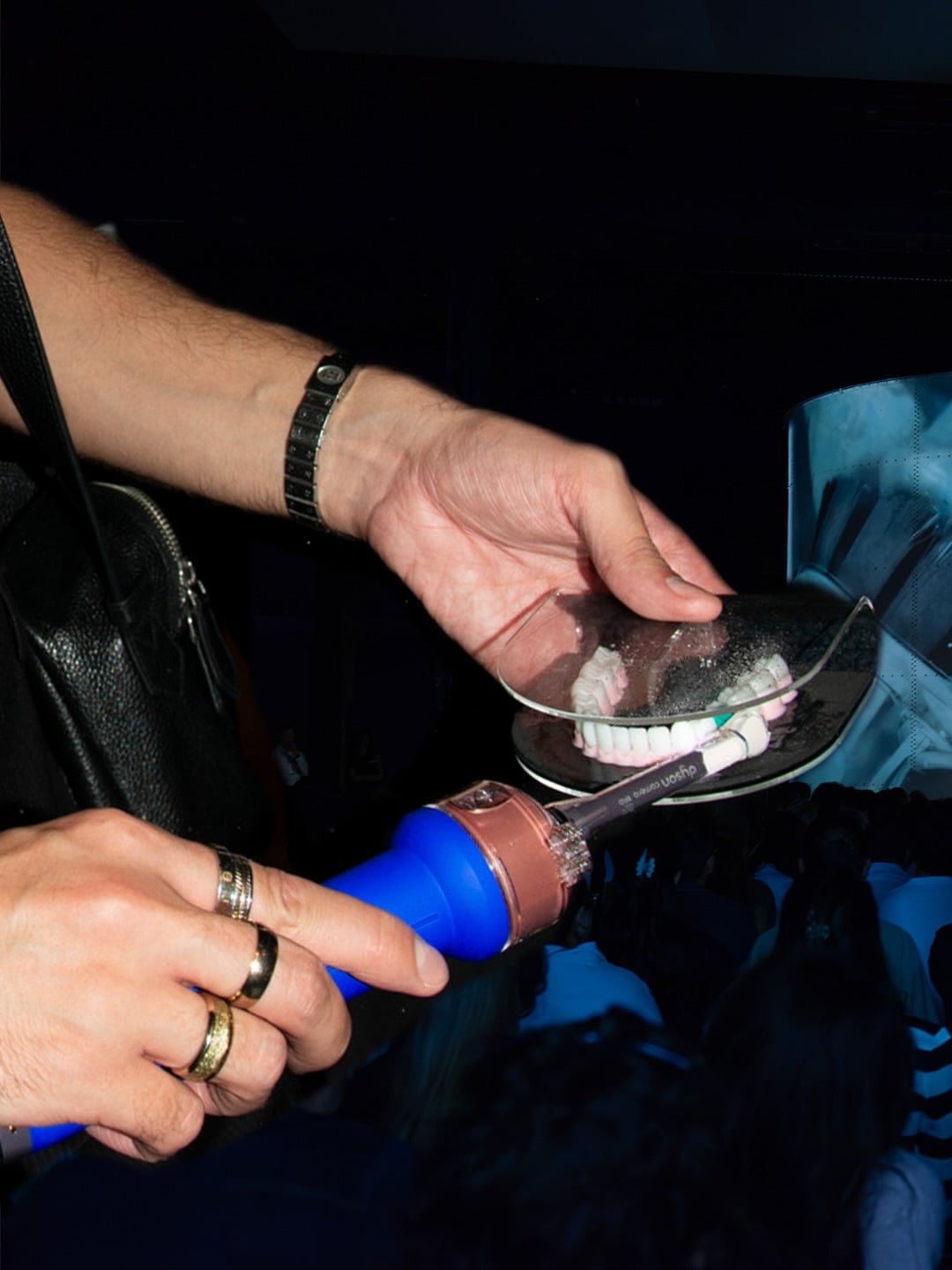
Image credit: @dyson via Instagram
The Dyson CameraJet costs far more than most of us would ever consider spending on a toothbrush. But with all its fancy technology promising to make brushing more effective, does it justify the hefty price tag? Let’s crunch the numbers and see how it stacks up against a regular electric toothbrush.
How much does each brushing session with the CameraJet cost?
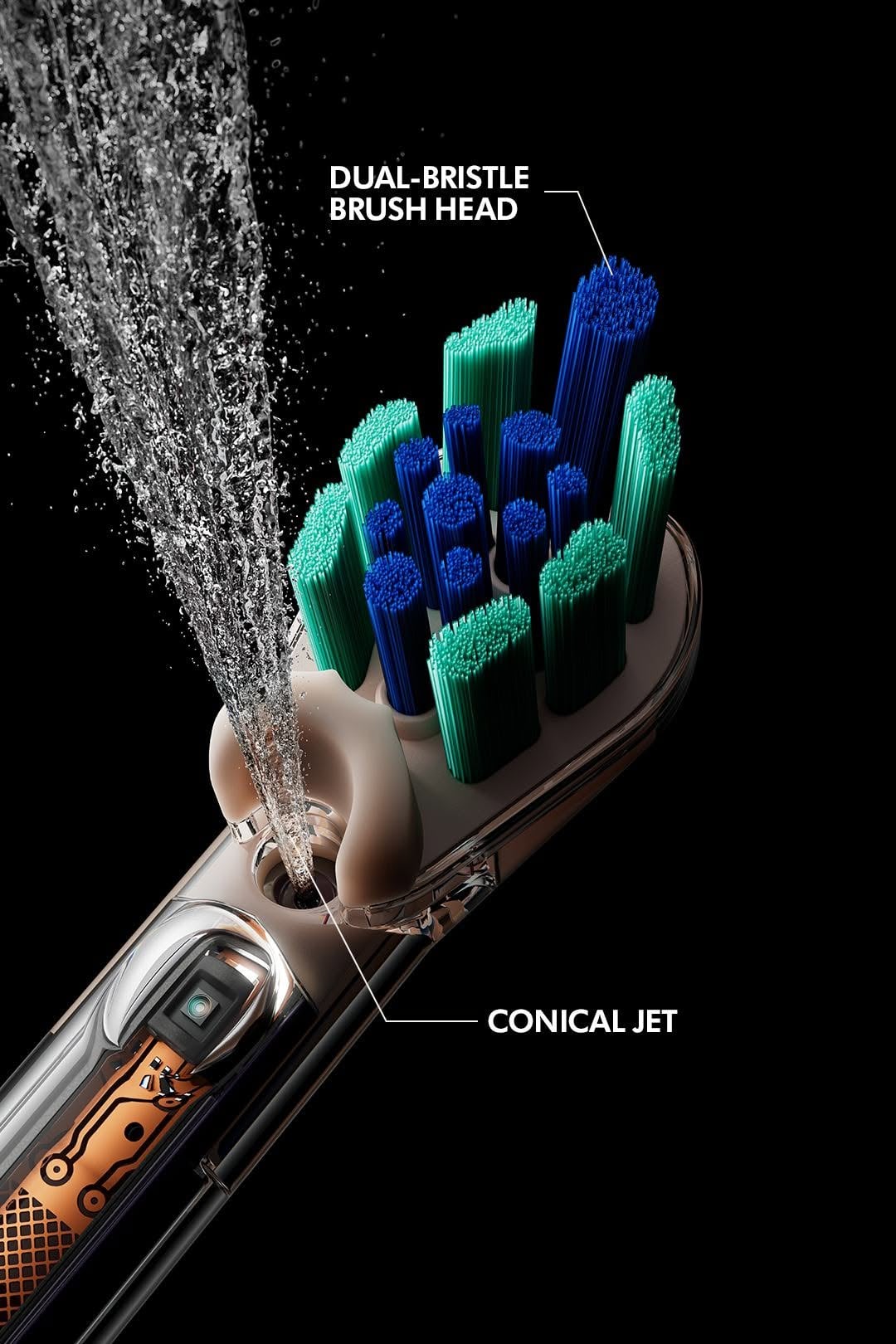
Image credit: Dyson
With the Dyson CameraJet, you’re already down $699 before you’ve even squeezed out your first drop of toothpaste. And that’s not all. Its RFID-enabled brush heads track your usage and remind you when it’s time to change them, with each 2-head pack costing another $49. Thankfully, the CameraJet comes with 2 heads out of the box, so you can hold off on spending more on accessories for a while.
We’ll assume you brush your teeth twice a day and replace your brush head every 3 months. After all, we’d be seriously concerned about your dental hygiene if you weren’t doing either. Over the CameraJet’s 2-year warranty period, that adds up to 1,460 brushing sessions.
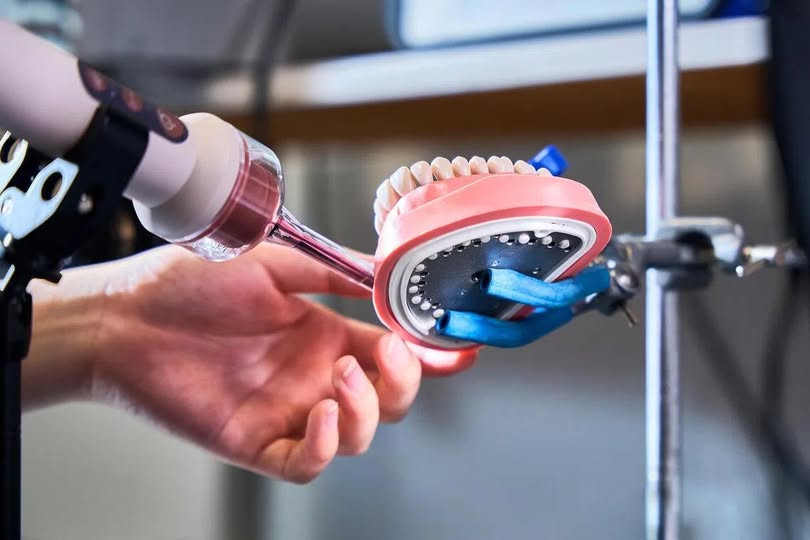
Image credit: Dyson
While most of us probably wouldn’t use the same electric toothbrush for 3 years, we’d expect a $699 toothbrush to last beyond its warranty period. So, we’ve extended our calculations to see how much each brushing session would cost in the long run.
| Element | 2-year cost (1,460 brushes) | 3-year cost (2,190 brushes) |
|---|---|---|
| Base price of the CameraJet | $699 | $699 |
| Extra replacement heads (2 for $49) | $49 x 3 packs* = $147 | $49 x 5 packs* = $245 |
| Total investment | $846 | $944 |
| Cost per brush | ~$0.60/brush | ~$0.40/brush |
*This calculation excludes the 2 brush heads that are already included in each product purchase.
What are the hidden costs of owning a Dyson CameraJet toothbrush?
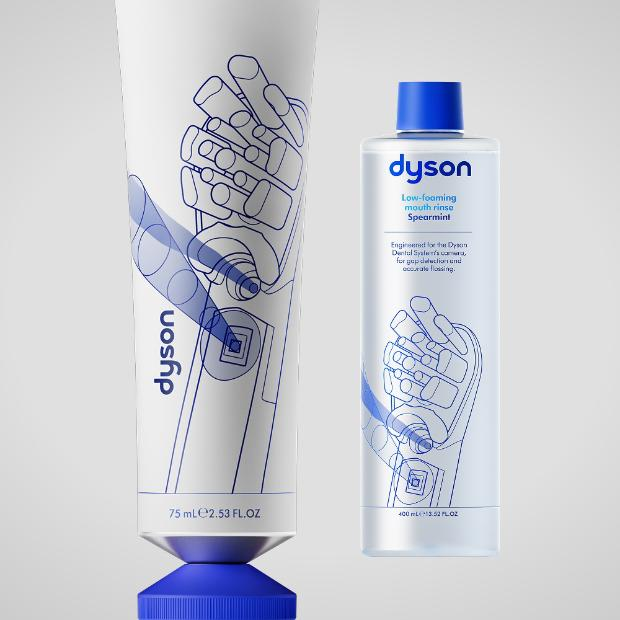
Image credit: Dyson Singapore
Each CameraJet set also comes with a special non-foaming toothpaste, allowing the built-in camera to see your teeth clearly. It also includes a low-foaming mouth rinse designed to work with the toothbrush’s precision jet.
Both products contain sodium fluoride to help strengthen teeth and protect enamel, while the mouth rinse also helps reduce bacteria that cause bad breath. You can choose between flavours such as peppermint, ginger mint, and Spearmint.
Once you run out, replacement bottles of the toothpaste and mouth rinse can be purchased on Dyson’s website for $15 each.
While you’re not required to use Dyson’s products and can stick to your usual toothpaste and mouthwash, the brand recommends using them to get the best long-term results from the CameraJet. So even though the $699 price tag already hurts, you might want to factor in these recurring costs if you plan to stick with Dyson’s recommended routine.
How does the cost compare to a typical electric toothbrush?
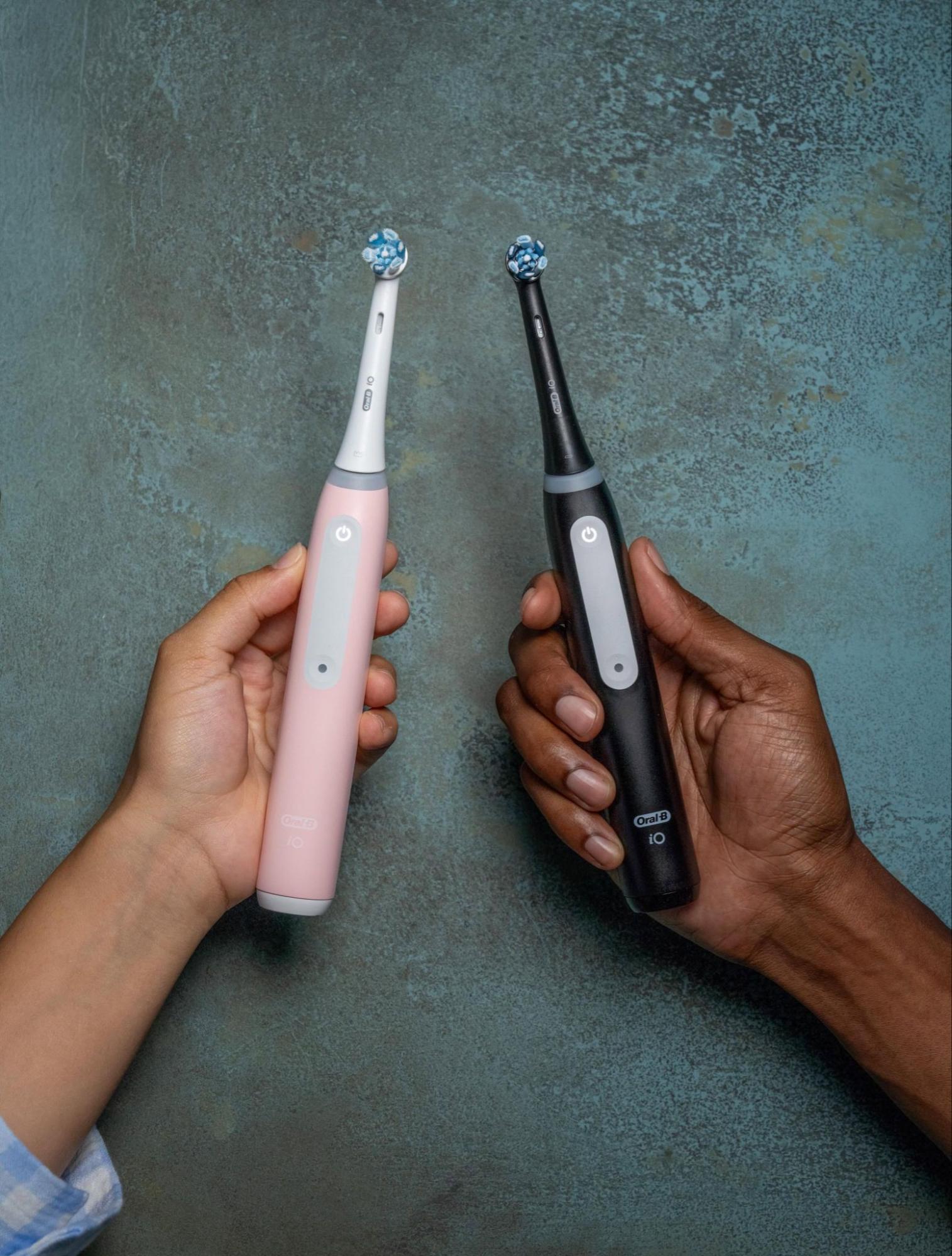 Image credit: Oral-B via Facebook
If the Dyson CameraJet’s price tag made you do a double-take, the Oral-B iO 3 might be easier on your wallet. This popular electric toothbrush is also available in Singapore and costs around $139 on average, although prices vary across retailers.
Replacement brush heads won’t break the bank either, with a 2-pack of standard iO refills going for $31.78 at FairPrice, at the time of writing. To keep things fair, we’ll stick to the same assumptions of replacing your brush head every 3 months and brushing 2 times a day. Here’s how much the iO 3 will cost you per brush over 2 and 3 years:
| Element | 2-year cost (1,460 brushes) | 3-year cost (2,190 brushes) |
| Base price of the Oral-B iO 3 series | $139 | $139 |
| Extra replacement heads (2 for $31.78) | $31.78 x 3 packs* = $95.34 | $31.78 x 5 packs* = $158.90 |
| Total investment | $234.34 | $297.90 |
| Cost per brush | ~$0.16/brush | ~$0.14/brush |
*This calculation excludes the 2 brush heads that are already included in each product purchase.

Image credit: 4ocean via Facebook
While this may be an apples-to-oranges comparison given the CameraJet’s more advanced technology, paying roughly 4 times more per brushing session than the average electric toothbrush is still a tough pill to swallow for most of us.
Additionally, at the time of writing, a 3-pack of Colgate Premier Clean toothbrushes costs just $2.90 at FairPrice. The more than $600 you’d save by opting for the Oral-B iO 3 over the $699 CameraJet could get you around 206 packs of Colgate toothbrushes, or 618 toothbrushes in total, just to put it into perspective.
Of course, manual toothbrushes or the Oral-B iO 3 don’t come with built-in cameras or AI-powered brushing guidance. But if all you need is a tool to get your teeth clean, it’s worth asking yourself whether those extra features justify paying hundreds of dollars more.
Where can I purchase the CameraJet toothbrush?
 Screenshot from: Dyson Singapore
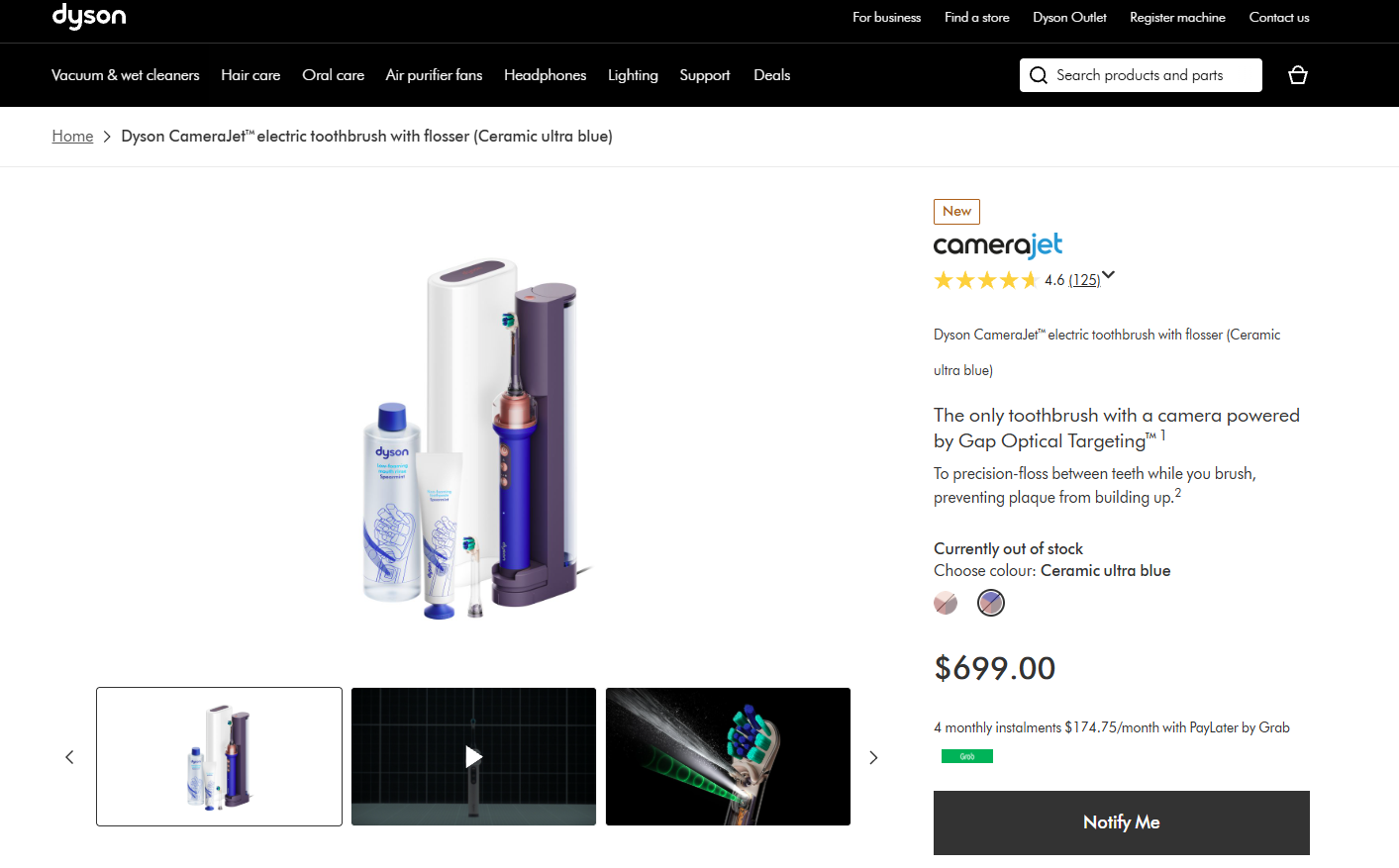
Unfortunately, you might be a little late to the party, as the CameraJet appears to have brushed its way off the shelves.
Dyson, Courts, Gain City, Best Denki, Harvey Norman, and iShopChangi are all currently out of stock. If you’re still keen on getting it, you can register your interest to be notified when it’s back. In the meantime, your trusty toothbrush will have to hold the fort a little longer, giving your wallet some extra time to brace itself for the price tag.
What are some users or the general public saying about the Dyson CameraJet toothbrush?
The CameraJet’s teething problems
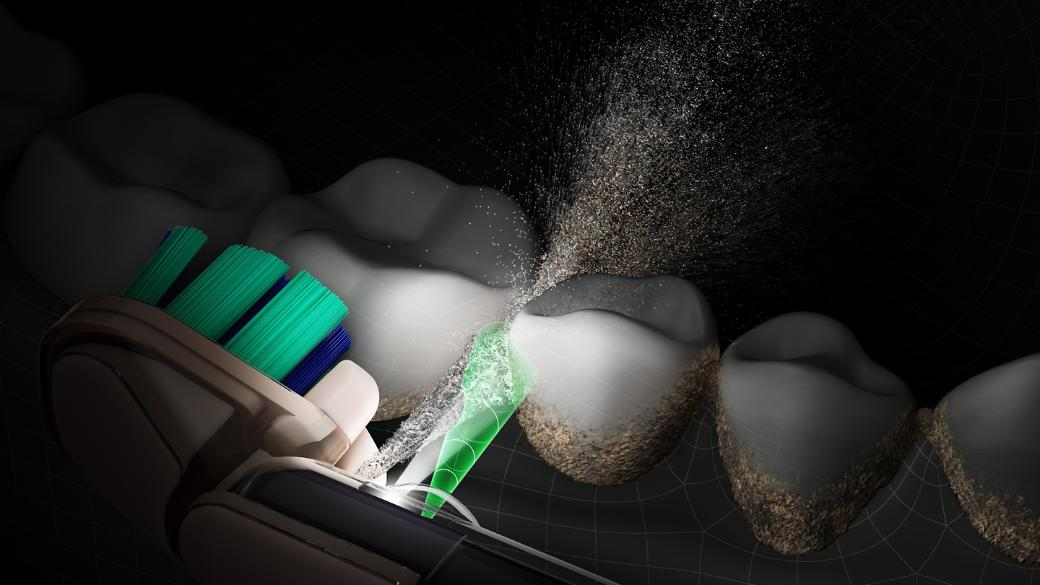
Image credit: Dyson Singapore
While high demand may have contributed to the CameraJet’s scarcity, it wasn’t the only reason behind the empty shelves. Following reports of water-seepage issues, Dyson acknowledged a production issue affecting 1 batch of jet tubes, which impacted a “small number of early units”. The company subsequently isolated the affected products, resulting in a temporary stock shortage.
Screenshot from: Reddit
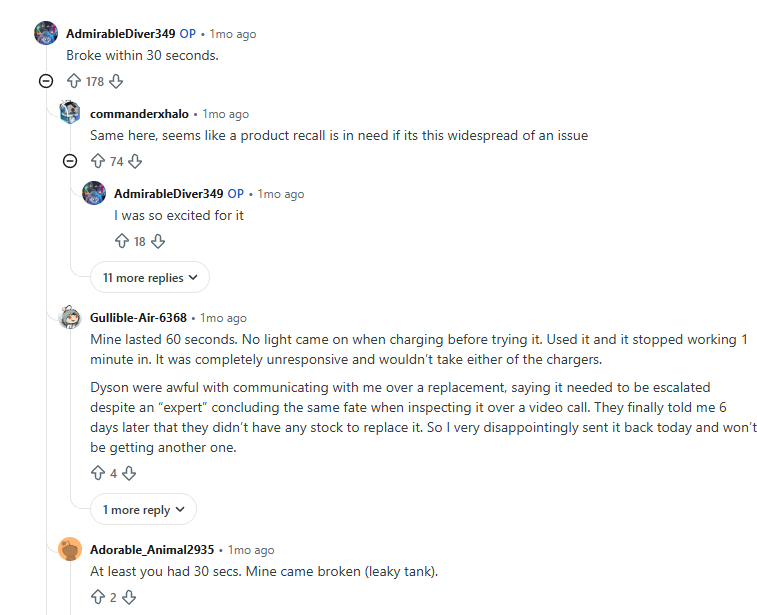
A quick trawl through Reddit reveals a few recurring complaints from CameraJet owners, and they’re not exactly pretty. Some users reported leaks from the internal tank or jet tubes, allowing water to seep into the handle and reach the battery compartment or charging port.
These leaks affected the built-in camera, causing the lens to fog up or become obstructed, which led the AutoJets to stop working mid-brush.
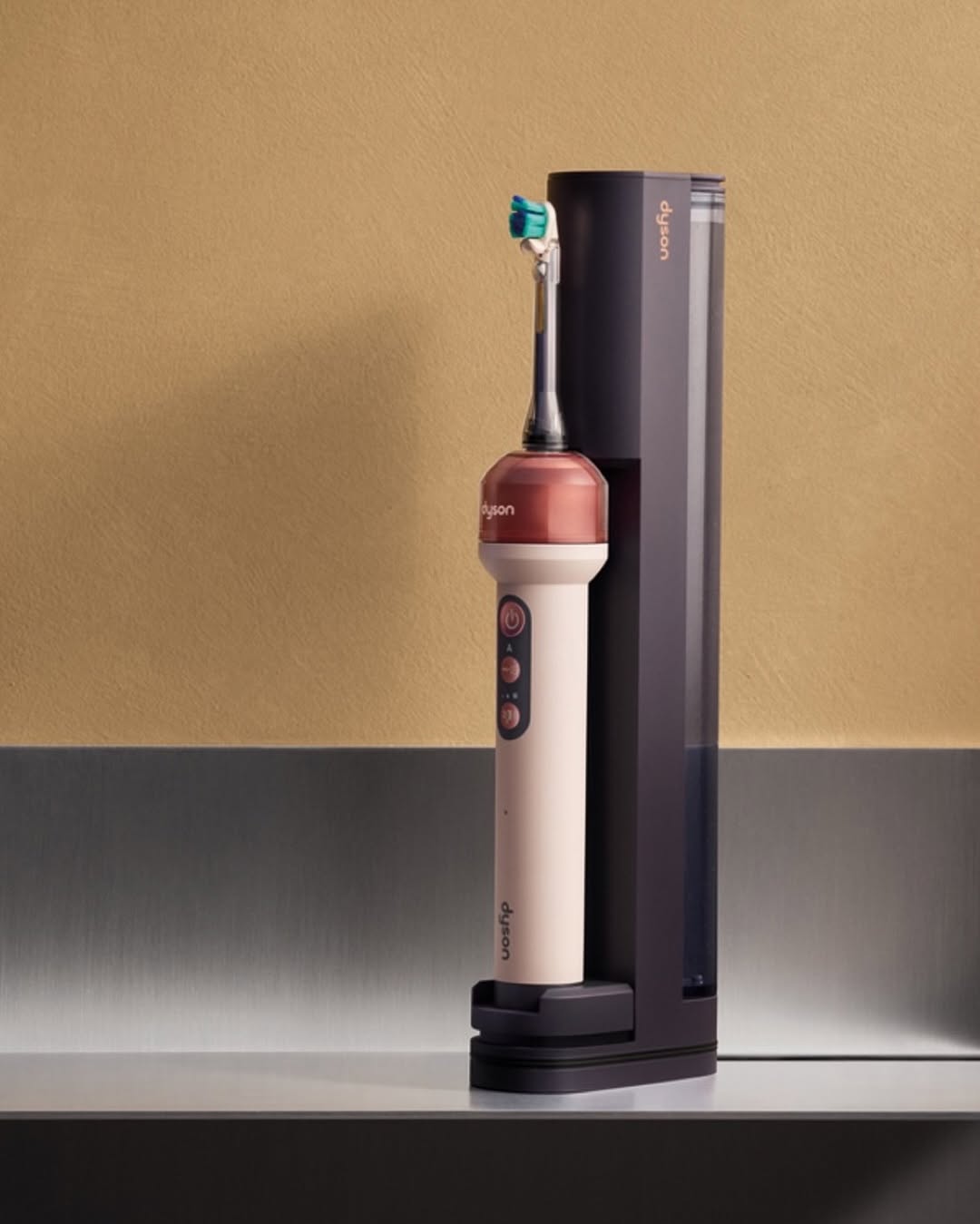
Image credit: Dyson
In one particularly frustrating case, a user claimed their unit stopped working after just a week and refused to charge via either the dock or cable. That’s a pretty short honeymoon period for a $699 toothbrush.
Fancy equipment doesn’t mean better oral health
Beyond the hefty price tag, some dental professionals also stressed that fancy technology alone won’t guarantee better oral health. Consistent brushing, proper interdental cleaning, and your dietary habits all play a much bigger role, so even a complex toothbrush can only do so much if you’re still reaching for that second bubble tea.
While a premium device might encourage some people to brush more regularly, maintaining good habits ultimately matters more than splashing out on an expensive gadget.
What features do you actually get with the Dyson CameraJet toothbrush?
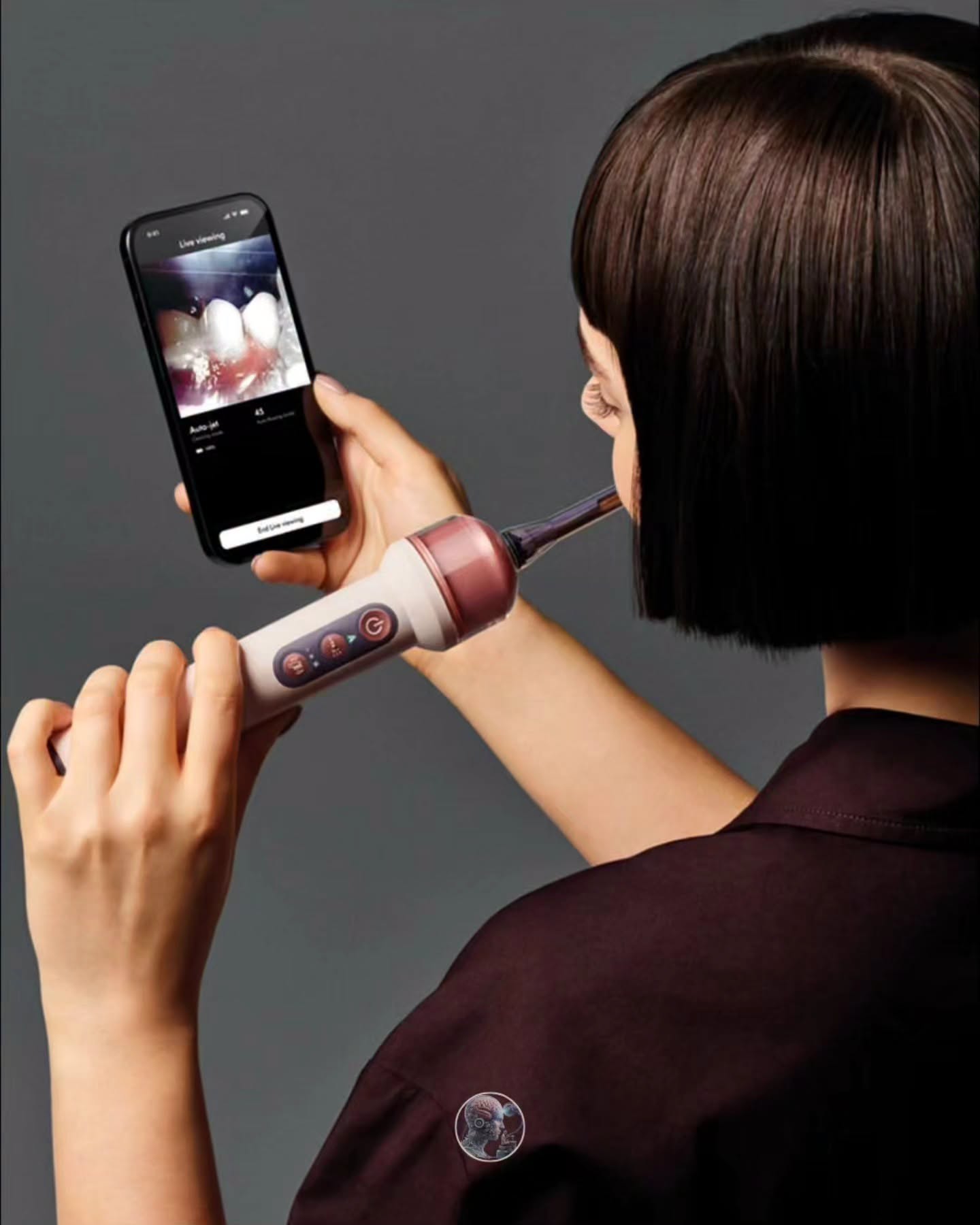
Image credit: Dyson
Despite its flaws, the CameraJet still sounds like an impressive piece of dental tech. A tiny 100,000-pixel camera beneath the brush head scans your mouth in real time, analysing 28 images per second to identify gaps between your teeth. Trained on over 470,000 dental images, it can detect these gaps and respond in just 100 milliseconds.
Once a gap is detected, the toothbrush fires a targeted, high-velocity jet of liquid to clean between your teeth. And that’s just one part of what this high-tech toothbrush can do.
So, should you purchase the Dyson CameraJet toothbrush?
If you’re someone who loves getting your hands on the latest tech, the CameraJet might pique your interest. However, it’s worth considering whether you’ll use its features enough to justify the cost. With reports of technical hiccups and the toothbrush currently out of stock, taking some time to weigh your options could save you from an expensive case of buyer’s remorse.
At the end of the day, we’ve crunched the numbers and laid out the facts to help you make a more informed decision.
For other tech-related reads:
- How to read free ebooks on a Kobo
- Guide to Apple’s foldable iPhone Duo
- 16 most affordable SIM plans in Singapore
Cover image adapted from: Dyson