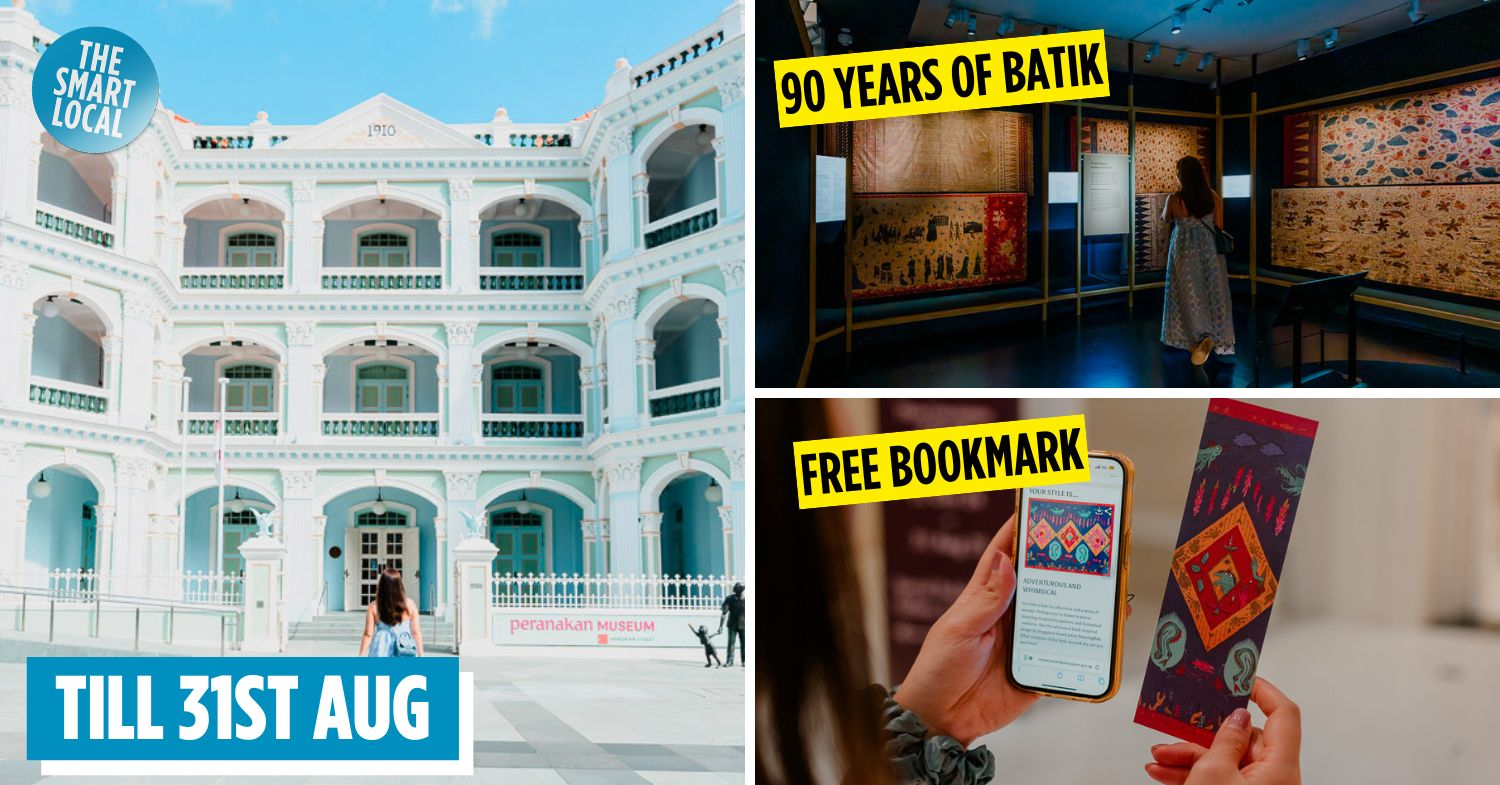

Batik Nyonyas exhibition at Peranakan Museum
Don’t say we didn’t warn you, but the Peranakan Museum is a severely under-mentioned destination in Singapore that we think you ought to put on your radar. Tucked away down Armenian Street, the historic building dates back to 1912, when it was the Tao Nan School, before it became the Asian Civilisations Museum in 1997.
After a 4-year renovation, it finally reopened in 2023 with more than 800 objects that explore the Peranakan culture and identity.
If you haven’t been to the museum yet, this latest exhibition, Batik Nyonyas: Three Generations of Art and Entrepreneurship, is worth checking out before it ends on 31st August 2025.
What is the Batik Nyonyas exhibition?
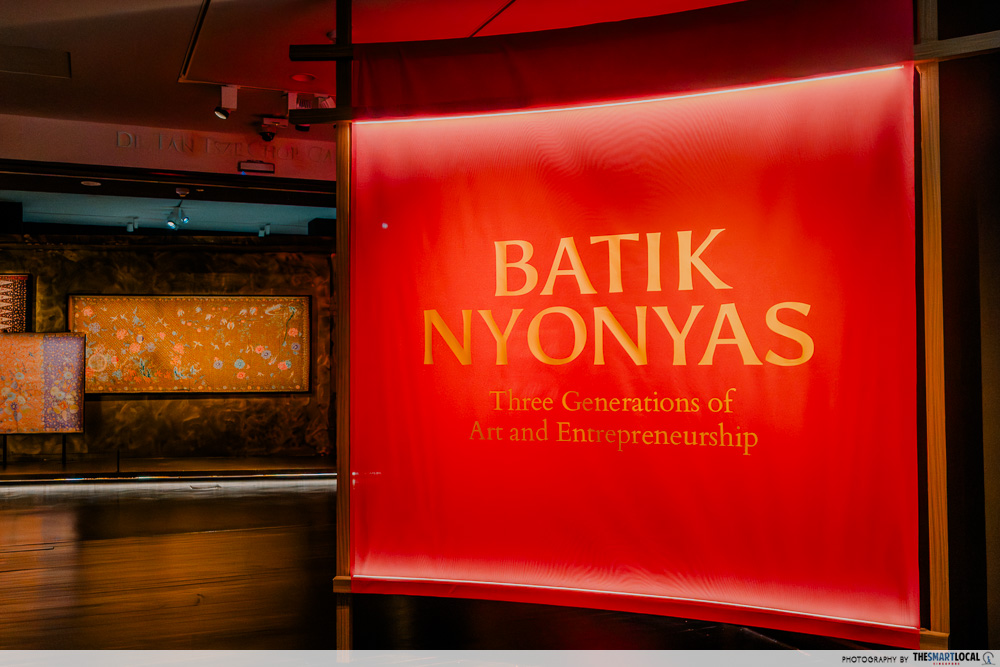
Batik Nyonyas: Three Generations of Art and Entrepreneurship isn’t just the title of this exhibition; it’s also the name of a book published in 2024 by the Asian Civilisations Museum. The exhibition celebrates the lives and works of 3 Peranakan women from Indonesia who created major shifts in the batik industry.
From Nyonya Oeij Soen King to her daughter-in-law Nyonya Oeij Kok Sing, and later her granddaughter Jane Hendromartono, this exhibition follows these batik masters from Pekalongan, the batik centre of Java’s north coast.
What can you expect at the Batik Nyonyas exhibition?
3 distinctive styles of batik on display
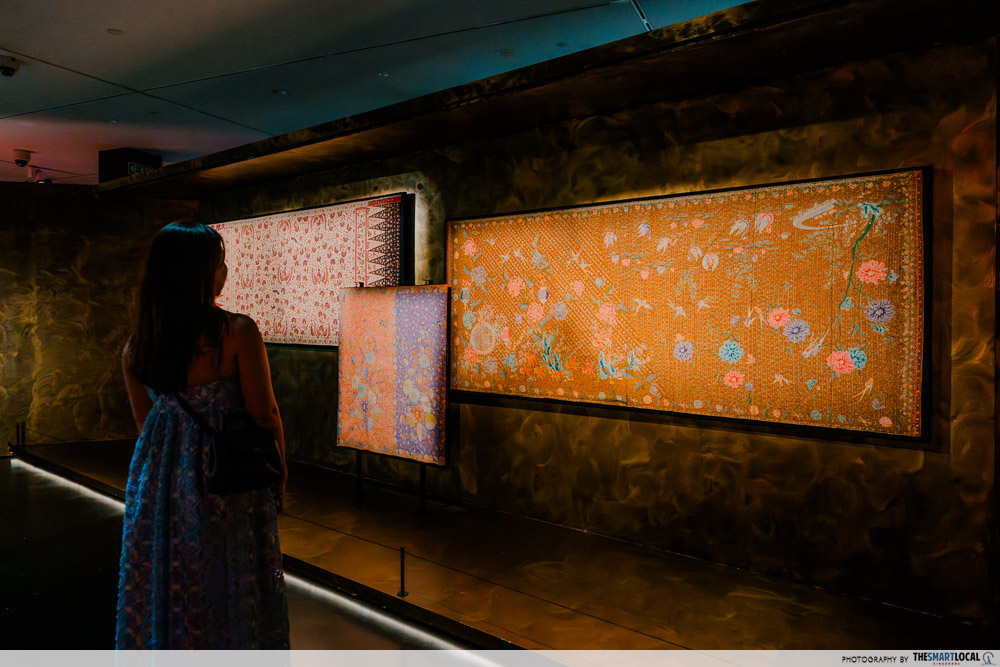
To understand the batik that you’ll see on display, you’ll need to know the stories of Nyonya Oeij Soen King, Nyonya Oeij Kok Sing, and Jane Hendromartono – 3 generations of women from the same family who stood at the forefront of batik-making in Pekalongan for decades.
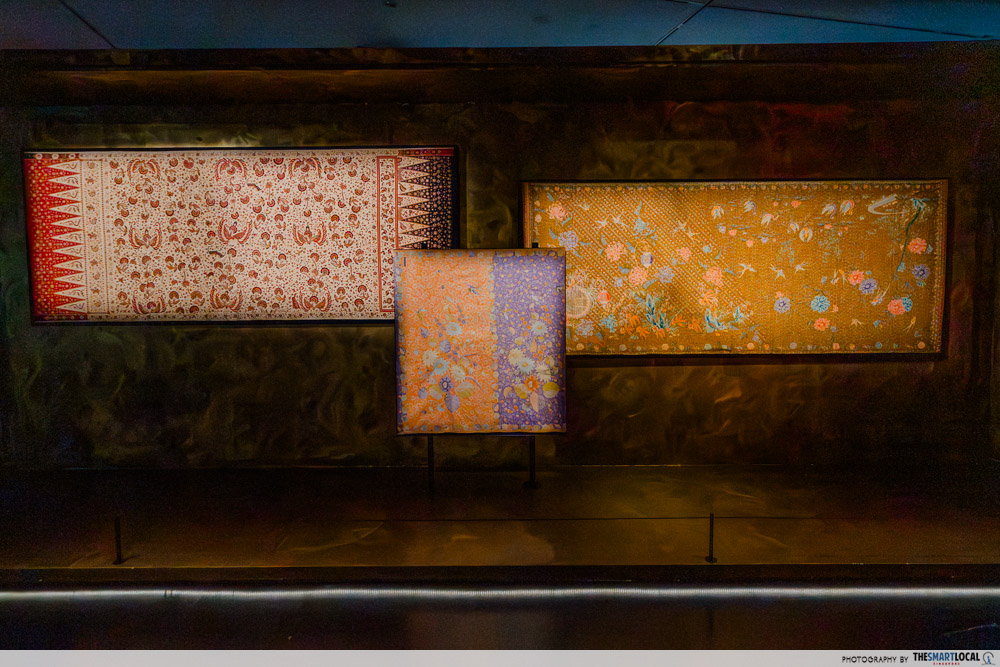
Each of them had a distinctive style, starting from Nyonya Oeij Soen King’s works, which mostly featured natural red and blue dyes on undyed cloth. Her pieces of batik typically had tumpal, or a saw-toothed pattern, which she would place at the two ends of the piece of cloth.
Then, there was Nyonya Oeij Kok Sing, whose designs were seldom repeated. While her mother-in-law adapted patterns from various designs to create original works, she broke the mould with unconventional new colours, original motifs, and backgrounds filled with small, repeating motifs called isen.
Where both women focused on producing one-of-a-kind batik pieces for the local elite, Nyonya Oeij Kok Sing’s daughter, Jane Hendromartono, diversified even further to keep up with the times and changing appetites. By the 1980s, Jane had developed a global export business for batik textiles used in both clothes and furnishing – all while upholding the traditions of hand-drawn and block-printed batik throughout her lifetime.
Only known pieces of Nyonya Oeij Soen King’s batik
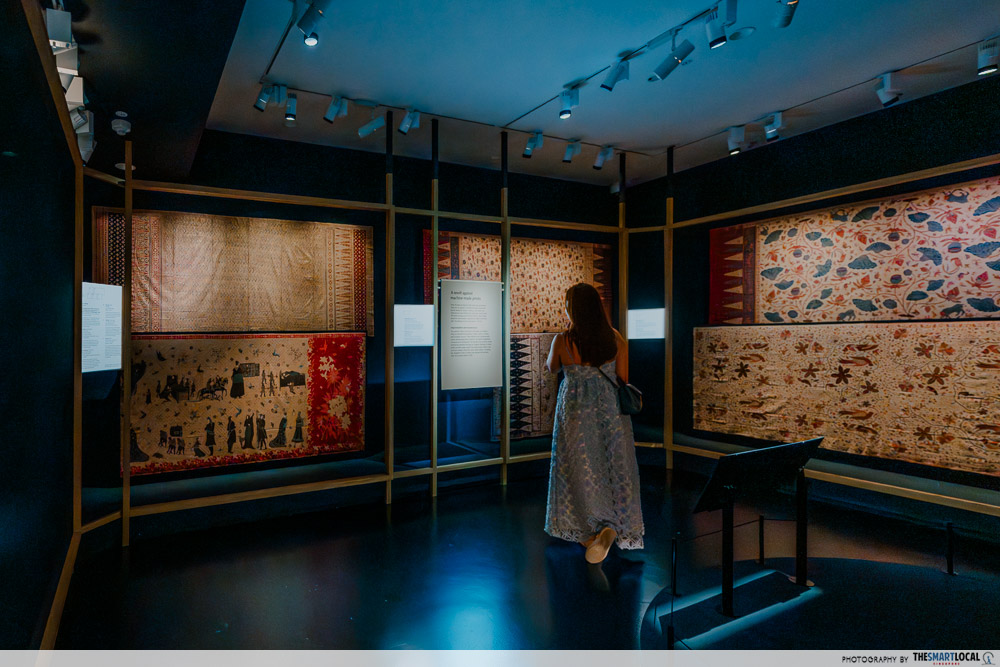
Nyonya Oeij Soen King didn’t sign on any of the batiks that she made – only 18 pieces that the family kept are known today, and you can see some of them at the Batik Nyonyas exhibition in the Peranakan Museum. These are among 100 pieces of batik that the Hendromartono sisters have gifted to the museum, made by their mother, grandmother, and great-grandmother.
Trace the evolution of batik design
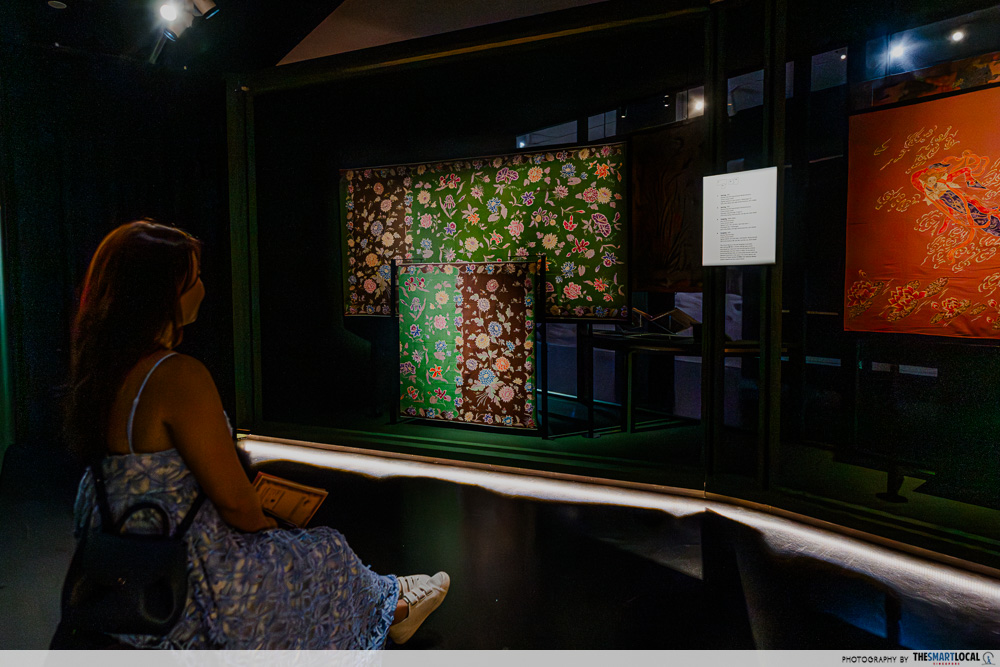
Magnificently displayed are batiks that trace the evolution of designs and colour through almost a century. Don’t miss the video screening of an interview with Jane’s daughters, who recollect their years growing up in the family’s batik business.
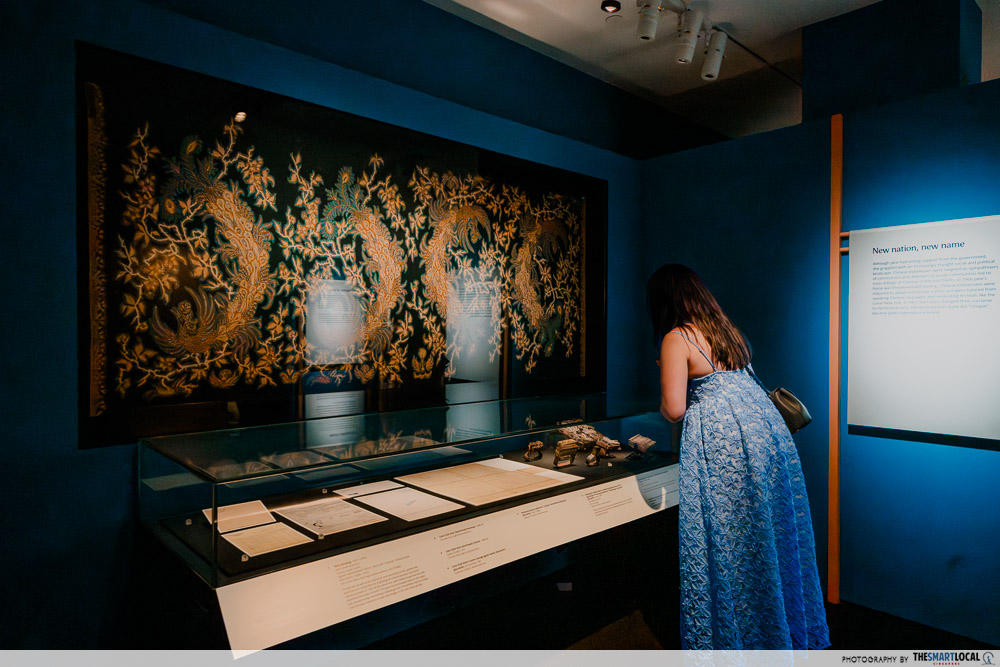
Stick around to also hear from Muhammad Sahlan, the son of Chamid Jasin, a batik maker who was a close family friend and business partner to Jane Hendromartono. Peek at the collaborative works that they produced together, which are on display in the exhibition.
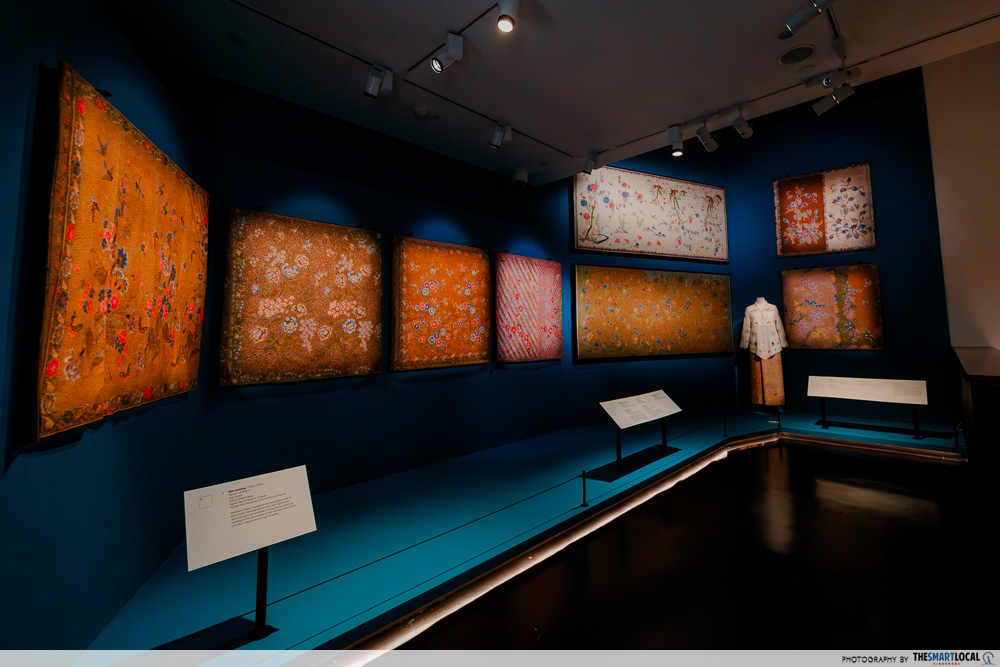
He and his wife were treasured friends of the Hendromartono family – he stood in front of Jane’s house and workshop during the riots of 1966 to stop the demonstrators from attacking her home. He also coined the Hendromartono name, which they took on as a result of the social turmoil of the time.
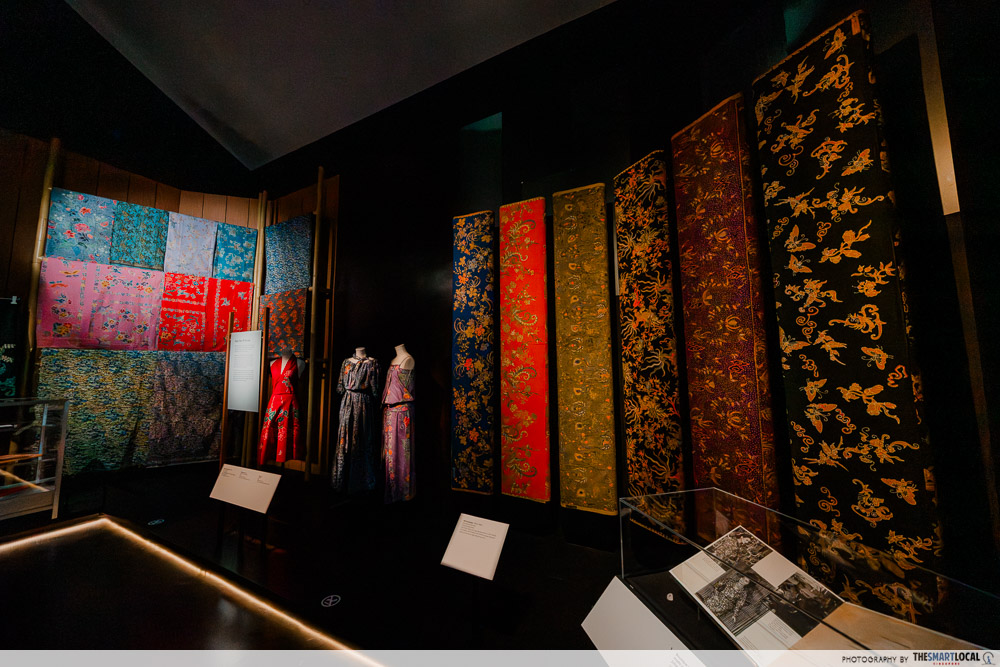
Track the changes in colour, design, and motifs as the women developed their craft.
Excerpts of the lives these visionary women led
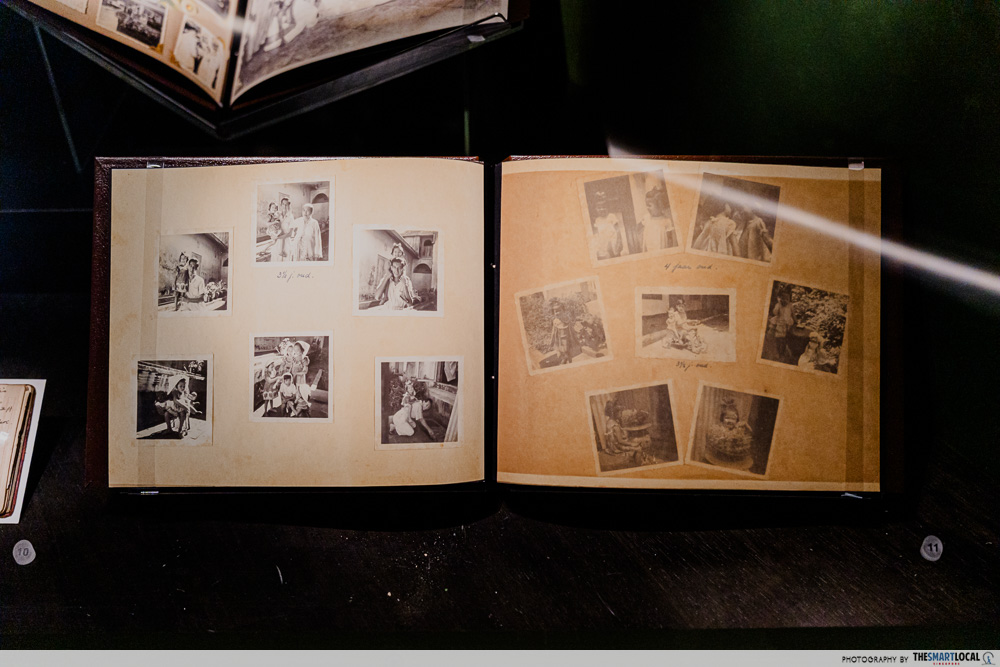
Whether it’s handwritten invitations, letters, photographs, or even medical chits from a century past, every artefact in the Batik Nyonyas exhibition is a moment in time that offers a glimpse into the lives that these 3 ladies led, and their place in Pekalongan’s batik industry.
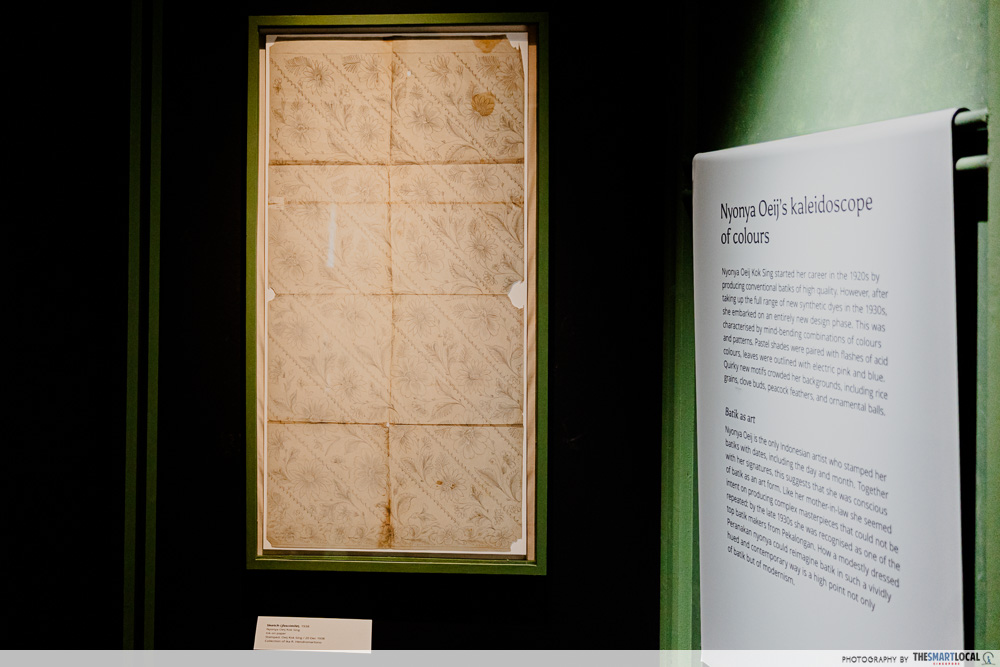
Lovingly kept by Jane Hendromartono’s 3 daughters, who have been integral to the success of this exhibition, the collection includes facsimiles of hand-drawn batik sketches designed by Nyonya Oeij Kok Sing.
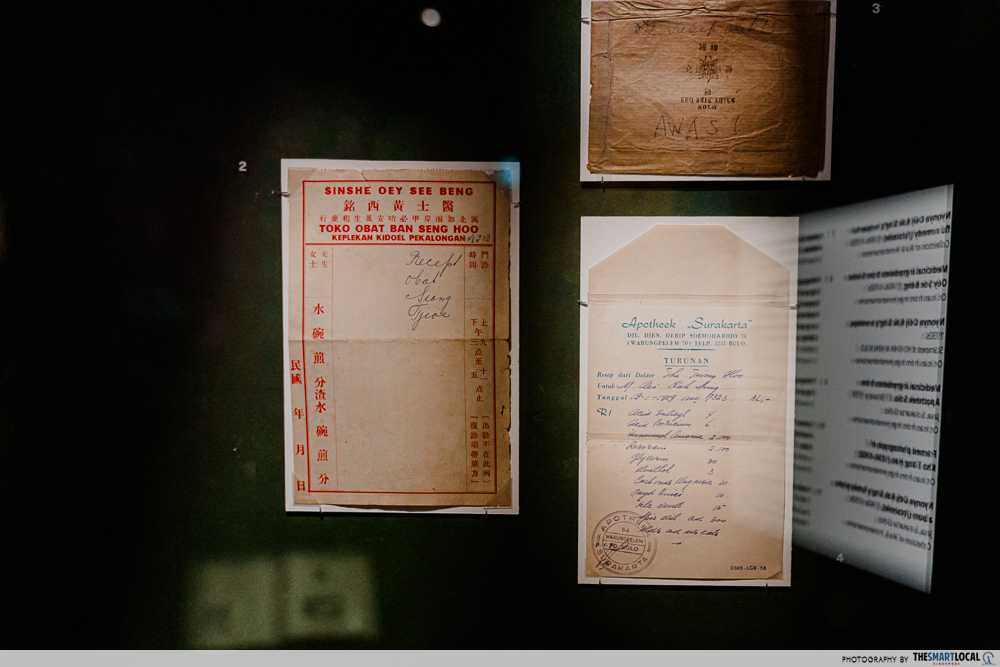
They were the power women of their time – Nyonya Oeij Kok Sing wasn’t just a batik maker; she also produced herbal medicine and had a hand in the family’s bird’s nest business.
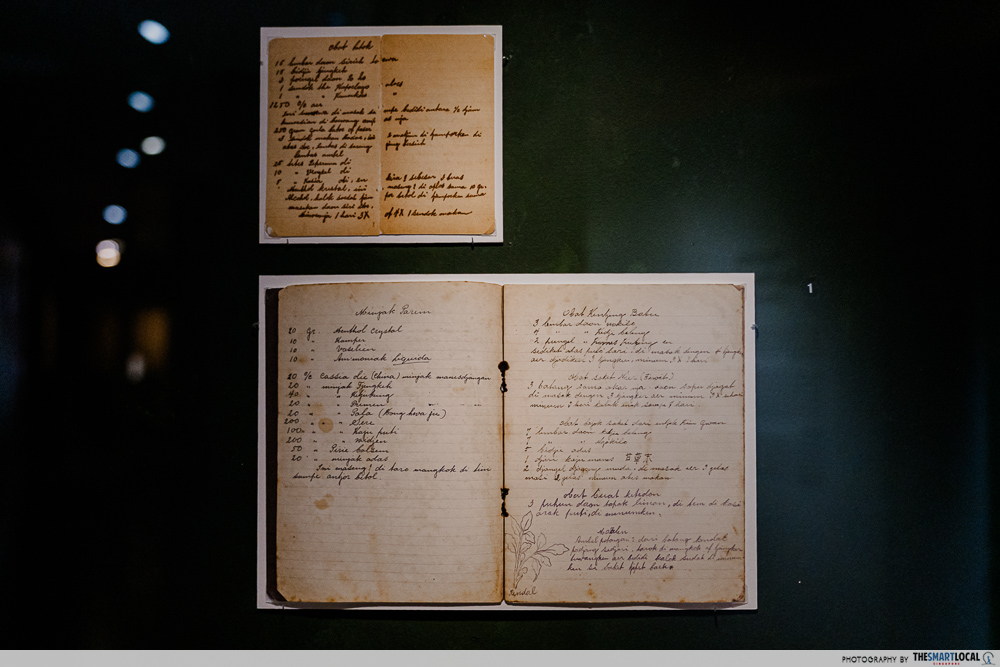
Amongst the treasured pieces of history in the collection are recipes for her herbal concoctions and apothecary receipts that remind us of their mortality, even as they’re immortalised through this exhibition.
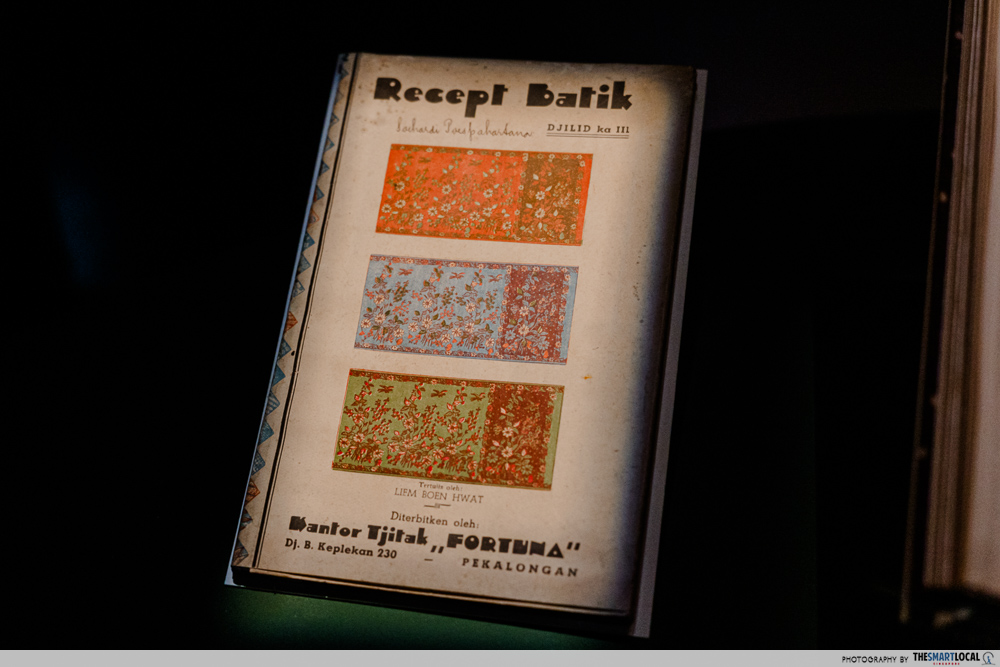
“Batik Recipe” – a book published in 1937 with hundreds of recipes for batik dyes.
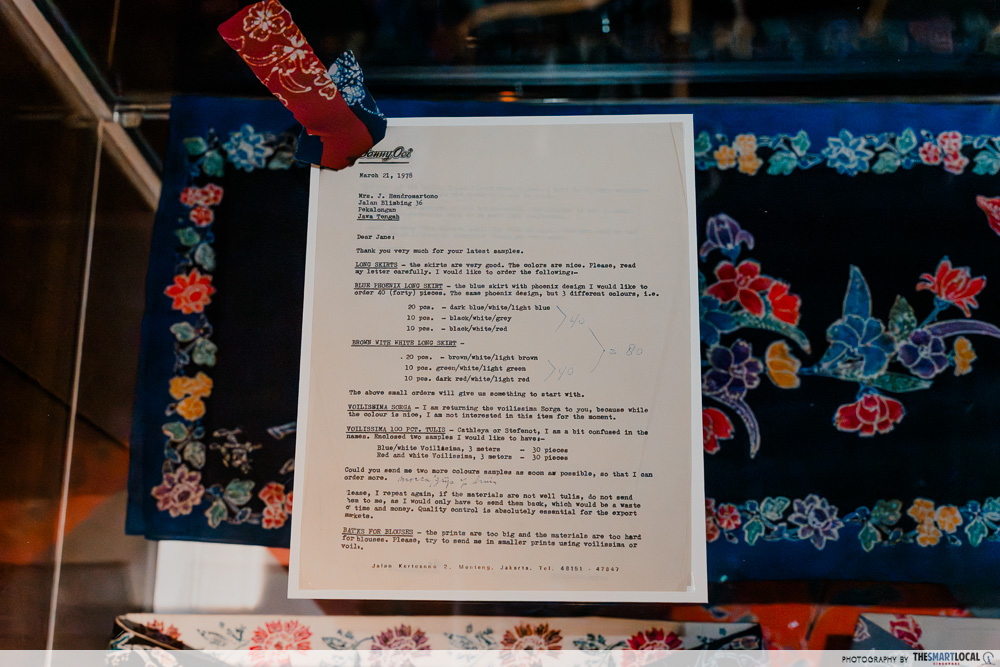
Order requests for Jane’s batik.
Kid’s activity book & interactive Discovery Corners
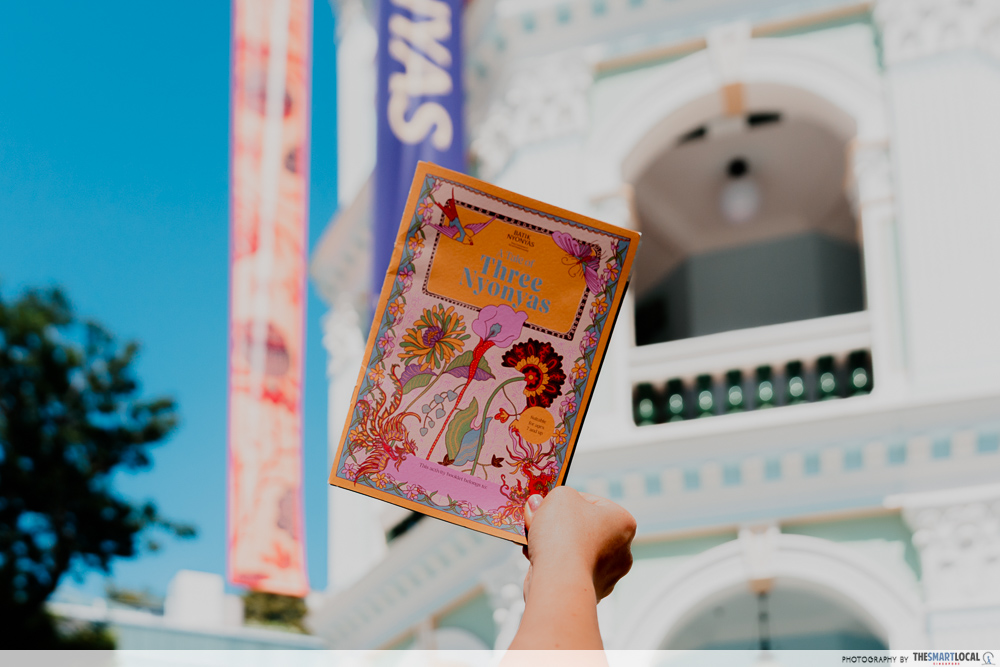
Fair warning: the halls of this exhibition are a little dark, but the little ones can absolutely still have fun at the Batik Nyonyas show. For kids aged 7 and up, the Peranakan Museum has prepared an activity booklet that they can take along with them through the exhibition.
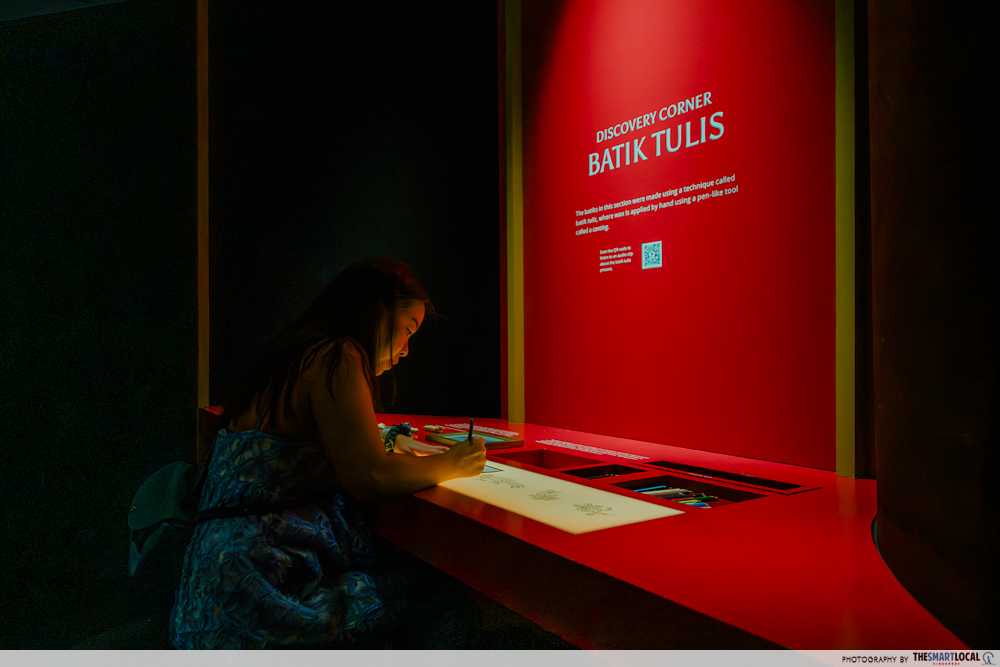
Look for the Discovery Corners – there are 3 – where kids and adults alike can have a hands-on encounter with some of the tools of the batik trade.
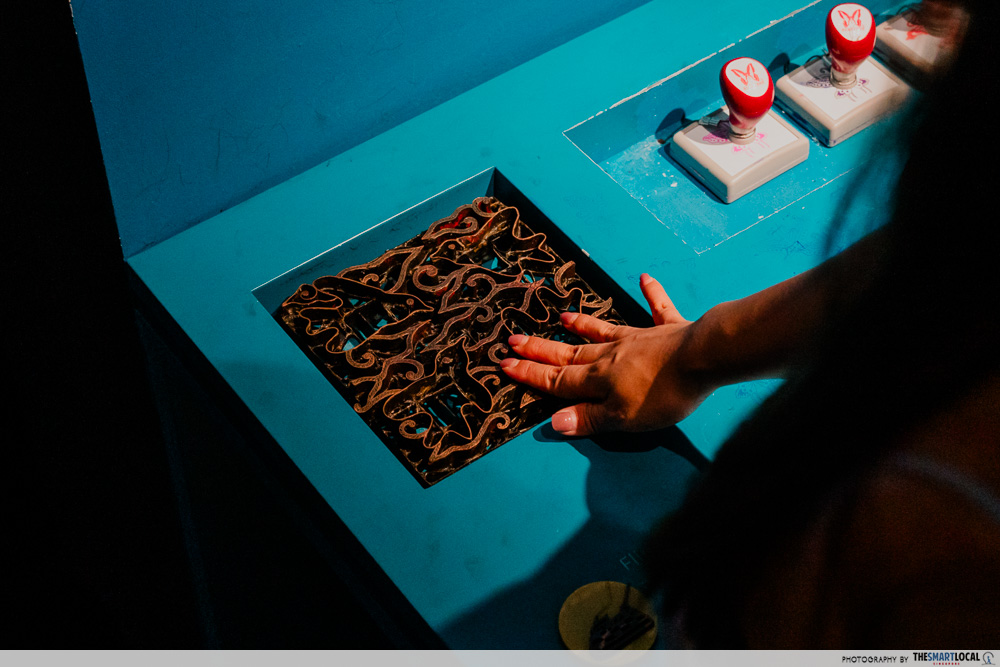
One of the Discovery Corners has a batik cap, or a copper stamp, on display. These caps are made of twisted copper strips, and dipped
in wax to make repeated patterns on the cloth.
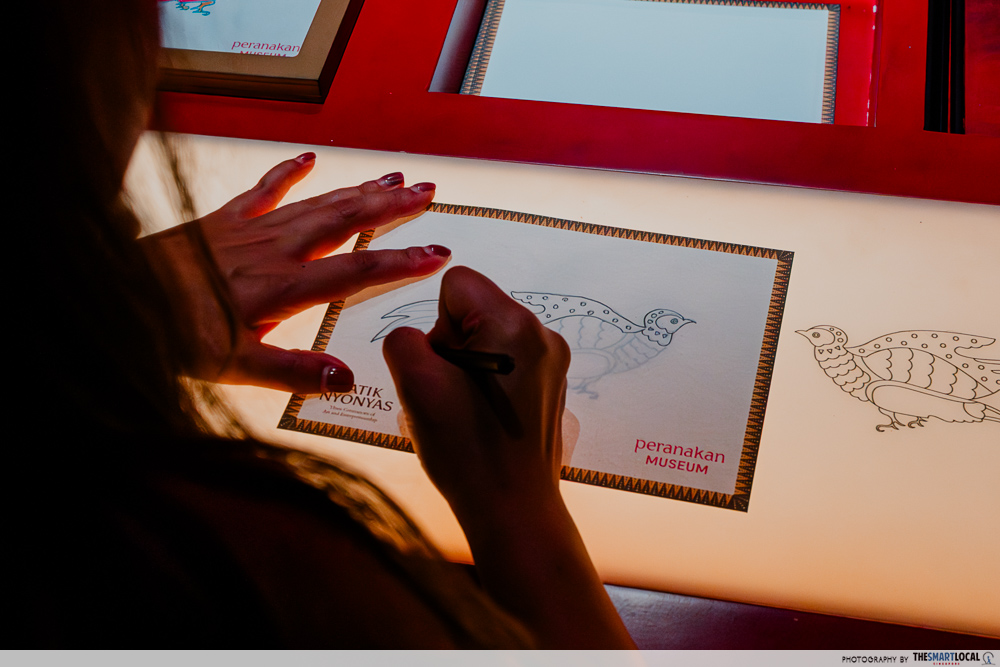
Make a pencil rubbing of motifs that can be found on batik, or trace and colour your very own fantastical batik creature or flower – we appreciated the sharpened pencils and colour pencils provided.
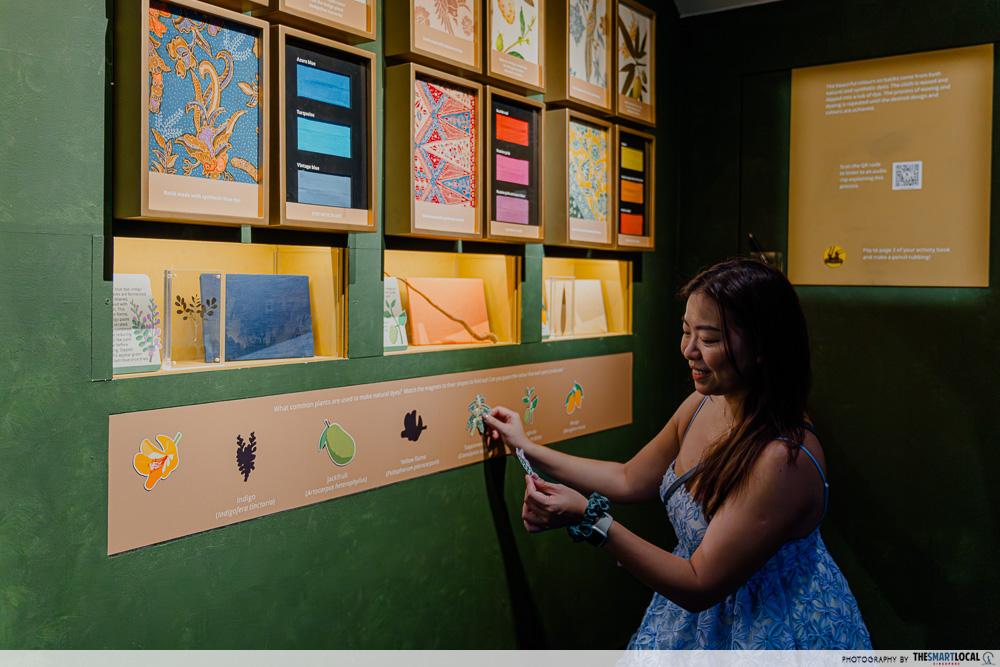
At the second Discovery Corner, kids can have fun matching the flowers or fruit to their silhouettes as they find out about the naturally occurring dyes that were used in batik-making.
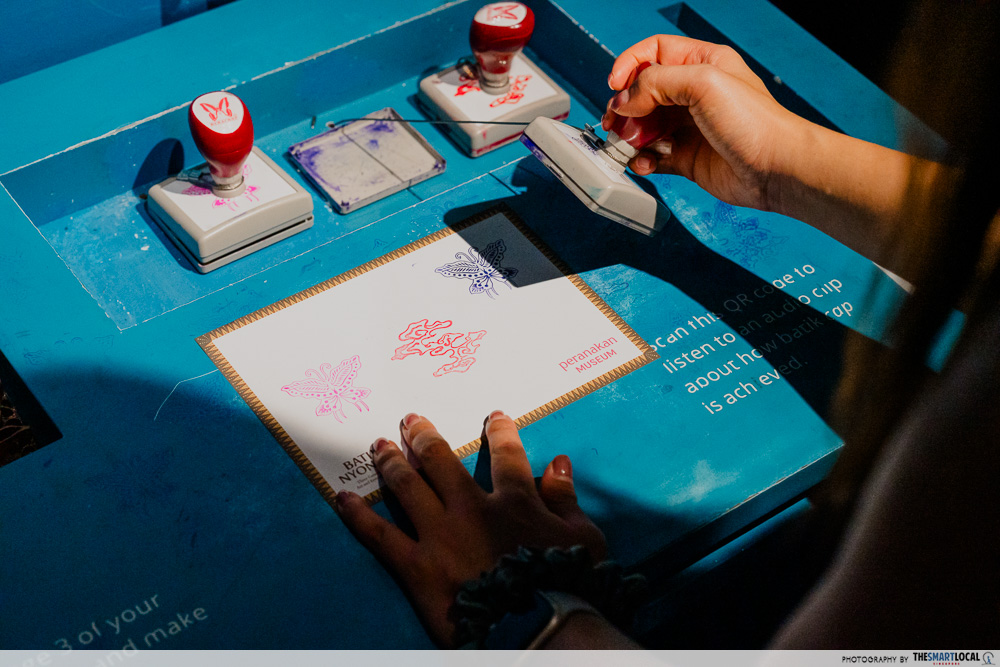
You may not get to stamp your own batik cloths, but you can try your hand at stamping batik motifs to create your very own design on a piece of paper.
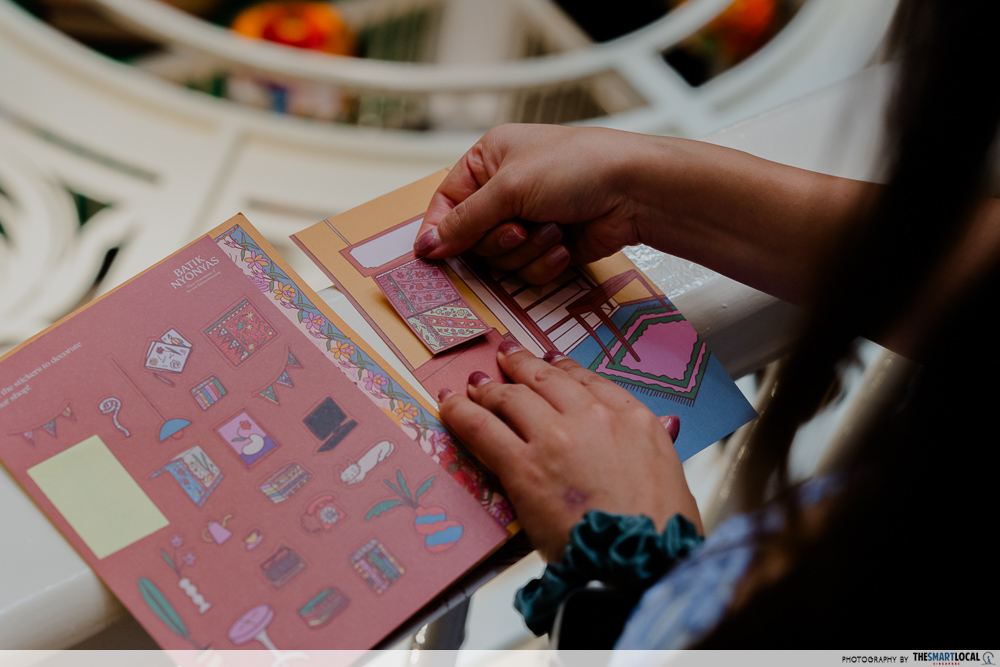
Also included in the activity book is a sticker sheet, which kids can use to decorate their very own shop. The museum has included a fabric sheet in the booklet too, so they can design a fabric print of their own.
Complete the mobile quiz for a batik-inspired souvenir
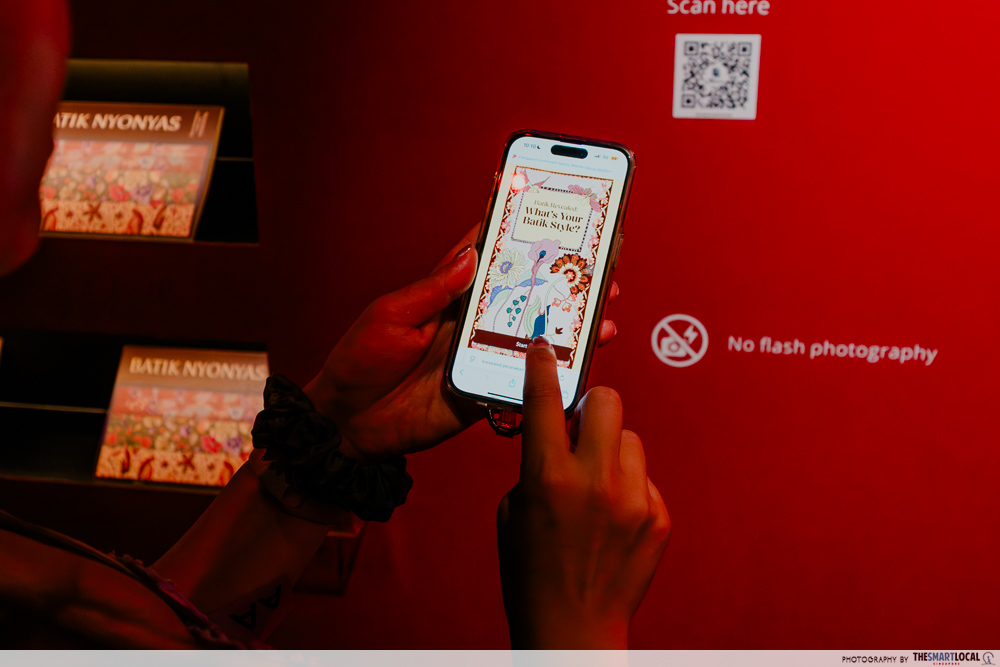
If you miss the QR code in the exhibition, there’s a Batik Revealed: What’s Your Batik Style? mobile quiz that you can take. And lest you worry that it tests you about what you saw in the exhibits – it doesn’t.
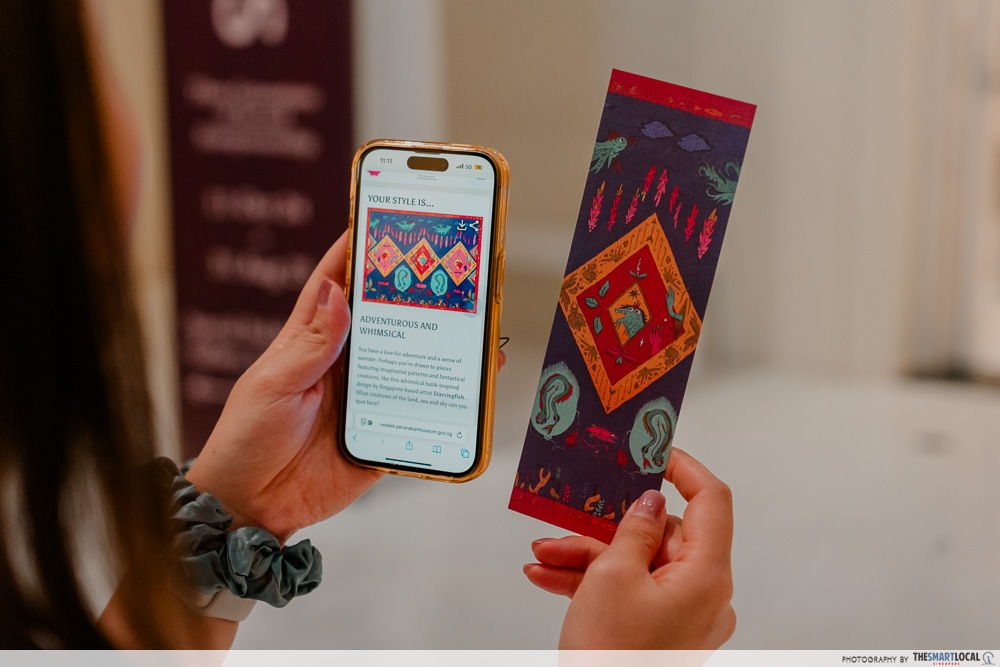
Answer the 5 questions, and you’ll be shown your batik style at the end of the quiz. Bring this result to the information desk at the entrance of the museum to get your very own batik-printed bookmark.
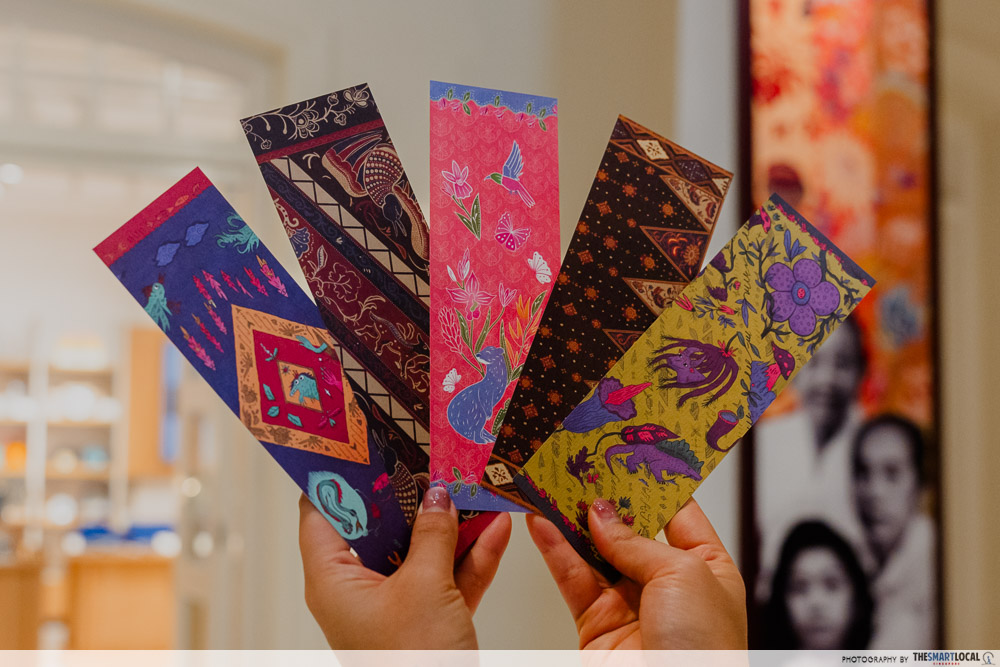
One of the bookmarks is no longer available as the exhibition is reaching the end of its run, but there are another 5 designs by Singapore-based artists Beeteal, Hello Jayne, and Starvingfish that you can take home, depending on your quiz result.
Head to Supermama The Museum Store to get your own batik outfit
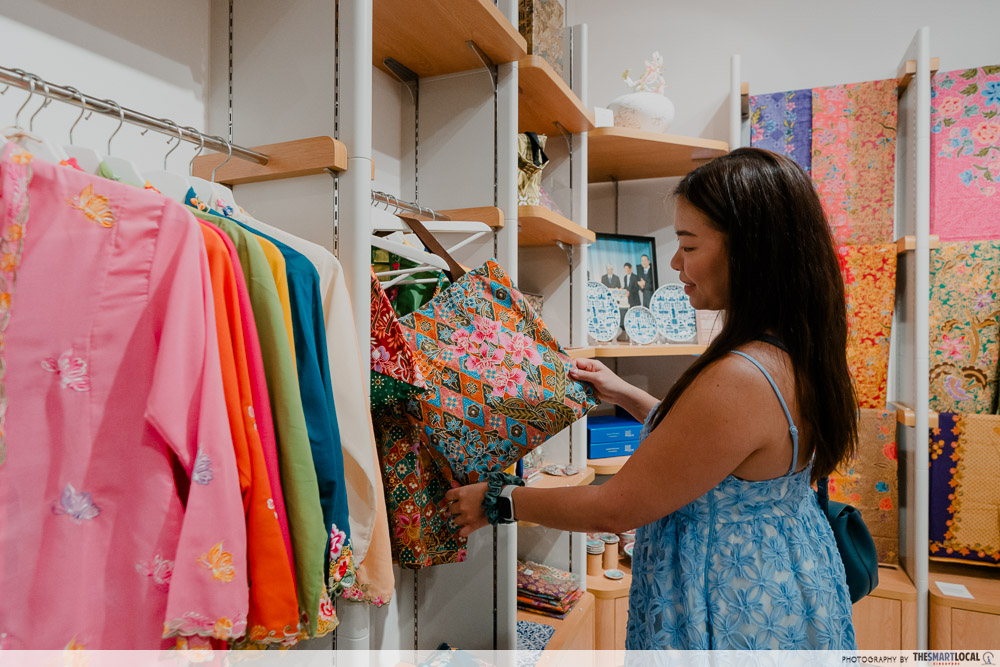
If you’ve been inspired by the stories and art of the Hendromartono family, pop into Supermama The Museum Store to pick up your very own piece of batik fashion. The local brand supports Singaporean designers and artists through its curated range of products; the batik you find here may be a modern take on Nyonya Oeij’s works, but you can be sure it’ll be a memento that will always remind you of the lady’s legacy.
Find kebayas with batik sarong skirts, batik bags, batik-printed ware, and even lengths of batik cloth – P.S.: hang, rather than fold your batik to preserve the colour and integrity of its print.
How much are tickets to Batik Nyonyas?
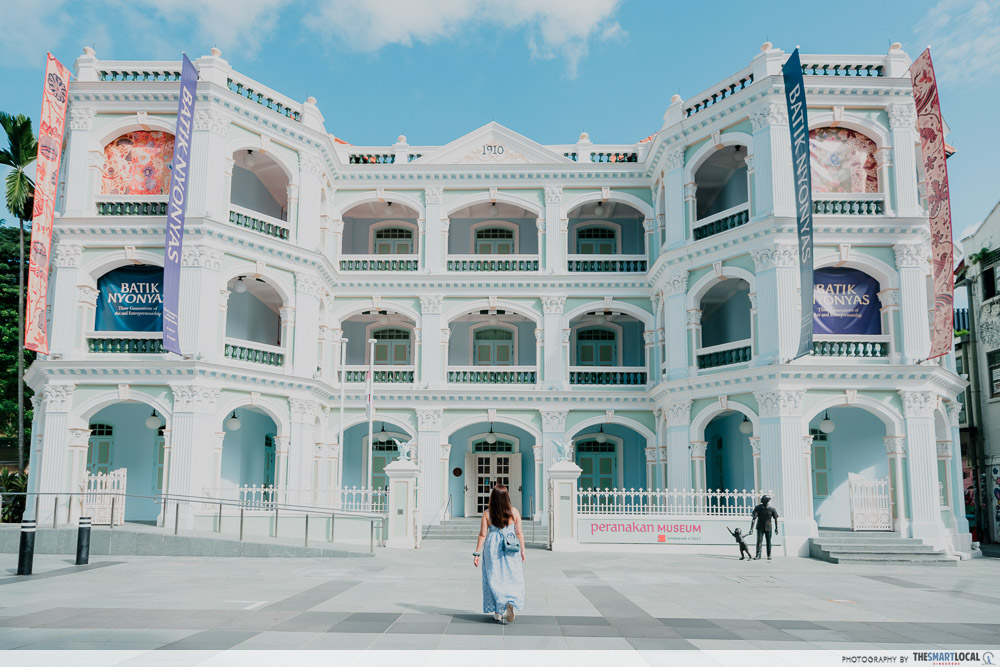
Tickets to the Peranakan Museum are priced at $6/adult, while senior citizens aged 60 and above, students with a valid student pass, children, and persons with disabilities plus their caregivers enter for free. Do note that these rates are only valid for Singaporeans and Permanent Residents, and grant you access to all the permanent galleries, as well as the Batik Nyonyas exhibition.
For tourists or foreigners, tickets are $18/adult, and $12 for concession tickets. Children under the age of 6 enter for free.
P.S.: The museum will have extended opening hours during the Singapore Night Festival 2025 this August, so you can catch Batik Nyonyas, after dark, before the exhibition ends. There’ll be music performances, an Arab Peranakan beading workshop, and charm bracelet-making, so be sure to make your way down.
How do I get to Batik Nyonyas?
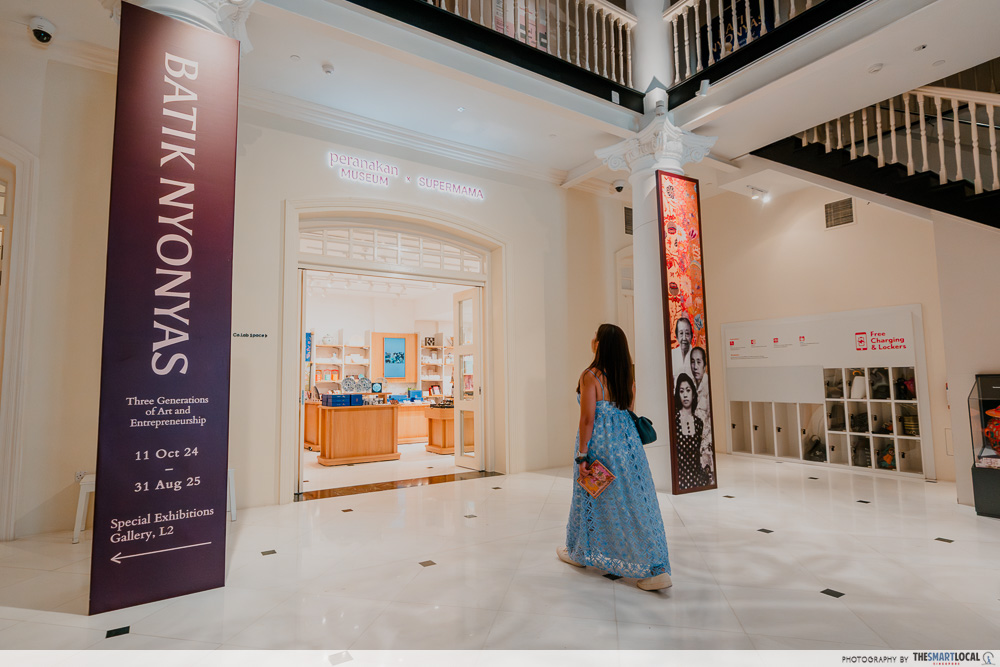
The Peranakan Museum is a 5-minute walk from Funan, where you can access the underpass to City Hall MRT Station. There’s an overhead bridge on Level 2 of Funan which you can take to cross over to the Central Fire Station.
Inside the museum, you’ll have to head up to the 2nd floor and cut through the permanent galleries on Family and Community Life. Follow the trail, which will lead you up to the 3rd floor to finish viewing the exhibition.
Batik Nyonyas exhibition at The Peranakan Museum till 31st August
Batik Nyonyas actually started its run last October, but it’s not too late to visit now before the exhibition ends on 31st August. The Singapore Girl batik kebaya may be the representation of our island nation, but let us not forget the origins of this ancient art form – and the visionary people who have carried it through the ages.
Book your tickets to the Batik Nyonyas exhibition here
Address: 39 Armenian Street, Singapore 179941
Opening hours: Mon-Thu, Sat-Sun 10am-7pm | Fri 10am-9pm
Contact: 6332 7591 | Peranakan Museum website
This post was brought to you by The Peranakan Museum.
Photography by Cyrus Oh.