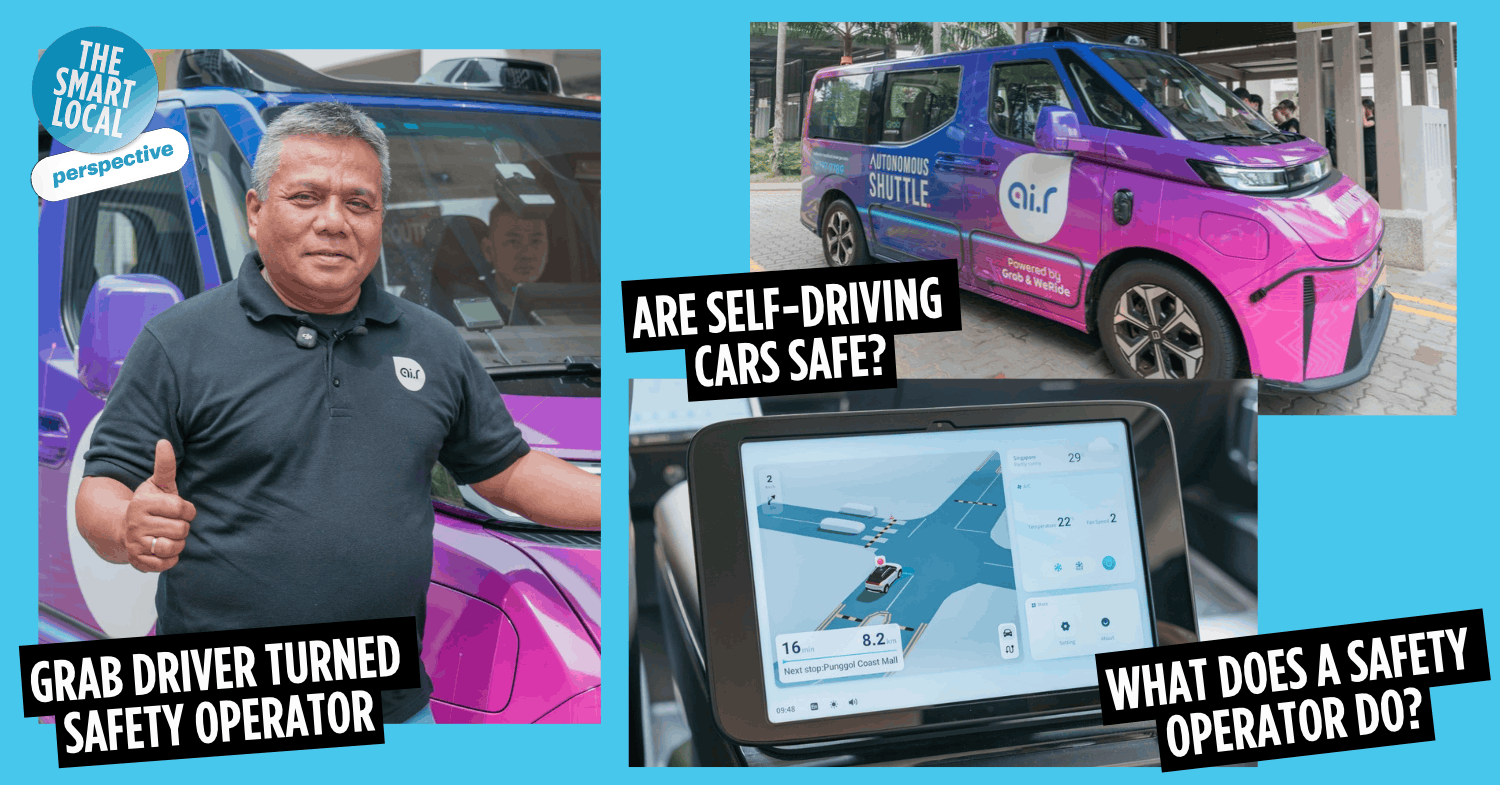

Self-driving cars in Singapore
If you’ve been around Punggol lately, you might have spotted a purple vehicle cruising down the road. Community Rides first began in January 2026, with public rides from self-driving shuttles in Punggol ferrying residents around the district since April.
Most of us have yet to ride in one, so we spoke to Azman Bin Rahman, an Autonomous Safety Operator with Grab, to find out how these vehicles work, whether they’re safe, and how he made the switch from private-hire driver to a safety operator for self-driving cars.
When he’s not on shift, Azman is a familiar face on the sidelines of youth football matches, where his daughter has been playing since she was very young. We caught up with him in Punggol, where he showed us around his workplace on wheels before taking us to his favourite lunch spot in the neighbourhood.
But first, what are autonomous vehicles & how do they “see” the road?
Autonomous vehicles drive themselves using a mix of sensors and smart systems.
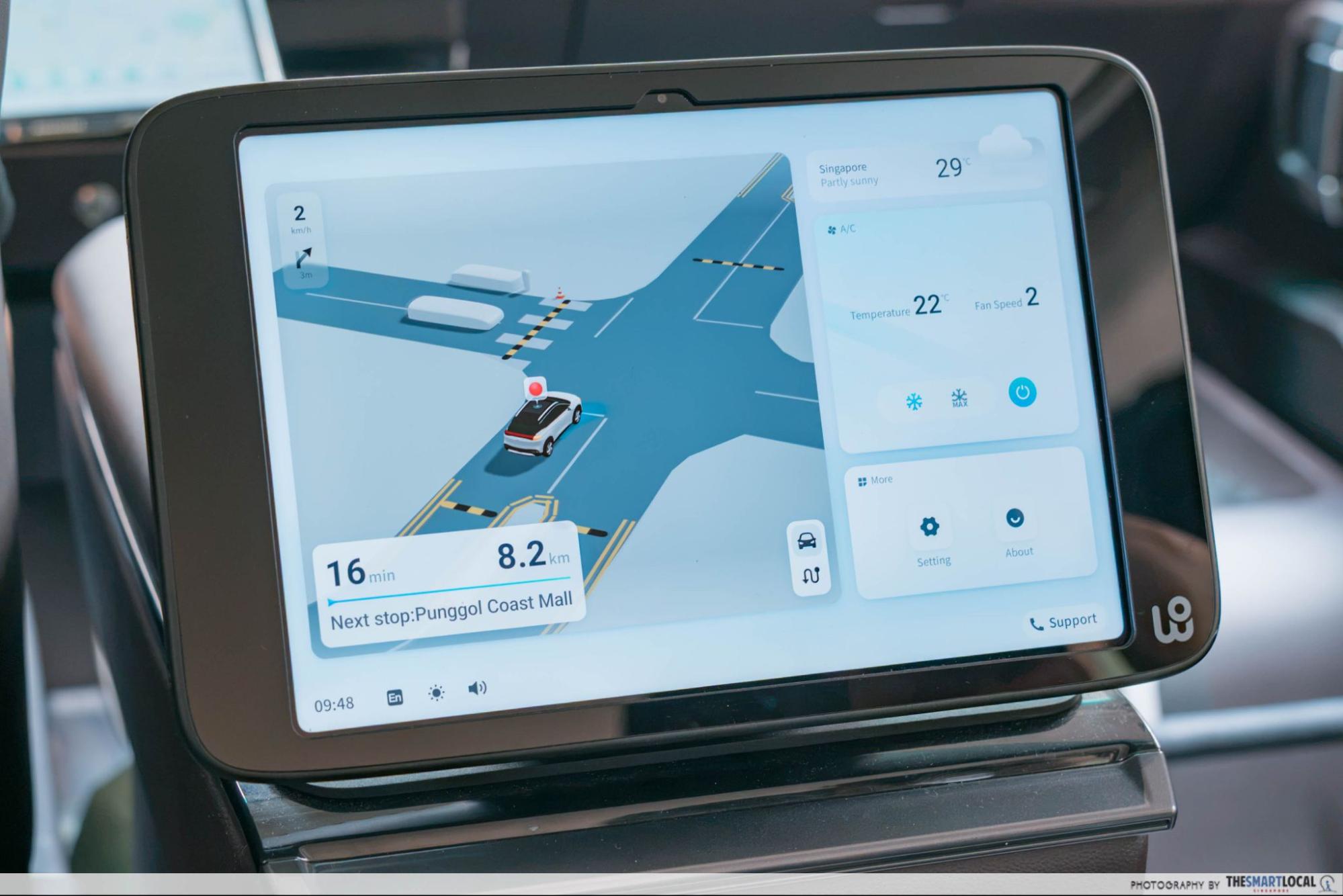
Cameras read traffic lights and road signs, while LiDAR sensors – short for light detection and ranging – use laser pulses to build a live 3D map of the surroundings, tracking the presence and movement of any surrounding objects. Some autonomous vehicles also have built-in radars which track the distance and speed of other vehicles.
Tying it all together, AI software calculates the information received to decide when to brake, turn, or give way. The result is a 360-degree view of the road at all times, powered by a system that never gets distracted or has its split-second decision-making capabilities impacted by fatigue or emotions.
Before taking on any passengers, every autonomous vehicle must pass a safety assessment at the “Centre of Excellence for Testing & Research of Autonomous Vehicles at NTU” or CETRAN for short, a centre developed specifically to test autonomous vehicles.
After passing a safety assessment at CETRAN, the autonomous vehicles can begin practice trips to “familiarise” themselves with every turn, stop, and stretch of the road, as well as the traffic conditions along the route.
This familiarisation process can involve thousands of trips. The autonomous vehicle must then pass a further on-road safety assessment to demonstrate that it can operate safely along the intended route. Only after completing these steps can it begin ferrying passengers or carrying goods to their destinations, with a safety operator on board.
Where you can ride a self-driving vehicle in Singapore now & in future
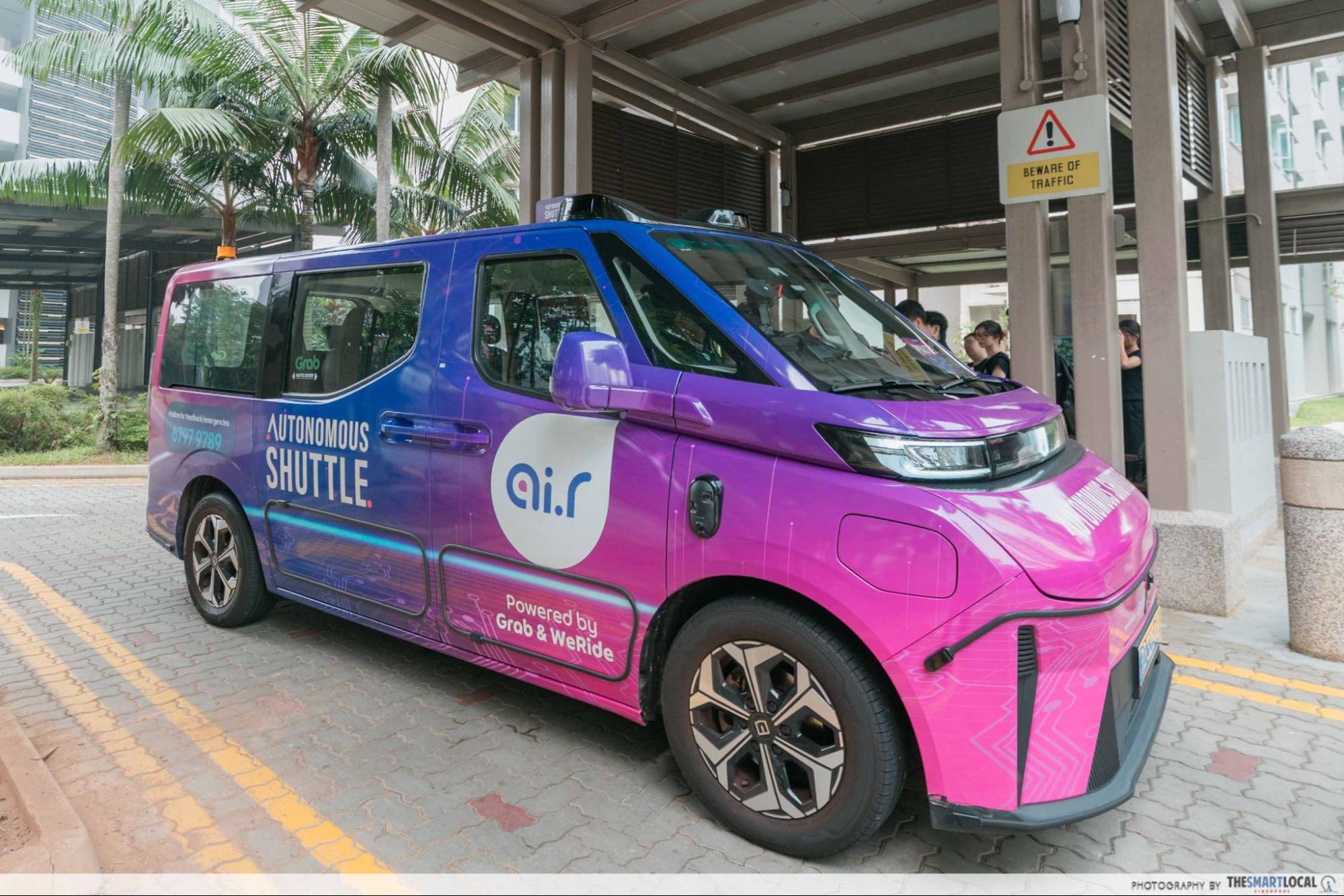
There are currently 2 autonomous vehicle operators in the Punggol district, namely Grab and ComfortDelGro, and their technology partners, WeRide and Pony.ai respectively. Grab and ComfortDelGro manage the service and operate the fleet, while WeRide and Pony.ai provide the autonomous vehicles and self-driving technology.
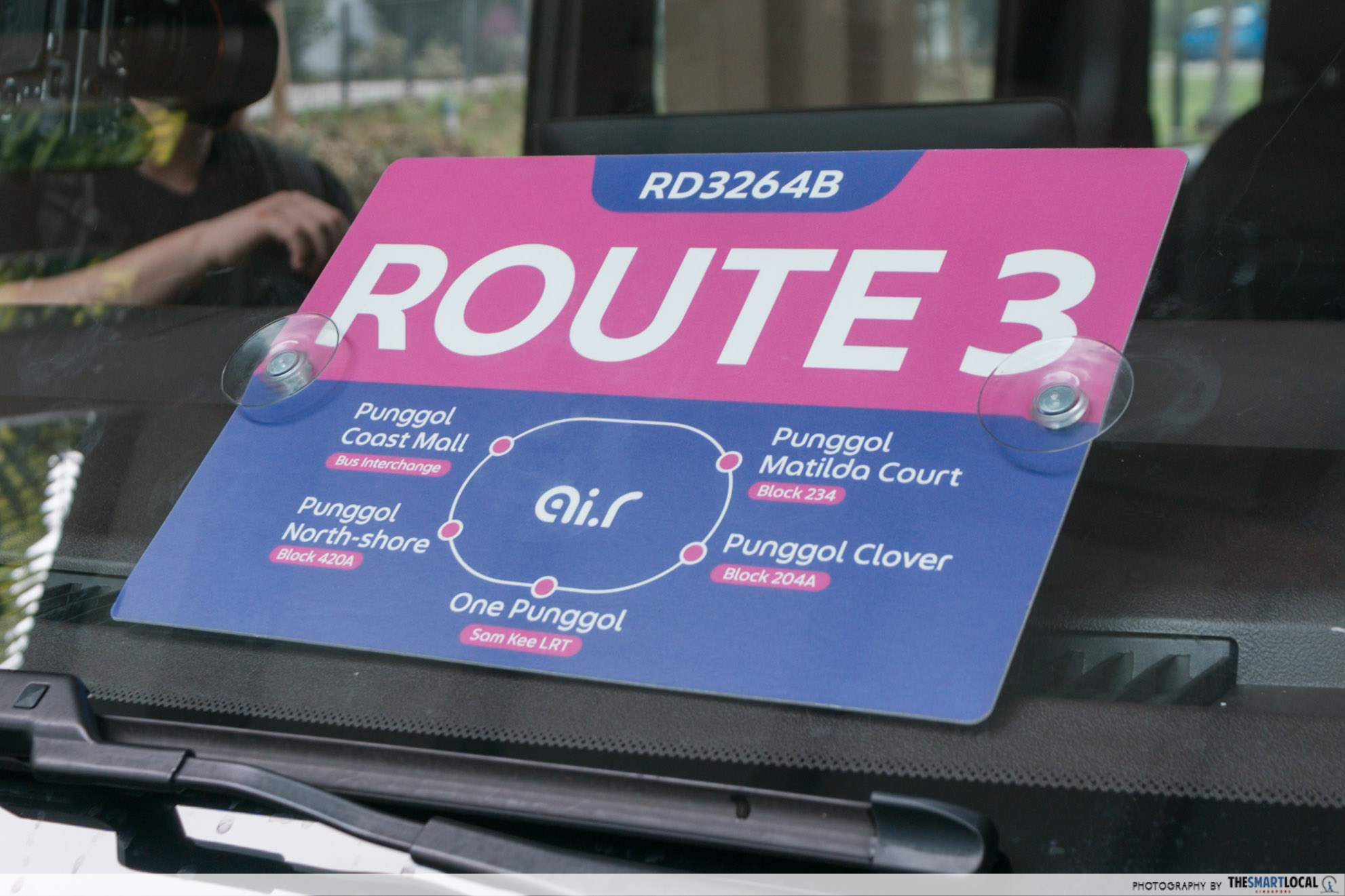
Grab and WeRide are currently running 2 designated routes spanning Punggol West to East and Punggol West to North, while ComfortDelGro and Pony.ai kicked off route connections in North-Eastern Punggol as of June 2026.
Additionally, an American autonomous vehicle company called Waymo is set to launch a driverless ride-hailing service in Singapore in 2028. At the announcement event back in September 2026 for this exciting development, Transport Minister Jeffrey Siow shared that about 20,000 Singaporeans have already taken rides on the driverless shuttles servicing Punggol.
When feedback was collected amongst these passengers, 99% of them shared that they would indeed recommend the experience of riding AVs to others. As Minister Siow rightfully pointed out, it’s rare for 99% of people to agree on anything in this world!
Meet Azman, a PHV driver turned Autonomous Safety Operator
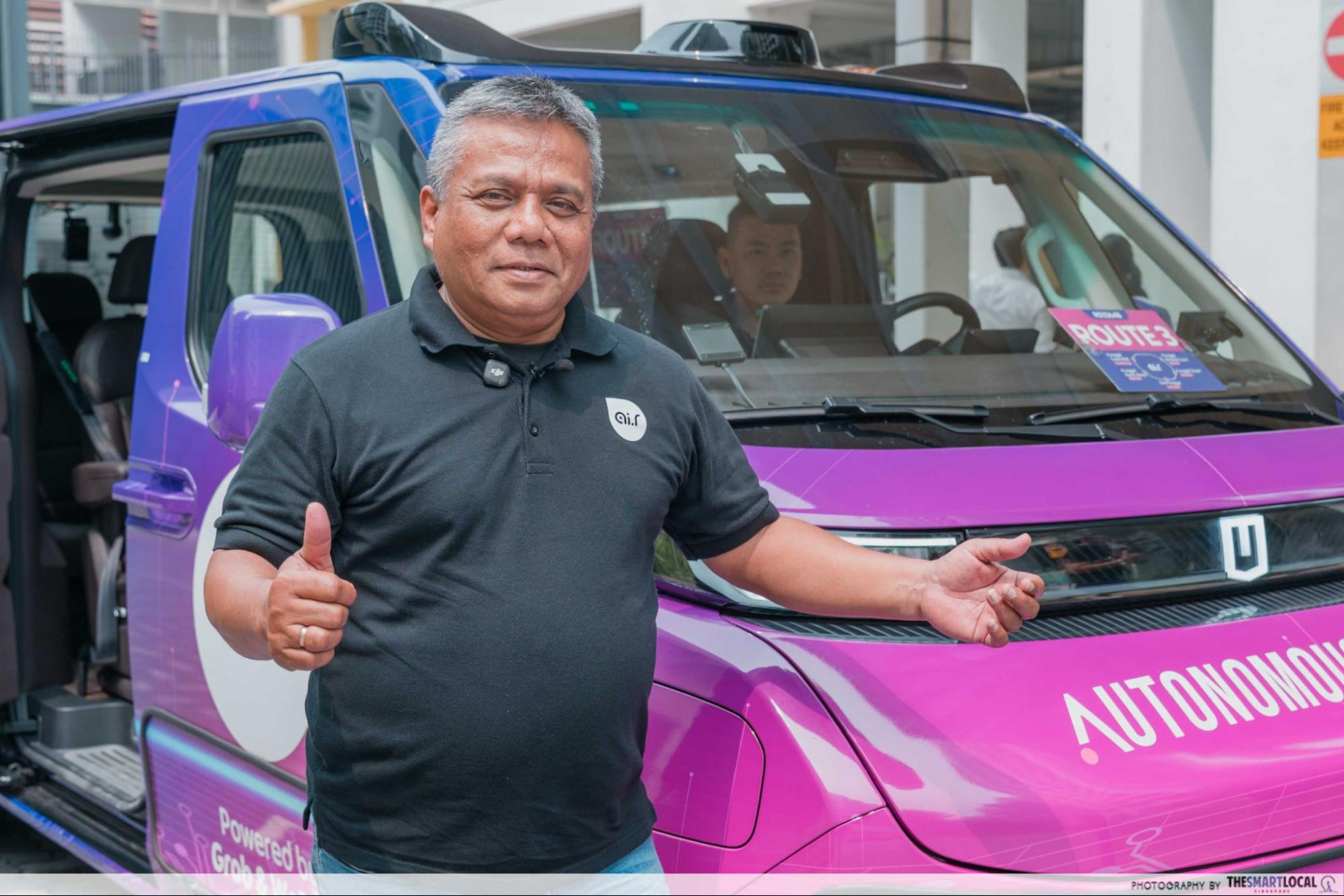
In mid-2025, Azman had just started driving a private-hire car when he saw an ad on the Grab platform looking for Safety Operators. “As this was new in Singapore and a new industry was being set up, I was curious,” he said. “I wanted to be one of the first few to operate an AV.”
He joined the first training batch at CETRAN in August 2025 and has been on the front line of Singapore’s autonomous vehicle rollout ever since.
For Azman, the appeal was simple: he likes trying new things. Rather than sticking to a line of work he already knew, he wanted to see what a brand new industry was like from the inside. Furthermore, there aren’t many chances to get in on the ground floor of something that’s never existed in Singapore before, so this was a rare opportunity indeed.
The job also suits his personality. Those who know him describe him as disciplined – which counts for a lot when you need to stay alert for a whole shift, and always happy to share what he knows to help put first-time riders at ease.
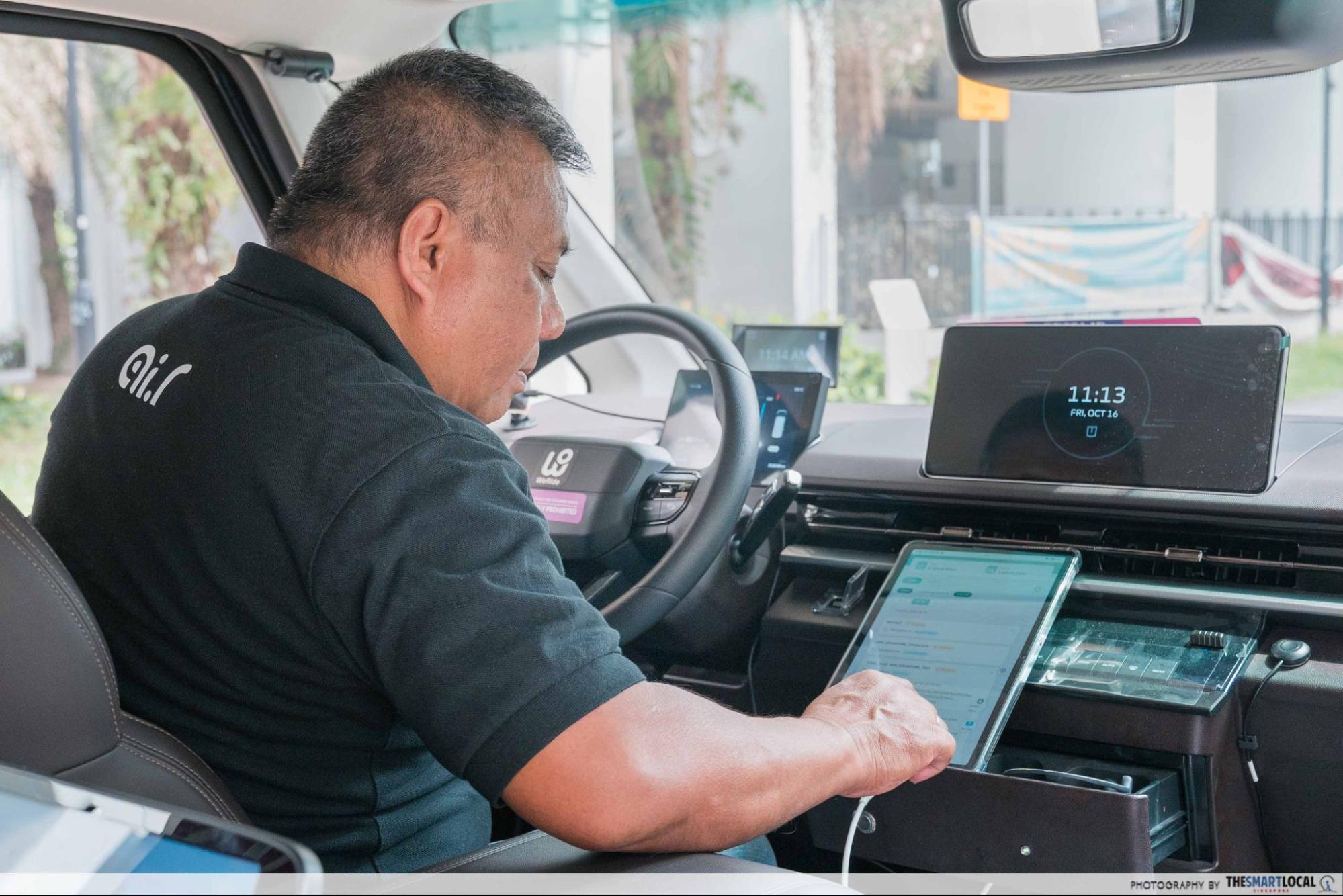
Now you might be wondering: What exactly is an “Autonomous Safety Operator”, and what does the job entail? While they’re certainly not a driver in the traditional sense, autonomous vehicle safety operators do sit in the driver’s seat for the whole ride. The vehicle itself does the driving, while the safety operator monitors the road and is ready to take over at any moment, should the need arise. The Safety Operator also provides continuous feedback on the autonomous vehicle’s driving performance for system enhancements.
“We’re one of the layers of safety for the autonomous vehicle before it becomes fully driverless,” Azman explained. “We make sure the autonomous vehicle operates safely, and give feedback whenever it’s needed to improve the operation.”
What training to become an Autonomous Safety Operator is like
Before he stepped into this fresh new role of Autonomous Safety Operator, Azman had to pass a theory test and a practical test – a rite of passage many of us are familiar with in our quest to obtain a driving licence. But in this case, it’s with an entirely different kind of vehicle altogether.
“We went through rigorous training, day in and day out, trying to master and understand the AV’s behaviour and how it will react,” he said. “We need to be alert at all times and take over control if required.”
The course, developed by GrabAcademy and WeRide, covers how the vehicle’s sensors and software work, switching between autonomous and manual driving, and emergency protocols.
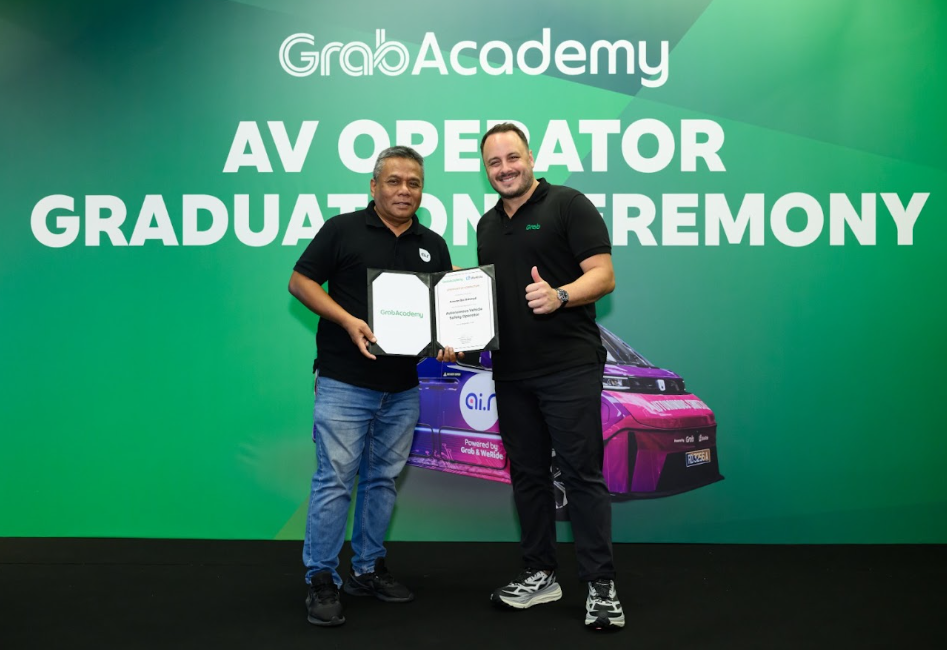
Image credit: Azman Bin Rahman
Azman’s training took about 2 months, and he went through it alongside a small batch of 10 trainees. Even after all that preparation, the hardest part was making it feel second nature: keeping his foot ready over the brake at all times, even though the vehicle is the one doing the driving.
Passing the final test was a proud moment, and GrabAcademy marked it with a graduation ceremony, complete with a photo to commemorate the milestone.
Are self-driving cars in Singapore safe?
In his speech back in September 2026, Minister Siow noted that although Singapore’s roads are safer than many other global cities, the nation still records 1 fatal road accident every 3 days on average. The statistic is jarring for sure, and you’ve likely seen countless news stories about tragedies linked to reckless driving.
Where autonomous vehicles are concerned, a multitude of human causes behind such tragedies are effectively removed. There’s no worry of drink-driving, road rage, or speeding because a driver thinks, “Aiya, it’s okay lah”. Every km/h is carefully calculated and applied, and not the result of a driver who’s in a rush and thinks nothing of putting pedal to the metal.
Then, there’s all the work that goes on behind the scenes to ensure that every ride is as smooth-sailing as it can possibly be. Before an autonomous vehicle takes on a single passenger, Azman runs it through a set of checks.
First up is the system: he checks that the systems and onboard screens are working properly. Then he walks around the vehicle and inspects the hardware, making sure there are no damages on any of the cameras or LiDAR sensors that the autonomous vehicle relies on to “see” the road.
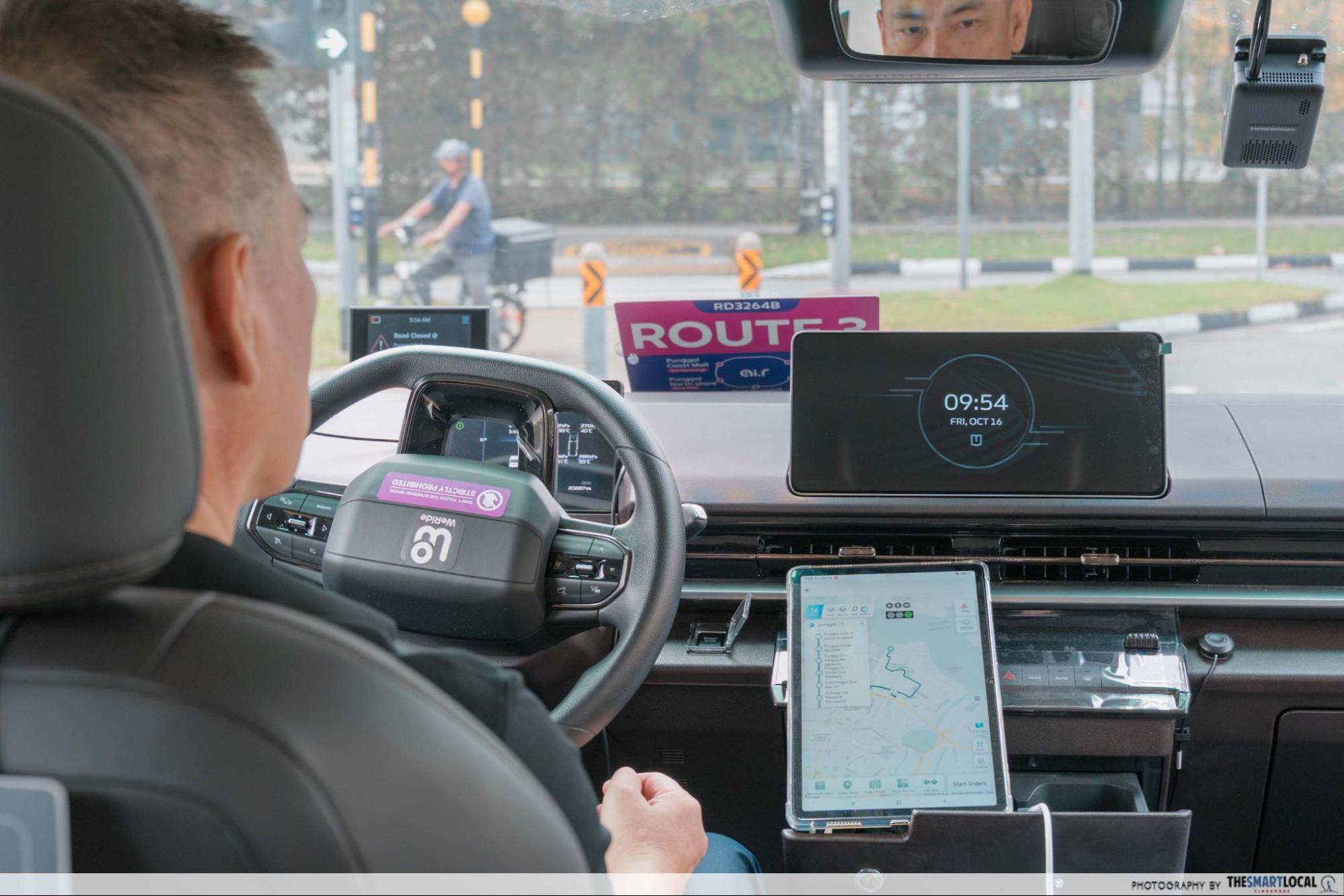
The most important check comes before the vehicle switches into autonomous mode. Azman tests the 3 different ways that a safety operator can take back control: steering, braking, and accelerating. If any of these doesn’t respond the way it should, the autonomous vehicle doesn’t go out.
It’s a routine he takes seriously. If anything goes wrong on the road, he’s the one who has to override the system in a split second, which is exactly why safety operators are on board in the first place.
And in terms of stats? Since their launch, autonomous vehicles in Singapore have clocked over 160,000km at the time of Minister Siow’s aforementioned speech on 18th September 2026 – and there have been zero major accidents.
To be fair, the mileage stems from fixed route operations. That said, Minister Siow assured the public that the Ministry of Transport will “expand the deployment of autonomous vehicles carefully”, and launch it on more routes and wider coverage areas only when they are confident that it’s completely safe to do so.
How Singaporeans are responding to the launch of AVs
As for Azman’s words of advice to first-timer passengers who may be feeling nervous, “Don’t worry, AVs are actually a very safe mode of transport,” he said. In his time on the job, Azman has noticed that most first-time passengers fall into 1 of 2 camps when they board: nervous or excited. Either way, he’s happy to reassure them and walk them through what the vehicle is doing.
In return, he regularly receives encouragement from riders, and many are already asking when the shuttles will run with no one behind the wheel.
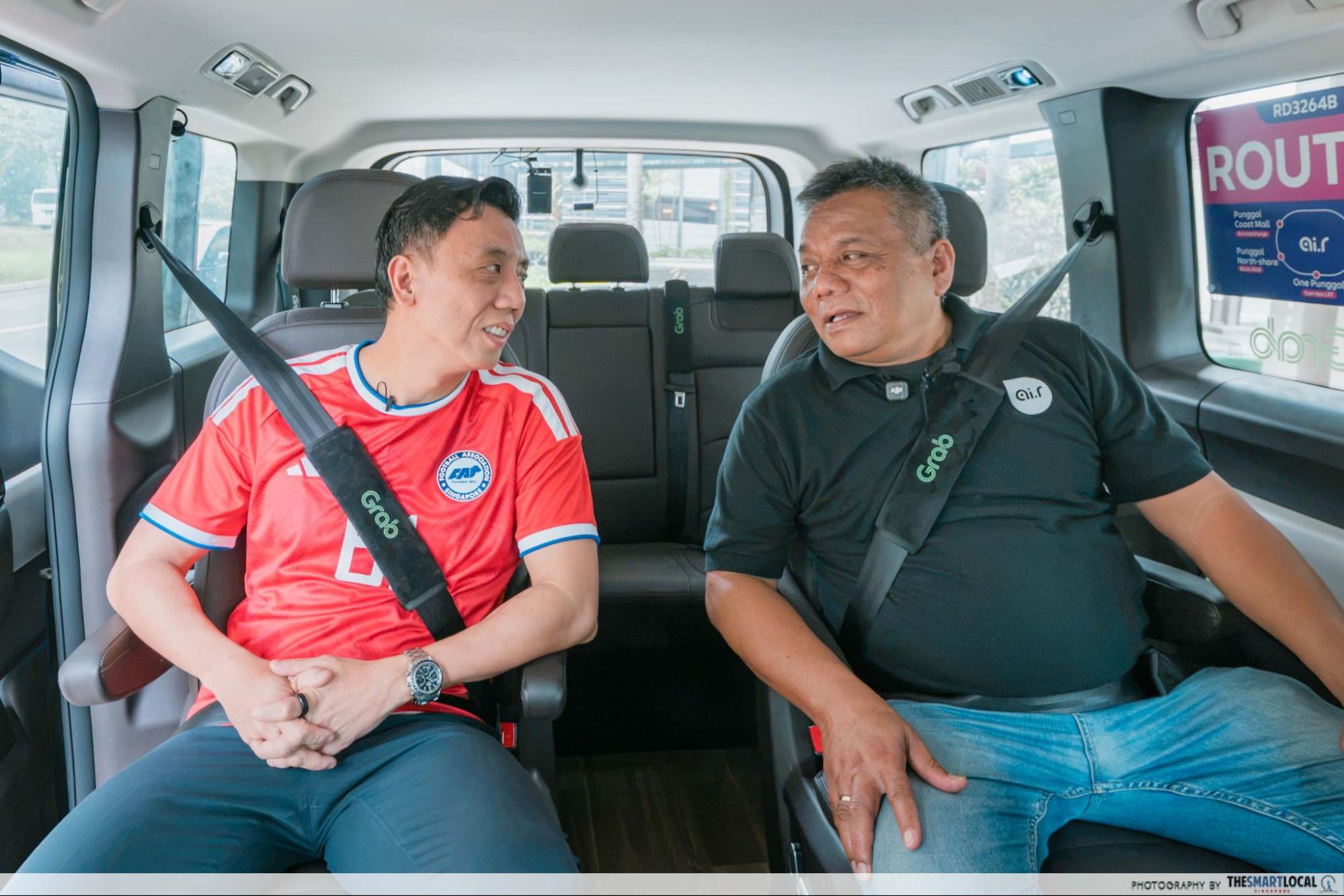
First-ride jitters don’t last long, either. Minister Siow admitted that he watched the vehicle’s every move on his first driverless ride back in 2025. By his second ride, he was busy chatting with the person next to him, just kicking back and enjoying the driverless ride.
What’s next for self-driving vehicles in Singapore?
Autonomous vehicles aren’t meant to replace Singapore’s robust public transport network of MRTs and buses. Instead, they enhance connectivity and improve first- and last-mile journeys.
Here’s what we can look forward to in the world of passenger AVs that will be available to the public:
- Point-to-point rides across Punggol, including to Sengkang General Hospital
- AVs in 1 to 2 more HDB towns, such as Tampines North and Tengah
- A 3rd operator, Waymo, will begin testing and preparations for their deployment in the western part of Singapore, starting with Labrador and HarbourFront
- A fleet growing from 16 passenger vehicles today to several hundred within the next 2 years
- More jobs created in Singapore’s autonomous vehicle industry
More AVs means more jobs, from fleet management and remote operation to maintenance and data analysis. Some of these roles are open to existing taxi and private-hire drivers, and operators have launched training programmes for them, with government salary support of up to 90% during the training period.
Azman knows his own job will look quite different in a few years. Once autonomous vehicles start running without anyone in the driver’s seat, safety operators like him could move into a remote operations centre, where they’ll monitor several vehicles at once instead of riding in one.
So, put those worries to rest if you know of any taxi or PHV drivers concerned that the launch of self-driving cars in Singapore means that they’ll be put out of a job, or “replaced by robots”. As Senior Minister of State Sun Xueling said, the Government will take a “pro-active approach to help workers adapt, support job transitions, and equip Singaporeans with the skills and capabilities needed in the age of autonomy and AI”.
Hear it from someone who has been there and done exactly that; Azman’s advice to anyone thinking of making the switch: “If you have an interest in this new industry, give it a try. It will shape the new era of transportation in Singapore.”
If you’re keen to explore a career in Singapore’s autonomous vehicle landscape, find out more about new career options and support for taxi and private hire drivers venturing into this field.
Taking a ride in a self-driving car in Singapore
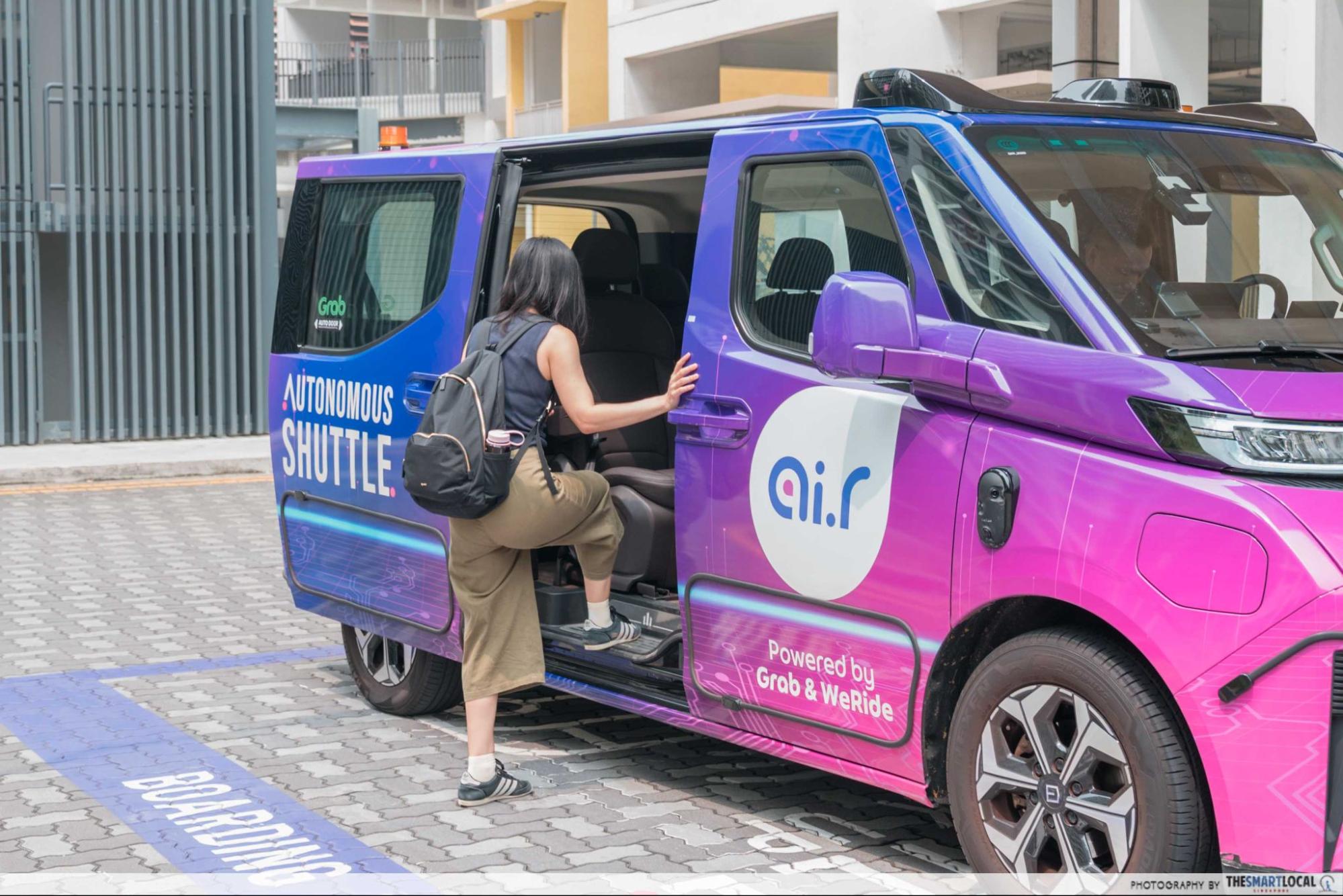
Self-driving vehicles may still sound like sci-fi, but in Punggol, they’re already part of daily life, with trained safety operators like Azman on board every trip. If you’re curious, hop on one yourself.
Chances are you’ll stop watching the road by your second ride. But for your very first one? We won’t blame you for being all ooh and ahh at the gadgets and gizmos that turn your everyday trip around the neighbourhood into a high-tech, futuristic voyage.
Find out more about autonomous vehicles in Singapore
This post was brought to you by the Ministry of Transport.
Photography by Shirlynn Koh.