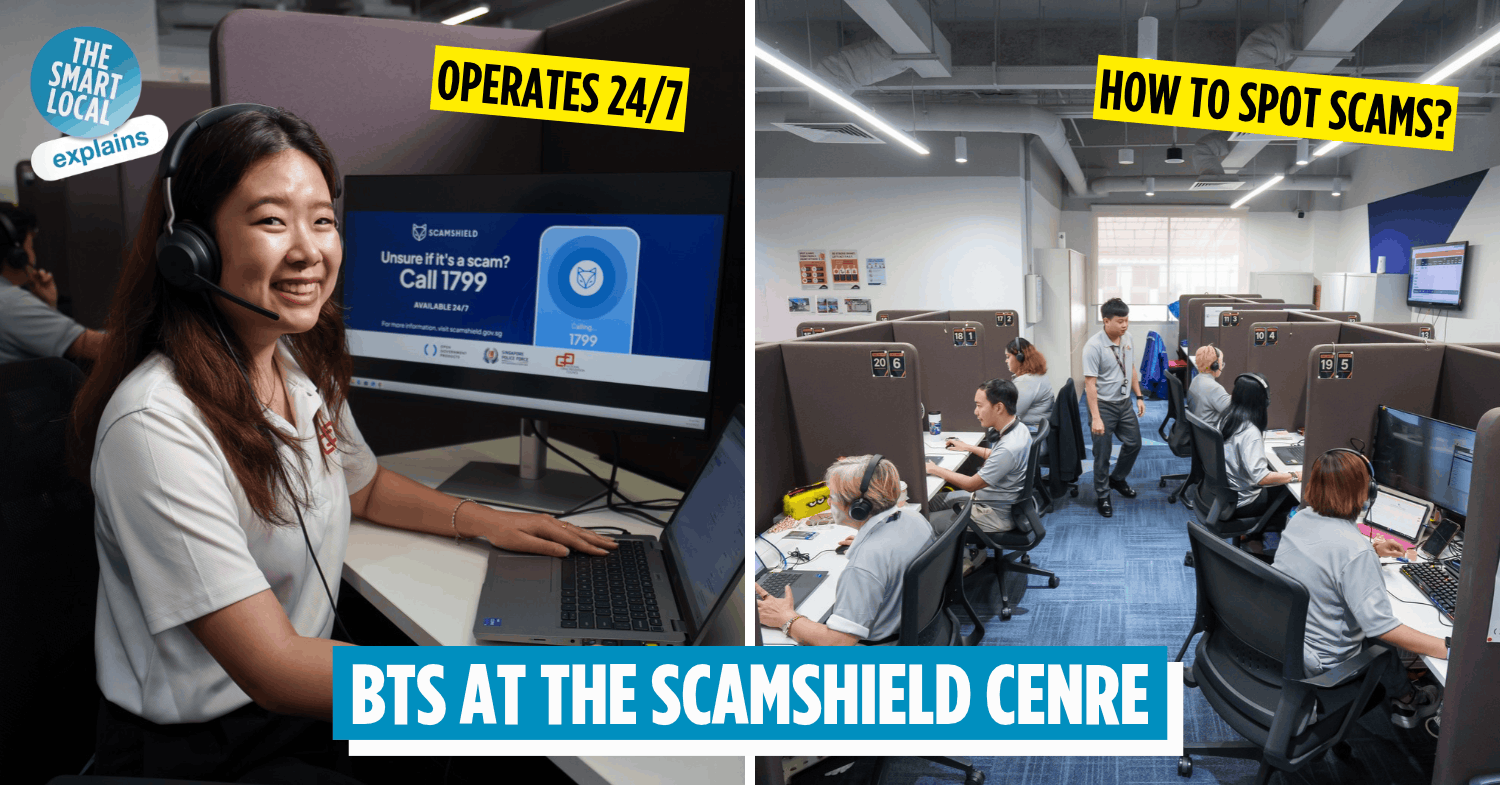

How the 1799 ScamShield Helpline functions
A quick look at the latest episodes of the Singapore Police Force’s educational Crimewatch series reveals a worrying trend: scams feature prominently in many cases. It’s a stark reminder of just how rampant such crimes have become, and how easily unsuspecting victims can fall prey to them.
But while scams in Singapore are becoming increasingly sophisticated, there are still ways to protect yourself. One of the most important tools at your disposal is the 1799 ScamShield Helpline. If something doesn’t feel right, simply dial 1799 for help. That call could make all the difference in protecting yourself and your loved ones from falling victim to a scam.
To see what goes on behind this crucial line of defence, we went behind the scenes for an exclusive look at the people and operations working round the clock to keep scammers at bay.
What is the 1799 ScamShield Helpline?
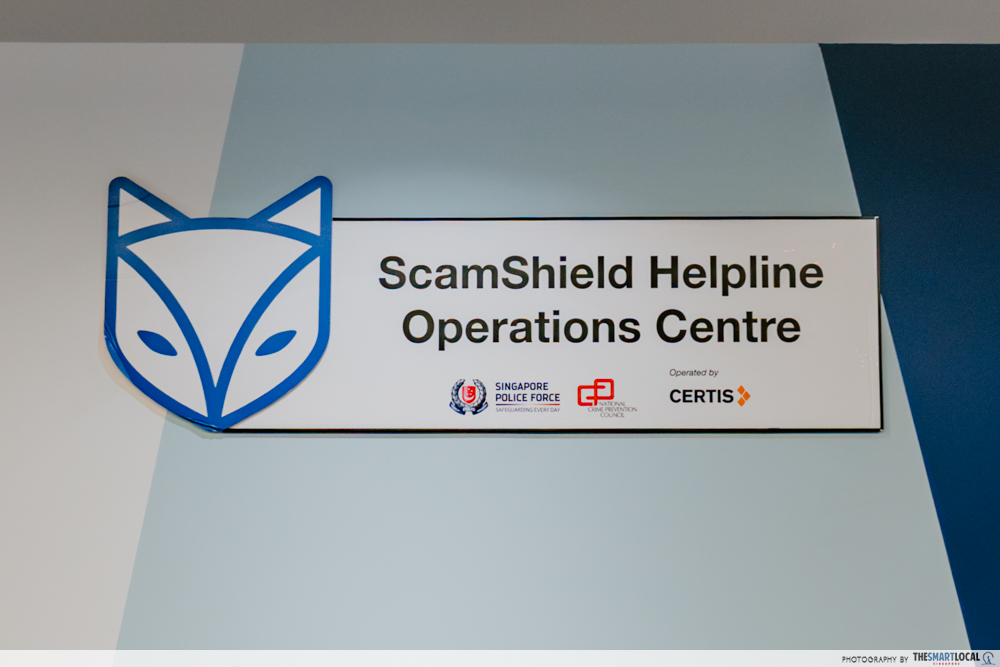
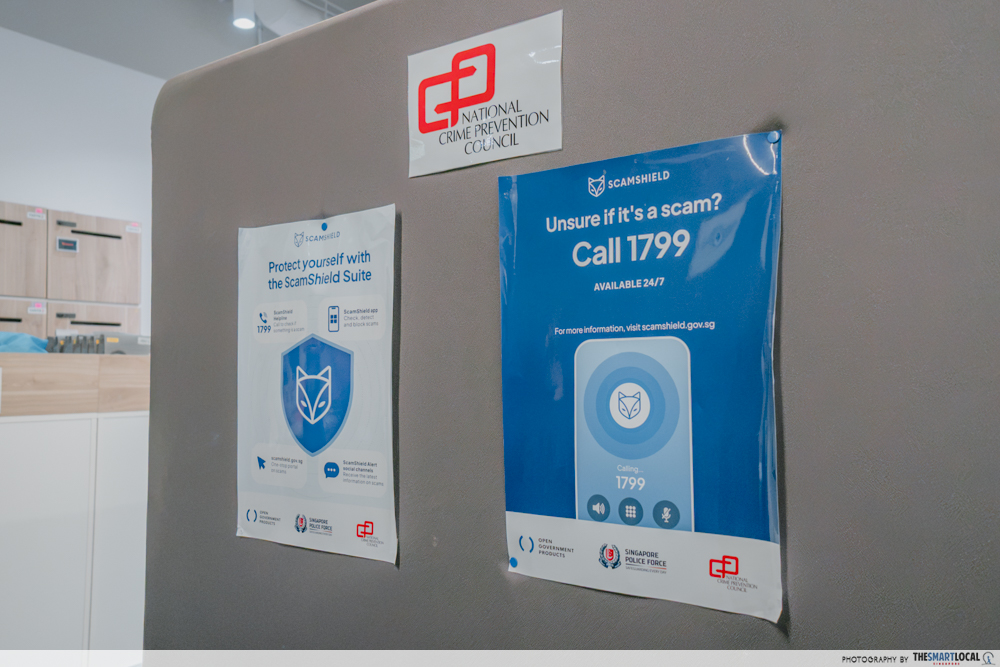
Launched in September 2024, the 1799 ScamShield Helpline is part of the ScamShield Suite, a joint initiative by the National Crime Prevention Council (NCPC), Singapore Police Force (SPF), and Open Government Products (OGP). It serves as a round-the-clock source of support for anyone who suspects they may be dealing with a scam.
Available 24 hours a day, 7 days a week, it provides real-time guidance to help callers assess suspicious situations and decide on the best course of action.
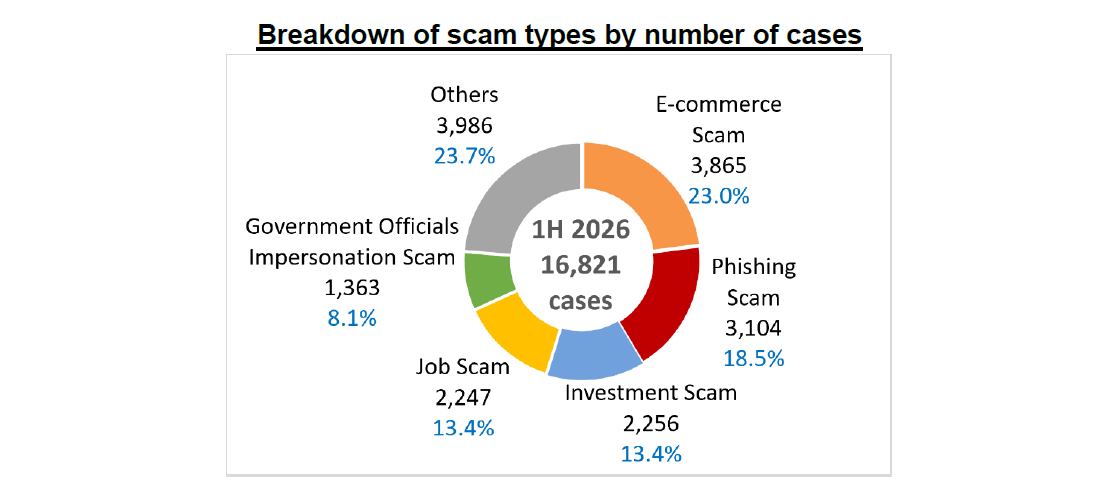 Screenshot from: Mid-Year Scam and Cybercrime Brief 2026 by the Singapore Police Force
According to the SPF’s Mid-Year Scam and Cybercrime Brief 2026, e-commerce scams were the most common type in the 1st half of the year, accounting for 23% of reported cases. Phishing scams came next at 18.5%, followed by investment and job scams at 13.4% each. Government official impersonation scams rounded out the top 5 at 8.1%.
With so many different ways scammers can catch people off guard, it’s little wonder that the 1799 ScamShield Helpline has handled over 310,000 calls since its launch, with another 500 or so coming in daily.
How does the helpline protect you from a scam?
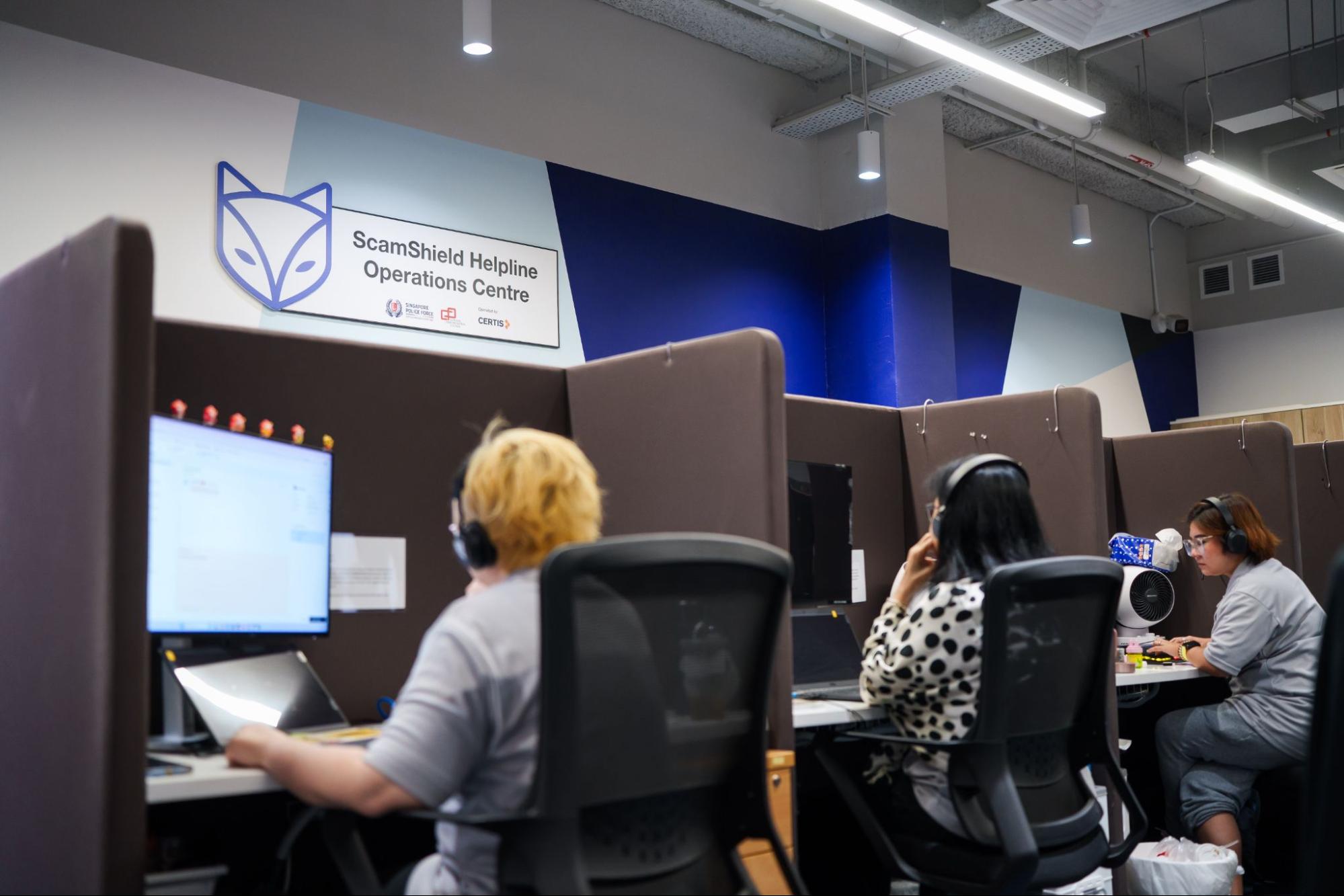
With trained call agents on duty, someone is ready to help whenever you dial 1799. They are trained to help callers make sense of suspicious situations, spot potential red flags, and figure out the next appropriate steps.
The hotline also offers an automated option for scam victims to connect directly with participating banks. Callers who have fallen victim to a scam can select Option 1 from the automated menu and choose their respective bank to be transferred to a representative for further assistance.
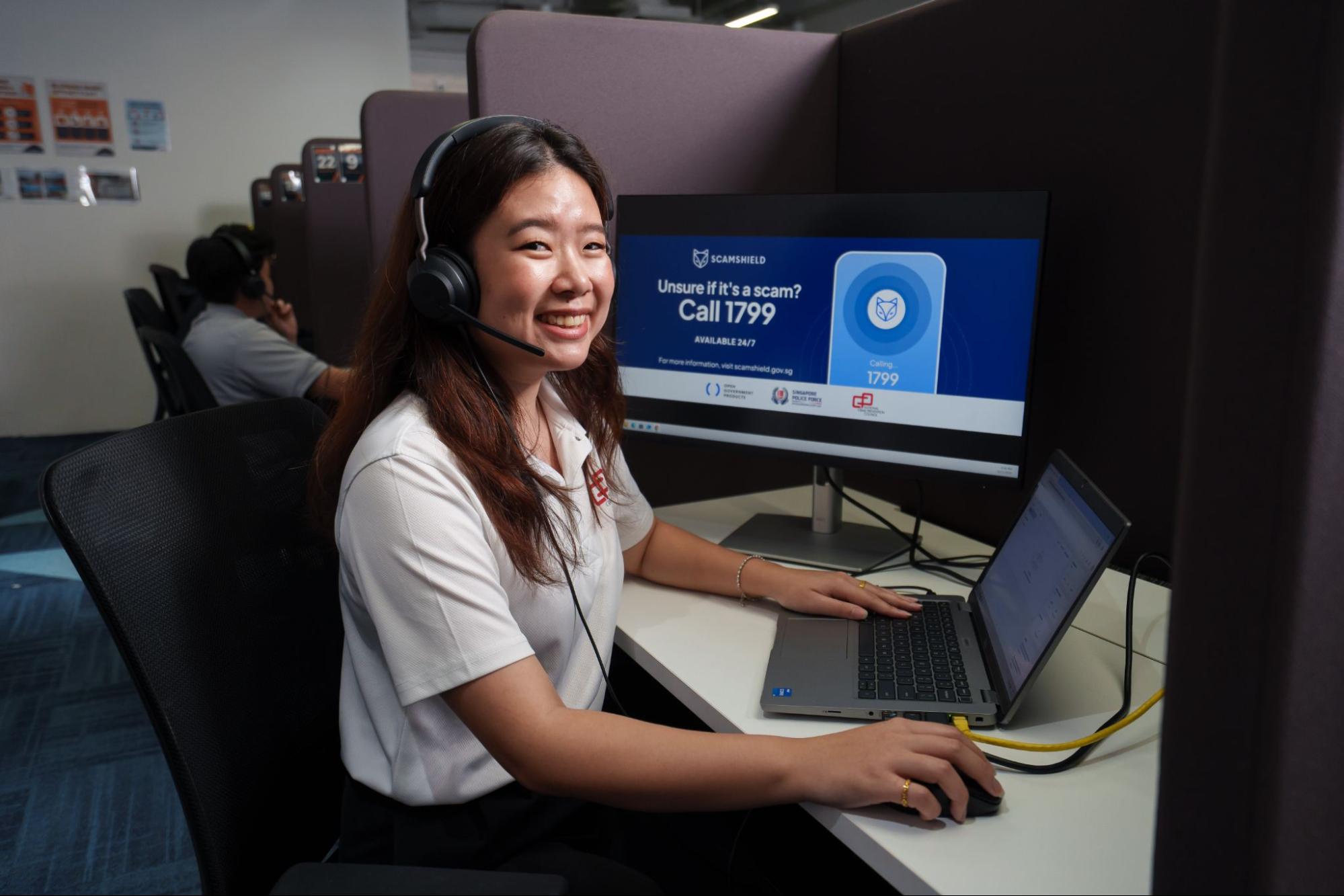 Image credit: National Crime Prevention Council
While scams come in many different forms, most follow a similar playbook. Scammers often start by dangling an enticing offer, be it a too-good-to-be-true investment opportunity or even the promise of finding love.
Once they’ve earned the victim’s trust, they slowly crank up the pressure, using urgency, fear, or emotional manipulation to convince them to part with their money. And just like that, the money is gone, along with the scammer.
By calling 1799 before any money changes hands, you’ll have a better chance of spotting a scam before it’s too late. The guidance you receive can also help you recognise similar red flags in future, so you can look out for your loved ones and prevent them from falling into the same traps.
Inside the operations of the 1799 ScamShield Helpline
 Image credit: National Crime Prevention Council
To keep pace with rising call volumes, the 1799 ScamShield Helpline moved its operations from Police Cantonment Complex to Certis’ facility in Bedok in July 2025. The move provided the helpline with more room to expand its operations and accommodate the growing volume of calls.
Today, Certis supports the helpline’s day-to-day operations to keep things running smoothly. More than 10 agents are stationed at the facility at any given time, with staffing levels adjusted according to call volumes.
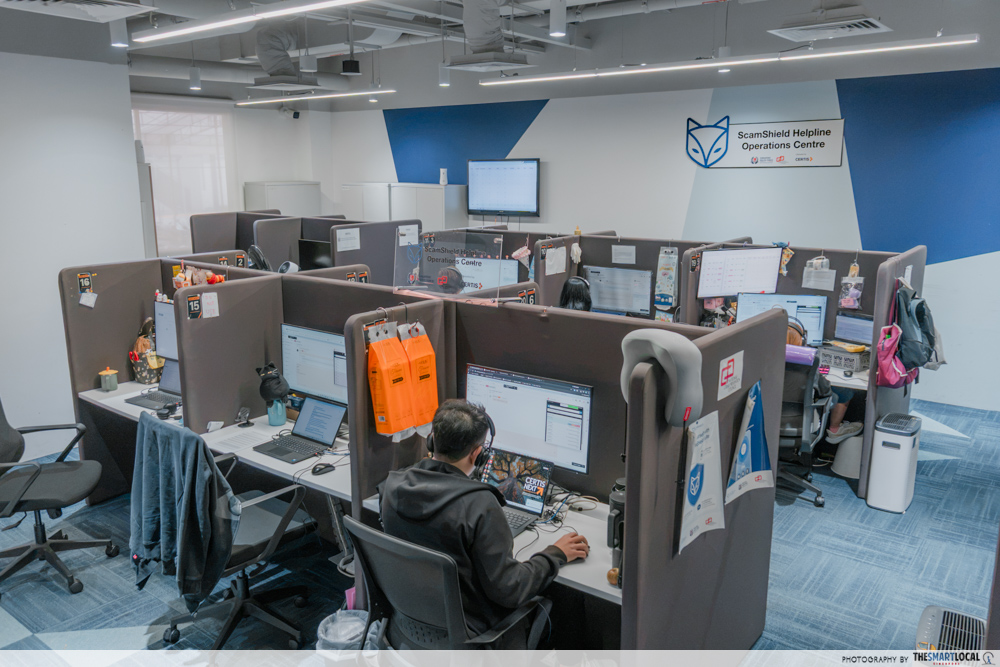
Stepping into the office, I was pleasantly surprised by how cosy and calm it felt. Each agent had their own personalised cubicle, complete with noise blockers to help them focus amid what could otherwise be a hectic work environment.
Despite the multiple monitors and documents around the room, there was a surprising sense of calmness – quite a contrast to the potentially frantic calls coming through at any moment.
My experience as a ScamShield call agent

As part of the visit, I also got the rare opportunity to step into the shoes of a ScamShield helpline agent through a simulated call scenario. Despite receiving a quick briefing beforehand, I was still pretty nervous when it was time to answer the call.
On the other end of the line was a caller seeking help with a government official impersonation scam. He had been contacted by someone posing as a police officer, who claimed he was involved in a fake credit card scam and instructed him to transfer a sum of money.
The victim’s voice sounded panicky, with a barrage of questions coming my way. Even though I knew it was just a reenactment, the urgency in his voice made the entire exchange feel surprisingly real.

My approach was to first listen carefully to the caller, then ask relevant follow-up questions to get a clearer picture of the situation. Even though I repeatedly reassured him that no government or police officer would ever ask him to transfer money over the phone, he was understandably caught up in a state of paranoia and remained unconvinced.
It eventually took us a rather stressful 10 minutes of reassurance and convincing before we could get him to agree that the best course of action was to head down to an actual police station. The experience made me realise just how challenging it can be to handle such calls, even before factoring in the sheer volume that officers have to deal with.
I learnt that handling such calls requires immense patience, a calm demeanour, and repeated reassurance to help callers work through their fear and take the necessary steps.
Download the ScamShield app for extra protection
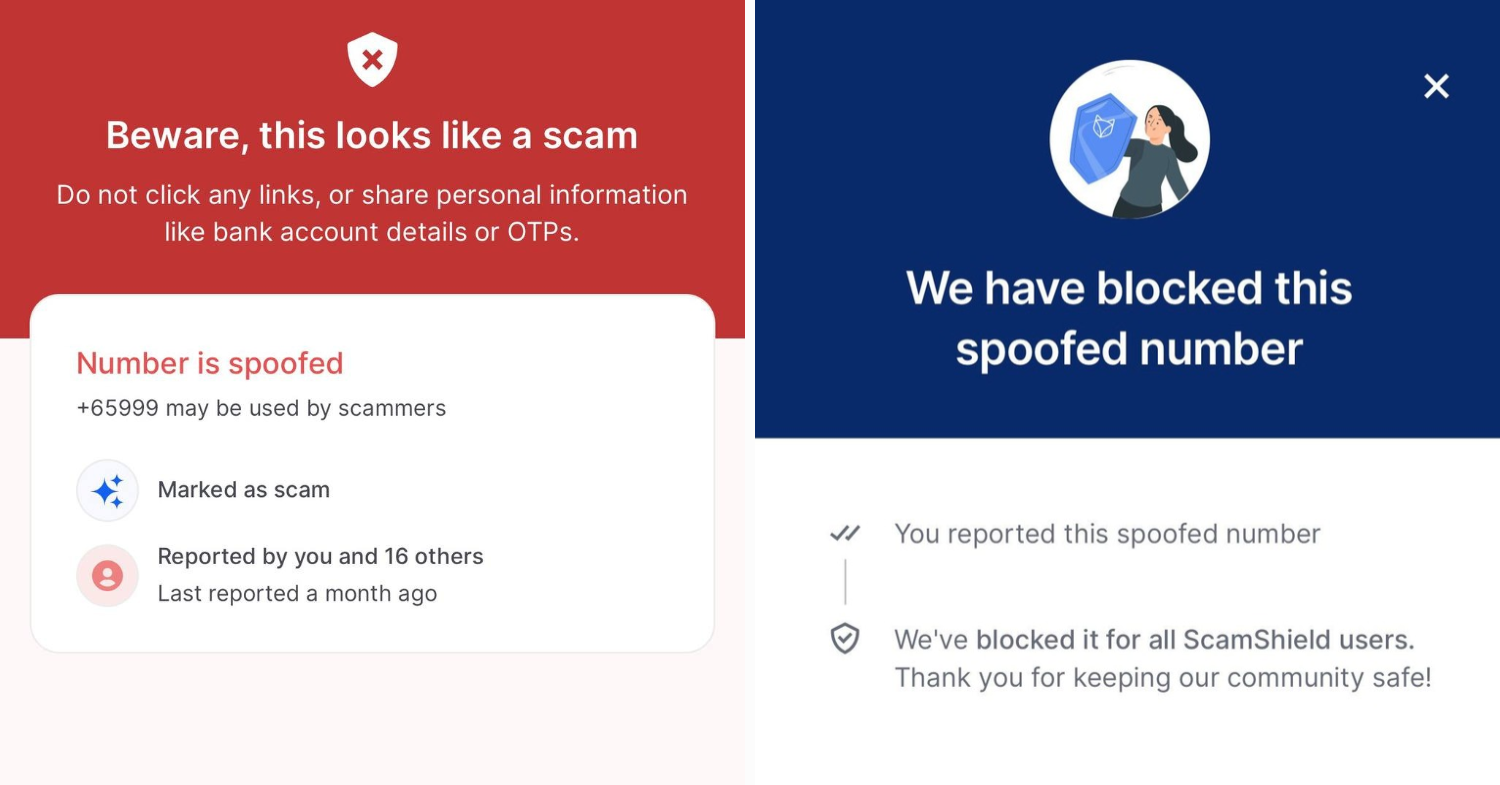 Image adapted from: ScamShield app
Besides the 1799 helpline, consider downloading the ScamShield app (App Store | Google Play) for an extra layer of protection against scams. The app comes with several useful features, including filtering scam calls and SMSes, blocking suspected scam numbers, and checking suspicious messages and links.
One particularly handy feature is the ability to look up unfamiliar phone numbers before deciding to answer a call or return it. Simply key in the number to check if it has previously been reported by other users and flagged as a potential scam by the authorities.
You can also check suspicious links and upload screenshots of questionable messages from SMS, WhatsApp, and Telegram for assessment. If you come across a suspicious number or message that has not been flagged yet, submit a report to help protect other users too.
Call the 1799 ScamShield Helpline if you’re ever in doubt
While I walked away with a clearer understanding of how the 1799 ScamShield Helpline operates, I also gained a newfound appreciation for the agents who work behind the scenes to help Singaporeans navigate the growing threat of scams. Hence, if you ever find yourself on the receiving end of a suspicious call, remember that help is just a phone call away at 1799.
For more behind-the-scenes looks:
- Project Wolbachia
- Sentosa’s upcoming autonomous vehicle shuttle service
- Touring the Nestlé R&D Centre in SG
Photography by Shirylnn Koh.
Feature image adapted from: National Crime Prevention Council