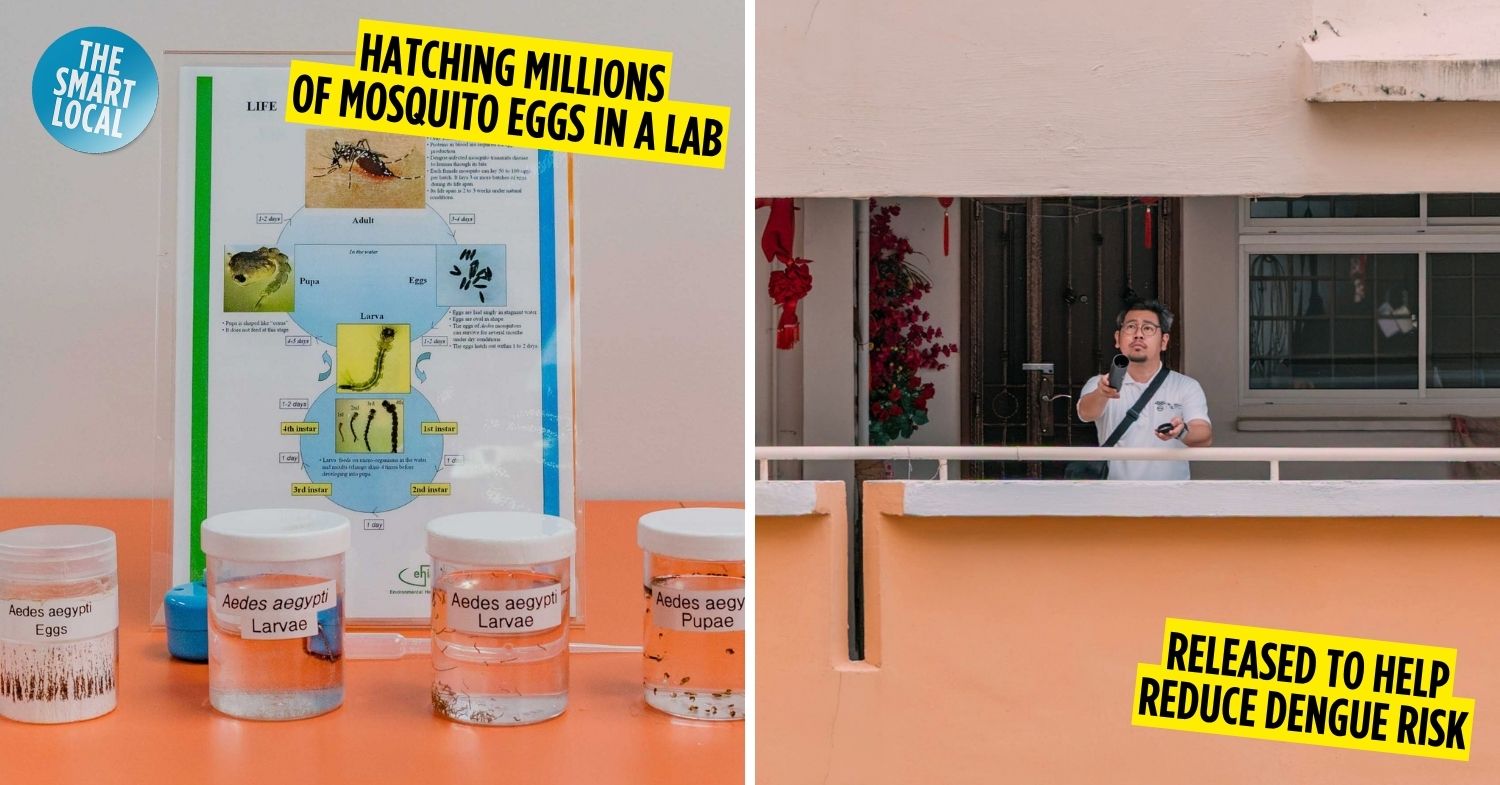

Behind the scenes of Project Wolbachia – Singapore
Singapore recorded a 7-year low in dengue cases in 2025, with about 4,000 cases reported. This was thanks in part to residents doing their part to keep mosquito breeding at bay, alongside mosquito suppression efforts with Project Wolbachia – Singapore.
The results of Project Wolbachia have been encouraging. In Project Wolbachia release areas, Aedes aegypti mosquito populations have fallen by 80–90%, while dengue risk has been reduced by over 70%.
Today, Project Wolbachia has expanded to cover more than half of Singapore’s households, and is the first in the world to use Wolbachia suppression technology to control mosquito population in a dense, high-rise tropical city.
Behind this project is a dedicated team working tirelessly to protect communities from dengue. We had the opportunity to see how it all works:
How does Project Wolbachia actually work?
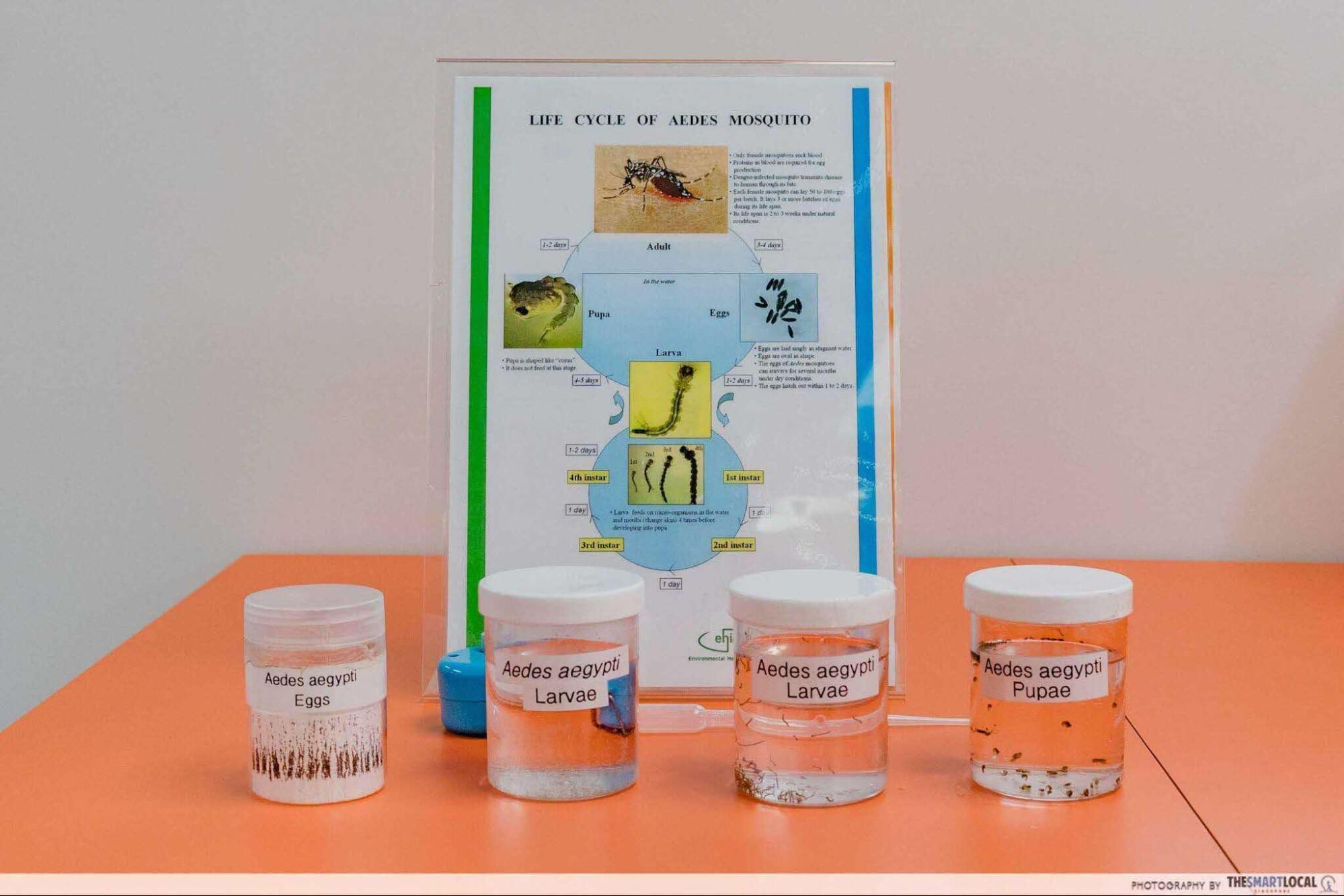 The different life stages of an Aedes aegypti mosquito.
But first, what is Project Wolbachia, and how does it actually work? Wolbachia is a naturally occurring bacterium found in more than 60% of insect species. Launched in 2016, the project breeds male Aedes aegypti mosquitoes carrying this bacterium and releases them into the community.
The Aedes aegypti mosquito is Singapore’s main dengue-spreading vector. So, the magic happens when these Wolbachia-carrying males mate with female Aedes aegypti mosquitoes in the wild – the eggs produced do not hatch.
Up to twice a week, these mosquitoes are released at selected sites, which have been chosen based on factors such as historical dengue risk, and Aedes aegypti mosquito population.
Over time, the population of Aedes aegypti mosquitoes in the area decreases, and in turn, dengue numbers drop too.
ICYMI, male mozzies don’t bite. And no, there is no genetic modification at work.
It all begins with gazillions of mozzie eggs
Each black dot is a mosquito egg.
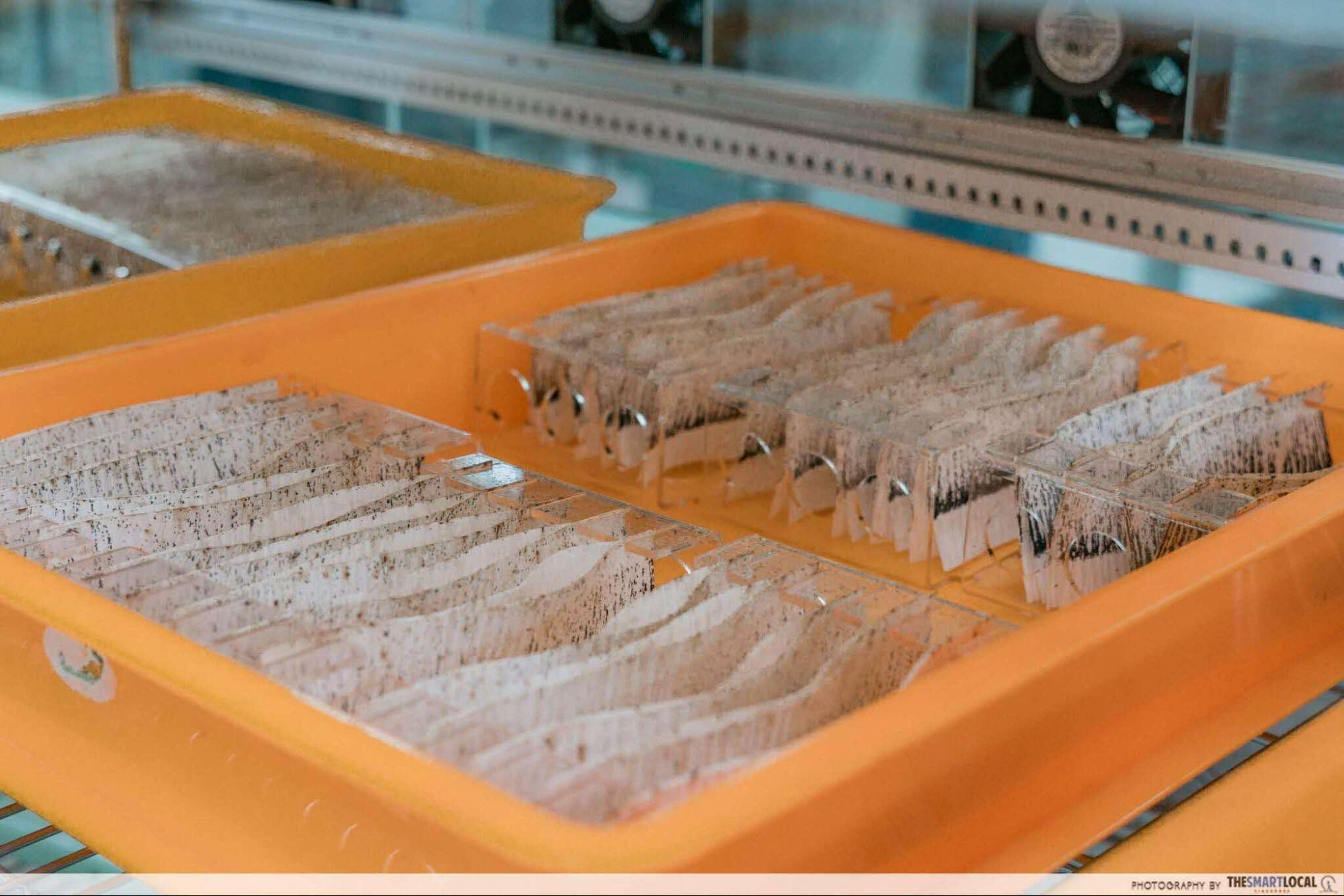
But how does NEA get so many male Wolbachia-carrying Aedes aegypti mosquitoes to constantly release into the wild? At NEA’s mosquito production facility in Ang Mo Kio, Aedes aegypti mosquitoes carrying Wolbachia are bred at scale using in-house designed technologies. Female mosquitoes naturally pass the bacterium to their offspring, enabling a steady supply of mosquitoes for the programme.
Millions upon millions of eggs are on standby at any point in time, waiting to be dipped in water and hatched.
Like a high-tech farm, but for mozzies
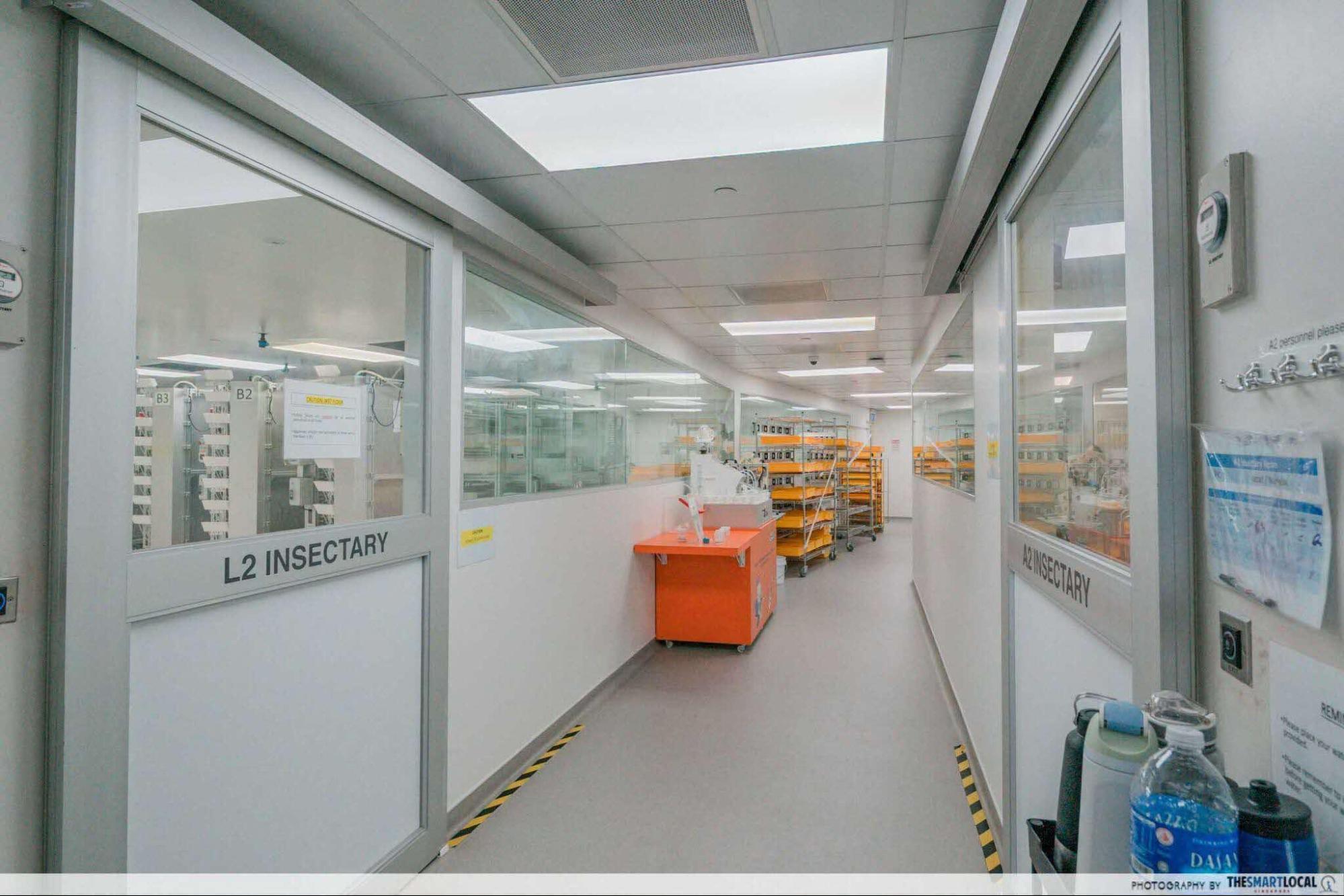
“These mosquitoes are highly spoiled,” we are told, and they honestly are.
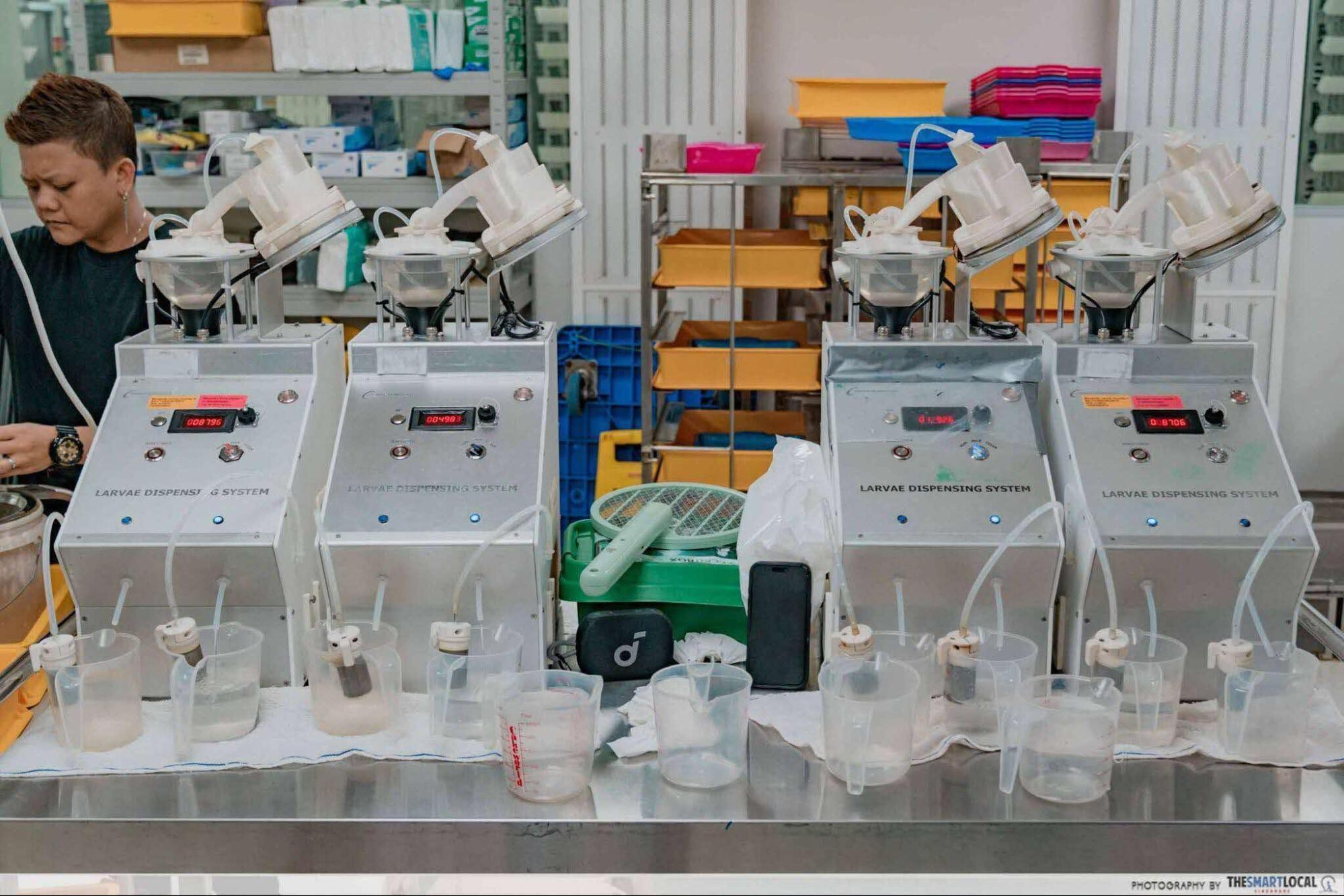
Automated larvae counters.Once the eggs hatch, the larvae are counted and distributed into trays to prevent overcrowding and ensure healthy development. In the early days of Project Wolbachia, this was done manually, with staff each taking more than 3 hours to count about 4,000 larvae per tray
Today, an automated Larvae Counter can process 25,000 larvae per tray in just five minutes, dramatically increasing the programme’s production capacity.
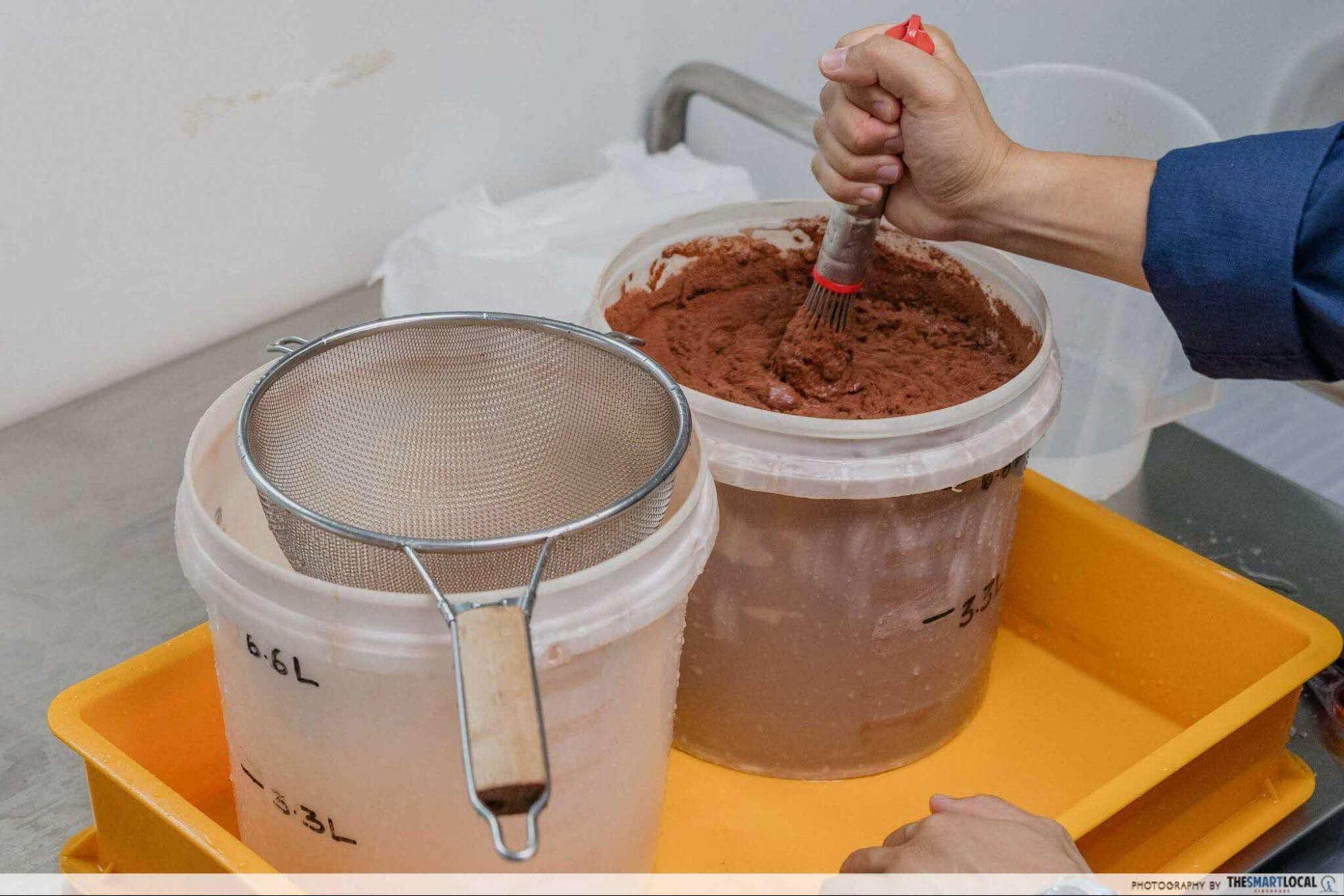
Premium fish food is mixed with water to achieve just the right consistency and poured into automatic feeders that dispense a precise amount of food to the larvae.
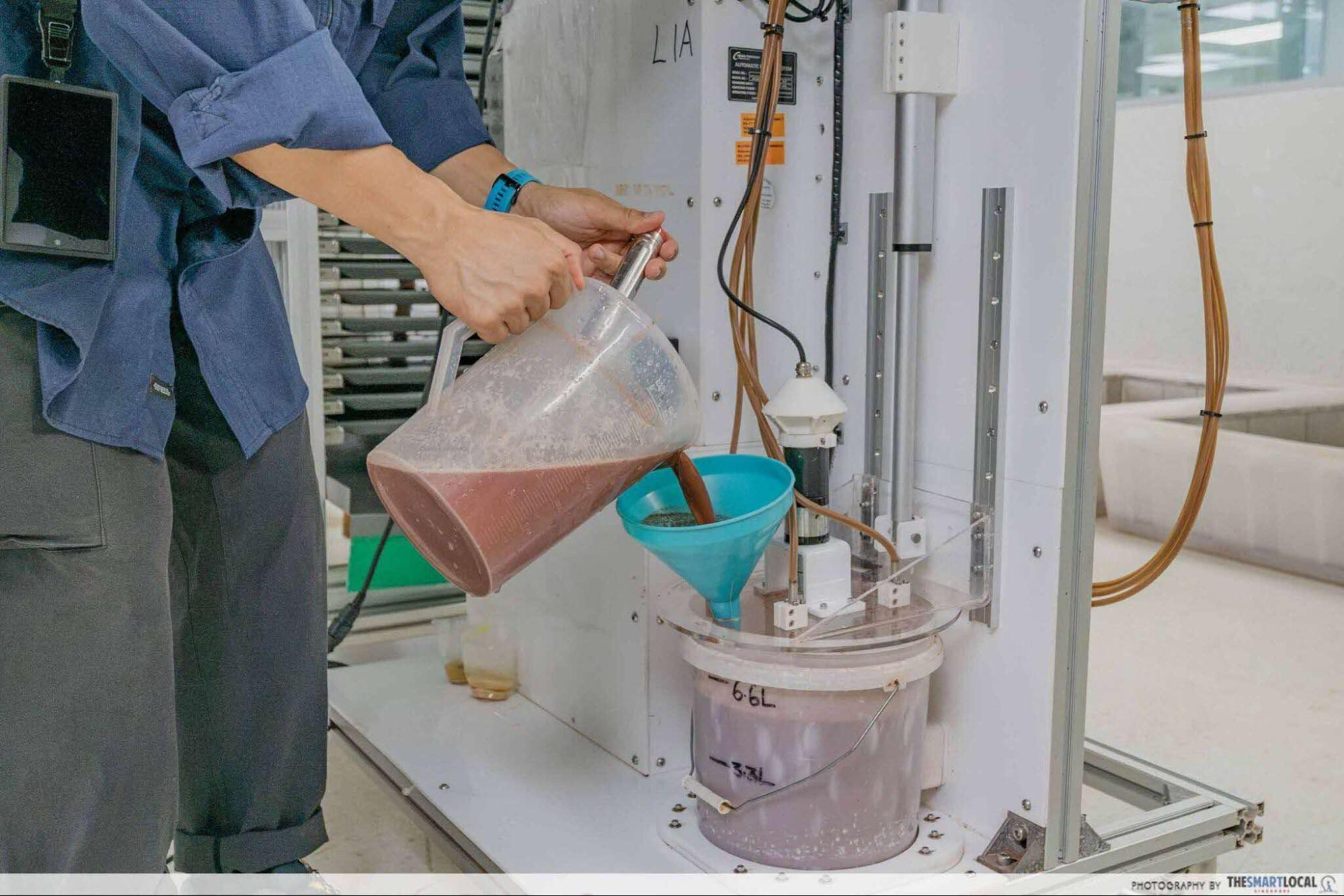 The mixed feed is poured into automatic dispensers.
The conditions are optimised for them – think 28°C rooms, maintained at an ideal 80% humidity, and let’s not forget the premium feed.
Every single step of the process is painstakingly monitored and supervised; nothing is left to chance.
Going through the sorting hat
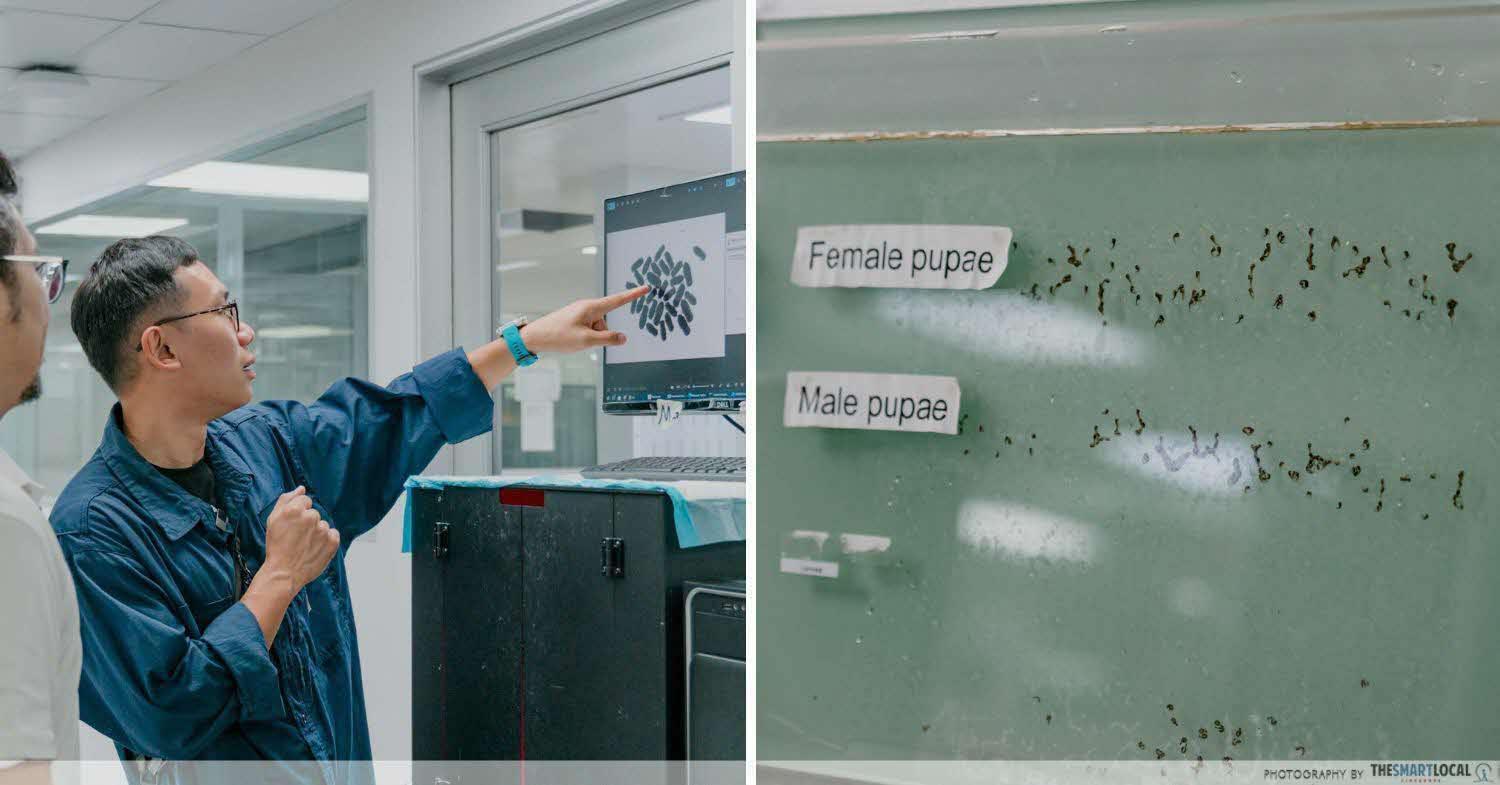
The pupae stage comes after the larvae stage, and this is where sex sorting takes place.
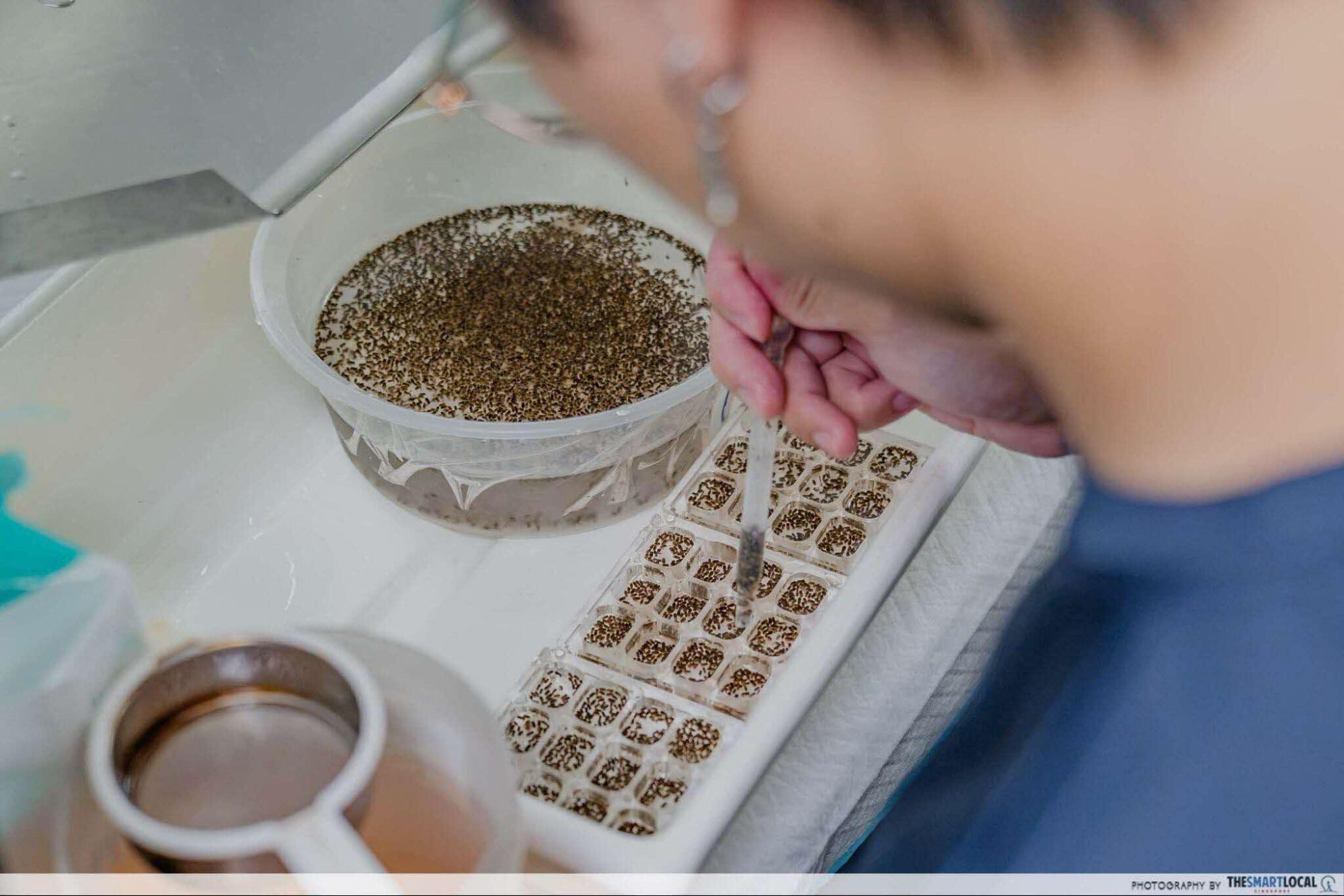 Loading small samples of pupae for the Pupae Size Scanner.
To ensure accurate sex separation, a sample of pupae from each batch is scanned using a Pupae Size Scanner. The separation of male and female pupae is primarily based on their size differences.
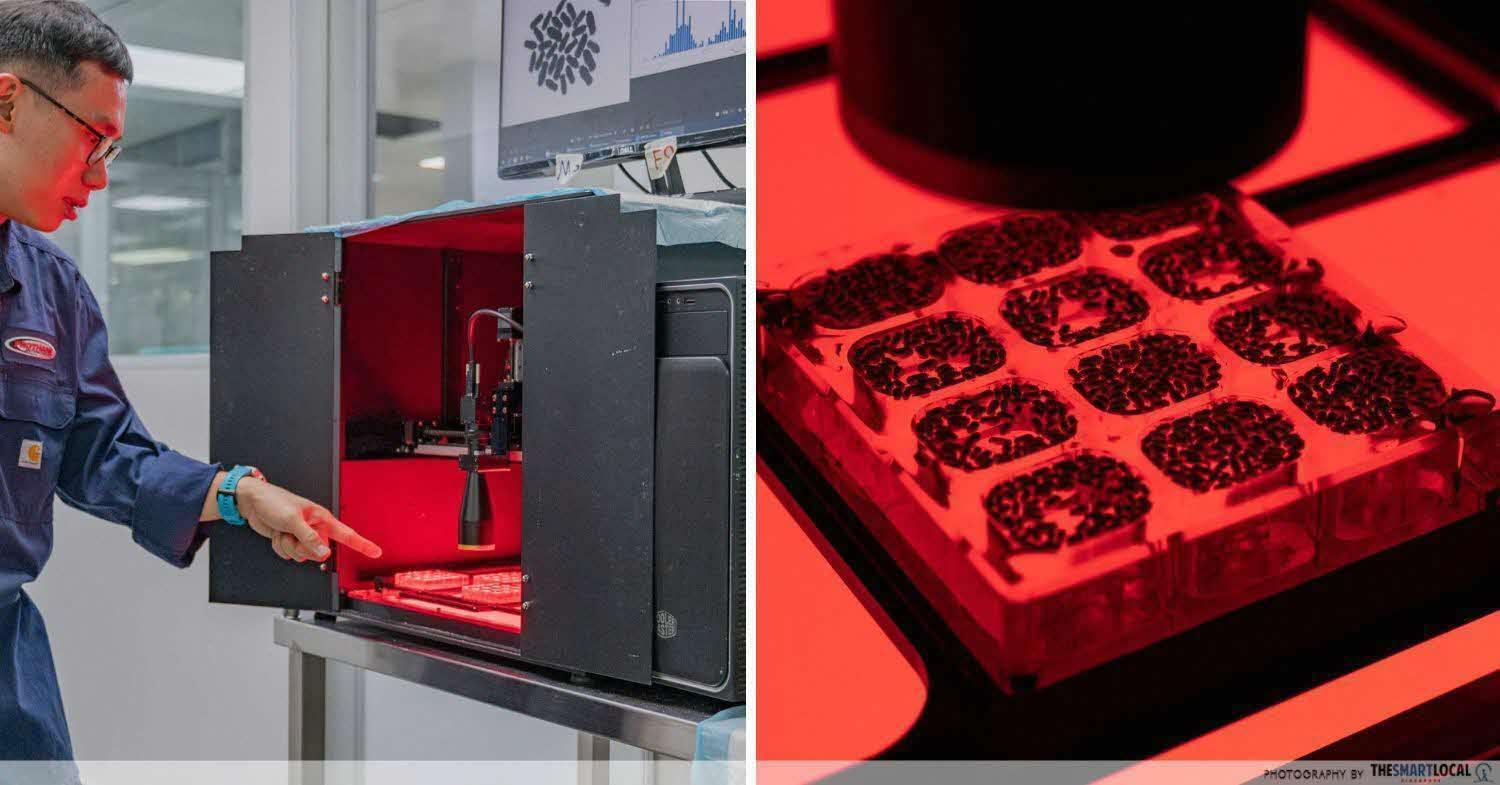 The Pupae Size Scanner measures the size distribution of male and female pupae in each batch.
The system quickly analyses pupal size distribution, allowing the team to select the optimal sieve size and minimise the chance of female pupae slipping through with the males during the sorting process.
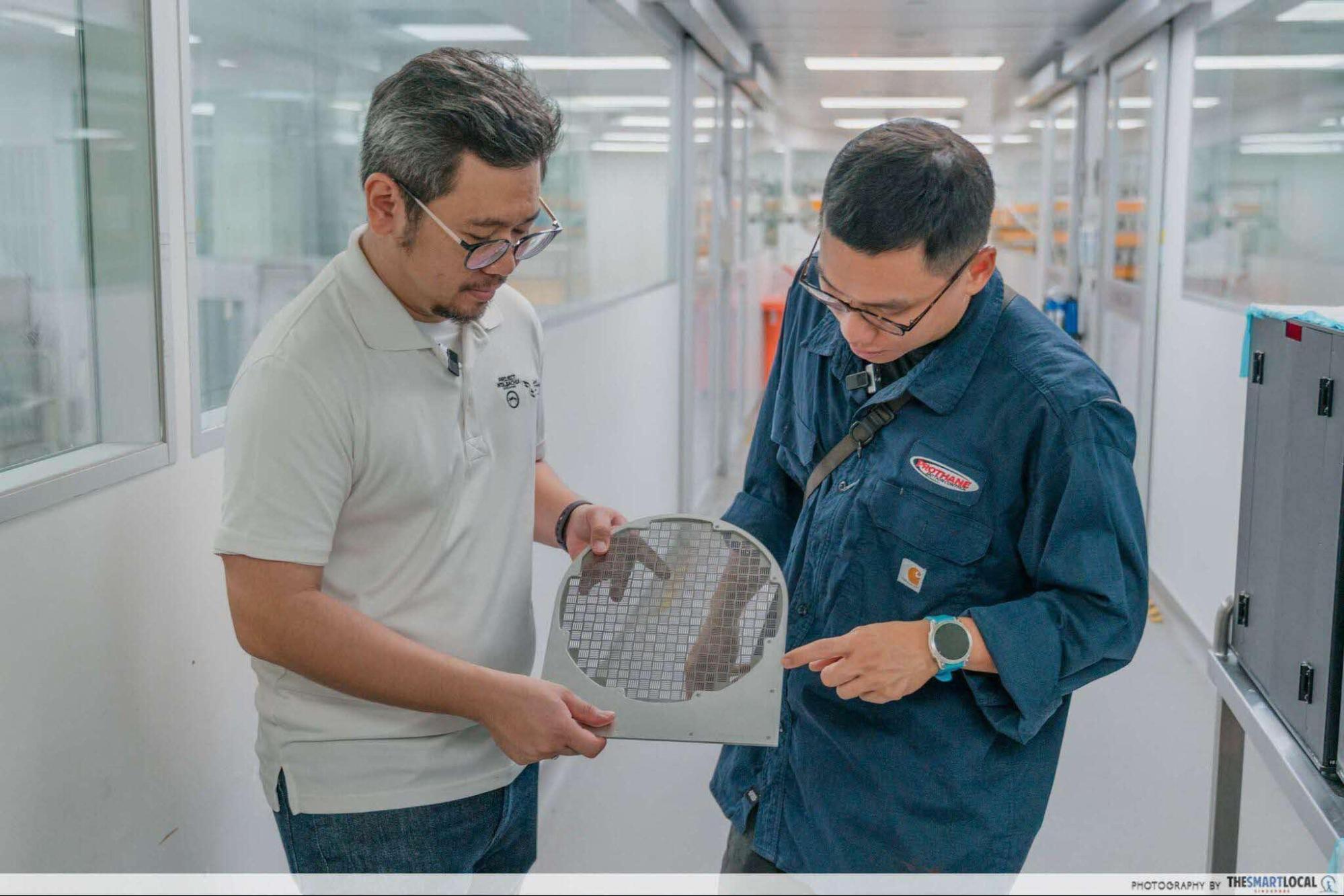
Male pupae are smaller than female ones, so the pupae are sorted through sieves that sift out the smaller males and collect them separately.
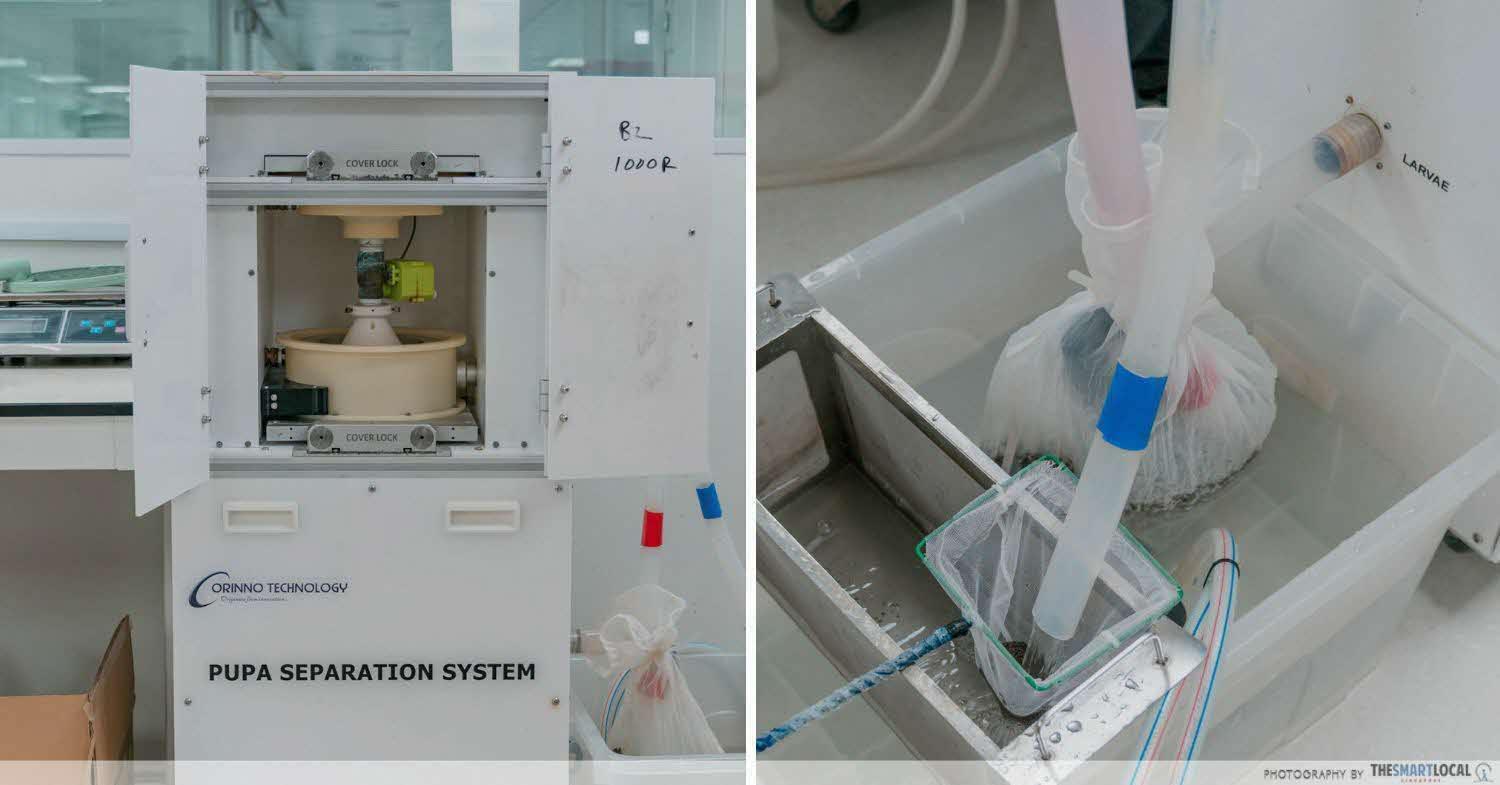 A pupa separation system with changeable sieve sizes is used to separate the male and female pupae.
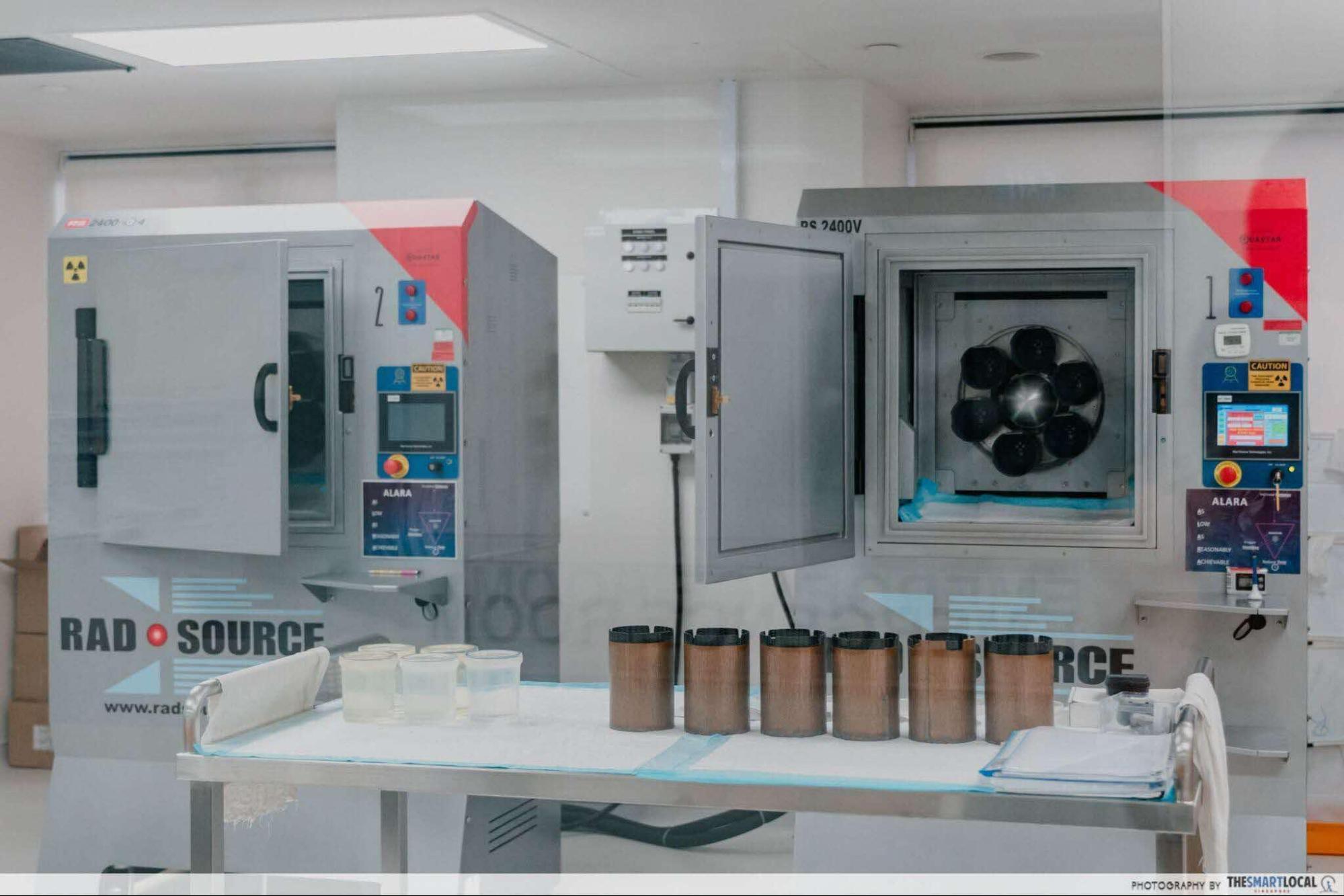
And as an added safeguard, every batch of sorted pupae undergoes low-dose X-ray irradiation to sterilise any females that may have slipped through, before release.
The most pampered mosquitoes you’ll ever meet
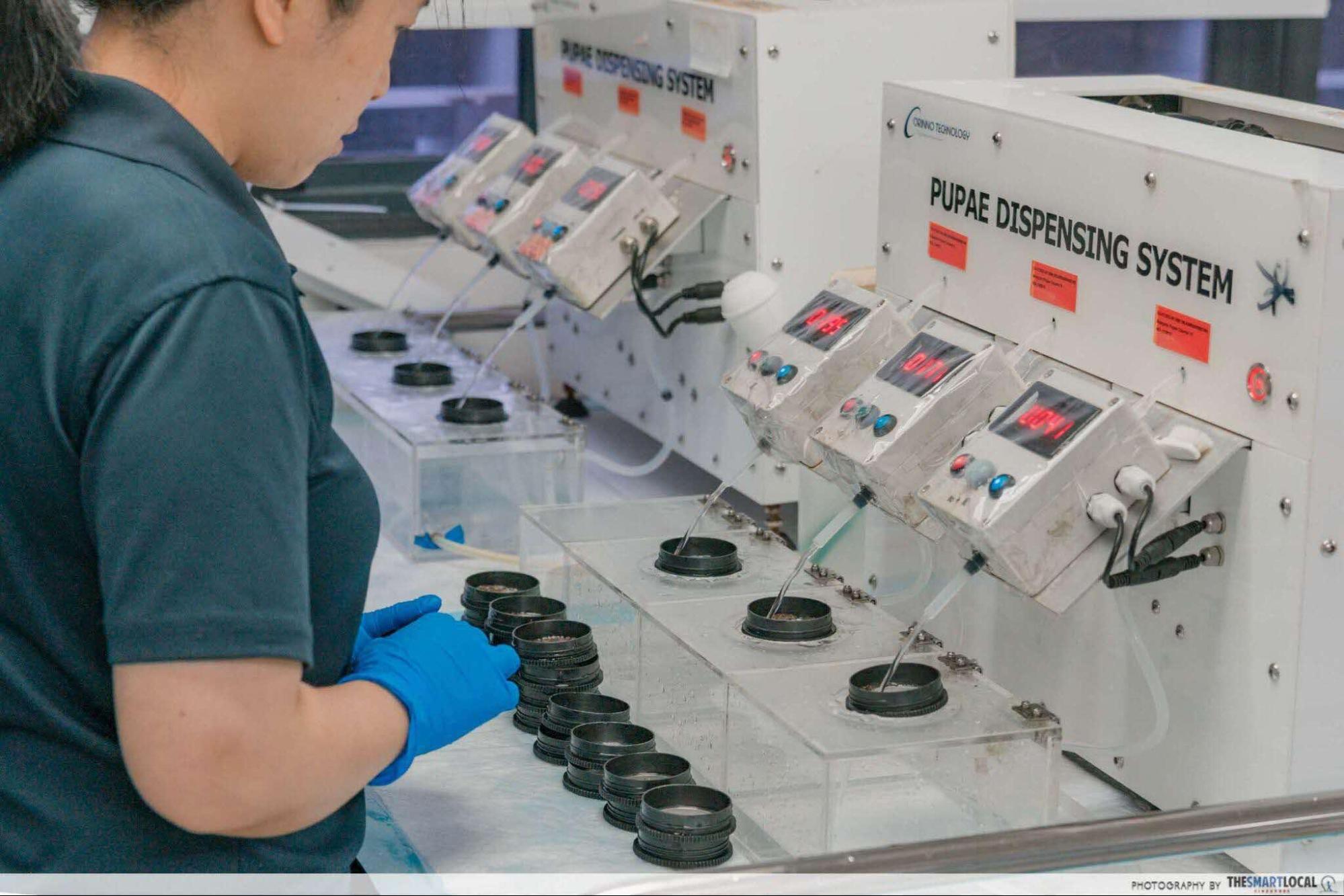
Then, these sorted male Aedes aegypti pupae are counted and dispensed into the lids of mosquito launchers.
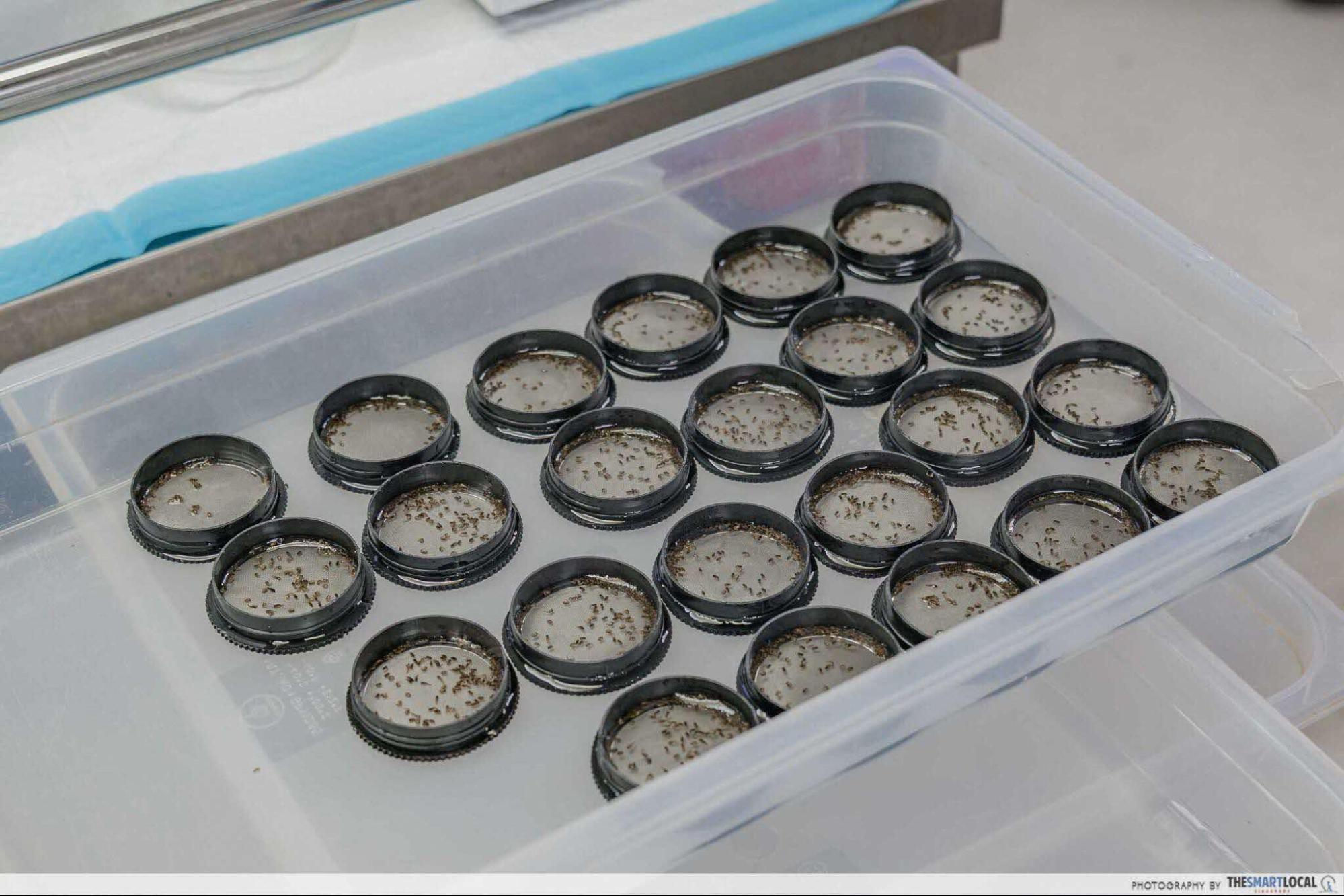
The lids are attached onto the mosquito launchers, where the pupae will emerge into adult male Aedes aegypti mozzies.
Of course, the pampering doesn’t stop at the premium fish food of their baby era.
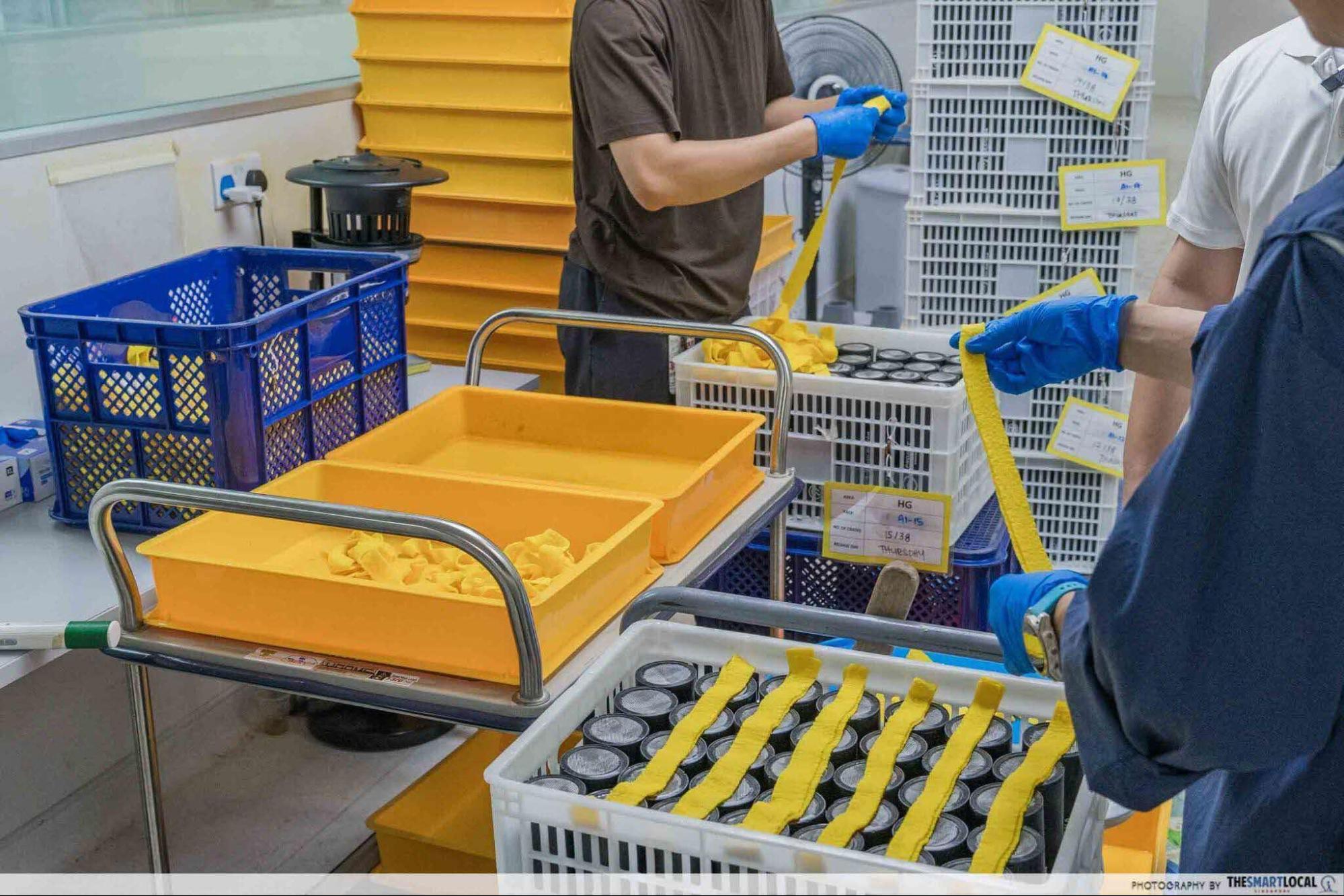
Even before the pupae emerge as adults, sugar solution-soaked strips are laid across the launcher lids – think of it as having a meal ready on the table the moment they wake up. In the wild, male mosquitoes feed on flower nectar, so this is the lab’s version of that. It keeps them fuelled and ready to fly and find a mate once released.
IPPT, mozzie edition
Flight test device.
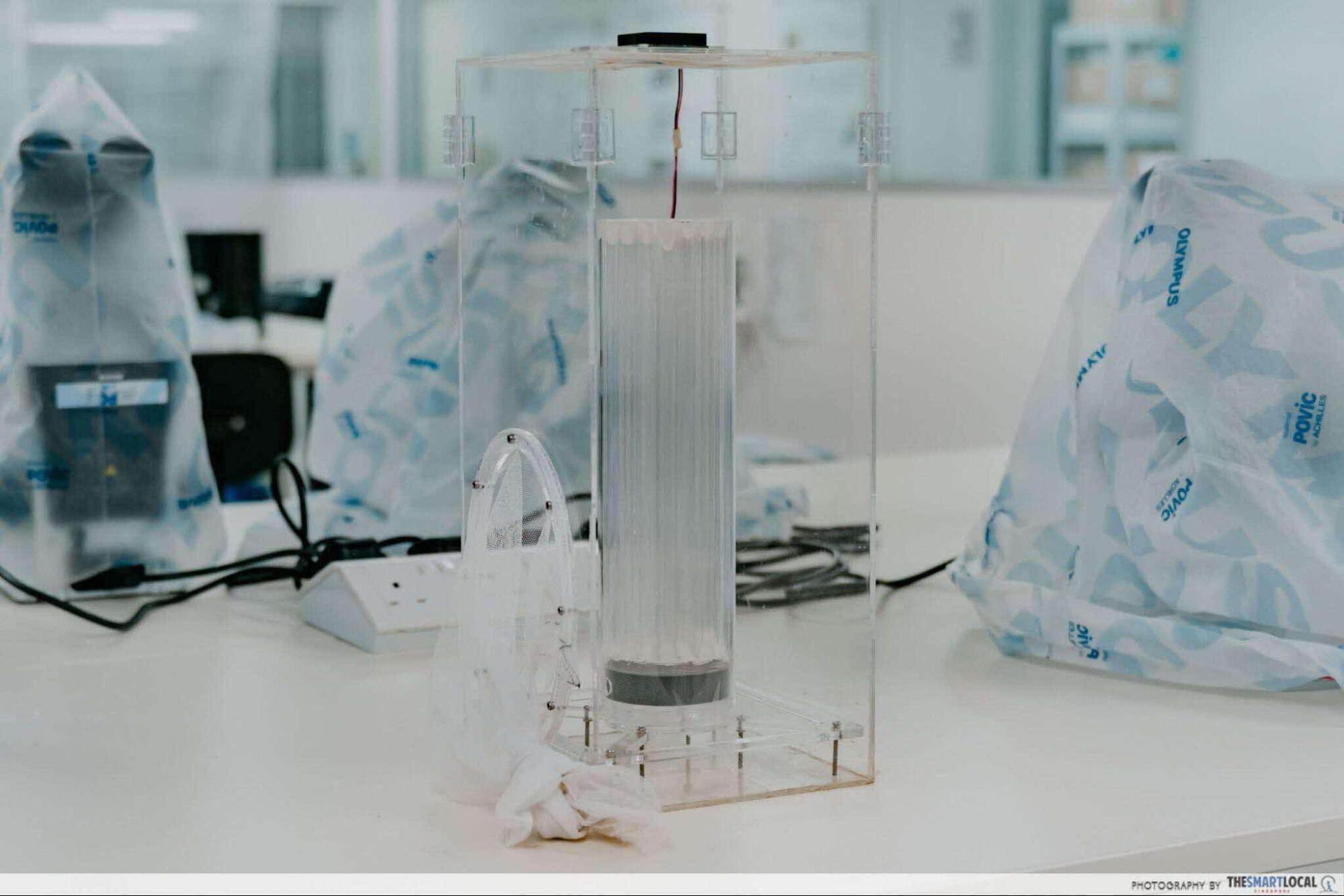
To ensure that the male Wolbachia-Aedes mosquitoes are fit enough to stand against their wild counterparts, they are put through flight tests. After all, nature is all about natural selection, and the survival of the fittest – and these male mosquitoes have to be able to hold their own, or they won’t find any mates.
So, the male mosquitoes are put into a flight test device, which tests their ability to take off and escape vertically. If they aren’t strong enough for this, then the upstream factors like feed and growing conditions, will have to be re-evaluated.
Up to 2 batches released weekly
NEA officers release the mosquitoes at ground, middle, and top levels.
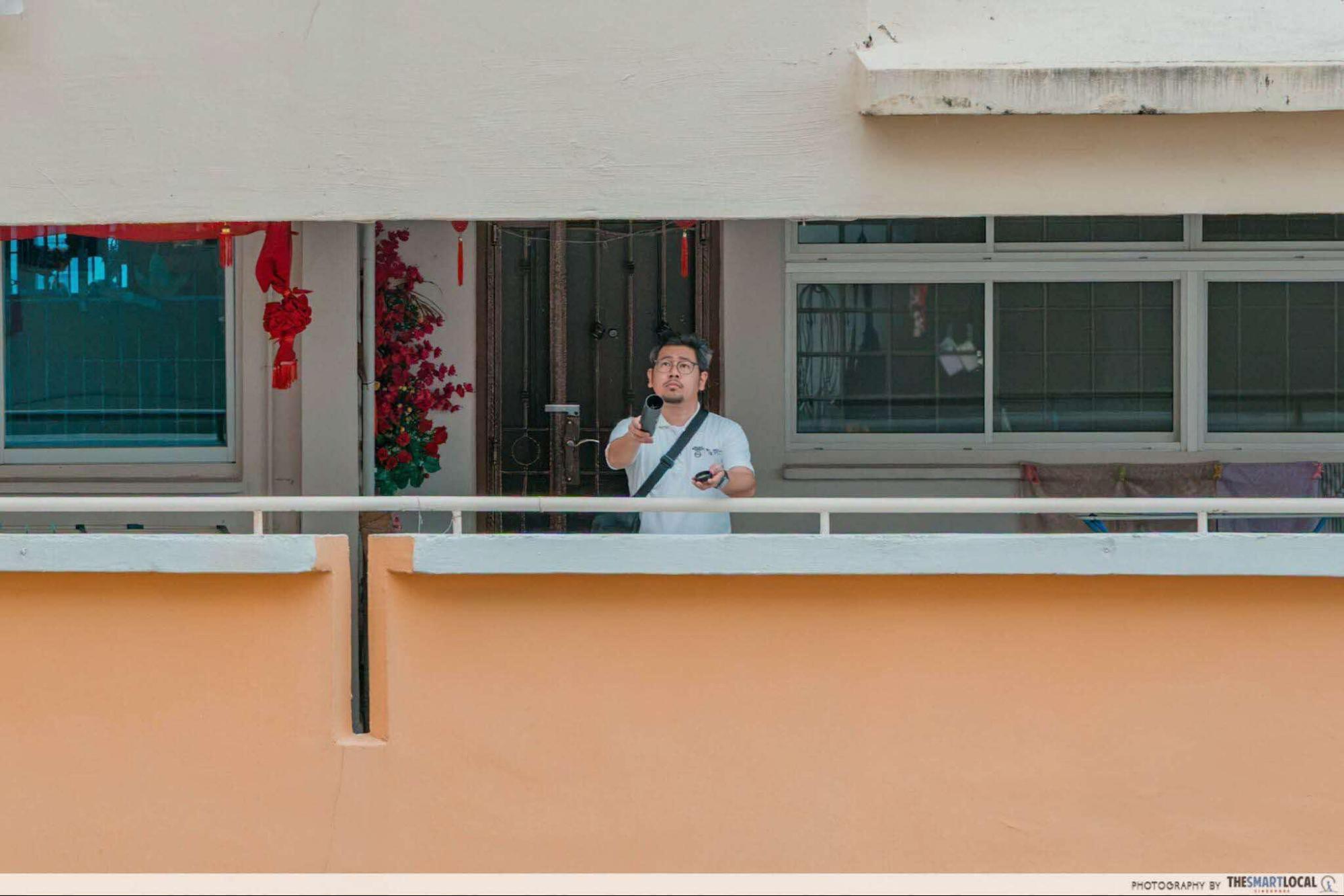
Thousands of the black canisters, AKA mosquito launchers, are prepared in the facility, ready for NEA officers to dispatch at release sites up to twice a week. Release frequency is carefully calibrated based on local mosquito population data, to maximise the chances of mating with wild female mosquitoes.
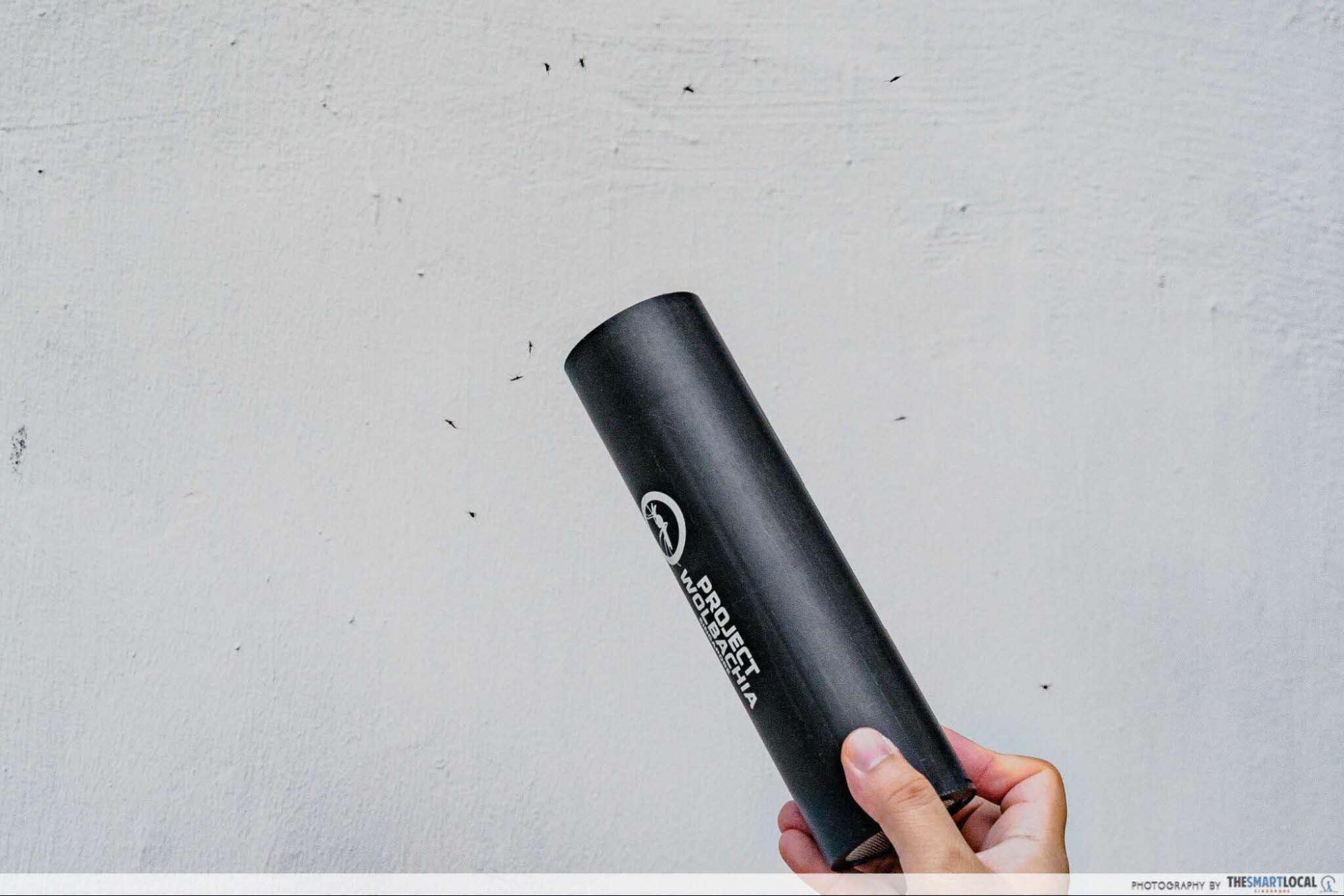 Male Wolbachia-Aedes mosquitoes zipping out of their launchers.
You’ll see the team releasing male Wolbachia-Aedes mosquitoes not just at the ground level, but also at different floors of residential blocks, helping them disperse better and find the wild female mosquitoes.
The proof is in the Gravitrap
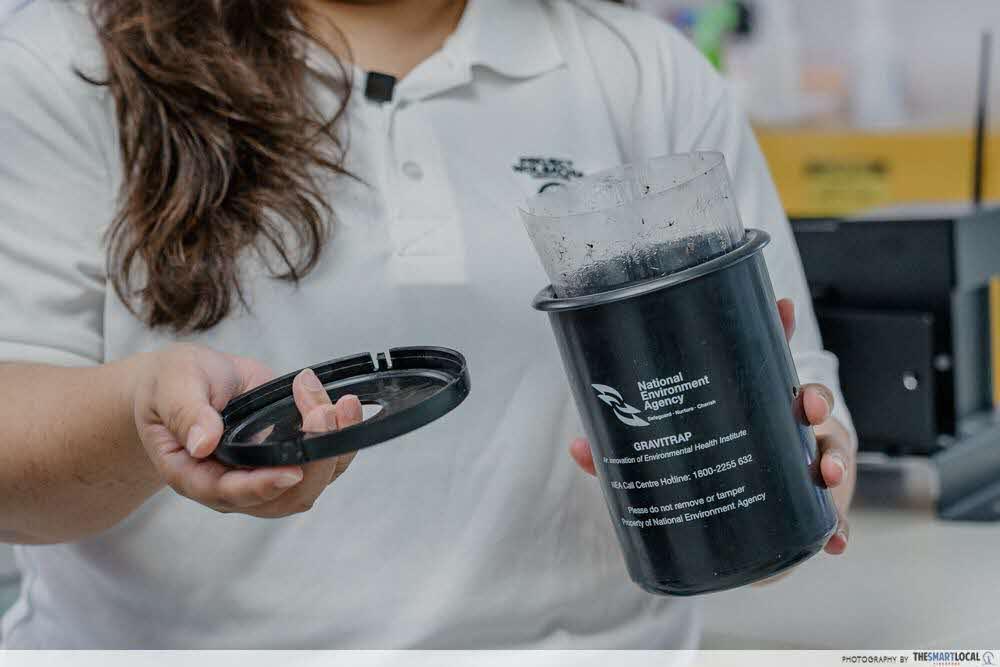
Another black canister that you’re likely to see in neighbourhoods is what’s known as a Gravitrap, which helps NEA to monitor the mosquito numbers all over Singapore. Lined with a sticky adhesive sheet, it’s baited with a solution that attracts female Aedes aegypti mosquitoes looking for a place to lay eggs, and traps them when they fly in.
Even if mosquitoes lay eggs in the Gravitrap, an internal wire mesh prevents them from escaping. As Project Wolbachia reduces the local mosquito population, fewer mosquitoes are subsequently captured in the Gravitrap, providing an indication of the programme’s success.
Dengue risk reduced by over 70%

Besides shrinking the mosquito population, there is, undoubtedly, the question of whether dengue cases see a corresponding drop. A local study by NEA, published in the New England Journal of Medicine earlier this year, showed that overall protective efficacy in Wolbachia-release sites against dengue was an impressive 71% to 72%.
Multiple studies have shown up to 90% reduction in the Aedes aegypti mosquito population at release sites. According to NEA, it’s not only Wolbachia sites that reap the benefits – residents living in adjacent areas are 45% less likely to contract dengue too.
This month, Project Wolbachia expanded to Ang Mo Kio, bringing its total coverage to more than 840,000 households, or over 50% of all households in Singapore, covering the majority of areas at risk of large dengue outbreaks. This expansion comes as the programme marks its 10th anniversary – a decade of science, innovation and community partnership in Singapore’s fight against dengue.
Doing our part to help Project Wolbachia
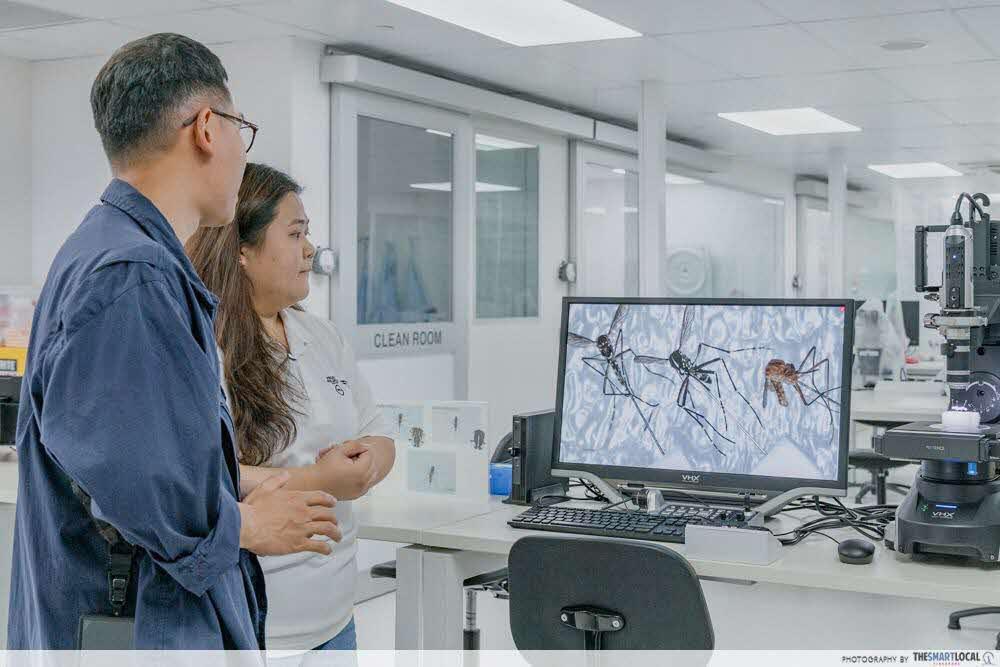 Understanding the difference in the morphology of male and female Aedes mosquitoes, and the common Culex mozzie that is mainly active at night.
It is very important to note, however, that Project Wolbachia alone is insufficient to control the spread of dengue. It is a complementary measure amongst a wider umbrella of prevention methods, where we can play a part too.
We must remember that Project Wolbachia only targets Aedes aegypti mosquitoes, which are the carriers of dengue, chikungunya, and Zika virus in Singapore. It does not target other biting mosquitoes, which also breed in stagnant water. Thus, it is crucial that we continue to stay vigilant, and remove any stagnant water from the equation for overall mosquito control.
Even small steps can make a big difference. Practise the B-L-O-C-K steps regularly:
- Break up hardened soil
- Lift and empty flowerpot plates
- Overturn pails and wipe their rims
- Change water in vases
- Keep roof gutters clear and place BTI insecticide inside
How Project Wolbachia helps fight dengue in Singapore
How often have you spotted NEA officers out in the field, collecting and replacing the Gravitraps, or releasing the male Wolbachia-Aedes mosquitoes into the wild? Chances are, not very often. Much of this work happens quietly in the background, away from public view. For most of us, our most familiar reminders of Singapore’s dengue control efforts may be the campaign messages at MRT stations, dengue messages in neighbourhood lifts, or flyers shared at community events, encouraging us to practise the B-L-O-C-K steps.
Behind the scenes, however, the story runs so much deeper, involving everything from entomology to microbiology, engineering, automation, and gazillions of tiny mosquito eggs.
And when the human part of the tale has run its course, it’s the male Wolbachia–Aedes mosquitoes that have to do the heavy lifting. They’re the ones needing to pass their flight tests, make it out of the launcher, hunt down and be fit enough to beat their wild-born bros in winning over the ladies – all so the line ends there.
So if you do happen to see one of NEA’s officers with their mozzie launchers, fret not. They’re not contributing to your collection of mosquito bites. If anything, they’re sending in the cavalry.
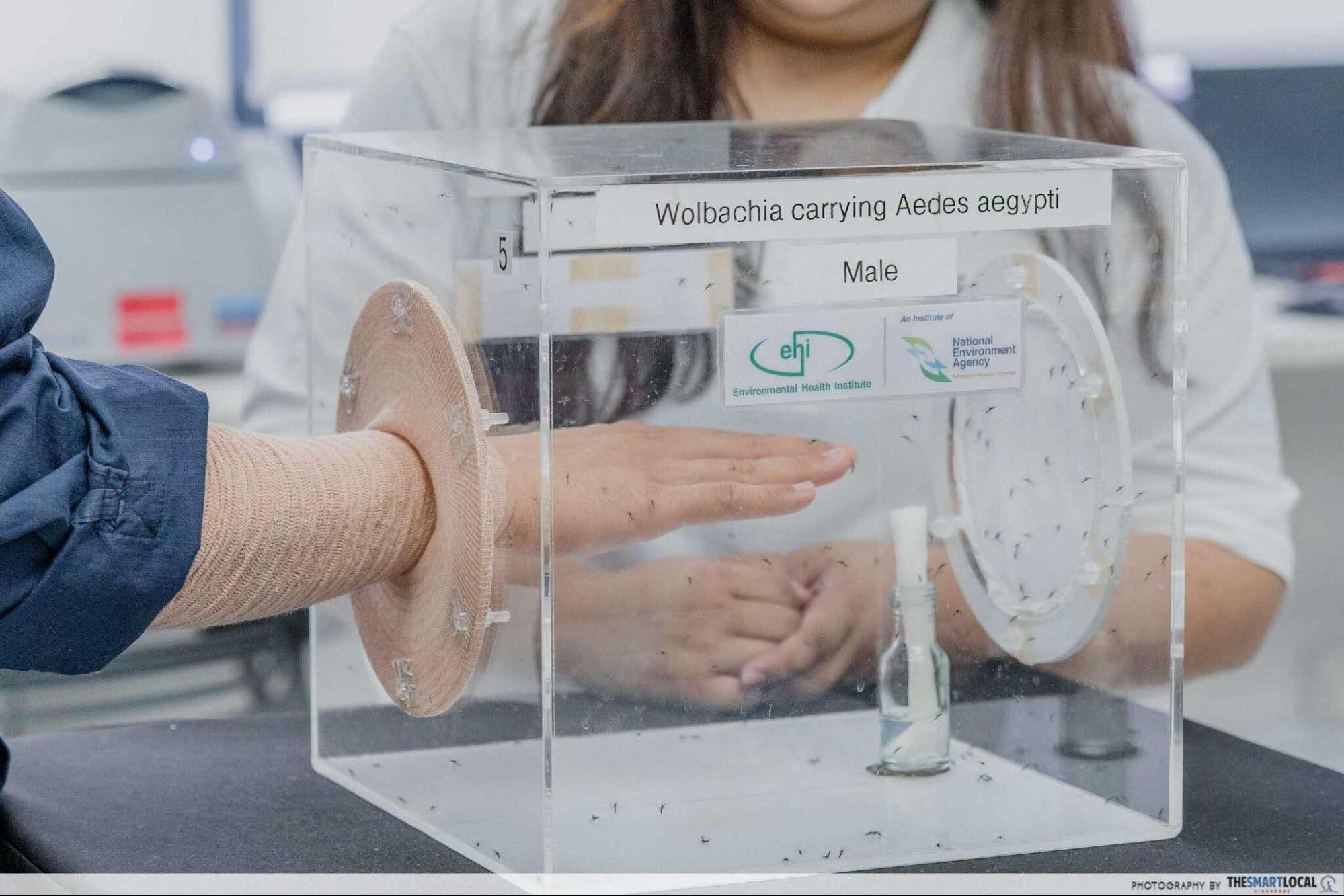 Put your hand into a case of male Wolbachia-Aedes mosquitoes at the Project Wolbachia 10th Anniversary Carnival.
Find out even more about Project Wolbachia at their 10th Anniversary Carnival, happening on 31st October 2026 from 9.30am to 3pm at the Central Plaza of Our Tampines Hub. There’ll be interactive exhibits and hands-on activities, such as an AI-powered photo booth where you can transform yourself into a mosquito-fighting hero, and learn how to identify different mozzie species.
There’ll be food stalls, and kids’ activities too, so bookmark that date!
Find out more about Project Wolbachia
This post was brought to you by the National Environment Agency (NEA).
Photography by: Shirlynn Koh