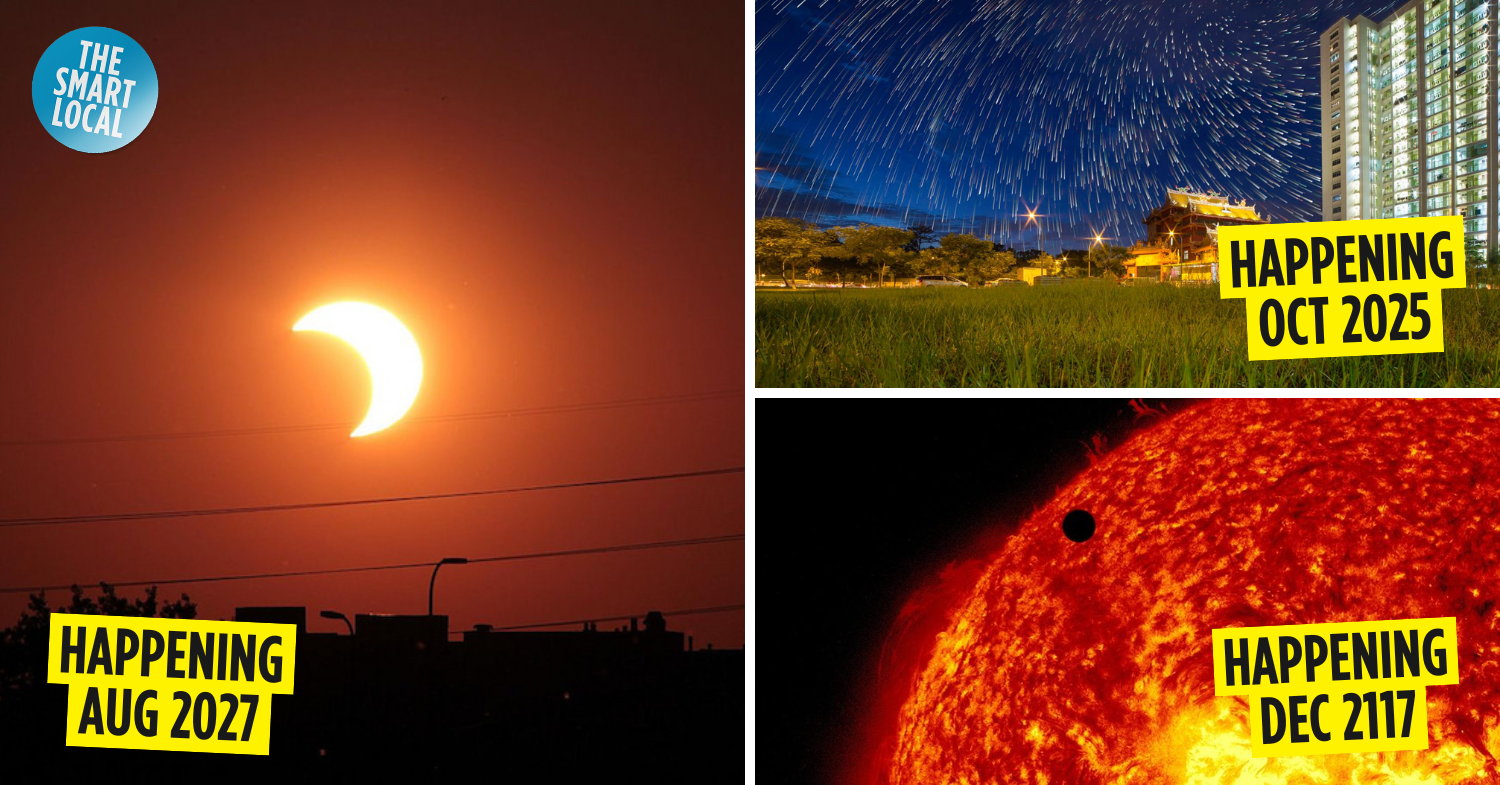

Astronomical events observable from Singapore
Singapore might be one of the most well-developed metropolises in the modern world, but when it comes to pristine natural landscapes, other countries have us beat. Although we don’t quite have unsullied greenery or soaring mountains, there is one thing we share in common with the rest of the Earth – the sky.
Fortunately, we’re just as privy to the happenings way up above in our planet’s atmosphere, in the expanse of outer space. As such, here are some astronomical events that you can observe from Singapore. You don’t even need to have fancy equipment to appreciate most of them as they’re visible from the ground; just head outside, tilt your head up, and pray for good weather.
What equipment do I need to observe astronomical events?
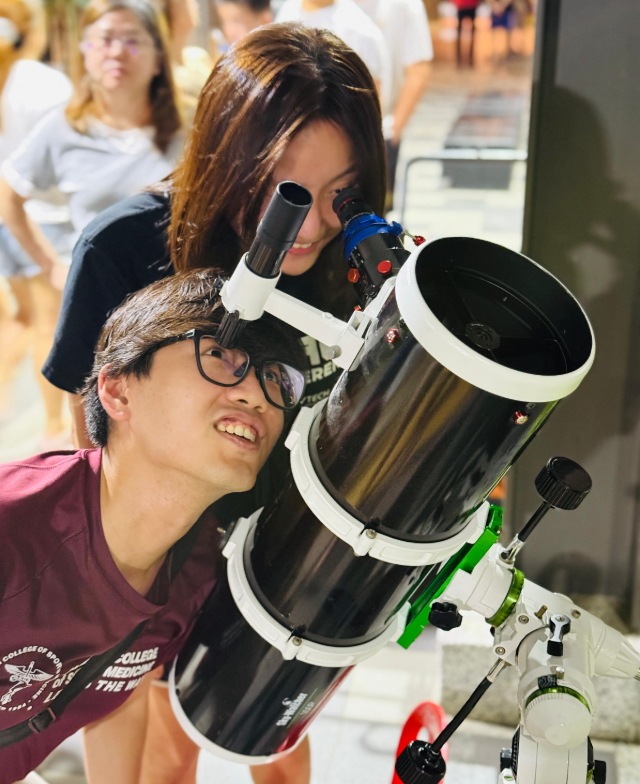
Image credit: Stargazing Singapore
You won’t need any additional equipment other than a good pair of peepers when you’d like to observe most astronomical events from Singapore. These events happen on a large enough scale that a majority of them are visible from the ground with the naked eye, but if you’d like the best viewing experience, here’s a packing list to bring on your next stargazing session:
- Binoculars or a telescope to view celestial bodies in greater detail
- Astronomy app to identify celestial bodies in the night sky like Sky Map (Google Play) or Classic Sky Map 2 (App Store)
- Red light lamp or torchlight, so your eyes’ night vision is not disrupted
- Solar eclipse glasses or solar film sheets to protect your eyes from the sun when viewing events that involve the sun like solar eclipses
- Outdoor gear like water bottles, comfortable outdoor attire, portable fans, insect repellent
Best places to view astronomical events from Singapore
Good weather is probably the most important factor when it comes to viewing astronomical events from Singapore, but unfortunately, we’ll have to leave that up to fate. What we can control, however, is the location at which we decide to hunker down to point our gaze towards the cosmos.

When it comes to picking stargazing spots in Singapore, you’ll want to choose a large, unobstructed open-air area that has minimal light pollution. Examples of such places include parks, beaches, multi-storey carparks, and sky gardens. Here are some of the best spots on the Little Red Dot that the stargazing community in Singapore recommends:
| Place | Region |
| Yishun Dam | North |
| Upper Seletar Reservoir | |
| Changi Beach | East |
| Pasir Ris Park | |
| Bishan-Ang Mo Kio Park | Central |
| Marina Barrage | |
| West Coast Park | West |
| Jurong Lake Gardens |
In case you didn’t know, there are observatories in Singapore that are open to the public for all to visit, for an unfettered view of the stars above.
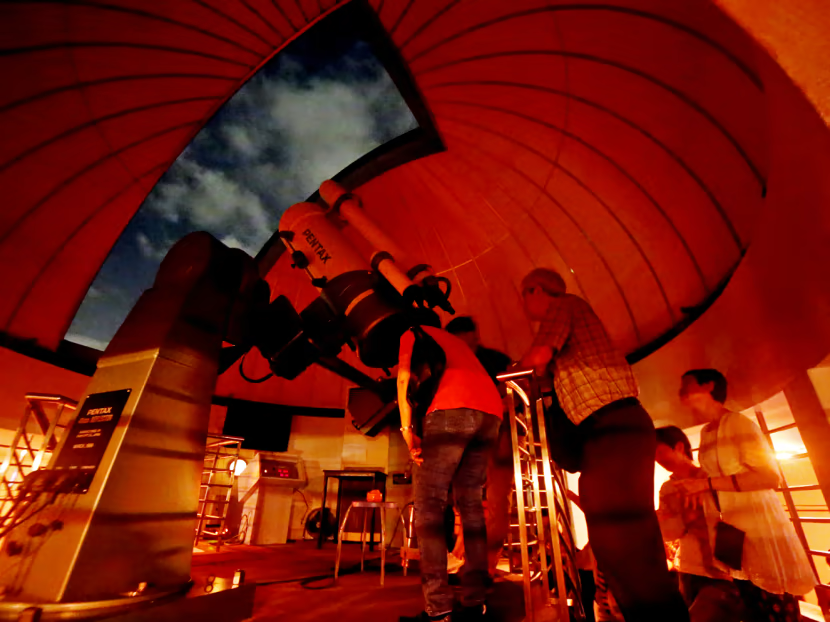
Image credit: Science Centre Singapore
The Singapore Science Centre Observatory is one of them, and their Stargazing and Digital Planetarium Live Show ($17/pax) is perfect for kids too. This guided tour will simulate the night sky within the facility’s immersive Omni Theatre to learn more about the stars, and you’ll also get a closer look at them through the lens of a telescope at the observatory.
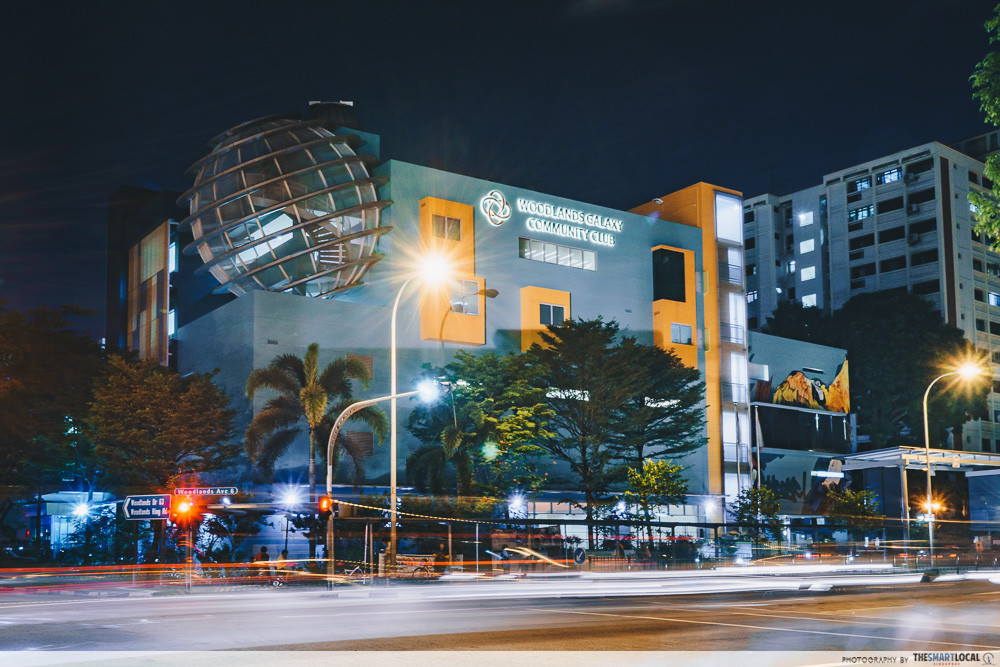
Another observatory you can stop by is the one at Woodlands Galaxy CC. Just like Science Centre Singapore, it’s equipped with state-of-the-art telescopes, and the best part is, entry to the observatory costs just $1/pax. You can buy your tickets from the service counter on Level 1, or purchase them via the onePA website.
1. Supermoon
Next happening on: 7th October 2025 (Harvest Moon)
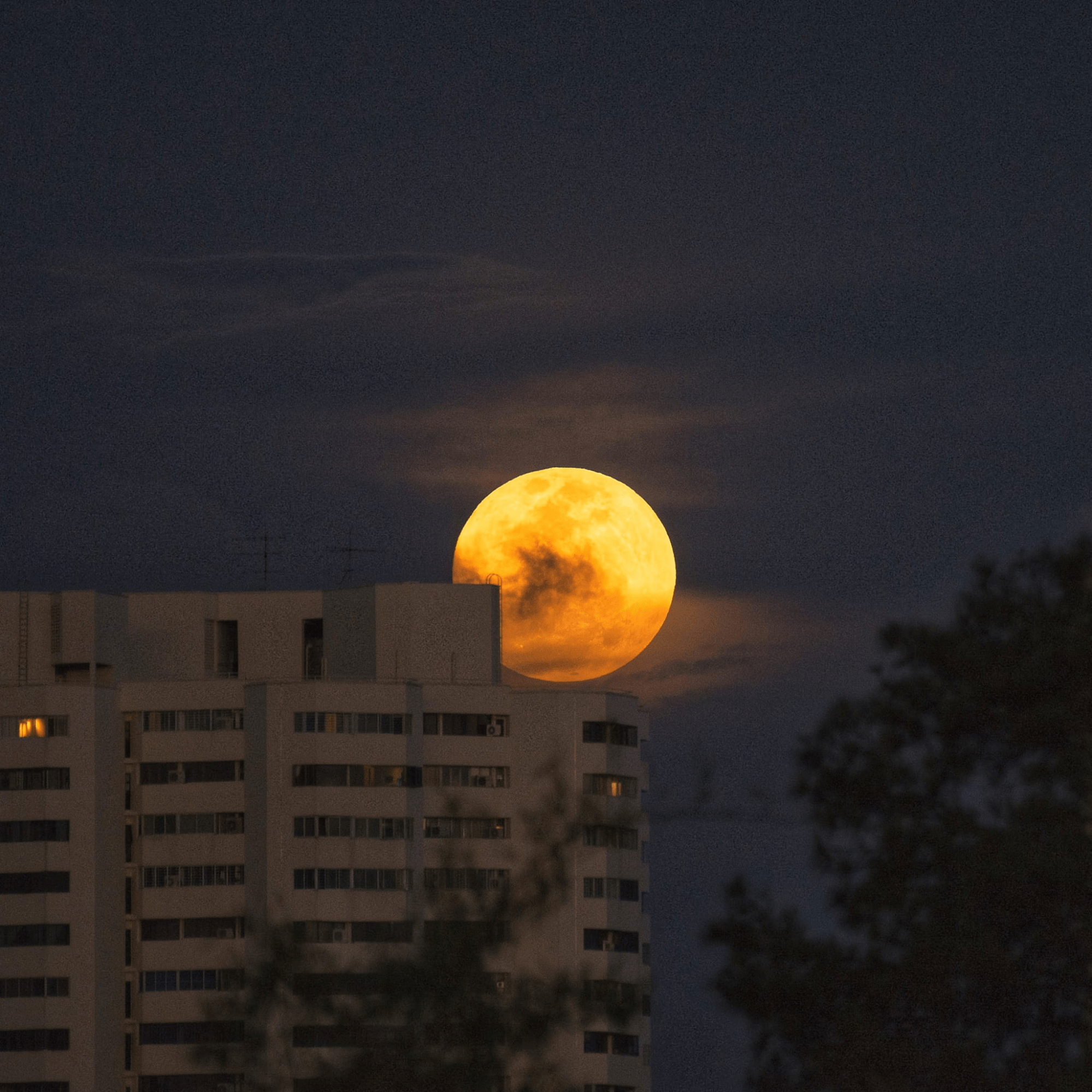 Image credit: Shaji Eapen via Facebook
Not affiliated with the Kyroptonite-fearing superhero in any way, a supermoon occurs when the Moon is the closest it can be to Earth during its orbit while it is a full Moon. As a result, a supermoon can appear up to 30% brighter and 14% larger when compared to the faintest moon of the year.
Although it’s not as visually stunning as some of the other entries on this list – after all, it’s essentially just a Pro Max version of the Moon that we see every night – it is an uncommon occurrence, happening only around 3 to 4 times a year. The next one’s due to rise on 7th October 2025; just in time to make spooky szn a tad less harrowing with its boosted supply of moonlight.
2. Lunar eclipse
Next happening on: 3rd March 2026 (total lunar eclipse)
Having recently made its rounds on social media, lunar eclipses are a little more elusive than supermoons, happening on average 3 times a year. A lunar eclipse takes place when the Earth passes between the Sun and the Moon, causing the sunlight to cast Earth’s shadow over the Moon.
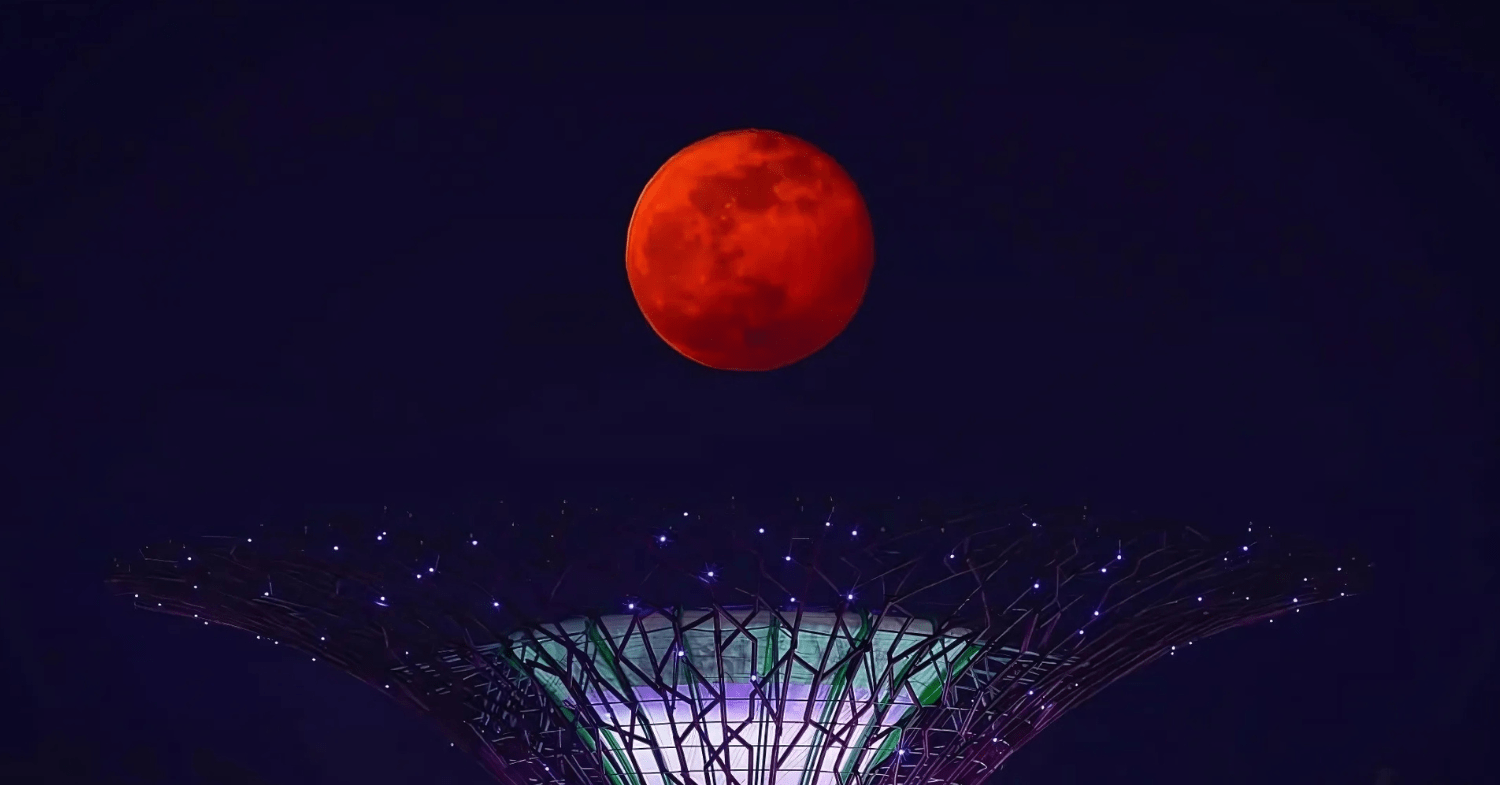 Image credit: @sivamballa via Instagram
There are 3 types of lunar eclipses, but the most noticeable ones are partial and total lunar eclipses. Like its name suggests, a partial lunar eclipse will look like a dark chunk of the Moon has been taken out of it, while a total lunar eclipse will bathe the entire Moon in a deep hue of red or orange, which is sometimes called a blood moon.
The last total lunar eclipse was observable from Singapore earlier this month, and if you didn’t manage to catch it, you’ve got to wait a couple more months to do so as the next one’s taking place on 3rd March 2026.
3. Solar eclipse
Next happening on: 2nd Aug 2027 (partial solar eclipse)
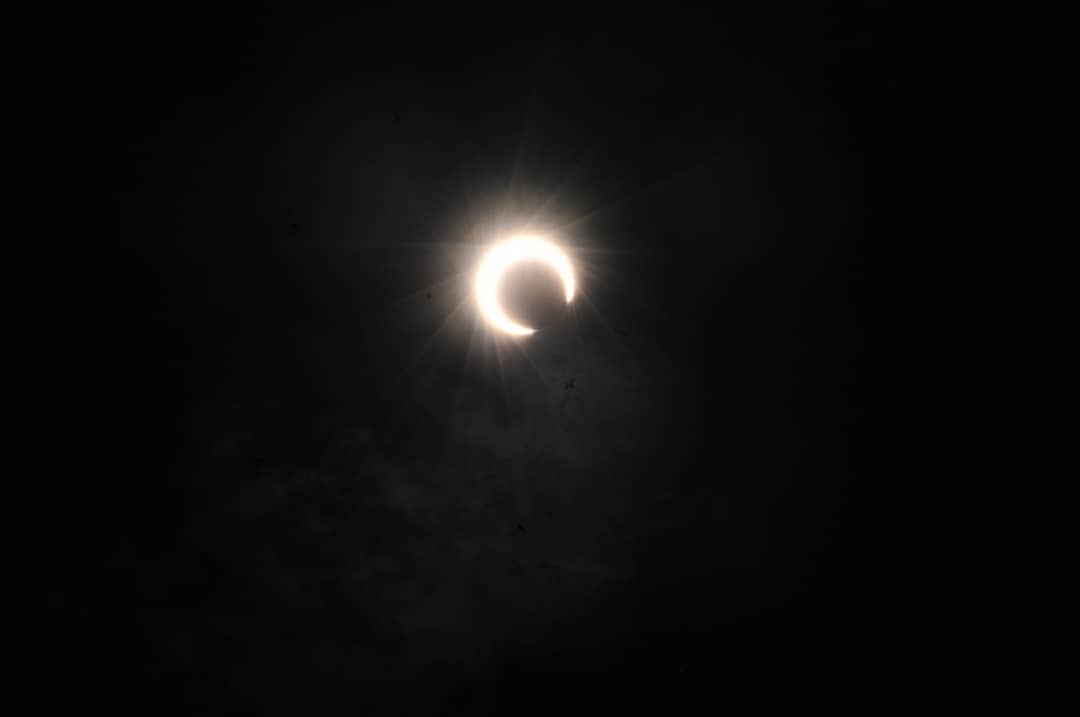
An annular solar eclipse, a type of partial solar eclipse, observed over Singapore in 2019.
Image credit: @kurokola2 via Instagram
On the flip side, solar eclipses are a thing too, but unlike their nighttime counterparts, total solar eclipses that are observable from Singapore are pretty dang rare – we’re talking once every 375 years-kind of rare.
A solar eclipse occurs when the Moon passes between the Earth and Sun, and how perfectly these celestial bodies line up with one another will determine the type of solar eclipse we can view from Earth. There are 4 types in total, but to keep things brief, we’re going to go over the 2 most common ones, partial and total.
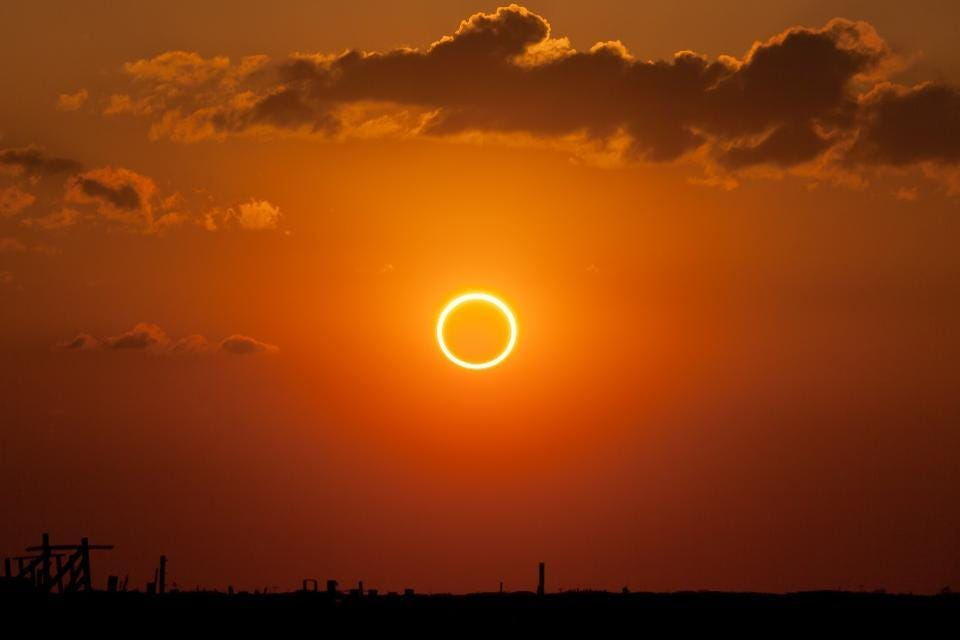
A total solar eclipse lasts for just a few minutes.
Image credit: Medium
A partial solar eclipse happens when the Sun, Moon, and Earth aren’t exactly in line during a solar eclipse, causing the Moon to only partially obscure the Sun, resulting in a crescent-shaped Sun hanging in the sky. When they fall in place perfectly, a total solar eclipse takes place, where the Moon completely blocks out the face of the sun, leaving only a “ring of fire” encircling a blacked-out sun.
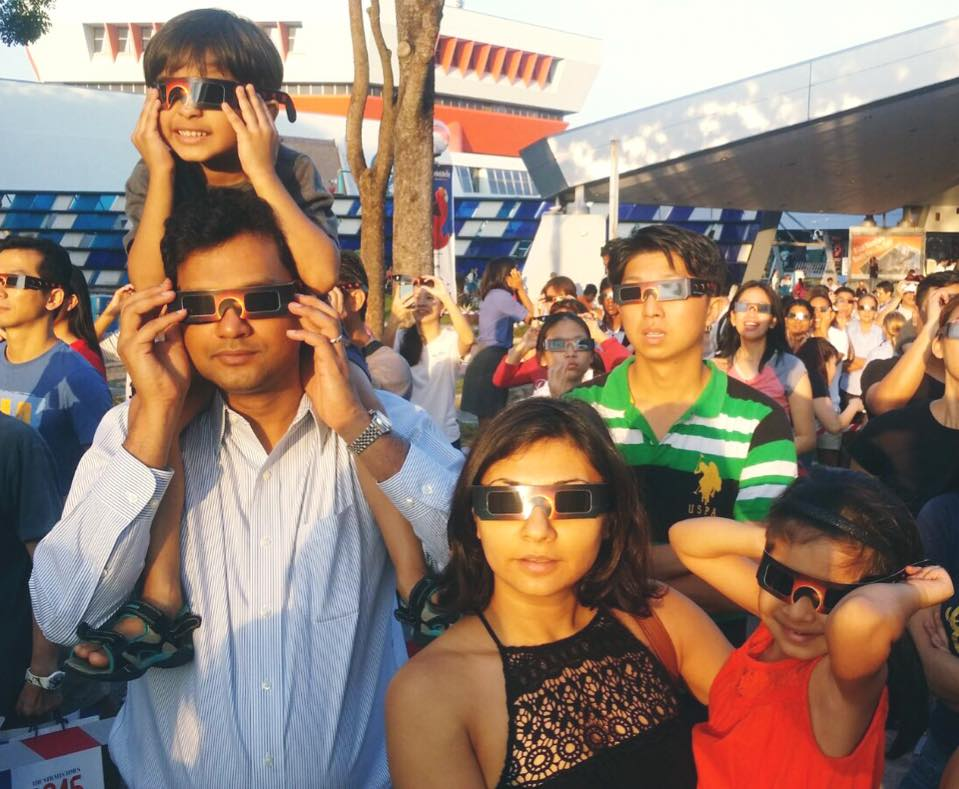
You’ll have to don special eclipse glasses to view a solar eclipse safely; you’re staring directly at the sun after all.
Image credit: Science Centre Singapore via Facebook
Although solar eclipses happen roughly twice a year, you can only see them from certain parts of the world when they do occur. As such, for a specific region to witness a total solar eclipse, the rarest of the bunch, you’ll have to wait about 375 years between eclipses. Unfortunately, the next one’s coming by Singapore in the year 2168, but if you’re willing to settle for a partial eclipse, there’s one scheduled for 2nd August 2027.
4. Meteor showers
Next happening on: 7th-10th October 2025 (Draconid meteor shower)
For a light show happening on a cosmic scale, look no further than meteor showers. In simple terms, a meteor is a small piece of space rock that hurtles through space, and when it gets a little too close to Earth, it’ll enter Earth’s atmosphere due to the planet’s gravitational pull.
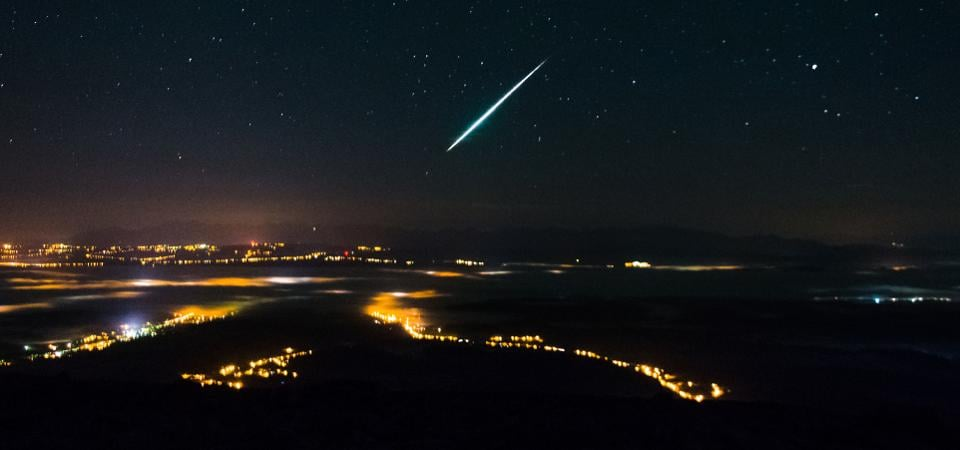
Image credit: Getty Images
One that generated some buzz was the one that lit up Singapore’s night skies last year which many called a “fireball”. Worry not, most of them are small enough that they completely burn up before touching down; in fact, there have been no recorded meteorite landings in Singapore.
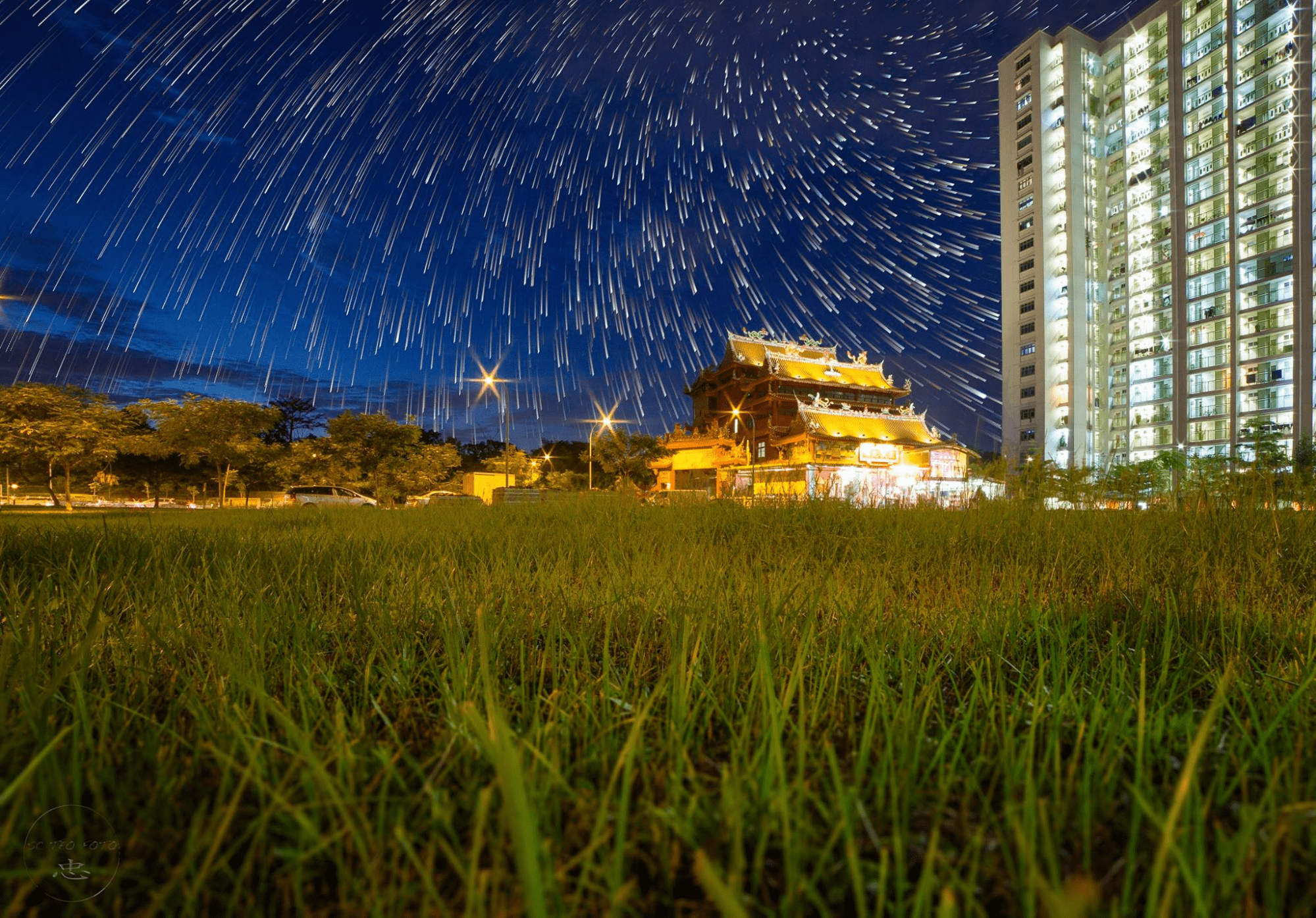 The Perseids meteor shower in 2014, as captured at Jalan Kayu.
Image credit: SC Teo via Facebook
Meteor showers happen when large numbers of meteors are spotted in the atmosphere at the same time, glowing and leaving streaks of light as they race across the sky. They’re also named after the constellations where they appear to originate from, and the most famous of the bunch is the Perseids meteor shower that’s known for its exceptionally bright and colourful fireballs.
It came around to dazzle onlookers earlier in August, but if you didn’t manage to catch it, the Draconid meteor shower is due for an appearance from 7th to 10th October 2025.
5. Comets
Last observed: 11th-22nd October 2024 (Comet C/2023 A3 (Tsuchinshan–Atlas))
Moving on to comets, in essence, they’re bigger space rocks when compared to meteors – way bigger, in fact. Made out of ice, dust, and frozen gases, comets can range in size from a few kilometres to 10km wide. However, exceptionally gargantuan ones have been recorded that measure 120km across; for reference, Singapore’s approximately 50km when measured from East to West.
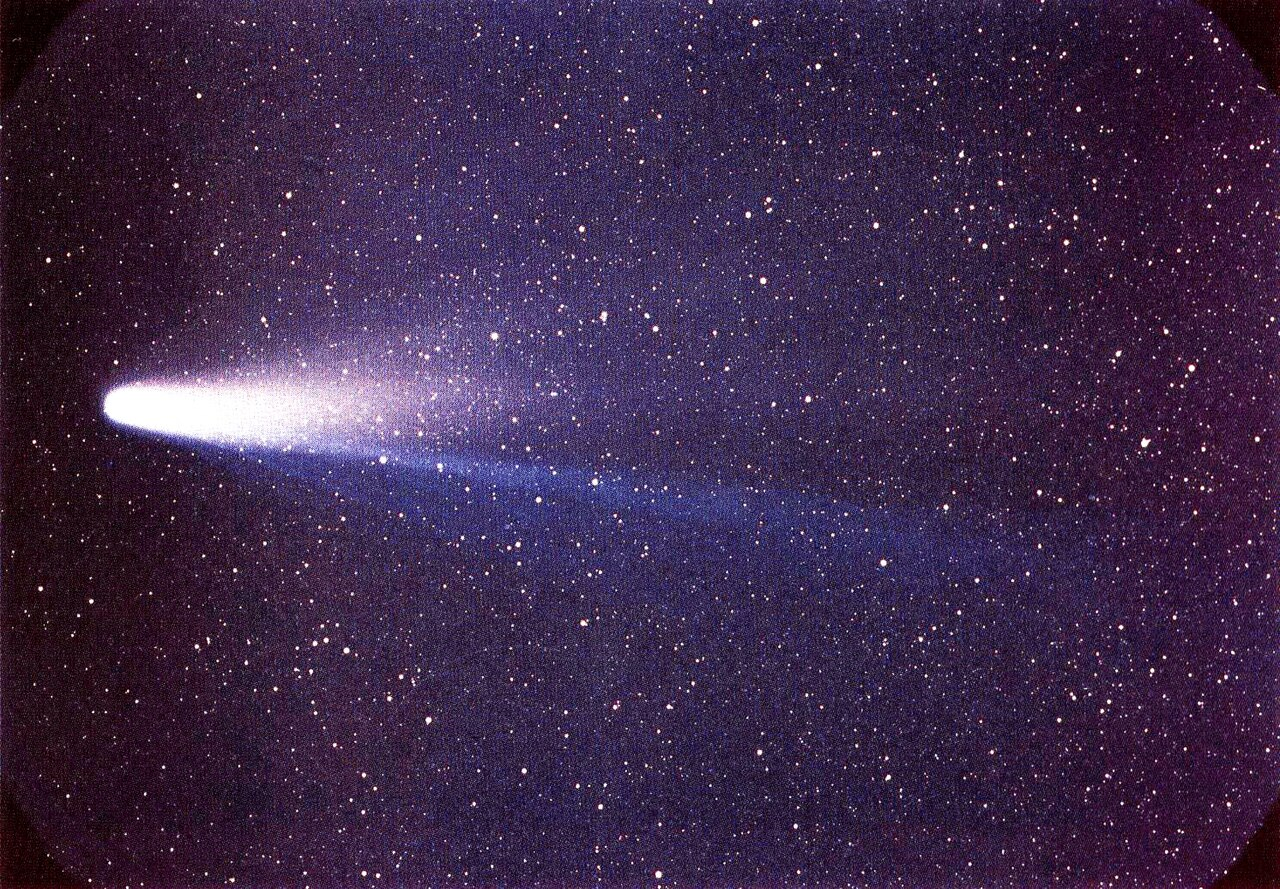
Halley’s Comet, arguably the most famous of its kind.
Image credit: Wikipedia
When they swing around Earth for a visit, you’ll be able to notice a fading trail of light that follows one; it’s known as a comet’s tail, and can go on for a whopping 10 million km. Despite this, it’s pretty rare to be able to spot comets inching across our skies anywhere from Earth, let alone Singapore, as most of them stray too far away from Earth to spot without a telescope’s aid.
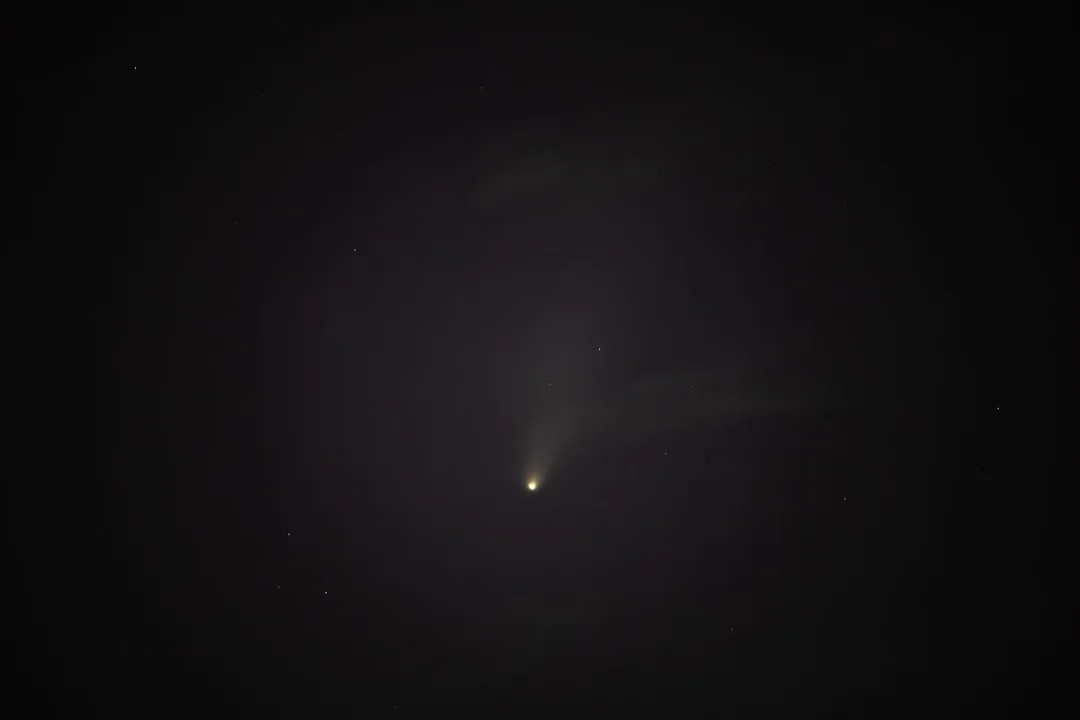
Comet C/2023 A3 (Tsuchinshan-ATLAS) was spotted in Singapore in October 2024.
Image credit: Reddit
However, although sightings are far and few between that’s not to say those living on the Little Red Dot won’t get a chance to see their iconic trails of light. The last one visible with the naked eye from Singapore was Comet C/2023 A3 (Tsuchinshan-ATLAS), which inched across the sky in October of last year, and so we wait with bated breath for experts to give us a heads-up on the next one passing through.
6. Planetary alignment
Last observed: 20th January-20th February 2025
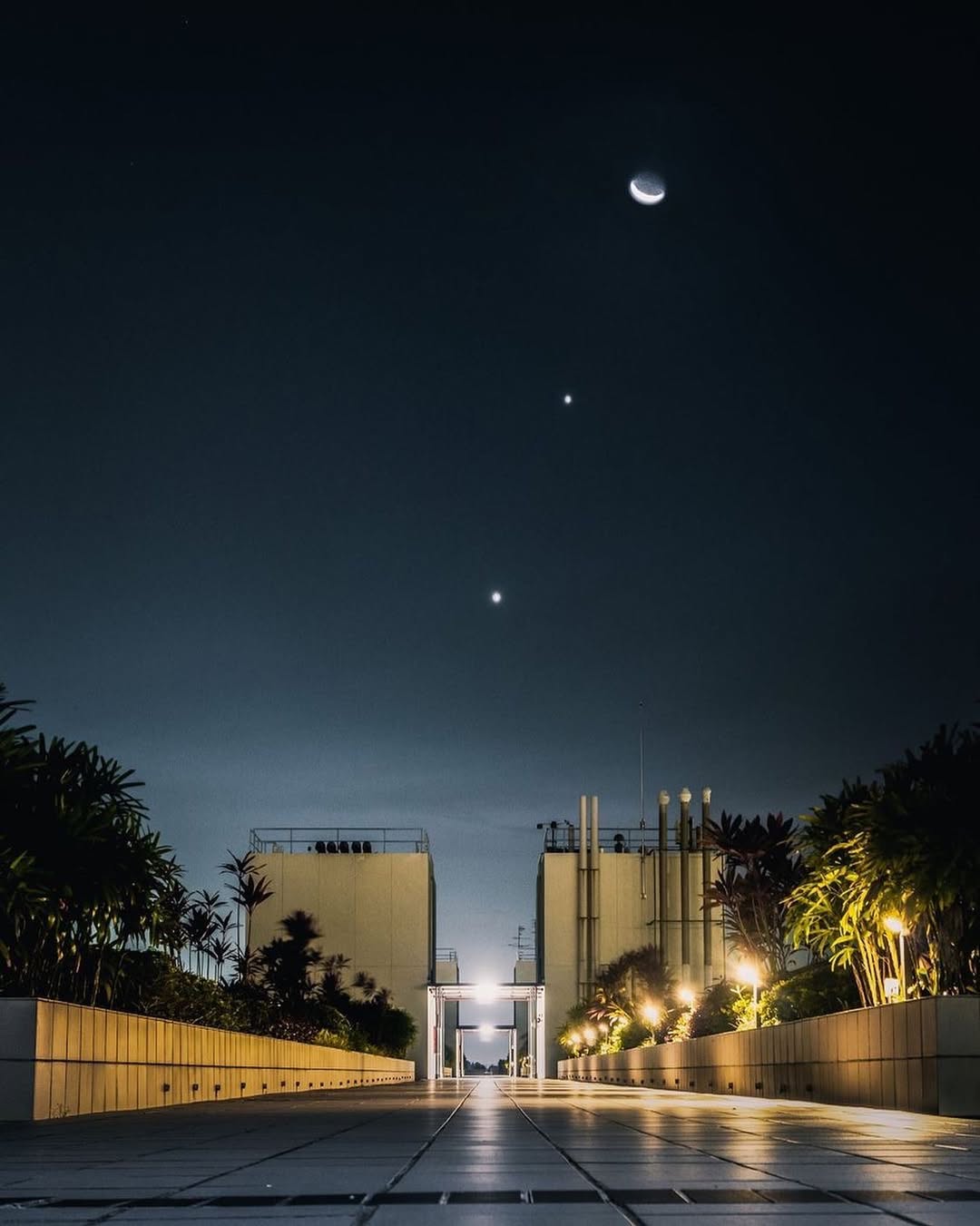
A lineup of 3 planets over NTU’s North Spine.
Image credit: @ntu_sg via Instagram
In case you didn’t know, you can spot faraway planets like Venus, Jupiter, Mars, and Saturn with just the naked eye from Singapore, provided the weather conditions permit. But to be able to see a couple of them twinkling away as specks, now that’s a different story.
Also known as a planet parade, planetary alignment happens when several planets appear to line up one after another on the same plane in the sky. In rare instances, 4, 5, or even 6 of them can be seen at the same time, but not all of them will be visible without the help of a telescope. Planets like Uranus and Neptune are located in the distant reaches of the solar system, so you’ll need to peer through one to pick them out.
This cosmic coincidence can take place anywhere between several days and a whole month, but they are by no means common. The next planet parade is projected to happen over a decade later in January 2036; make a note in your calendar now if you’d like to see Saturn, Jupiter, Mars, Venus, Uranus, and Neptune sharing the moonlit spotlight at the same time.
7. Transit of Venus
Last observed: 5th-6th June 2012
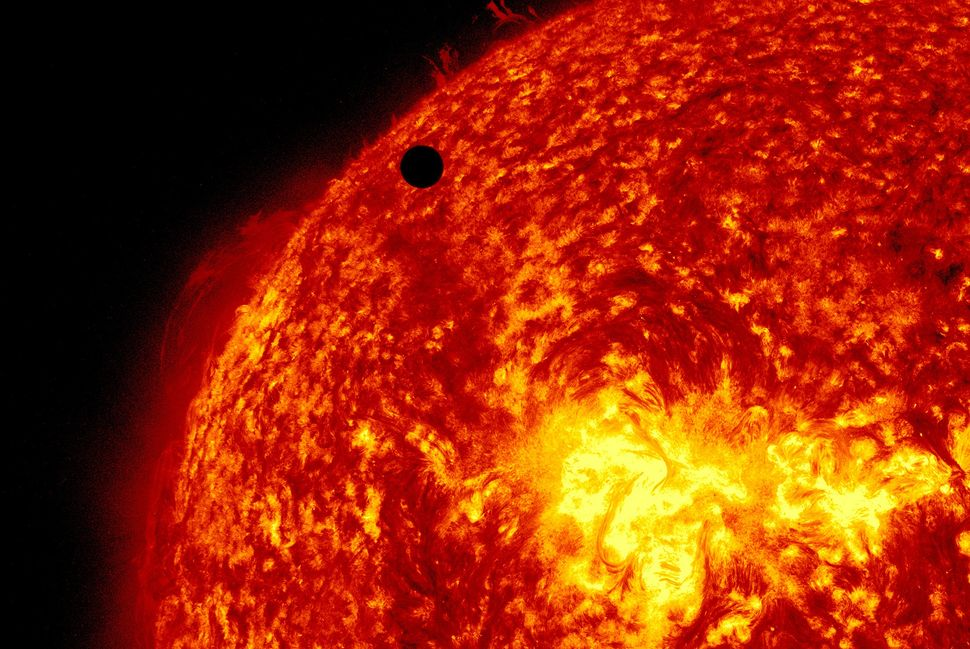
Image credit: Space.com
Dubbed the rarest of all predictable solar events, the Transit of Venus is technically observable from sunny Singapore, but whether we’ll be around to witness it with our very own eyes, that’s a whole other question. It happens when the planet Venus passes directly between the Earth and the Sun, becoming visible on the solar disc.
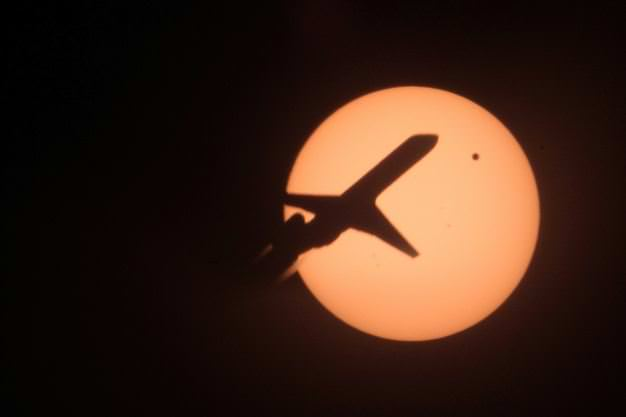
Image credit: Universe Today
It’s not exactly the most spectacular of celestial events; when one’s happening, slap on a pair of solar eclipse glasses and look at the Sun. You’ll be able to make out a miniscule black dot on the sun’s apparent surface, and that’s about it. The kicker is, a pair of transit happens 8 years apart, followed by a wait of 105.5 years before another pair occurs.
The last one happened on 6th June 2012, do the math, and we’ll be able to see Venus crawling across the Sun on 10th December 2117. Or not, unless we manage to find the cure for the eternal disease we’re all cursed with from birth AKA ageing in the next few decades.
Mark your calendars for these astronomical events in Singapore
It’s not every day that we get to experience these astronomical events in Singapore, so when one happens, you can bet that there’ll be dozens of smartphones pointed skywards in order to capture the rare phenomena. If you’d like to witness one yourself, now you know which ones are coming our way soon, so have your binoculars and star charts at the ready.
For more outdoorsy things to do in in Singapore:
Cover image adapted from: Premier Christian News, SC Teo via Facebook, Space.com