

Early childhood educators in Singapore
Speaking as someone who has personally been there and done that – albeit at a different education level – teaching is not an easy profession. Where primary and secondary school teachers are tasked with heavy academic loads, it’s easy to then think that Early Childhood and Early Intervention Educators, AKA preschool teachers, have it easy. After all, playing with toys, changing diapers and singing songs about ABCs and 1-2-3 isn’t that difficult.
But that’s where we forget how these educators play such a big role in the building of foundational units of a child’s development – beyond just literacy and numeracy, they impart important values and essential skills that help to set them up for life ahead. With Teachers’ Day coming up on 5th September, we spoke to some preschool teachers to find out the wins they’ve had in their careers that keep them going.
1. A small step in life, a giant step for the child
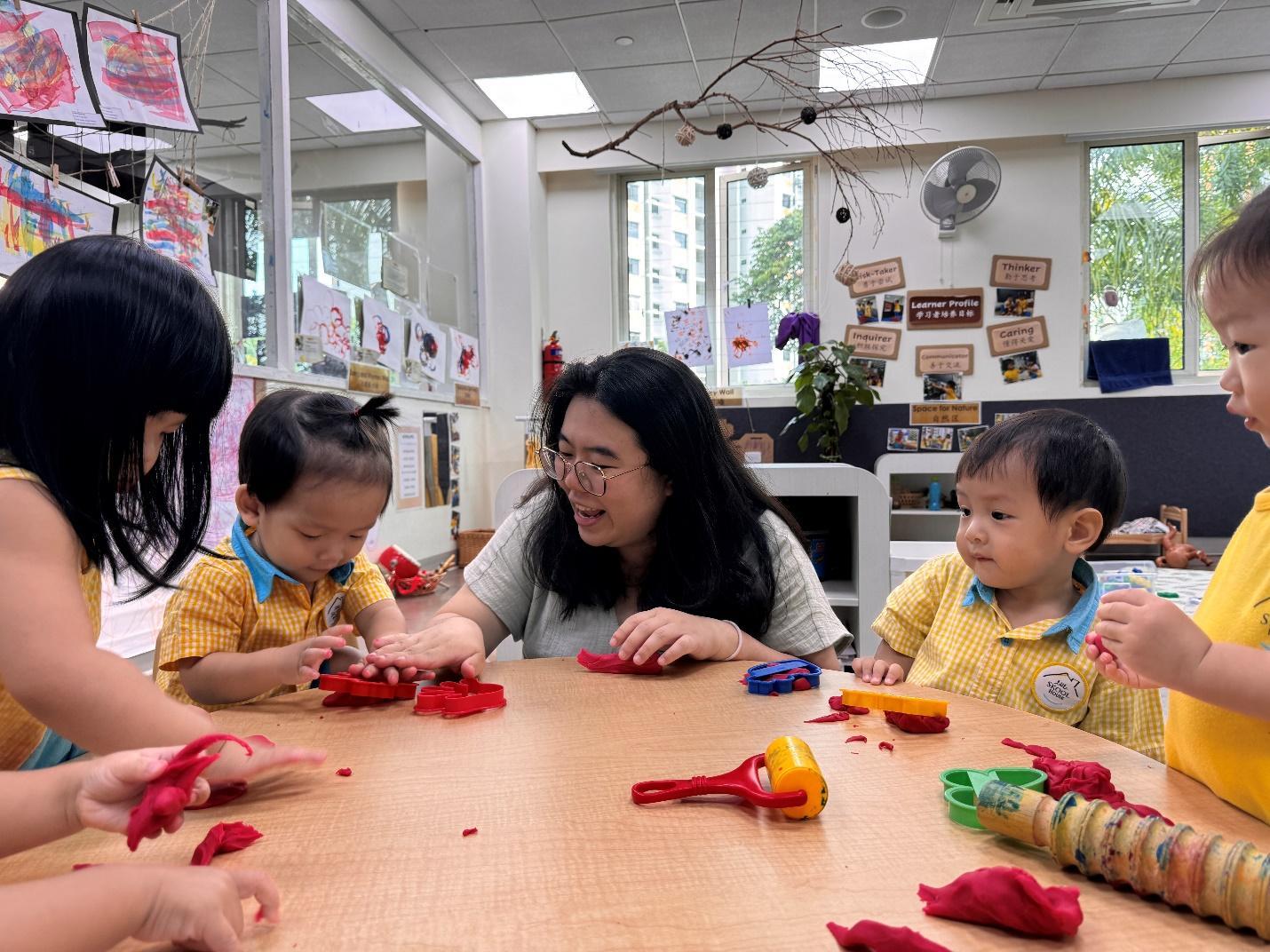
Image credit: Little Skool-House
Right alongside parents, preschool educators are integral to a toddler’s passage into childhood and beyond. The vital building blocks that prepare them for primary school, and even life, are set in place during these formative years – and as inconsequential as these little things may appear to us, they’re in reality huge steps forward for the little kiddos.
For Senior English Teacher Crystal Tan at Little Skool-House at Ulu Pandan Community Club, one small win that immediately comes to mind was seeing a child under her care successfully complete potty training. “It might seem like a small milestone,” she shared, “but witnessing a young child use the potty, clean up, flush, and wash their hands – all independently – is a huge achievement. When it finally clicked, the child felt proud and empowered. It was truly heartwarming to see them recognise their own independence.” And this is only one episode amongst the many valuable lessons preschoolers learn under the professional guidance of their preschool teachers.
Despite helping children to achieve these essential life skills, some people still think that Early Childhood Educators are “just babysitters”, but the answer is a resounding no. Crystal explained, “We wear many hats – educator, nurse, therapist, snack-time coordinator, emotional support specialist, life coach, conflict negotiator, and even part-time detective when uniforms go missing.”
“Behind every playful moment is an intentional learning goal,” she added. “Through thoughtfully planned activities and purposeful play, we help children develop vital skills in communication, problem-solving, emotional regulation, and self-help tasks. There’s so much depth to what we do – play is the method, but the goal is to prepare children for lifelong learning.”
2. Classroom motto turned life lesson
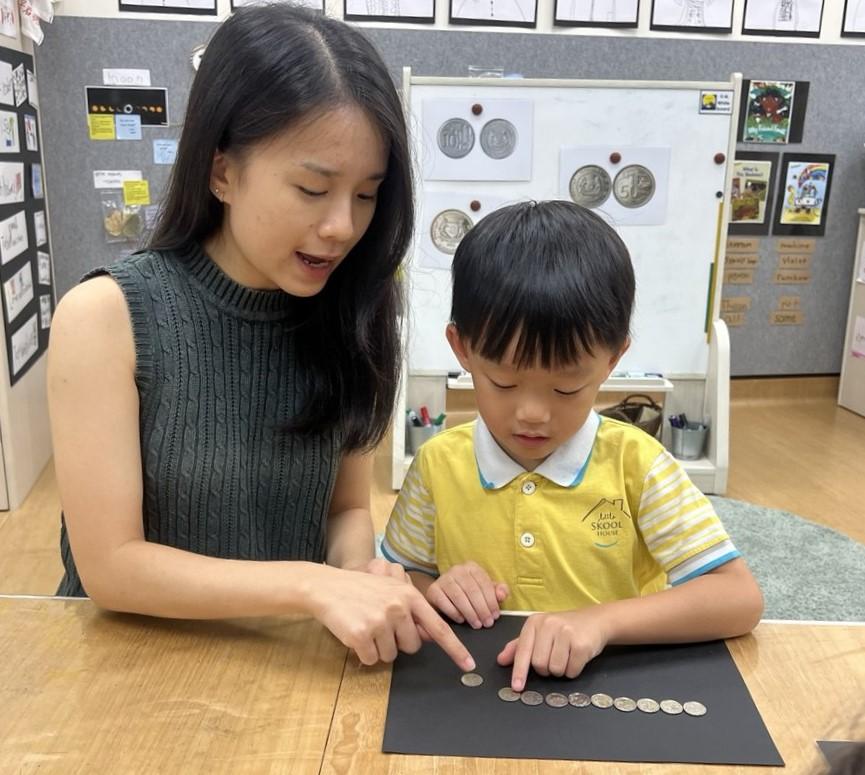
Image credit: Little Skool-House
“Do my best always” is a maxim that’s heard and repeated so often, it’s like wind past the ear, as the Chinese saying goes. But for a boy in Joyce Teo’s first batch of Kindergarten 2 kids, it left such a lasting impression, it stuck with him even as he was moving onto Primary 1 the following year.
It started as one of 5 agreements that Joyce, principal at Little Skool-House at Kent Vale, had struck with the class at the beginning of the year, after she asked the children if they were proud of their hastily completed work. One day, she heard a boy, who disliked colouring, remind his friends, “Remember, we need to do our best right? We cannot give up even if it is difficult, and we need to try our best.”
“Throughout the year, this was a phrase that became common in our classroom. Children cheered their friends on and reminded each other to give their best in everything they did – from keeping their belongings and cubby holes tidy, to sweeping eraser dust off the table after use, and packing up the classroom when they were done playing. I saw how much they had grown, and it touched me tremendously. I was so proud of them,” Joyce recollected.
The best was yet to be, because when Joyce spoke to the child’s mother after his graduation, she was told that the boy said he was determined to give it his best effort, even if it was difficult.
“I still go back to this moment whenever I’m having a challenging day,” said Joyce, “It reminds me of the significance of being in this industry, being able to impact young lives and young minds.”
3. Bridging the gap between home & school to build literacy and support parents
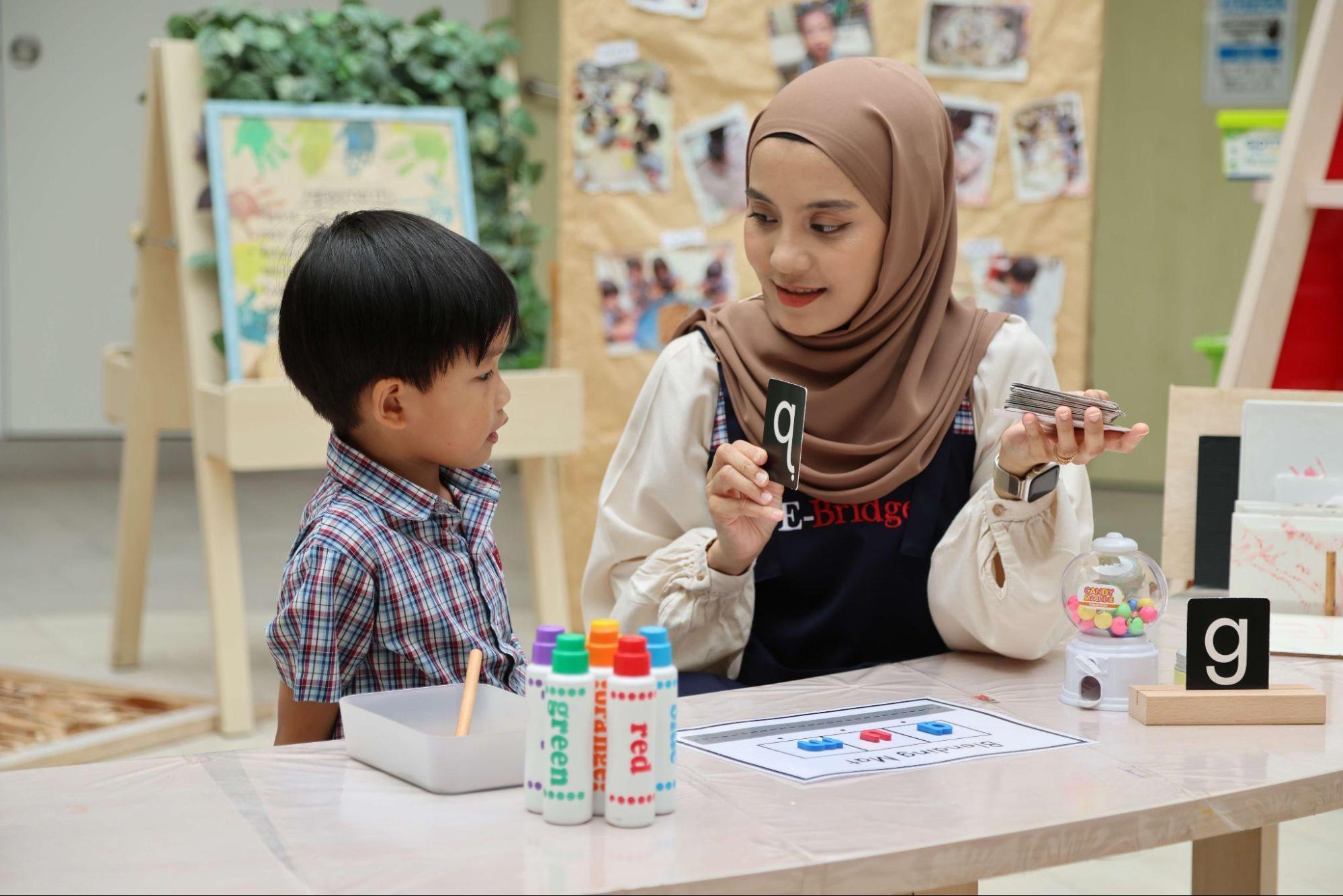
Image credit: E-Bridge Pre-School
“It’s small but significant wins, where progress shows up both in school and at home, that keep me going,” says Senior Learning Support Educator Salmah Harris from E-Bridge Pre-School, “We are nurturing growth and building connections, walking alongside families as they navigate each step of their journey.”
One of these, for her, was opening up a channel of communication with the parents of a child whom she was supporting through targeted intervention for his literacy skills. Through this, she discovered that the child’s mother was having difficulties getting him to practise at home, though he was showing progress during his sessions with Salmah.
She suggested implementing a visual task checklist similar to the one they used during their sessions, which helped to bridge the learning between school and home – and it saw fruition when he began to complete his home tasks, and progress.
“Seemingly small breakthroughs such as these lay the foundation for long-term growth and success – progress doesn’t always come in big, dramatic leaps, but often shows up in quiet, everyday moments that remind me of the heart of this work.”
4. Close collaboration with parents for lifelong habits to be established
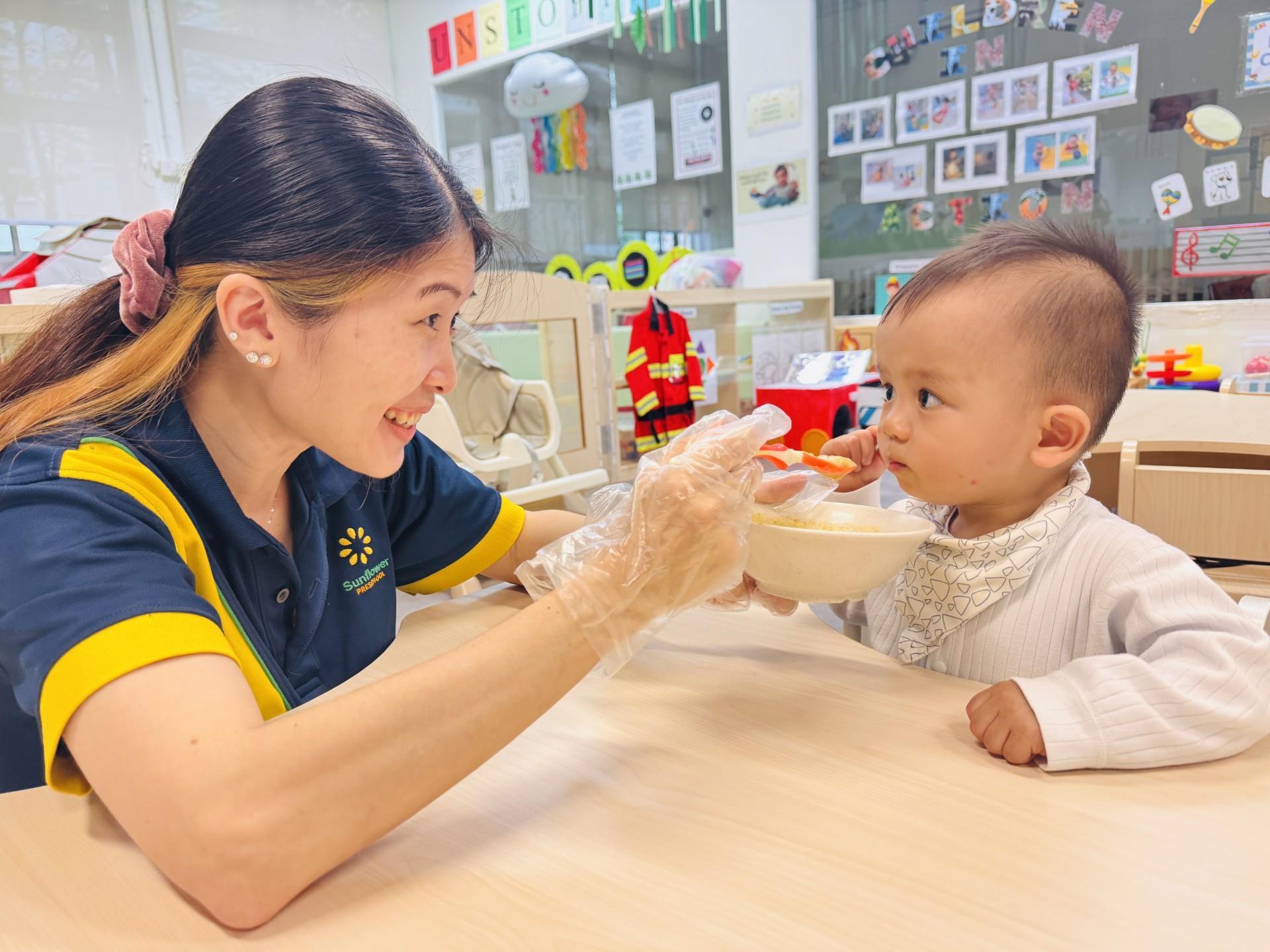
Image credit: Sunflower Preschool
After nearly 25 years in the industry, Infant Lead Teacher Shermaine Seet from Block 513 Sunflower Preschool @ Yishun has probably seen it all. Yet, it was an infant’s progress from spitting out everything solid that was put in his mouth, to gradually feeding himself, which has really stuck with her.
“Since the children spend a significant amount of time with us, it is our responsibility to notice the small but meaningful changes that can make a big difference, supporting the child’s development and helping to build strong bonds and trust between the educator and parent,” she shared.
Studies have debunked the myth that it takes 21 days to form a new habit – it really takes anywhere from 2-8 months. True enough, it took months for Shermaine to help this child overcome his aversion to solids, patiently feeding him each day, while also keeping his parents updated about the food that he tried in school and the various methods that she undertook to encourage him so that they could work closely together to support him.
“What we do makes a significant difference in a child’s life – as early childhood educators, we are often the first to identify and act on those needs, in collaboration with families and specialists, to provide additional support for the child,” she shares. “Many people may not fully understand the depth of the work that we do – it’s not just about taking care of children, but also to build a strong foundation for their lifelong and holistic development.”
5. Inclusivity through compassion and communication
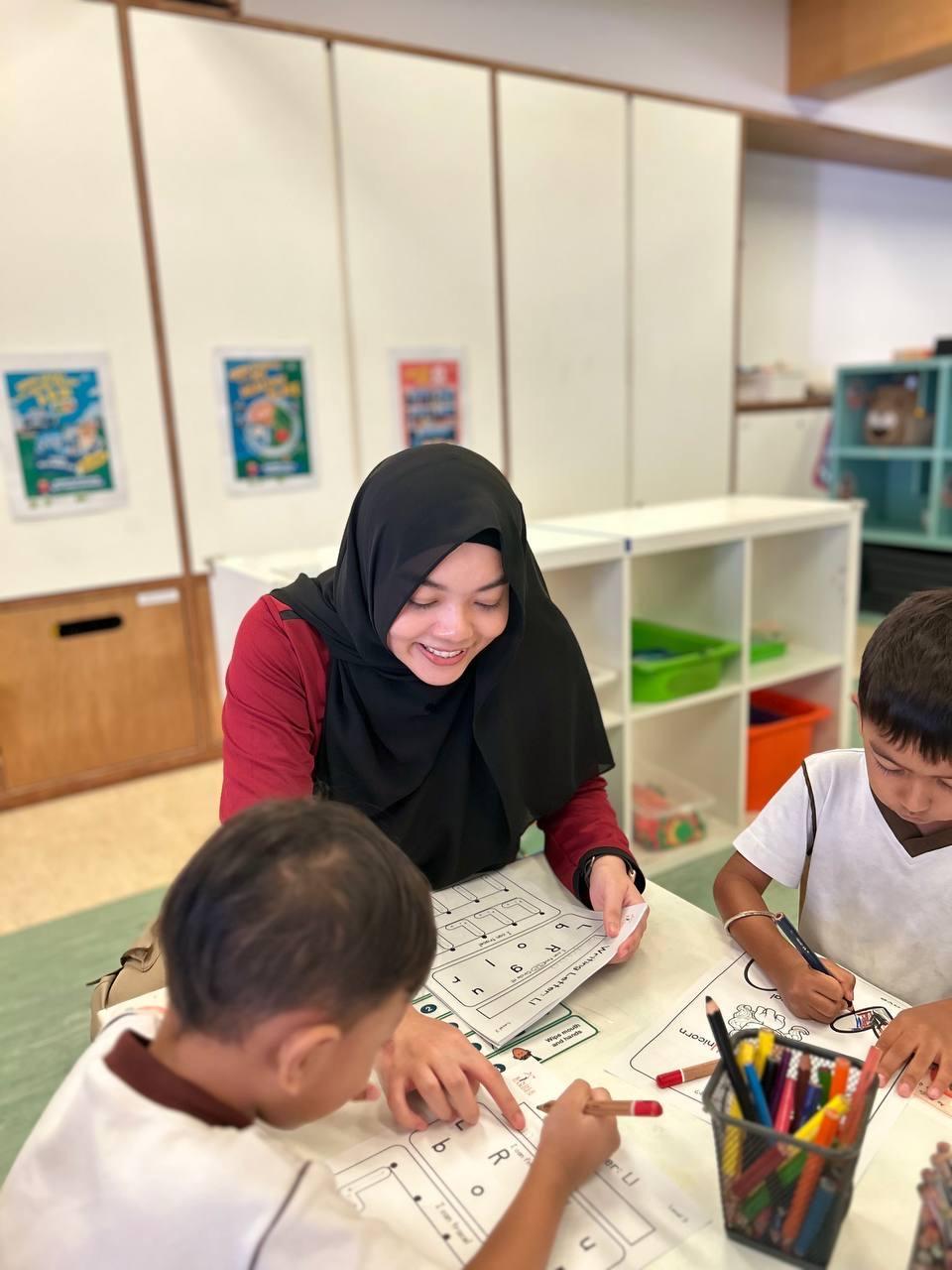
Image credit: Kindle Garden Preschool
When Nur Allysha Binte Osman joined Kindle Garden, Singapore’s first inclusive preschool, as a Teacher Assistant, she didn’t just take on a new job. She stepped into a classroom that celebrated every child’s voice, even those who don’t speak with words. More importantly, it was about creating an environment where children of all abilities could participate, learn and grow together.
Now a certified preschool teacher, Allysha recalls that there was a particular child in her class who was non-verbal and communicated mainly using basic key word signs and a visual communication board. At first, her classmates struggled to understand or engage with her.
To support the child, Allysha began incorporating these communication methods into her lessons, modelling for the class how they could interact meaningfully with each other. Over time, it became second nature to the children, and they were able to genuinely enjoy each other’s company. This demonstrated “how much children are capable of,” she says, “that they can be the best advocates for inclusion when given the right environment and support.”
“These moments may seem small, but they’re powerful,” shares Allysha. “They remind me why I do what I do, and I hope the children carry these values with them long after preschool.” Beyond Allysha’s classroom, small acts of inclusivity such as this lay the foundation for a society that embraces all – one classroom, one friendship, one child at a time.
6. Gaining the trust of parents
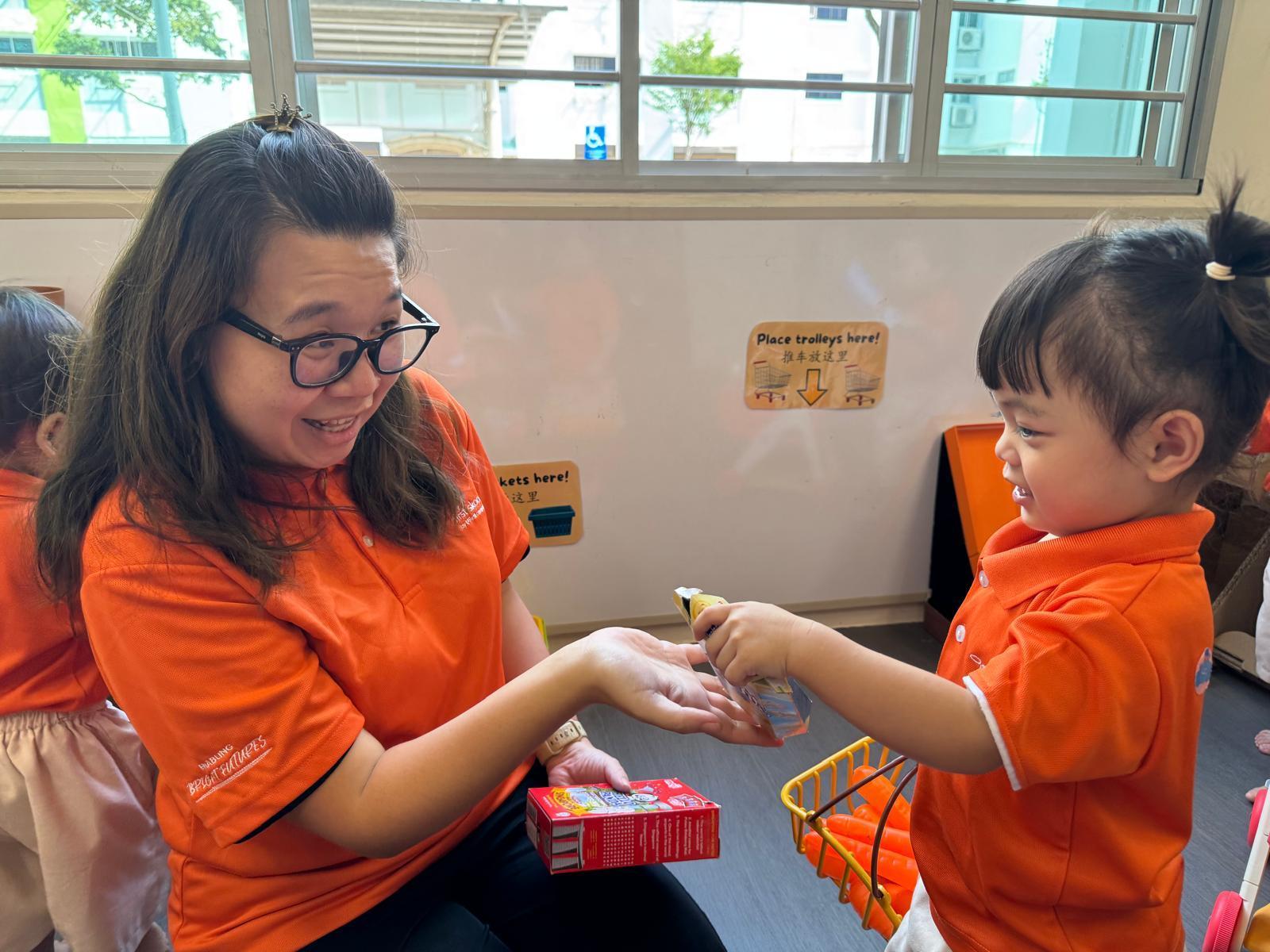
Image credit: My First Skool
“Early childhood education goes far beyond just teaching routines – it’s about deeply impacting every child, in every interaction, helping to shape their earliest experiences and foundations,” shared Executive Principal Chan Yin Jie at My First Skool at Block 209 Ang Mo Kio, who has been in this line for 17 years.
She once taught a child in Playgroup whose mother was initially, and understandably, protective of her son. In time, Yin Jie gained the child’s, and his mother’s, trust, and the boy flourished in preschool under her care. The powerful moment that has stuck with her, even till today, was when she was approached by the boy’s mother – not only to thank her, but to request that Yin Jie teach the next child she was planning to have.
“It wasn’t just about her child’s development, but the peace of mind she had found to entrust her child to my care,” said Yin Jie. “In our field, immediate results are rare; we often won’t see the full impact for years. But these moments of parental appreciation assure us that our efforts are meaningful and are truly making a difference.”
7. Building love for the language & culture
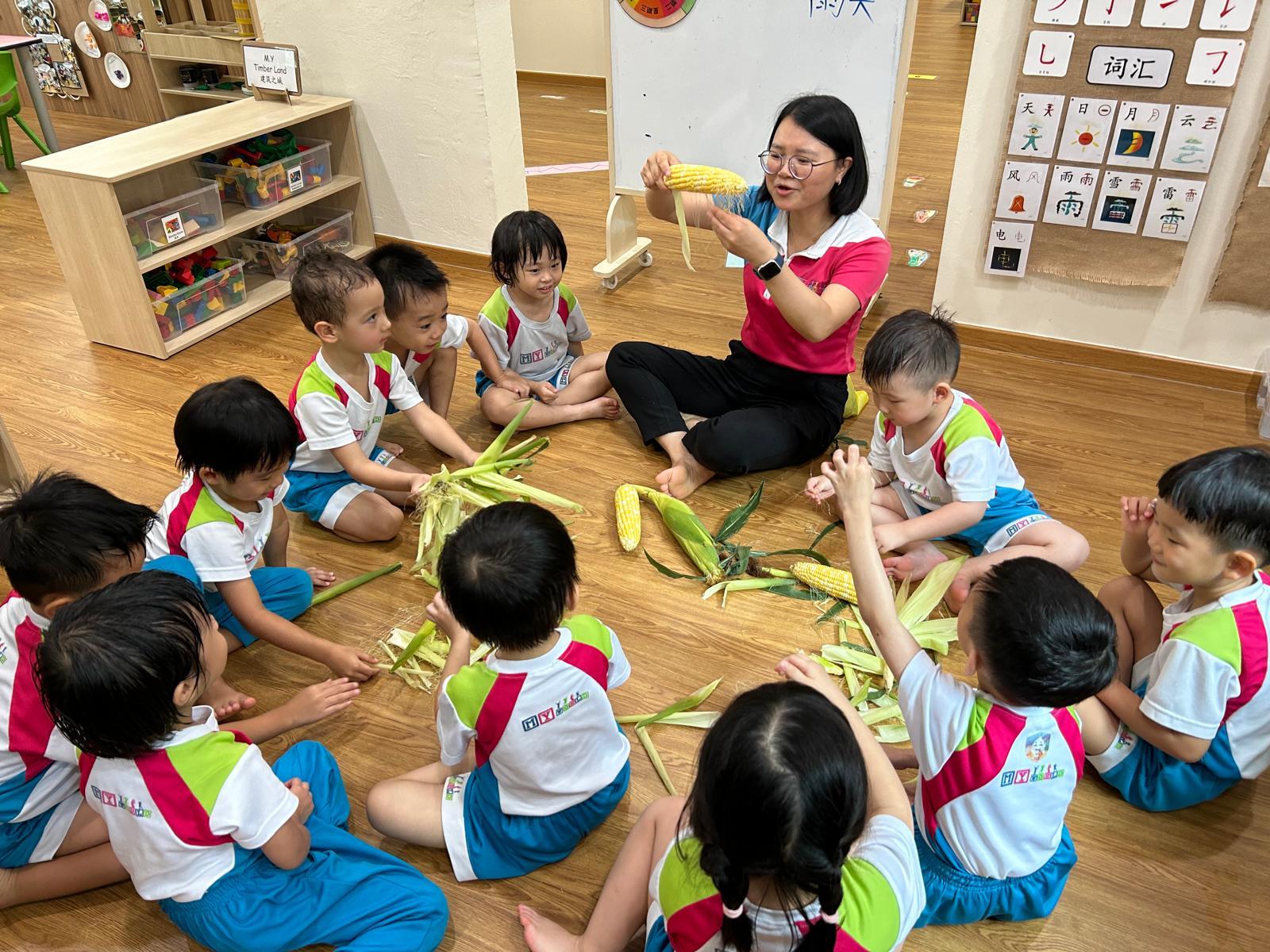
Image credit: M.Y World
For Chinese Principal Lei Tianxia of M.Y World @ Bishan, affirmation of her work came in the form of feedback from her student’s mother, who shared that her daughter would enthusiastically tell her about what she had learnt in Chinese class every day after school – in Mandarin. It’s no easy feat as most kids these days tend to be more English-speaking, but Early Childhood Educators like Tianxia are clearly making a positive impact in helping children embrace their Mother Tongue and cultural identity.
In the case of this child, she was so inspired by her activities in preschool, she rallied her entire family to spring clean the house ahead of Chinese New Year, explaining why they ought to do it after a lesson by Tianxia about traditions for the Lunar New Year.
Even after 12 years in the Early Childhood sector, Tianxia is still constantly inspired and encouraged by her students’ sense of wonder and spirit of exploration. “The children are my greatest source of motivation,” Tianxia told us, “They are not only full of curiosity and a deep thirst for knowledge, but also brimming with imagination and creativity. These wonderful qualities inspire me every day to design rich and meaningful learning experiences, giving them opportunities to explore their surroundings and connect to the wider world.”
Giant appreciation button at the “99% for the 1%” Teachers’ Day pop-up
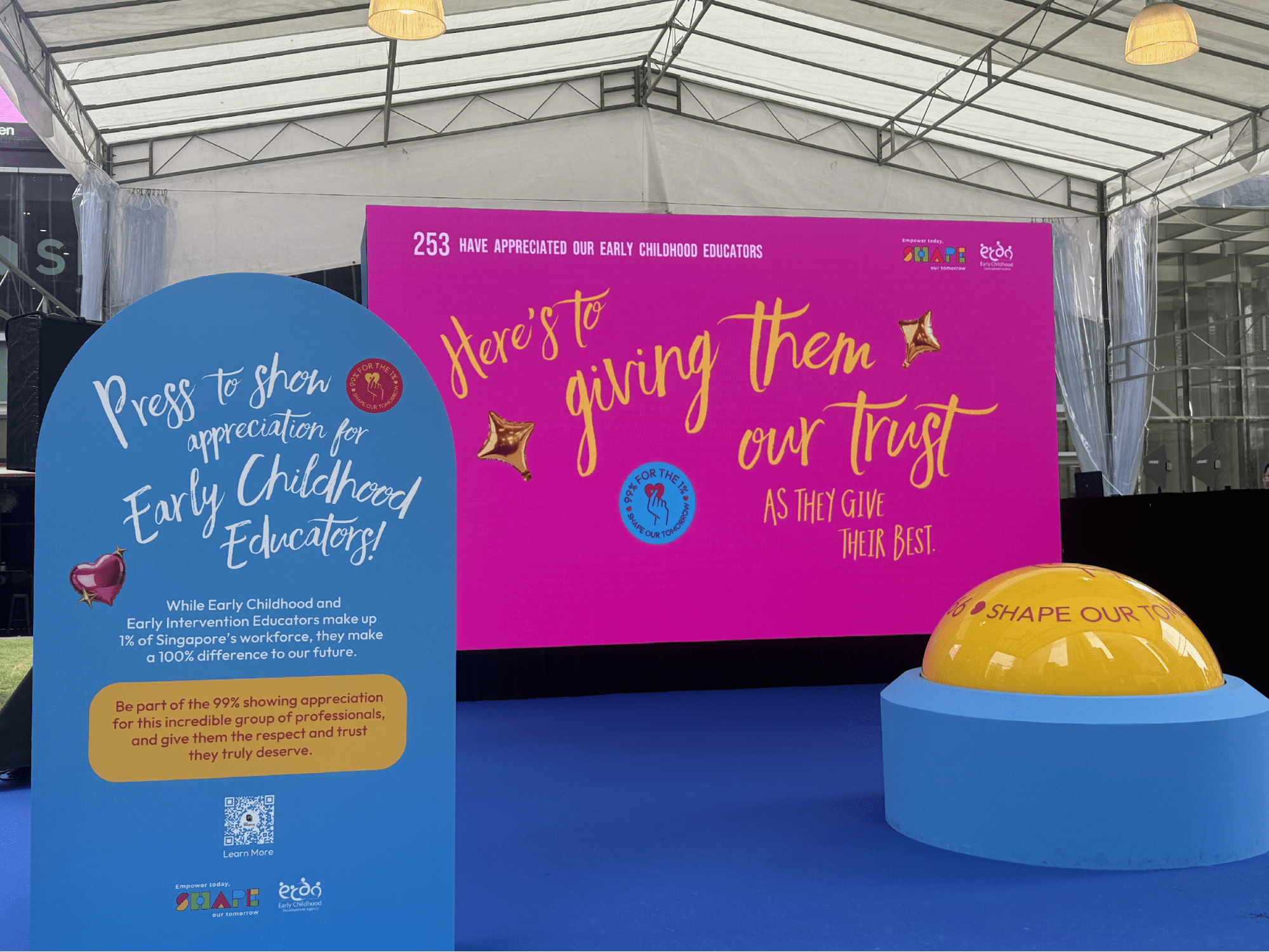
Visit One Punggol on 29th August-1st September to press a larger-than-life 1.3m-big button to show appreciation for our Early Childhood and Early Intervention Educators, who make up about 1% of the workforce, yet are making a 100% difference. Each press reveals a statement based on values of trust, respect, empathy, and altruism, to remind us how we, the 99%, which includes more than just parents of preschoolers, can recognise the work that these inspirational preschool educators do.
Early childhood educators play a big part in our children’s lives
This Teachers’ Day, let’s stand up, be the 99%, and support the 1%. Let’s recognise the many roles that they play in our children’s lives, and help them to help us bring up children whose hearts and minds are both gently nurtured. It takes a village to raise a child, and these early childhood educators are our village.
Find out more about the “99% for the 1%” pop-up here
This post was brought to you by the Early Childhood Development Agency.
Cover image adapted from: Crystal Tan, Salmah Harris