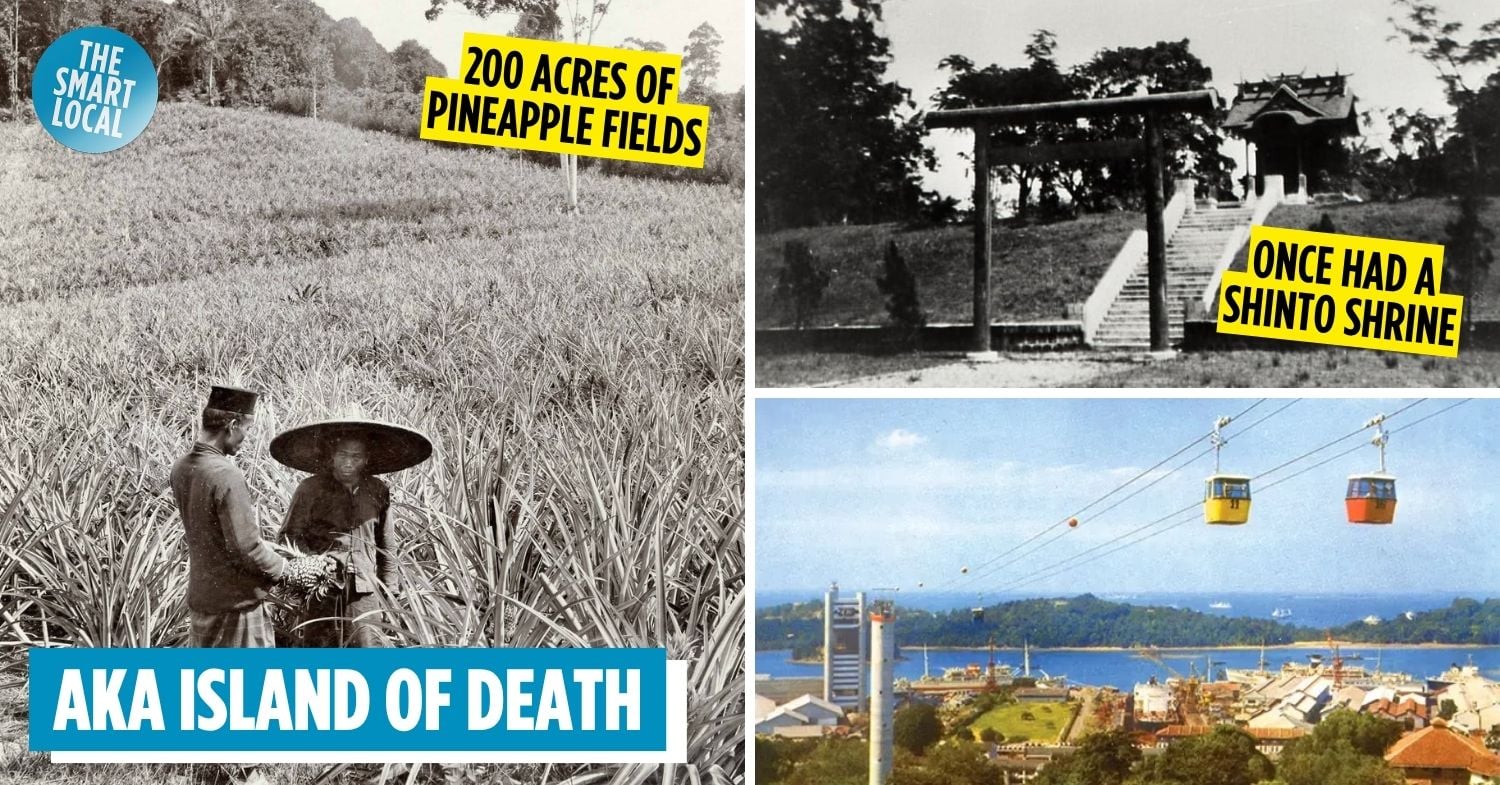

Sentosa was once Pulau Blakang Mati
Before Sentosa was Sentosa, it was an island known as Pulau Blakang Mati. Literally translated, this reads “Island of Death from Behind”. Peel away the layers of glam and fun, and you’ll find a grittier past that’s written into the foundations of the island.
Here’s all you need to know about the island where Halloween Horror Nights 14 is due to take place in a couple of months:
First appeared on a map in 1604
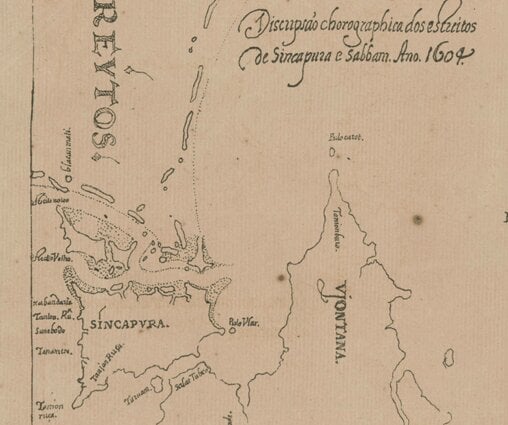
Manuel Godinho de Eredia’s map of Singapore and Blacanmati.
Image credit: Sentosa
Surprise – Blacanmati was first documented more than 200 years before Sir Stamford Raffles’ time, on a map drawn by Portuguese-Malaccan cartographer Manuel Godinho de Eredia.
The spooky origins of Dead Back Island
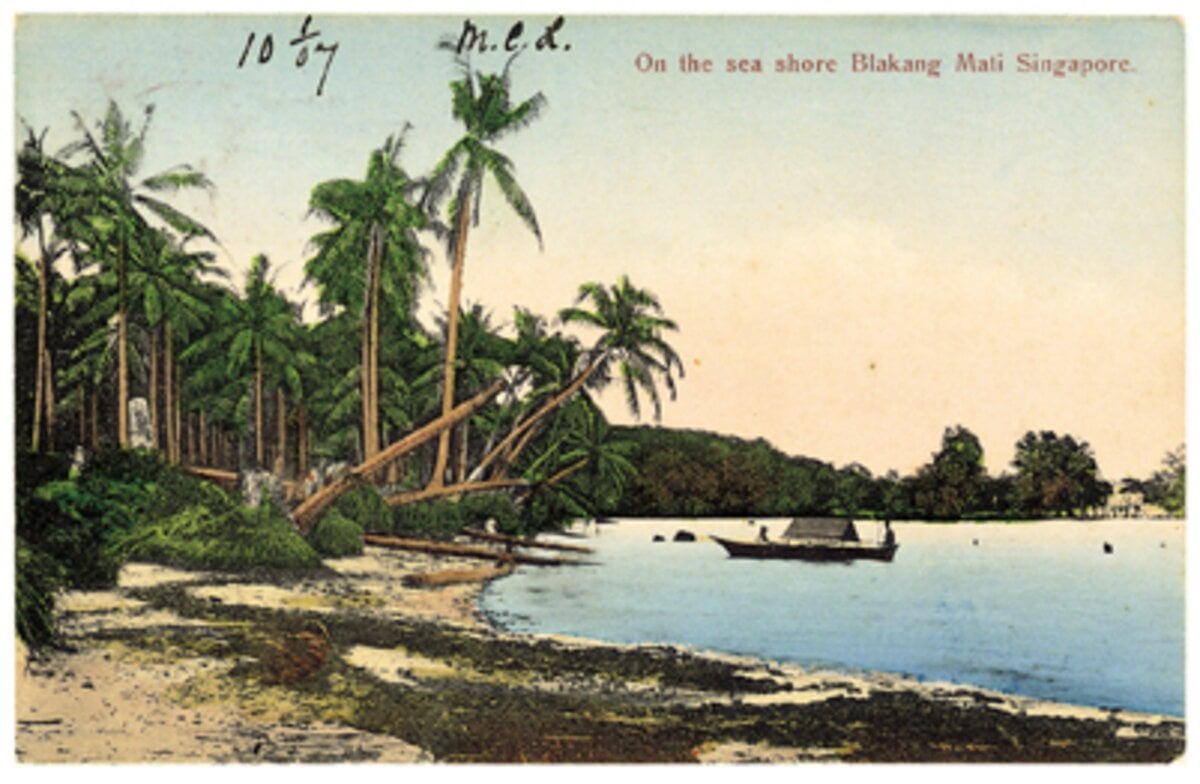 Image credit: Sentosa
So, what’s behind the creepy name? There are some tales and theories behind it, including that Keppel Harbour, the strait between Singapore and Sentosa, was historically a hotbed for pirates.
Legend has it that many of these brutal pirate battles took place behind Sentosa, leaving the waters full of floaters. In other tales, the battles took place between the island’s inhabitants and pirates. In yet more recounts, the fights were between the Bugis of the Riau Islands and the Malays of Johor and Singapore, with the dead buried on Pulau Blakang Mati.
As another piece of lore goes, Pulau Blakang Mati sits adjacent to, or “behind” Pulau Brani. Back in the day, Pulau Brani served as ancient burial grounds for Malay warriors; their restless spirits, according to the tales, roam Dead Back Island.
Then, there’s the catastrophic outbreak of 1848, which completely wiped out a British signal station and reduced the local Bugis settlement from 60 to 2 families. This mysterious epidemic, likely malaria, was dubbed “Blakang Mati Fever”.
Or a simple linguistic theory
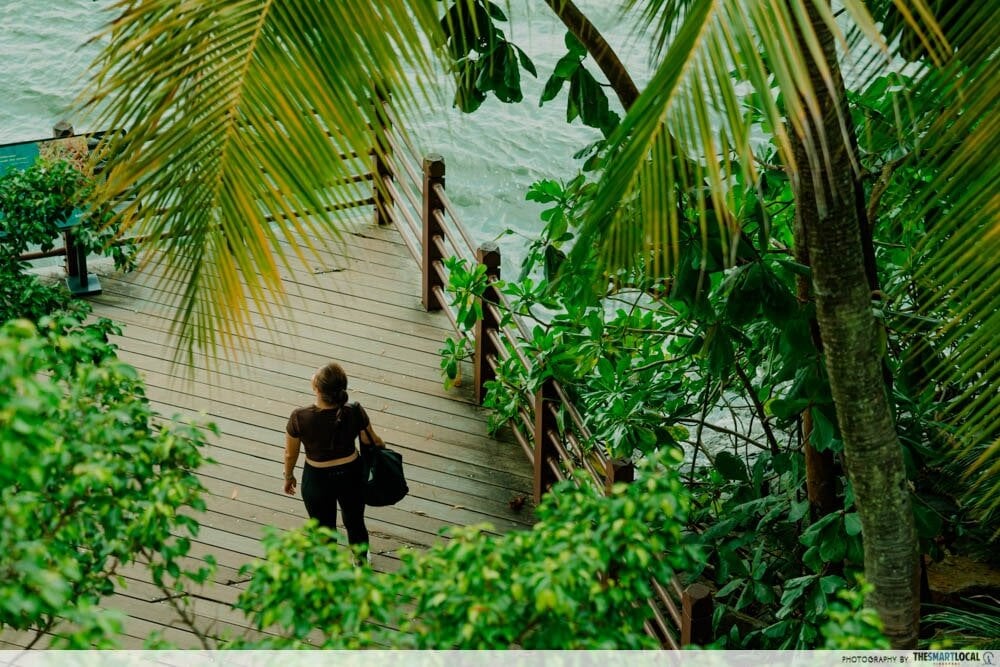 Southernmost point of the Malay Peninsula.
On a much less ghastly note, Pulau Blakang Mati might simply mean “dead end island”. If you think about it, a dead end is known in Malay as jalan mati.
To people of those times, Sentosa marked the southernmost point of the Malay Peninsula. Therefore, in the eyes of early sailors, the island could very well be a dead end.
Who lived in a pineapple by the sea?
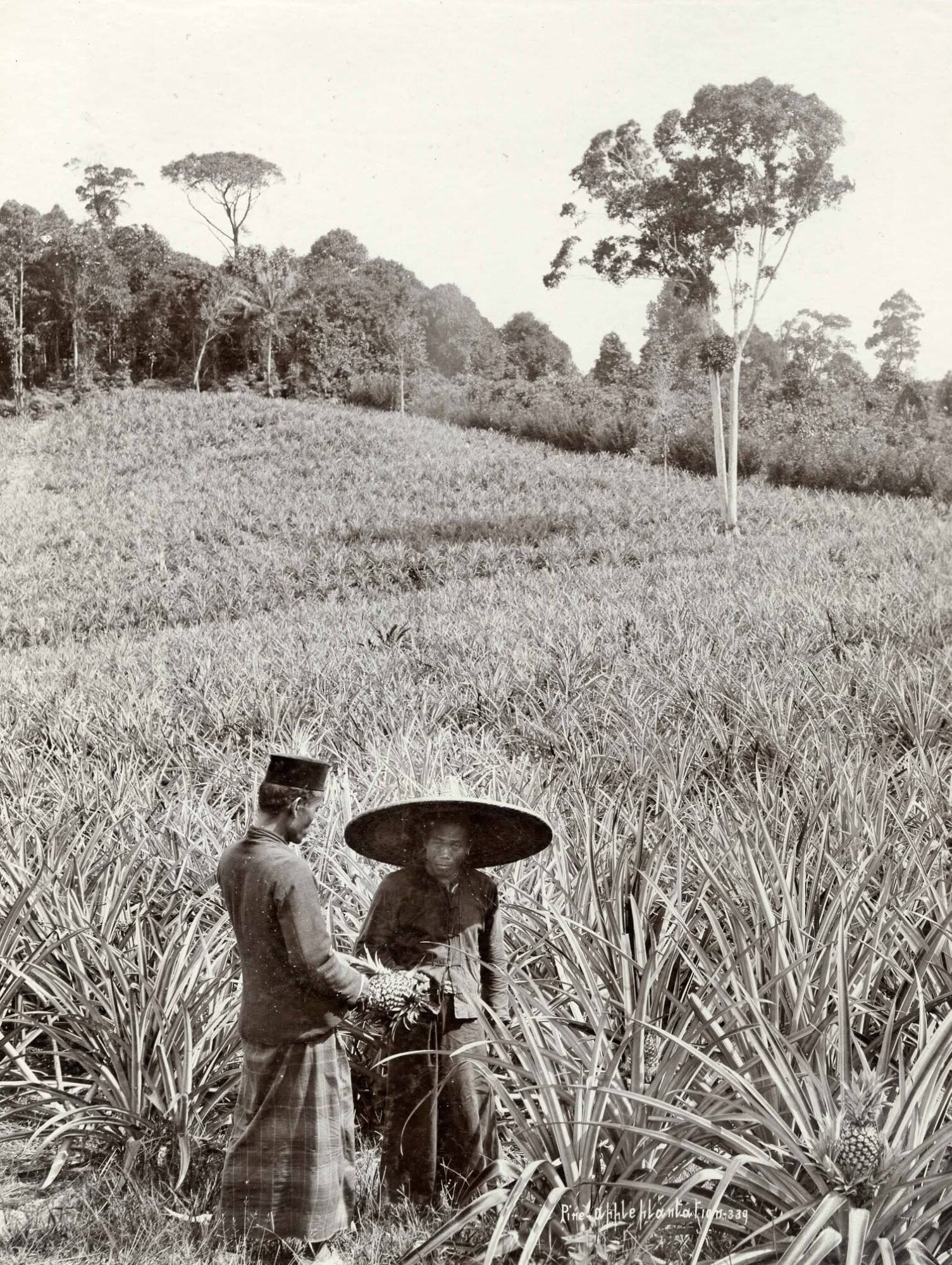 Circa 1880s.
Image credit: Museum Fünf Kontinente via Facebook
To British doctor Robert Little, who was on the island to investigate Blakang Mati Fever, the village on Sentosa known as Kampong Blakan Mati “one vast pinery, supplying the island of Singapore with this delightful and refreshing fruit” – AKA pineapple.
At its peak, nearly half of the island, or approximately 200 acres, was covered in pineapple plantations. These plantations were primarily managed and farmed by Bugis settlers, who moved there in the 1820s from South Sulawesi to escape Dutch trading restrictions.
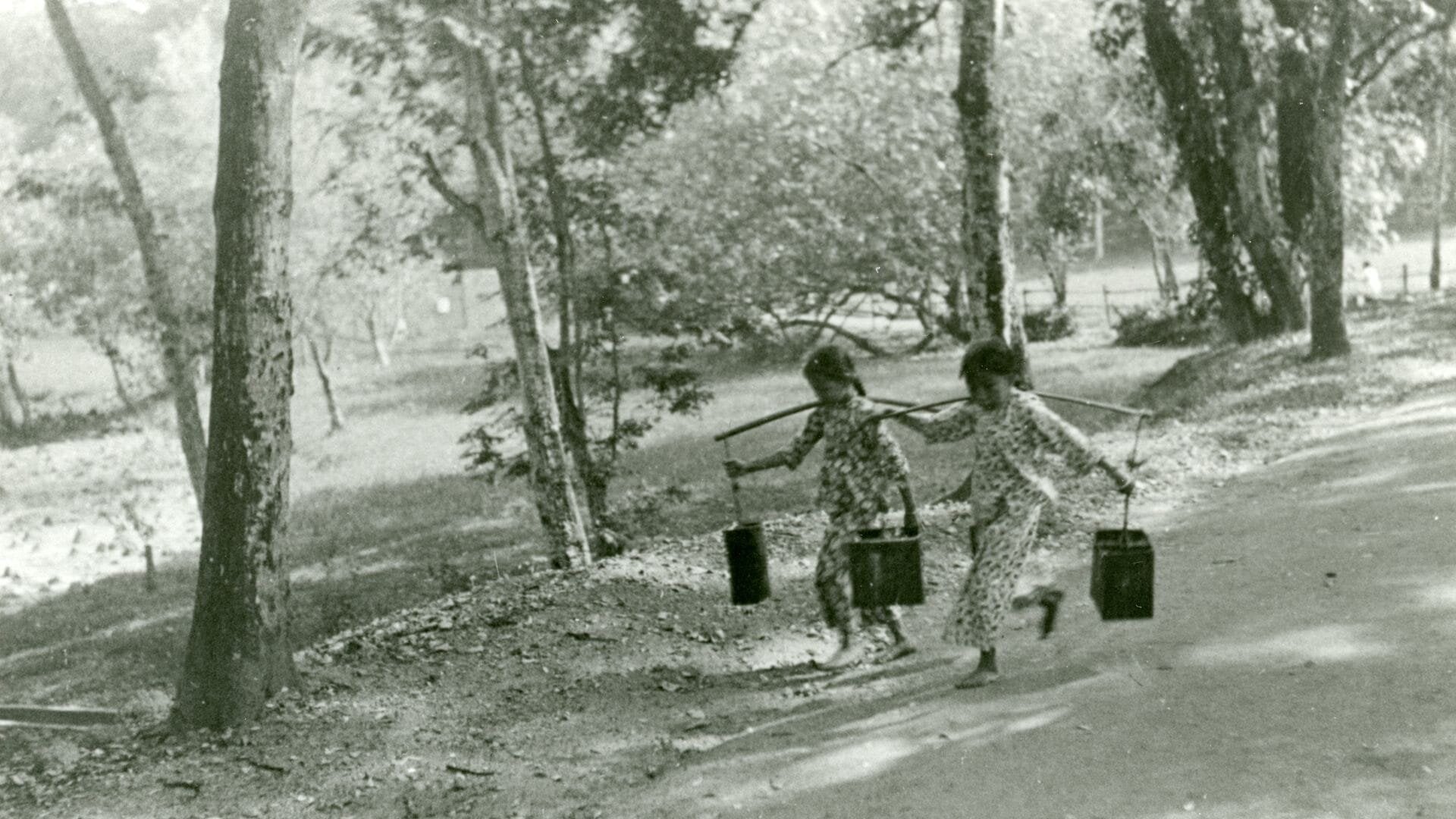 Children carrying buckets of water at Blakang Mati, undated.
Image credit: Sentosa
It was then that they began building agricultural and fishing villages there alongside the indigenous Orang Laut, after Singapore was founded as a British trading post.
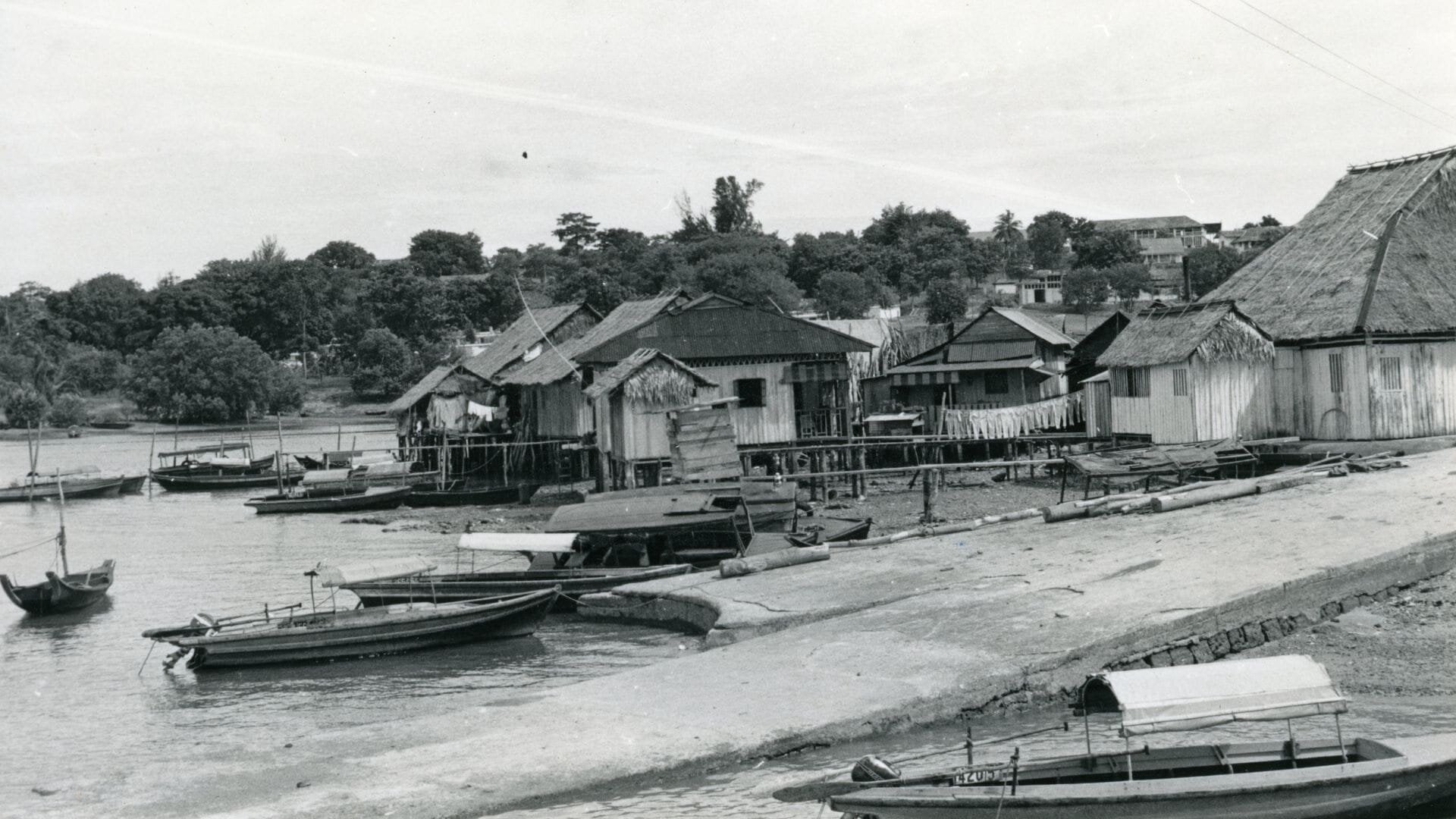 Former kampongs located next to the jetty on Blakang Mati, 1957.
Image credit: Sentosa
Beyond the fruit, it’s said that the Bugis manufactured piña cloth from the long leaves of the pineapple plants, and transformed the pineapple juice into a fermented drink.
Taken over by the British by the 1900s
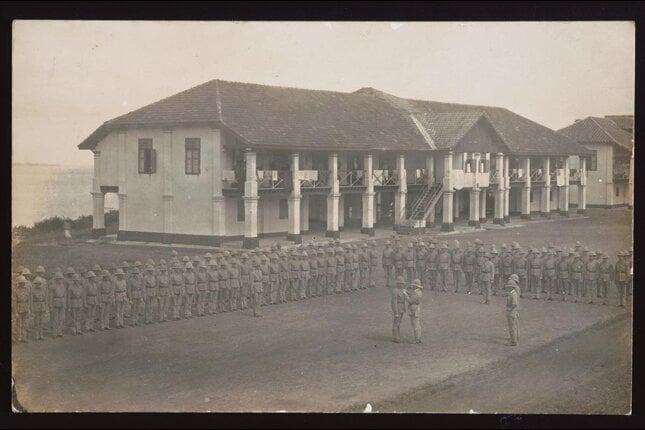
The Royal Garrison Artillery barracks at Blakang Mati, 1915.
Image credit: National Museum of Singapore
This era came to an end with the British taking over much of Sentosa, clearing away the plantations in favour of military barracks, administrative quarters, a military hospital, gun batteries and 3 massive coastal forts.
Island of Death Deer
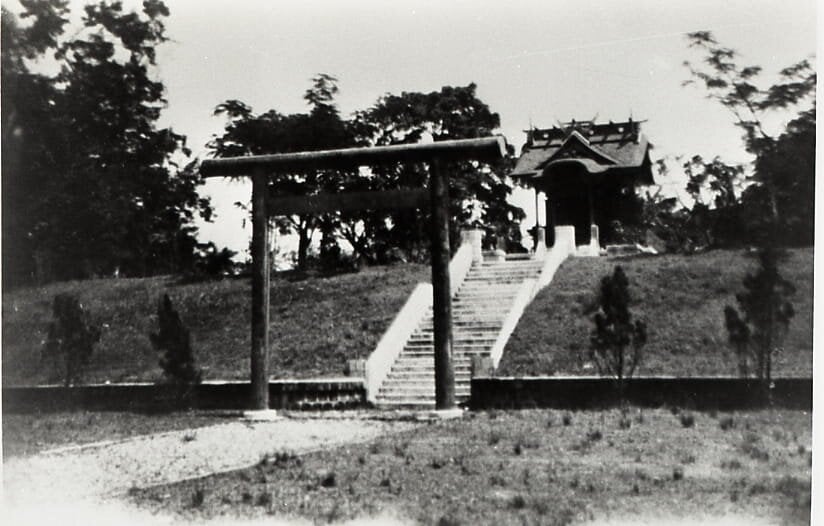
Kashima Jinja.
Image credit: Sentosa
Under the Japanese Occupation, the island was renamed Kashima Island, AKA Island of Deer. They even erected a Shinto shrine called Kashima Jinja, which they obliterated at the end of the war, and are said to have imported deer from Java to the island.
Today, nobody knows where exactly this shrine was located.
POW Camp & mass graves
During those same years, Sentosa also housed a Prisoner-of-War (POW) Camp, which held more than 1,000 British and Australian Allied soldiers. Some recounts tell of how 300 bullet-ridden bodies washed up on the island’s beaches after the Sook Ching Massacre, and were buried by the POWs.
In 1957, 8 skulls and almost 100 bones were found in one of the creeks on Pulau Blakang Mati; they’re suspected to be the remains of Chinese men who had worked at the Singapore Harbour Board.
Almost an oil refinery, but turned into paradise
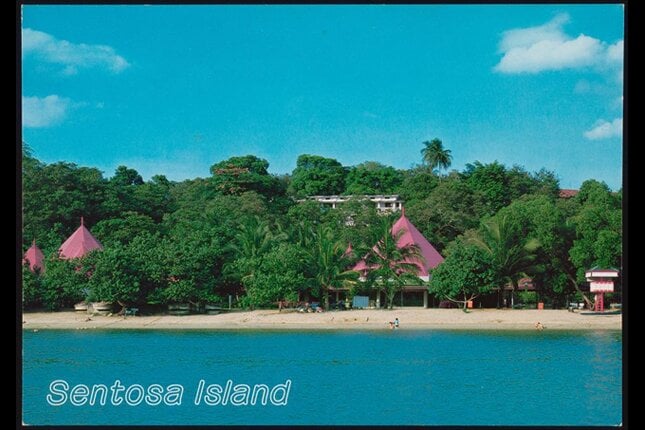
Sentosa, 1970s.
Image credit: National Museum of Singapore
While the British did reclaim the island post-WW2, using it as the British Royal Artillery Training Centre, it was returned to us post-independence, in 1967.
It was almost turned into an oil refinery under Esso, but the government was convinced by the then-Chairman of the Economic Development Board (EDB), Albert Winsemius, and Alan Choe, who helmed what is now the Urban Redevelopment Authority (URA) that it was better to turn the island into a resort for recreation and tourism.
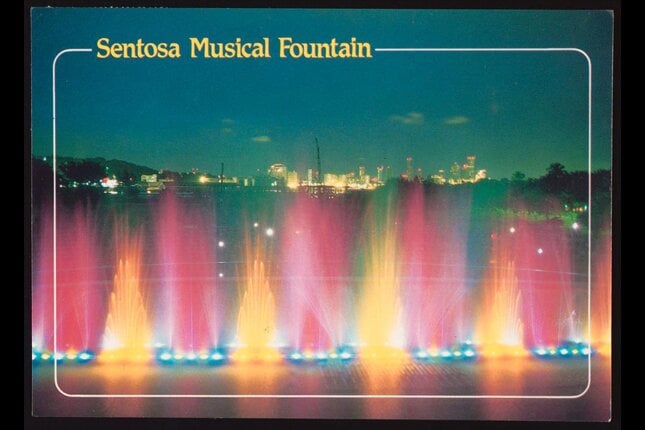
Sentosa’s Musical Fountain, 1980s.
Image credit: National Museum of Singapore
There was a public renaming contest for Pulau Blakang Mati’s new name, from which Sentosa was born. The Malay word is derived from Sanskrit, and means “peace and tranquillity”.
Sentosa’s gritty past includes being called the Island of Death Behind
Let’s just say that the Sentosa we know today is the literal polar opposite of what it was before it was christened Sentosa. You’ll still find vestiges of its past today – the old British military hospital is now Madame Tussauds Singapore, while The Barracks Hotel were once military barracks.
Venture into Capella Singapore, and you’ll find The Pineapple Room, a heritage cocktail bar that celebrates the historic Palawan Ridge, once the densest of the pineapple plantations, on which it’s located.
The next time you’re on Sentosa, or maybe at this year’s HHN14, take a deeper breath and closer look – maybe you’ll catch a whiff of pineapple, or the echoes of Pulau Blakang Mati’s past.
For more content:
- Living on Sentosa in the 1960s
- Guide to hiking in Sentosa
- Sentosa Nature Discovery
- Spending a day on Sentosa for a digital detox
Cover image credit: Museum Fünf Kontinente via Facebook, Sentosa, Biblioasia